
Reviewed · ANURADHAPURA TOURS
Hands-On Cooking Class in Anuradhapura: Cook Like a Local
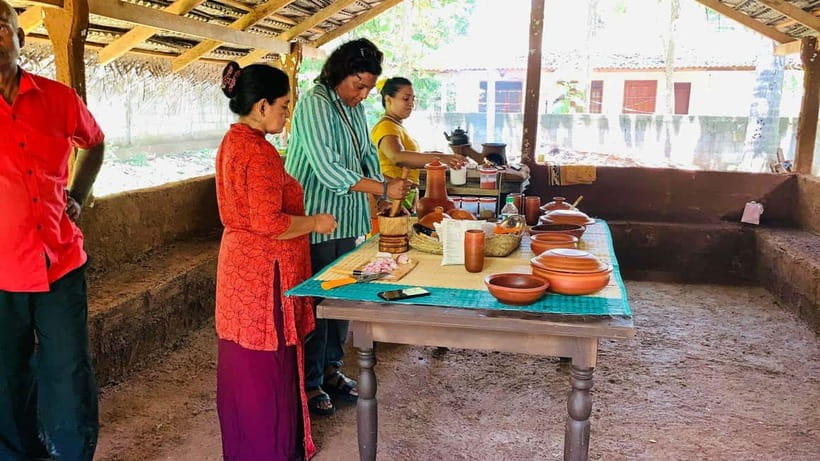
The most memorable part of this Anuradhapura cooking class is not the finished plate. It is the old-fashioned work that comes first: grinding spices on a miris gala, scraping coconut with a hiramanaya, and cooking beside a wood-fired stove in a small clay kitchen. You get a close look at how village meals were prepared long before modern appliances entered Sri Lankan homes.
I like the class for two clear reasons: you handle the tools instead of watching a demonstration, and the menu goes well beyond the usual tourist curry. The lake fish, ambarella, banana blossom, and kathurumurunga greens give you a taste of local ingredients that may not appear on a standard restaurant menu. The main consideration is the rustic setting. Smoke, heat, outdoor conditions, and a little help from mosquito repellent are part of the deal.
Key points at a glance
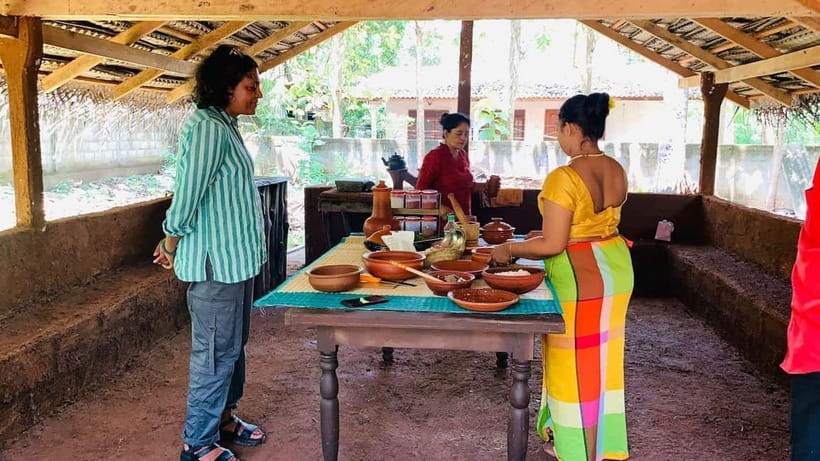
- Traditional Rajarata setting: Cook in a clay-house kitchen covered by a coconut-leaf shelter.
- Hands-on preparation: Grind spices, scrape coconut, pick a coconut, and cook over firewood.
- Seven-part savory menu: Prepare rice, lake fish curry, ambarella, banana blossom, greens, sambal, and pumpkin curry.
- Local sweets to finish: Enjoy fresh curd with treacle and ripe fruit after the meal.
- Private three-hour class: The activity is designed for a private group and is conducted in English.
- Flexible booking: You can cancel up to 24 hours before the class for a full refund and reserve without paying at once.
A village kitchen near Anuradhapura
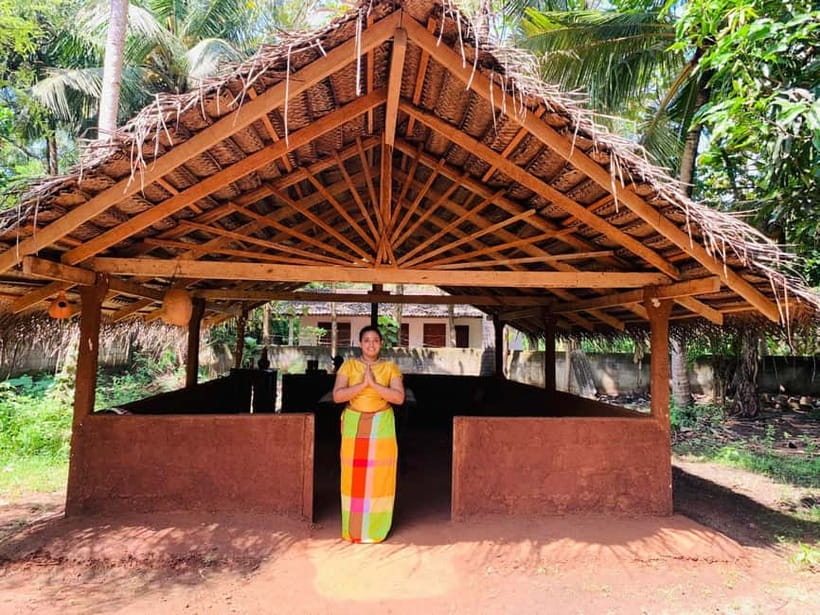
The class takes place at GK Immersions, in a clay house kitchen shaded by a traditional coconut-leaf roof. This is not a polished cooking school with stainless-steel counters and rows of induction burners. The setting is meant to show you a more familiar side of Sri Lankan food culture, where cooking is tied to firewood, hand tools, garden produce, and shared work.
That setting matters. Sri Lankan cooking is built around fresh aromatics, coconut, spices, and careful heat control. When you grind the spices yourself, you can smell the difference before anything reaches the pot. When you cook over firewood, you also see why traditional cooks pay close attention to flame, pot position, and timing.
The location is in the North Central Province, in the Anuradhapura area. The meeting point is the clay kitchen itself. To find it, search Google Maps for GK Immersions, Best things to do provider in Anuradhapura. The available information does not include hotel pickup, so you should plan to reach the meeting point independently unless the provider gives you different instructions after booking.
More ancient city days:
- Private City Day Tour in Anuradhapura
★ 5.0 · 383 reviews - Explore & Ride the history of anuradhapura with Vogel Tours
★ 5.0 · 62 reviews - Delve Into Ancient Anuradhapura with Optional Visit to Mihintale
★ 5.0 · 42 reviews
Starting with coconut, stone, and fire
The experience begins with a refreshing local drink, then moves into the tools and ingredients that shape the meal. One especially appealing touch is the chance to pick your own coconut straight from the tree. The activity description does not promise that you will climb the tree yourself, so treat this as a garden-to-kitchen step rather than a tree-climbing adventure.
Next comes the miris gala, a traditional stone grinder. You will use it to crush spices and create the fragrant base for the dishes. This is a small task, but it gives you a better sense of the labor behind Sri Lankan cooking. Ground spices lose aroma over time, so freshly crushed ingredients bring a sharper smell and fuller flavor to the pot.
You will also use a hiramanaya to scrape coconut. This is one of the most useful local kitchen skills in the class. Fresh coconut appears throughout Sri Lankan food, sometimes as milk, sometimes as grated flesh, and sometimes as the main ingredient in a side dish. Scraping it by hand gives you a practical connection to the meal rather than treating coconut as an invisible ingredient from a packet.
The cooking takes place on a wood-fired stove, using firewood that can include coconut shells. You should expect the pace to be more hands-on than a standard demonstration class. The fire needs watching, and the cooking process may feel less predictable than using a modern stove. That is part of the appeal, but it also means you should wear clothes you do not mind exposing to a little smoke.
The rice and curry menu
The meal centers on rice, as most traditional Sri Lankan meals do. You may prepare yellow rice or white rice, depending on the class plan and available ingredients. White rice is the simple base, while yellow rice brings color and a little more seasoning to the plate.
The lake fish curry is one of the most distinctive dishes on the menu. It uses locally caught lake fish, spices, and creamy coconut milk. This gives you a chance to taste the food of the Rajarata area rather than a generic seafood curry. The exact fish is not specified, so the dish may depend on what is available locally that day.
Ambarella curry is another unusual choice. Ambarella is a tropical fruit with a sharp, tangy flavor, and here it is treated as a savory curry ingredient. If you have only eaten familiar fruit-based desserts, this dish will show you how flexible Sri Lankan cooking can be. The flavor may be quite tart, so it is best appreciated as one part of a plate balanced with rice, coconut, and milder curries.
The banana blossom dish adds a completely different texture. The flower of the banana plant is prepared as a curry or mallum, creating an earthy side with more bite than a soft vegetable curry. Banana blossom takes preparation, so working with it helps you see how local cooks make use of the whole plant rather than only its fruit.
Greens, sambal, and pumpkin
Kathurumurunga mallum brings leafy greens, coconut, and spices together. Mallum is generally a gently mixed green preparation, so this dish should provide a lighter contrast to the fish curry and more heavily spiced items. It also shows how coconut is used to give body and flavor to vegetables without turning every dish into a rich sauce.
Coconut sambal is the hot, bright side of the meal. Freshly grated coconut is combined with red chili, lime, and onion. The recipe sounds simple, but the balance matters. Too much chili can overpower the plate, while lime cuts through the heat and keeps the sambal fresh.
Pumpkin curry rounds out the savory menu with a softer, mildly sweet flavor. It is cooked with gentle spices and coconut, giving you a comforting dish alongside the sharper ambarella and fiery sambal. This variety is one of the class’s strongest features. You are not making several versions of the same curry. You are building a full Sri Lankan meal with contrasts in heat, texture, sweetness, and acidity.
The advertised menu includes rice, lake fish curry, ambarella curry, kathurumurunga mallum, coconut sambal, pumpkin curry, and banana blossom mallum. Ingredients can vary in local cooking, so it is sensible to confirm the exact menu if one particular dish matters to you.
More Cooking Classes in Anuradhapura:
- Ella: Traditional Sri Lankan Cooking Class
★ 4.9 · 788 reviews - Organic cooking class sigiriya (kumara & family)
★ 5.0 · 650 reviews - Sri Lanka Cooking Class with Granny
★ 5.0 · 587 reviews - Kandy Village Cooking Class
★ 5.0 · 536 reviews
Sharing the finished meal
After the cooking, you sit down to taste what you have prepared. The sweet finish is fresh curd with treacle and ripe papaya. Curd and treacle are a classic Sri Lankan pairing, with cool, tangy dairy balanced by the dark sweetness of palm treacle. Papaya keeps the final course simple and fresh.
The meal is important because it gives the class a natural end point. You do not simply cook a few sample dishes and leave. You prepare several components, then see how they work together on one plate. That makes the three-hour duration feel useful rather than padded.
The class has received especially strong praise for clear instruction about which spices and vegetables to use, along with explanations of the background, preparation methods, and traditional tools. That is a good sign for beginners. You do not need to arrive with a working knowledge of Sri Lankan cuisine to take part.
The experience is led in English. No individual guide names are provided, but the teaching includes both the practical steps and the cultural background behind them. If you want to ask about specific spice blends, cooking times, or substitutions, this is the point to do it.
What the three-hour schedule means
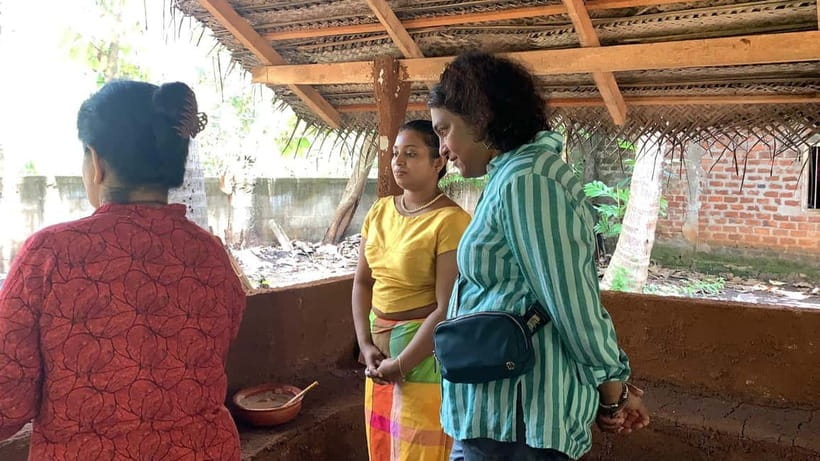
Three hours is long enough to cover the tools, cooking, and meal without turning the activity into a full-day commitment. It also leaves room for the slower parts of traditional preparation, especially grinding spices, scraping coconut, and cooking over firewood.
The exact start time is not fixed in the supplied details. You need to check availability when choosing a date. Since the class involves heat, food preparation, and an outdoor-style kitchen, a session that fits comfortably into your day will be more enjoyable than one squeezed between major sightseeing stops.
An important practical point: the activity is listed as a private group. That gives you a more personal format than a large public class, and it should make it easier to ask questions or take a turn with each tool. The maximum group size is not stated, so do not assume that private means one-to-one.
You should also allow for the physical nature of the class. You may stand while preparing food, work close to a fire, handle wet coconut, and spend time in a rustic kitchen. The activity is listed as wheelchair accessible, but the clay-house setting and cooking arrangements may still be worth confirming in advance if you have specific mobility needs.
Is $40 a fair price?
At $40 per person, this is not simply payment for a meal. You are paying for three hours of instruction, ingredients, a private-group format, access to traditional tools, and a cultural setting that would be difficult to recreate in a city restaurant.
The value is strongest if you want to understand how Sri Lankan food is made. A restaurant can serve you fish curry and sambal, but it cannot easily show you how to grind the spices, prepare the coconut, manage a wood fire, and turn unfamiliar local produce into lunch. The class also includes a full savory menu and dessert, so you are not left hungry after the lesson.
The price may feel less attractive if your main goal is a quick cooking demonstration or a cheap meal. This activity is slower and more involved. You are paying for participation and context, not just food.
For a private class in a traditional setting, $40 is a reasonable price, particularly for food-focused visitors and anyone who values local skills over a highly polished venue. I would compare the cost with the price of a good meal plus a separate guided activity in Anuradhapura. Here, both are combined, with the added benefit of making the dishes yourself.
Small details that will improve your visit
Bring mosquito repellent. One person specifically found it useful, and the shaded, nature-filled village setting makes this sensible advice rather than an unnecessary extra.
Wear comfortable clothes and shoes that can handle a rustic kitchen. The class may involve standing, smoke, heat, and hands-on food preparation. Avoid clothing that is precious or difficult to wash.
Arrive ready to participate. The best part of the class is not taking pictures of the stone grinder or wood stove. It is using them. You should expect to touch the ingredients, ask questions, and accept that traditional cooking is not always perfectly tidy.
Keep your camera nearby, but do not let it replace the experience. The coconut tools, clay kitchen, firewood stove, and finished meal all provide good photo opportunities, but the class is most useful when you focus on the process.
If you have dietary restrictions, ask before booking. The menu includes fish, coconut, dairy curd, chili, and several plant-based dishes. The supplied details do not state that substitutions or allergy adaptations are available, so confirmation is important.
Who will enjoy this Anuradhapura activity?
I would recommend this class to food lovers who want more than a restaurant meal, couples looking for a private activity, families with older children, and anyone interested in village cooking methods. It also suits visitors who have already seen Anuradhapura’s major ancient sites and want an activity that connects with present-day local life.
The class is a good match for beginners because the instructions cover the ingredients, tools, and preparation. You do not need to know the names of Sri Lankan spices before arriving.
It may be less suitable if you dislike heat, smoke, outdoor conditions, or strong flavors. The coconut sambal and spice-based curries may also be challenging for people who prefer mild food, though the menu includes softer dishes such as pumpkin curry, rice, and curd.
Because the group is private, it can work well for people who want a quieter lesson. Still, the details do not say how many people can join each booking, so check the group arrangement if that matters to you.
Should you book the cooking class?
I would book this experience if you want a practical cultural activity in Anuradhapura and have three hours to spare. The strongest reasons are the traditional tools, the unusual menu, and the chance to cook in a clay kitchen rather than a purpose-built classroom.
The class earns its price through participation. You grind, scrape, stir, cook, and then eat the meal. That makes it a better choice for curious cooks than for anyone simply seeking lunch.
Book it with realistic expectations. This is a rustic village cooking session, not a luxury food studio. Bring repellent, expect smoke and heat, and confirm any food or mobility needs ahead of time. If that sounds appealing, GK Immersions offers one of the more distinctive things to do in Anuradhapura.
FAQ
Where does the cooking class take place?
The class takes place at the GK Immersions clay-house kitchen in Anuradhapura, under a traditional coconut-leaf shelter. You can search for GK Immersions, Best things to do provider in Anuradhapura, on Google Maps.
How long does the activity last?
The cooking class lasts three hours. Starting times depend on availability when you book.
How much does the class cost?
The listed price is $40 per person.
What language is the class conducted in?
The instructor conducts the class in English.
Is the cooking class private?
Yes. The activity is listed as a private-group experience, though the maximum number of participants is not specified.
What food will I prepare?
The menu includes rice, lake fish curry, ambarella curry, kathurumurunga mallum, coconut sambal, pumpkin curry, and banana blossom mallum. Dessert includes fresh curd with treacle and ripe fruit.
What traditional tools will I use?
You will use a miris gala stone grinder, a hiramanaya coconut scraper, and a traditional wood-fired stove. The experience also includes picking a coconut from the tree.
Can I cancel or pay later?
You can cancel up to 24 hours in advance for a full refund. You can also reserve now and pay later, so no payment is required at the time of booking.
More workshops and classes in Anuradhapura
- Galle: Traditional Gems & Jewellery Workshop with Transfers
★ 4.9 · 539 reviews - Sea waves sri lankan cooking class
★ 5.0 · 467 reviews - Ella: Sri Lankan Cooking Class with Neranji at Homestay
★ 5.0 · 276 reviews - Ella : Cooking class with amazing Spice Garden Tour
★ 5.0 · 239 reviews
Recently listed around Anuradhapura
- Day Tour from Dambulla to Sigiriya or Pidurangala & Polonnaruwa★ 4.0 · 5 reviews
- All Inclusive Wilpattu National Park Day Tour From Anuradhapura★ 5.0 · 5 reviews
- From Sigiriya : Kaudulla National Park Private Jeep Safari★ 5.0 · 6 reviews
- Half Day Minneriya National Park Safari from Dambulla★ 5.0 · 6 reviews
- Elephant Jeep Safari at Minneriya National Park★ 4.8 · 6 reviews
- Minneriya National park Safari Sri Lanka★ 5.0 · 6 reviews
- Private Round Tour in Sri Lanka with Vehicle★ 5.0 · 6 reviews
- From Trincomalee: Minneriya National Park 4X4 Jeep Safari★ 3.8 · 6 reviews
Anuradhapura Tours, compared.
Minneriya National Park Elephant Jeep Safari Private Tour
Read our review →
Explore & Ride the history of anuradhapura with Vogel Tours
Read our review →
Sigiriya Hike & Minneriya Safari Private Full Day Tour
Read our review →
Sigiriya & Habarana: Sunrise Hot Air Balloon Ride Experience
Read our review →
Minneriya National Park Safari – Private Jeep with Hotel Pickup
Read our review →
Delve Into Ancient Anuradhapura with Optional Visit to Mihintale
Read our review →
Browse the lists this tour appears in