
Reviewed · GALLE TOURS
Sea waves sri lankan cooking class
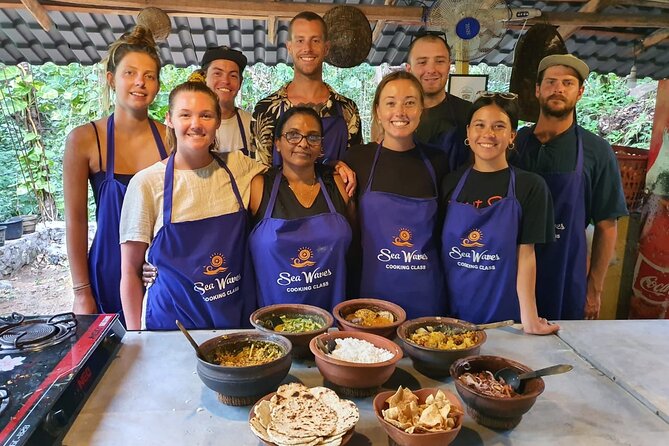
The best part of this Sri Lankan cooking class near Unawatuna happens before you reach the stove. You visit local fish and vegetable markets, choose what you want to cook, then return to a family restaurant where Susanthi and a chef with more than 30 years of experience guide you through the meal. You finish by eating what you made, not just watching someone else cook.
I like the market visit, because it gives the lesson a real connection to daily life in Galle. I also like the open kitchen and jungle view, where you may spot monkeys and birds while learning to blend spices, make coconut milk, and prepare several curries. The main point to check is the group arrangement: the experience is advertised as private, but one booking reported that three additional people joined, so confirm this before paying if privacy matters to you.
Key points at a glance
- Market-to-table cooking: Choose fish, vegetables, and other ingredients at local markets before class.
- Five vegetable dishes: Prepare a broad Sri Lankan meal, plus fish or chicken according to your preference.
- Susanthi and an experienced chef: Expect English guidance from a family-run restaurant team, with more than 30 years of cooking experience.
- Open-air kitchen setting: Cook with a jungle view and the chance to see monkeys and birds nearby.
- A full meal at the end: Sit down and eat the curries and side dishes you helped prepare.
- Small-group question: It is sold as a private activity, but confirm the exact group size before booking.
From Galle’s markets to the family kitchen
This class begins at 10:00 a.m. at Sea Waves Restaurant & Cooking Classes on Dunwella Road in Yaddehimulla, Unawatuna. The location is close to public transportation, though the experience is described as being in Galle while the meeting point is in Unawatuna, so check your route carefully if you are staying elsewhere.
The first step is a market visit. The plan includes a fish market and a vegetable market, where you choose the ingredients for your meal. This is more useful than receiving a fixed menu because you can see the raw materials before they are cleaned, chopped, and cooked.
You may select fish or chicken, then add five vegetables. That choice gives the class a personal touch and also lets you avoid ingredients you do not eat. If you have strong preferences, state them when booking or at the start of the activity. The supplied details do not promise a fixed set of dishes, so the meal can vary with your selections and what is available at the market.
One detailed account describes going first to a fish market near the beach and Galle Fort, then taking a tuk tuk to a vegetable market before heading to the restaurant. The exact transport arrangement is not fully set out, so treat that as a useful indication rather than a guaranteed part of every booking. Ask where you will meet for the market portion and whether transport is included.
More Cooking Classes in Galle
- Galle Unawatuna Cooking Class
★ 5.0 · 142 reviews - Galle Fort cooking class
★ 5.0 · 60 reviews - Galle: Cooking Class at a Local Home and Market Tour
★ 5.0 · 47 reviews
What the market visit adds
A cooking lesson can easily become a demonstration with a few token tasks for the customer. The market visit helps prevent that. You see the ingredients being selected at the source, then follow them into the kitchen and onto your plate.
The fish market is especially useful if you want to understand how local meals begin. Rather than choosing a fillet from a menu, you can take part in selecting the main ingredient. The vegetable market also gives you a chance to choose produce for the five vegetable dishes.
I like this format for curious cooks who want more than a recipe card. You learn that Sri Lankan cooking is not only about adding curry powder. It involves choosing ingredients, combining spices, working with coconut, and building several dishes that share a meal without tasting the same.
The market can also make the morning less predictable. You are not simply following a polished cooking-show schedule. Produce and fish may shape the final menu, and the class works best if you are happy to make choices as you go.
Cooking with Susanthi in an open kitchen
Back at the family restaurant, you cook in an open kitchen with a jungle view. That setting is one of the experience’s most appealing details. You may see monkeys and birds while you work, adding a sense of place that a hotel cooking studio cannot easily provide.
Susanthi is the guide named in the available details and customer accounts. She speaks fluent English and leads the class with the chef. The chef has more than 30 years of cooking experience, which matters here because the lesson is meant to explain the process rather than simply hand you prepared ingredients.
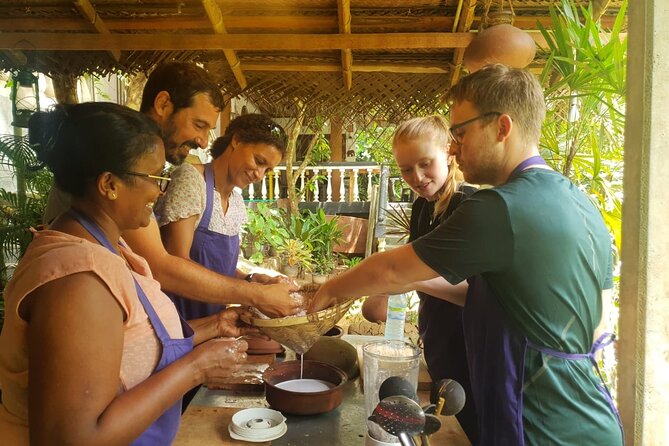
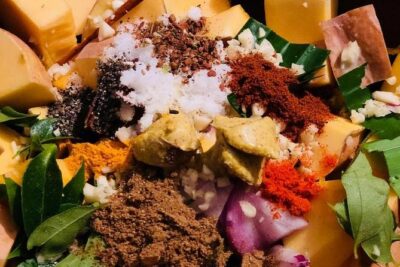
You can expect to help prepare a meal with five vegetables and your choice of fish or chicken. The supplied information also points to lessons in blending spices and making coconut milk. Dhal curry, tuna curry, and vegetable curries are among the dishes described in the experience details, but the exact menu depends on what you select.
That variety is a real strength. In roughly three hours, you are not learning one dish in isolation. You are seeing how several curries are made for the same table, how different vegetables are treated, and how spices and coconut affect the final taste.
The instruction appears practical rather than formal. You work through the stages with the chef and Susanthi, which can make the techniques easier to repeat at home. If you want exact measurements, ask during the class. Sri Lankan home cooking often relies on sight, smell, texture, and personal judgment, so you may need to write down quantities yourself.
The meal you eat at the end
After cooking, you sit down to eat the food you prepared. This is not an extra tasting added after the lesson. It is the payoff for the work at the market and stove.
A meal with five vegetables plus fish or chicken can be substantial, especially if you are interested in trying several curries rather than ordering one dish in a restaurant. You also get to judge the balance of spices and coconut while the techniques are still fresh in your mind.
The meal is useful in another way. A dish can seem simple while someone else cooks it, then feel quite different when you have prepared the spice blend, handled the vegetables, and watched the sauce change. Eating the finished food helps connect each stage of the lesson.
One particularly warm detail from the experience is that Susanthi offered food to a tuk tuk driver. That suggests a relaxed family-restaurant setting rather than a tightly staged commercial class. Still, do not assume every small custom or serving arrangement is guaranteed. The core promise is that you dine on your own meal after the class.
A different sort of day out of Galle:
- Whales and Dolphins Watching-Luxury Super Grade Cruiser(Hotel Pick up offered)
★ 5.0 · 1,268 reviews - Galle: Traditional Gems & Jewellery Workshop with Transfers
★ 4.9 · 539 reviews - Galle Fort Walking tour
★ 4.9 · 285 reviews - Snorkeling with Turtles in Mirissa
★ 5.0 · 268 reviews
The Jungle Beach stop and the itinerary details
Jungle Beach is listed as a stop, but the available description gives little detail about what happens there. The main account of the day focuses on the fish market, vegetable market, and cooking session at the restaurant.
You should ask the operator how Jungle Beach fits into your particular booking. It may be part of the route or a named itinerary point rather than a long beach visit. Do not book this class expecting a separate beach excursion unless that detail is confirmed.
The cooking portion lasts about three hours, and the activity ends back at the meeting point. The 10:00 a.m. start makes it a morning class followed by lunch, although the market travel and any stop outside the kitchen may affect the full time you spend out.
There are two sessions per day. If you need a different start time, ask before booking rather than assuming the second session will suit your schedule.
Is $59 a fair price?
At $59, the value depends on how much of the full format you use. This is not just a short lesson at a restaurant. The price covers a market visit, ingredients, cooking tools, instruction, a meal, and a family-run setting.
For someone who wants only one recipe, a standard restaurant meal would cost less. For someone who wants to understand a wider Sri Lankan meal and take home useful cooking methods, the price is easier to justify. You are paying for the instruction and the work behind the meal, not only the food on the plate.
The private format also affects the value. A private lesson for your own party can be worthwhile if you want to ask many questions or choose dishes around your tastes. But because one person reported that three other people joined despite booking for two, confirm the group size directly. The listing says only your group will participate, yet this conflicting account makes a quick message sensible.
All ingredients and tools are provided, so you do not need to shop for equipment or bring cooking supplies. You may want a notebook or phone for recording spice combinations, but that is a personal choice rather than a stated requirement.
Who will enjoy this class most?
I would recommend this experience to you if you enjoy food, local markets, and hands-on activities. It suits couples, families, and small groups who want to cook together rather than sit through a passive demonstration.
It is also a good fit if you are new to Sri Lankan cooking. The chef and Susanthi guide you through the process in English, and the class covers several dishes in one sitting. You can see how dhal, fish or chicken, and vegetables work together in a Sri Lankan meal.
Home cooks will get the most long-term value. The market choices and cooking stages can help you recreate at least some of the dishes later. One lesson participant specifically planned to make dhal curry at home, which is a good sign that the instruction is practical enough to carry beyond the restaurant.
You may want to skip it if you dislike choosing ingredients, prefer a fixed menu, or want a polished culinary school setting. The family restaurant atmosphere is part of the appeal, but it may also mean a less formal class and a more flexible pace.
What to clarify before you book
A few quick questions can prevent surprises:
- Confirm whether the class will be private for your party.
- Ask how the market visit is arranged and where you will meet first.
- Confirm how Jungle Beach fits into the day.
- Tell the operator whether you prefer fish, chicken, or particular vegetables.
- Check the exact location if you are staying in central Galle, since the meeting point is in Unawatuna.
The experience accepts mobile tickets and provides confirmation at booking. It requires good weather, and a cancellation caused by poor weather should lead to either another date or a full refund. If you cancel yourself, you need to do so at least 24 hours before the start time for a full refund. Changes or cancellations inside that period are not accepted for a refund.
Should you book Sea Waves Cooking Class?
Book it if you want a market visit, real participation, and a generous Sri Lankan meal rather than a single recipe taught in a formal studio. The combination of fish and vegetable shopping, five vegetable dishes, your choice of fish or chicken, and a jungle-view kitchen gives the experience a strong sense of place.
I would be more cautious if a strictly private class is essential. The experience is presented as private, but the report of extra participants is worth taking seriously. Confirm the group size before you commit.
For most food-focused visitors staying around Galle or Unawatuna, $59 is a reasonable price for a three-hour lesson with ingredients, tools, instruction, and lunch included. The best reason to book is simple: you do not just taste Sri Lankan food. You learn how the meal is built, then sit down and eat the result.
FAQ
Where does the cooking class begin?
The activity begins at Sea Waves Restaurant & Cooking Classes on Dunwella Road, Yaddehimulla, Unawatuna 80600, Sri Lanka.
What time does the class start?
The listed start time is 10:00 a.m. There are two sessions per day.
How long does the experience last?
The cooking experience lasts approximately three hours. It ends back at the meeting point.
What food will I cook?
You will choose ingredients at the fish and vegetable markets, then prepare five vegetable dishes with fish or chicken according to your preference. Dhal curry, tuna curry, and other curries are included among the dishes described for the class, but the exact menu can vary.
Are ingredients and cooking tools provided?
Yes. The class provides all ingredients and tools needed for the cooking session.
Can I cancel for a full refund?
Yes, if you cancel at least 24 hours before the local start time. Cancellations made less than 24 hours before the experience are not refunded. If poor weather causes the operator to cancel, you will be offered another date or a full refund.
More workshops and classes in Galle
- Surf lesson in weligama by surf and stay Srilanka .
★ 5.0 · 95 reviews - PRIVATE Surf Lesson for Beginners
★ 5.0 · 80 reviews - Galle : Traditional Jewellery making workshop
★ 4.9 · 34 reviews - PRIVATE Surf lesson for Beginners Couple
★ 5.0 · 26 reviews
Recently listed around Galle
- Surfing Lessons at Unawatuna★ 4.5 · 11 reviews
- Sinharaja Rain Forest Tours (Full Day)★ 5.0 · 11 reviews
- Mix it Like a Lankan in Unawatuna★ 5.0 · 11 reviews
- Galle to Colombo Airport Private Taxi 247 Lowest Price Mini Bus, Car, Van★ 4.5 · 11 reviews
- Paradise Turtle Watching Tours★ 5.0 · 11 reviews
- Mirissa/Weligama to Colombo Airport Private Taxi Transfer★ 5.0 · 12 reviews
- Yala National Park Private Safari trip from Galle/Unawatuna/Mirissa★ 5.0 · 12 reviews
- Scuba Diving in Unawatuna★ 5.0 · 12 reviews
Galle Tours, compared.
Whales and Dolphins Watching-Luxury Super Grade Cruiser(Hotel Pick up offered)
Read our review →
Traditional Gems & Jewellery Workshop with Transfers
Read our review →

Galle/Mirissa/Hiriketiya: Drop to Ella & Udawalawa Safari
Read our review →
Browse the lists this tour appears in