
Reviewed · SIGIRIYA & DAMBULLA TOURS
Organic cooking class sigiriya (kumara & family)
The best part of this Sigiriya cooking class happens before the first pot reaches the fire. Kumara takes you through his family garden, explaining the vegetables, herbs, spices, and plants used for cooking and traditional health remedies. Then you work with Kumara, his wife Thanuja, and other family members in their outdoor kitchen.
I like the true farm-to-table approach, where many ingredients are grown on site rather than bought for a staged class. I also like that you do more than watch: you help prepare spices, measure ingredients, cook several dishes, arrange the table, and eat the finished meal. The main consideration is comfort. This is a family home and a traditional cooking space, not a polished studio, and you should bring extra drinking water because one account says bottled water was not always provided.
Key points to know
- Garden first: Walk through Kumara’s organic growing area and learn how herbs, vegetables, and medicinal plants are used.
- A full Sri Lankan meal: Prepare several curries, sambal, rice or string hoppers, and sometimes a dessert.
- Traditional methods: Grind and prepare spices, work over wood fires, and learn how quantities change from dish to dish.
- Family-led setting: Kumara, Thanuja, and relatives teach in and around their home near Sigiriya.
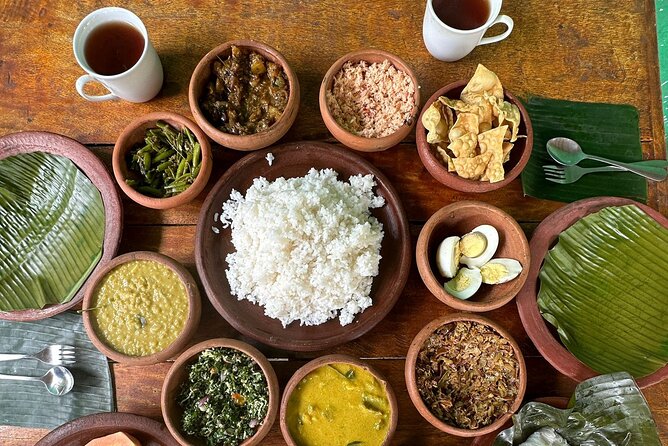
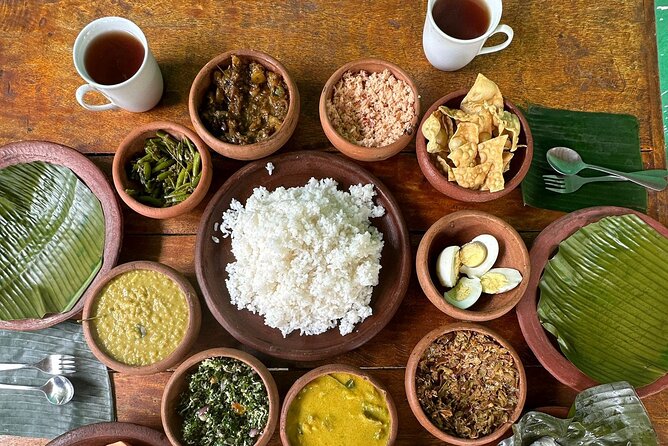
- Dinner is part of the class: The table is arranged in a Sri Lankan style, then you sit down to eat what you helped make.
- Good value at $28: For about two and a half hours of instruction, food, family contact, and a garden visit, the price is fair.
A home garden instead of a demonstration kitchen
This experience begins at Organic Cooking Class Sigiriya, at 284 Kahatagahayaya, Kalapuraya, Sigiriya 21120. The class takes place at Kumara and his family’s home, where the garden is part of the lesson rather than a decorative backdrop.
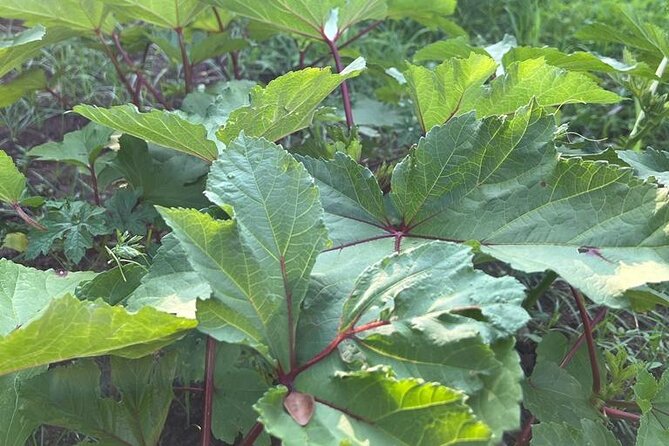
I like this opening because it gives you context for the meal. You see the produce before it is washed, chopped, and cooked. A pumpkin, eggplant, leafy herb, or spice has a place in the garden, and Kumara explains how the family uses it.
The garden also adds a useful Sri Lankan food lesson. You learn that cooking is not only about following a recipe. It is about choosing fresh produce, balancing spices, and using plants in everyday food and home remedies. The exact plants depend on what is growing, but the class includes an introduction to herbs, fruits, vegetables, and their traditional uses.
This part may take longer than a quick walk around a market stall, so allow yourself to listen and ask questions. If you want a fast recipe demonstration with little conversation, this may feel slow. If you want to understand where the meal begins, it is one of the most valuable parts.
More Cooking Classes in Sigiriya
- Sajee’s Place Cooking Class
★ 5.0 · 237 reviews - Cooking Class: Sajee’s Place Cooking Class sigiriya
★ 5.0 · 117 reviews - Organic Cooking Class sigiriya home Kitchen(Kumara & family)
★ 5.0 · 116 reviews
Preparing spices the traditional way
Sri Lankan cooking depends on spices, but the important lesson is how they are handled. Kumara introduces the ingredients and shows how spices are prepared in a traditional manner. You also learn how ingredients are cleaned, cut, and measured for the amount of food being made.
That practical detail matters at home. A recipe can list curry powder and coconut, but it does not always explain the order of preparation or how much of each ingredient to use. Here, you get tips while the food is being made, including guidance on quantities and cooking methods.
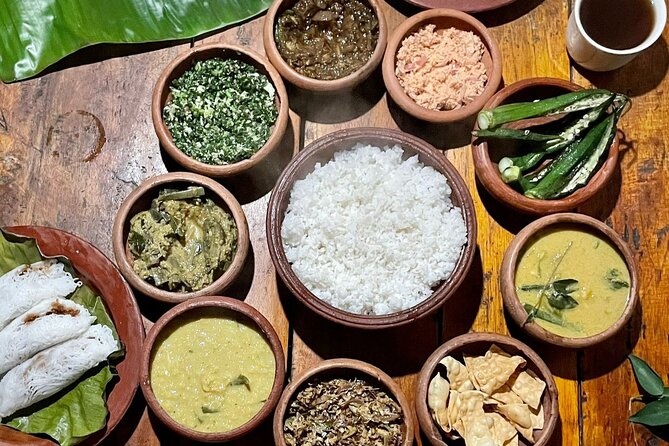
The class is plant-focused, and several meals described by participants were fully or largely vegan. Dishes have included dhal, eggplant curry, pumpkin curry, sambal, sweet potato curry, coconut roti, rice, string hoppers, and dessert. The menu can vary, so do not expect every dish every time.
I especially like the chance to see several curries prepared together. Sri Lankan meals are built around contrast: different colors, textures, heat levels, and flavors on one table. A single curry gives you only part of the picture. Several small dishes show you how the meal works as a whole.
Working together over the outdoor fire
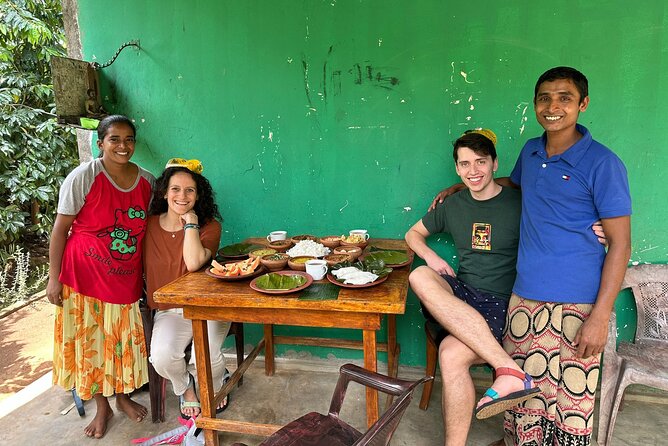
The cooking takes place in a traditional home setting, including an outdoor kitchen and, according to one account, a row of wood fires. You are not simply placed at one station with a pre-measured bowl. Tasks are shared among the people taking part, with Kumara and his family guiding the work.
You might chop vegetables, prepare coconut-based ingredients, mix spices, make sambal, or help with string hoppers and other accompaniments. The class is hands-on, but it is also social. If you arrive with a group, you may have different jobs from the person next to you, so pay attention and ask to try more than one task if time allows.
This is a good fit for curious cooks, but you do not need advanced kitchen skills. The emphasis is on seeing and doing the process. You will learn useful techniques, yet you should not expect a formal cooking-school certificate or a printed lesson plan during the session.
The family’s style is warm and personal. Kumara leads much of the teaching, while Thanuja and other relatives help with preparation and cooking. One account also describes a flower crown at the start, a small festive touch that suits the relaxed family atmosphere.
The meal you sit down to eat
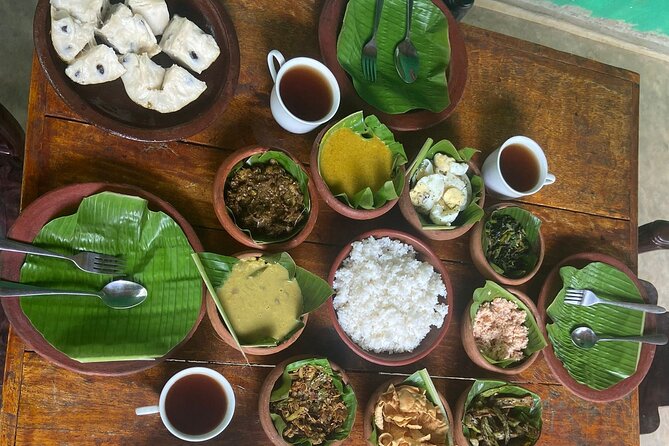
Once the food is ready, the lesson changes pace. The family shows you how a Sri Lankan dinner table is arranged, and then you sit down to enjoy the meal you helped prepare.
This is more than a tasting. You have watched the vegetables come from the garden, handled the spices, prepared the dishes, and seen them cooked. Eating at the end gives the class a clear finish and helps you understand how the separate curries and side dishes work together.
Expect a generous plant-based spread when the menu includes several curries, sambal, rice, string hoppers, and dessert. Past menus have included three curries and, on some occasions, as many as seven curry dishes. Since the family cooks with garden produce, the exact selection depends on seasonal ingredients and the day’s plan.
Herbal tea is included, and the tour information also lists bottled water. Still, one account specifically advises bringing your own bottled water because tap water and hot tea were offered instead. I would follow the safer advice and carry water, especially during a warm afternoon or evening.
More ways up Sigiriya rock:
- From Colombo: Sigiriya and Dambulla Day Trip with Safari
★ 4.7 · 842 reviews - From Sigiriya: Minneriya National Park Private Jeep Safari
★ 4.9 · 415 reviews - From Sigiriya: Minneriya National Park Elephant Safari
★ 4.8 · 365 reviews - Night Hike to see Elusive & Rare Loris in Sigiriya
★ 4.5 · 101 reviews
What the organic claim means here
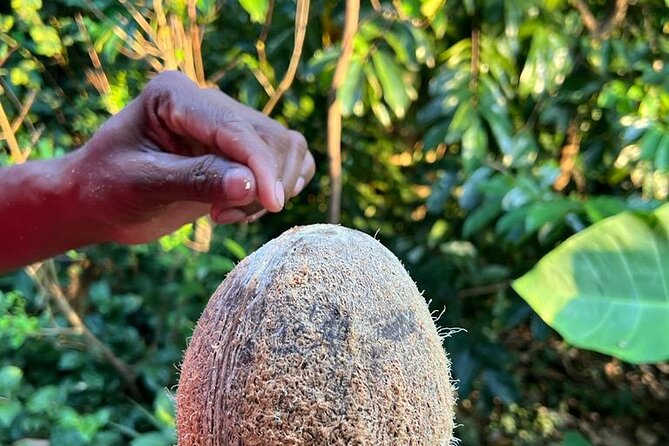
The strongest feature of this class is its connection to the family’s own garden. The food is described as organic and homegrown, and many of the vegetables and spices used in the class come from the property.
You should treat this as a family’s working garden, not a large commercial farm. That is part of the appeal. The garden may feel simple and practical, and the cooking area may rely on basic equipment. You get a close look at how a household grows and prepares food, rather than a staged presentation built for a large audience.
I also appreciate the family’s effort to make its own spices. You can learn how they are prepared and may be able to buy some to take home if you wish. Ask about current availability, since the information does not give a fixed list or price for spice purchases.
The organic approach is particularly useful if you care about ingredients, local food, or vegetarian cooking. It is less useful if your main goal is learning meat or seafood recipes, because the dishes described are plant-based and centered on vegetables, lentils, coconut, and spices.
Private class or shared group?
The experience is presented as a private workshop, but the available details are not fully consistent about group size. Some accounts describe a couple joining a group of about 10 people, while the general information calls it private. The additional information also displays a maximum of 0 travelers, which is clearly not a useful group-size figure.
For that reason, confirm the arrangement when booking. A small group can improve the class by adding conversation and shared tasks. It can also mean less individual time with the cooking pot. If you want a one-to-one lesson, ask directly if the session will be exclusive for your party.
The family setting may make a shared group feel natural. Cooking together, then eating together, is part of the experience. You may meet other people, split the preparation work, and make the final meal a social occasion.
Timing, meeting point, and transport
The advertised duration is about two hours and 30 minutes, though one account says the entire activity took close to three hours. Allow a little extra time rather than scheduling a tight connection afterward.
You meet at Organic Cooking Class Sigiriya, 284 Kahatagahayaya, Kalapuraya, Sigiriya 21120. The activity ends at the same point. A tuk-tuk pickup and return have been arranged for some participants, but transport is not clearly listed as a standard inclusion, so confirm this before setting out.
The class is a better choice on a day when you can take things at an easy pace. A garden walk, ingredient preparation, cooking, table arrangement, and dinner cannot be rushed without losing much of the value.
Good weather is required. If poor weather forces cancellation, you are offered another date or a full refund. You can cancel for a full refund up to 24 hours before the start time. Changes or cancellations inside that 24-hour window are not accepted for a refund.
Is $28 good value?
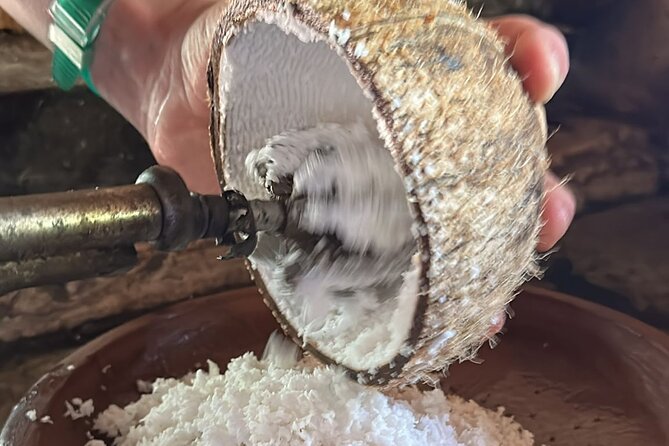
At $28, I consider this a strong value if you want more than a meal. You receive a garden visit, cooking instruction, food, family contact, herbal tea, and a look at traditional kitchen practices in one experience.
The price also compares well with the time involved. For roughly two and a half hours, you are not paying only for a seat at a restaurant. You are helping create several dishes and learning methods you can repeat later. Recipes may also be sent to you after the class, giving the experience some use beyond your time in Sigiriya.
The value depends on your expectations. This is not a luxury food tour, a professional kitchen, or a formal class with polished equipment. The family’s home, basic tools, wood fires, and informal teaching are central to the experience. If you want comfort and precision, spend more on a hotel-based class. If you want local cooking in a real family setting, $28 is sensible.
Who will enjoy this most?
I would choose this class if you like vegetarian food, gardens, local family life, and learning by doing. It also suits couples, solo visitors, and small groups who want an evening activity that feels different from another restaurant meal.
It is a good match for people who want to understand Sri Lankan food rather than simply eat it. You learn why the ingredients matter, how spices are handled, and how several dishes are placed together at the table.
Families should confirm the arrangements and task suitability before booking, since the available information does not state a minimum age or special child program. Anyone with mobility, dietary, or allergy concerns should also contact the provider ahead of time, as no detailed accessibility or dietary policy is supplied.
You may want a different activity if you dislike heat, smoke, outdoor cooking, shared tasks, or informal home settings. The class is also not the best choice if you need a guaranteed menu. The family cooks with garden produce, so the dishes can change.
Small practical tips for a better visit
Bring your own drinking water. Bottled water is listed as included, but the reports are not consistent, and staying hydrated is an easy precaution.
Wear clothes and shoes you can use around a garden and cooking fire. The setting is traditional and practical, so avoid anything you would not want near food preparation or smoke.
Tell the family about dietary needs before the class. The food is heavily plant-based, but the available information does not promise substitutes for every allergy or restriction.
Keep the rest of your evening flexible. The official duration is about two and a half hours, but preparation, eating, and transport may take longer.
If you want to buy homemade spices, ask Kumara during the visit. The family makes spices available for purchase, but no fixed product list is provided.
Should you book Kumara and his family?
I would book this if your ideal Sigiriya evening includes garden produce, wood-fire cooking, several curries, and time with a welcoming local family. The 5 out of 5 rating from 651 ratings and 99 percent recommendation support the experience’s strong reputation, but the real reason to choose it is its hands-on, home-based format.
Before confirming, ask two questions: Is the session private or shared, and will bottled water or tuk-tuk transport be provided that day? Once those details are clear, this is an easy pick for a genuine Sri Lankan food experience at a fair price.
FAQ
Where does the cooking class take place?
The class takes place at Organic Cooking Class Sigiriya, 284 Kahatagahayaya, Kalapuraya, Sigiriya 21120, Sri Lanka.
How long does the experience last?
The stated duration is approximately two hours and 30 minutes. One account describes the full activity as taking about three hours, so allow extra time.
What food will I prepare?
The menu can include several Sri Lankan curries, dhal, eggplant, pumpkin, sweet potato, sambal, rice, coconut roti, string hoppers, and dessert. The exact dishes can vary.
Is the food organic?
The family grows garden vegetables, herbs, and spices, and the class is presented as fully organic. Many of the ingredients used for the meal come from the family garden.
Is the class vegetarian or vegan?
The dishes described are plant-based, and several accounts specifically mention vegan recipes. Contact the family if you need confirmation for a particular dietary requirement.
Who teaches the class?
Kumara leads the class with his wife Thanuja and other family members. They teach the garden, spice preparation, cooking, and traditional table arrangement.
Is bottled water included?
The tour information lists bottled water and herbal tea. However, one account says bottled water was not provided and recommends bringing your own, so carrying water is advisable.
Can I cancel for a full refund?
Yes. You can cancel at least 24 hours before the start time for a full refund. Cancellations and changes made less than 24 hours before the start time are not refunded or accepted.
What happens if the weather is poor?
The class requires good weather. If it is canceled because of poor weather, you are offered another date or a full refund.
More workshops and classes in Sigiriya & Dambulla
- Malee Cookery Lessons
★ 5.0 · 26 reviews - Sri Lanka Cooking Class with Granny
★ 5.0 · 587 reviews - Galle: Traditional Gems & Jewellery Workshop with Transfers
★ 4.9 · 539 reviews - Kandy Village Cooking Class
★ 5.0 · 536 reviews
More Cooking Classes in Sigiriya & Dambulla
- Organic Cooking Class with Garden Visit by Sinhagiri
★ 5.0 · 65 reviews - Organic Cooking Class Sigiriya TASTY TASKS
★ 5.0 · 17 reviews - Sri Lankan Privet Cooking Class with Lunch
★ 5.0 · 12 reviews - Ella: Traditional Sri Lankan Cooking Class
★ 4.9 · 788 reviews
Recently listed around Sigiriya & Dambulla
- Minneriya National Park Safari in a 4×4 Vehicle★ 4.5 · 10 reviews
- Sigiriya Village Tour and Lunch with Hotel Pick up from Sigiriya★ 5.0 · 10 reviews
- Wasgamuwa: Wasgamuwa National Park Private 3-Hour Safari★ 4.9 · 10 reviews
- Small Group Sigiriya Village Tour with Typical Lunch★ 4.0 · 10 reviews
- Kandy: Sigiriya, Dambulla & Wildlife Safari Private Tour★ 4.3 · 10 reviews
- Sigiriya To Kandy Private Transfer: Visit Dambulla Temple★ 4.9 · 11 reviews
- Sigiriya: Sunrise or Sunset Kayaking Tour★ 4.8 · 11 reviews
- Kandy To Sigiriya Drop Tour- – Private Tour★ 5.0 · 11 reviews
Sigiriya & Dambulla Tours, compared.

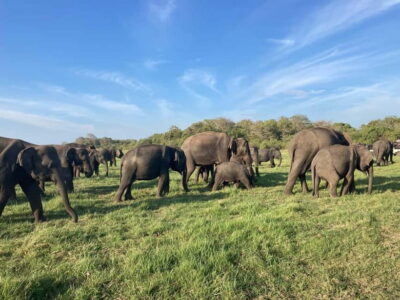
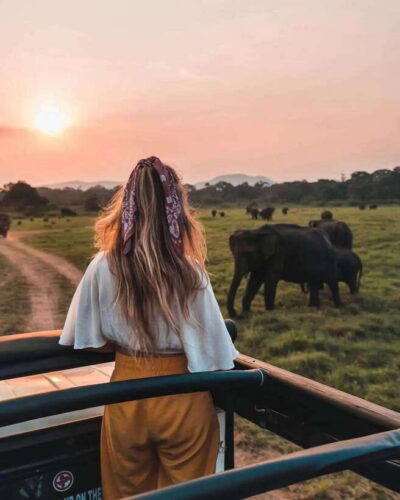

Private Jeep Safari at Minneriya National Park to Visit Elephants
Read our review →

Sunrise or Sunset Hike Pidurangala Rock with Scenic Views
Read our review →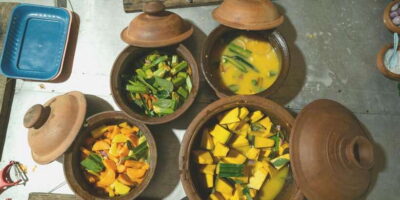
Cooking Class: Sajee’s Place Cooking Class sigiriya
Read our review →Browse the lists this tour appears in