
Reviewed · ANURADHAPURA TOURS
Private City Day Tour in Anuradhapura
Anuradhapura is too spread out to see well on foot in half a day, and its enormous stupas can blur together without context. This private tour fixes that with a personal guide, driver, and tuk-tuk transport linking 12 important sites across the ancient city.
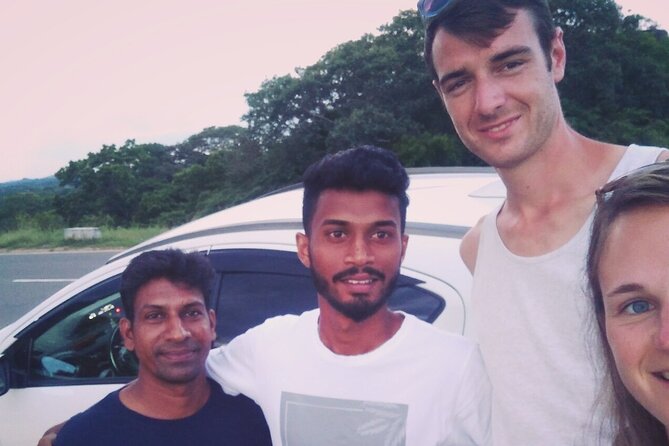
I like the personal pace and the way guide Navin explains both Anuradhapura’s past and living Buddhist traditions. I also like the practical tuk-tuk format: you spend your energy looking at ruins, not finding your way between them.
The main catch is cost clarity. The tour is advertised at $30 per person, but the old-city entrance fee is another $30 per person and must be paid on-site. You also cover a lot of ground in four to five hours, so this is a highlights tour rather than a slow archaeological study.
Key points at a glance
- Twelve major sites in one half-day: You visit stupas, temples, royal-era baths, guardstones, and the sacred Bodhi tree.
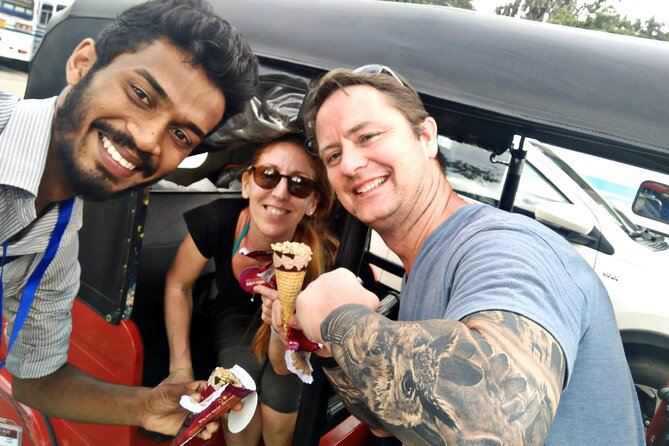
- Navin leads the tour: Expect clear explanations of Buddhism, Sri Lankan culture, and Anuradhapura’s long royal past.
- Private tuk-tuk transport: Your group travels together with a personal guide and driver instead of joining a large coach.
- Hotel pickup is offered: The tour begins and ends in Anuradhapura, making it easy to fit into a stay in town.
- Plan for bare feet: Shoes are not permitted at the temples, and thick socks help when the paving is hot.
- Entrance fee is extra: Allow $30 per person for the old-city ticket, payable by cash or card.
Why Anuradhapura works best with wheels and a guide
Anuradhapura was one of Sri Lanka’s ancient capitals, and its sacred area is not a compact old town. Important monuments are scattered through a broad zone of trees, paths, ponds, and archaeological remains. You can visit independently, but arranging transport and working out what each site means takes time.
This tour gives you a private vehicle, a driver, bottled water, and a licensed guide for roughly four to five hours. The transport has commonly been a tuk-tuk, which suits Anuradhapura well. It is easier to move between stops than walking, while still giving you a close feel for the quiet, leafy center.
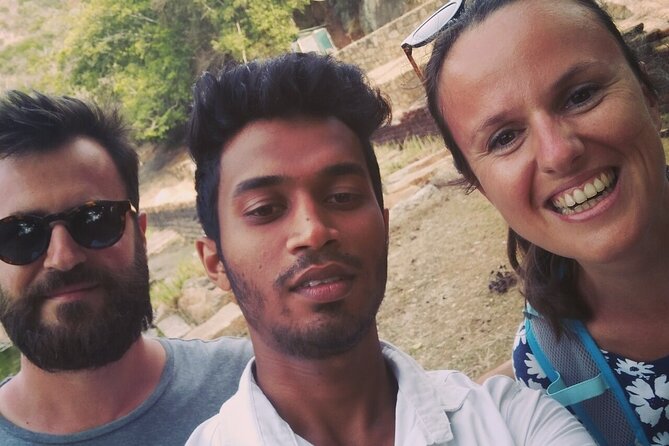
Navin is the guide named for this experience. His strength is explaining religion and history in plain language, then answering questions rather than reciting a fixed speech. You can ask about Buddhism, ancient kings, architecture, Sri Lankan culture, or practical travel matters, and the tour is designed to move at your group’s pace.
The format is especially useful if you have only one afternoon or morning in town. It is also a good choice for families, couples, and small groups who prefer conversation over a large organized outing. One family found that Navin could keep children interested and explain complex subjects in a way they could follow.
More ancient city days:
- Explore & Ride the history of anuradhapura with Vogel Tours
★ 5.0 · 62 reviews - Delve Into Ancient Anuradhapura with Optional Visit to Mihintale
★ 5.0 · 42 reviews - Anuradhapura Private Ancient City Day Tour
★ 5.0 · 39 reviews
Jaya Sri Maha Bodhi, Anuradhapura’s living center
The first stop is Jaya Sri Maha Bodhi in Mahamewna Gardens. This sacred fig tree is regarded as the closest living link to Gautama Buddha. Its importance is not only botanical or historical. It is an active place of devotion, and the atmosphere depends as much on worshippers and offerings as on the tree itself.
You get about 25 minutes here, enough to see the site and listen to an explanation of its place in Sri Lankan Buddhism. Navin’s background in Buddhist philosophy adds value at this stop because the meaning of the tree is not obvious from a quick look.
Keep your expectations realistic. You will not have unlimited time for quiet observation or photography, especially if you want to cover every stop. The admission ticket is not included, and the old-city entrance fee applies separately.
Brazen Palace and the scale of ancient monastic life
Near the Bodhi tree, you visit the remains of Brazen Palace, also called Lowamahapaya. King Dutugemunu built this nine-story monastic structure in the second century BC. It is said to have included a refectory, assembly hall, and chapter house.
Today, the surviving stone columns give only an outline of the original building. That can make this stop seem less dramatic than a giant stupa, but it helps you picture Anuradhapura as a major religious and political center rather than a collection of isolated monuments.
The allotted 25 minutes works well for a guided explanation and a short walk around the remains. Without a guide, rows of columns can be hard to interpret. With Navin, the site becomes a useful lesson in how large Buddhist monasteries were organized.
Ruwanwelisaya, the monument that fills the view
Ruwanwelisaya is one of Anuradhapura’s most famous stupas. King Dutugamunu began it in the second century BC, and it was completed by his younger brother. Its bright white form and rounded dome make it one of the city’s most immediately impressive sights.
This is a sacred religious site, not simply an ancient structure to inspect and leave. You may see people praying, walking around the stupa, or making offerings. The visit is more rewarding if you slow down, watch what is happening, and let Navin explain the Buddhist meaning behind the architecture.
You will need to remove your shoes at temple areas. One useful tip from the experience is to bring thick socks, or even two pairs, because stone paving can become very hot under the Sri Lankan sun. That small preparation can make a big difference.
A few more Anuradhapura days to line up
- Minneriya National Park Elephant Jeep Safari Private Tour
★ 5.0 · 68 reviews - Minneriya National Park | Private Safari
★ 5.0 · 59 reviews - Sigiriya Hike & Minneriya Safari Private Full Day Tour
★ 5.0 · 56 reviews - Sigiriya & Habarana: Sunrise Hot Air Balloon Ride Experience
★ 5.0 · 47 reviews
Abhayagiri Stupa and Anuradhapura’s former power
Abhayagiri Stupa gives you a sense of the scale ancient builders achieved. At about 122 meters, it was once the tallest stupa in the world and the third-tallest structure of any kind when built under King Mahasena between AD 273 and 301.
The monument has changed over time, and its brick surface is not as smooth or polished as the white stupas you may see elsewhere. That is part of its appeal. The size is easier to appreciate from a distance, while a guide helps connect the monument to the wider monastic complex around it.
The visit is limited to about 25 minutes, so this is not a full exploration of every ruin in the Abhayagiri area. Still, it is enough to see the stupa, hear the key story, and understand why this was once a major center of Buddhist learning and religious life.
Kuttam Pokuna, where stonework becomes the star
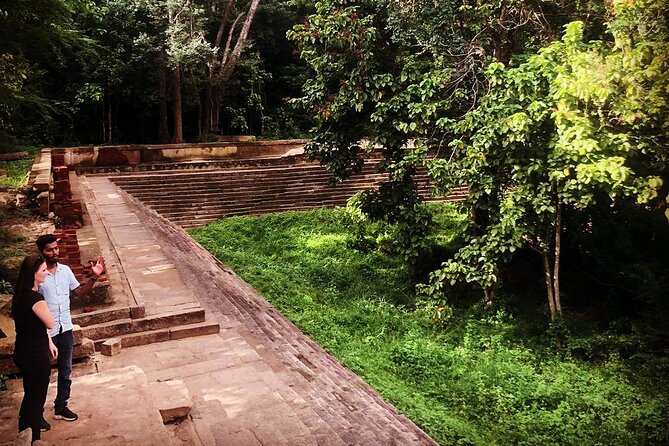
The Twin Baths, or Kuttam Pokuna, are among the best-preserved ancient bathing ponds in Sri Lanka. Built during the Anuradhapura Kingdom, the two pools form part of the Abhayagiri complex.
This stop gives your eyes a break from stupas. The carefully cut stone steps, edges, and channels show a high level of planning and craftsmanship. The pools also remind you that a major monastery needed practical systems for daily life, not only prayer halls and monuments.
The 25-minute visit is enough for photos and an explanation of how the baths fit into the monastic setting. Be mindful of the heat and uneven ground as you walk around. The tour’s private format means you can ask to pause briefly, but the full route still has a firm time limit.
The Samadhi Statue and the quietest pause
The Samadhi Buddha is a famous statue in Mahamevnāwa Park. The Buddha sits in the Dhyana Mudra, the meditation posture associated with his first meditation.
Compared with the huge stupas, this is a smaller and more intimate stop. It gives Navin a chance to explain Buddhist ideas through posture and expression rather than only through dates and royal names. If you have questions about meditation or Buddhist practice, this is a natural place to ask them.
You get around 25 minutes, which should be enough to look carefully at the statue and take in the setting. The value here comes less from a long visit and more from the contrast with the massive monuments elsewhere on the route.
Jethawanaramaya and the engineering of brick
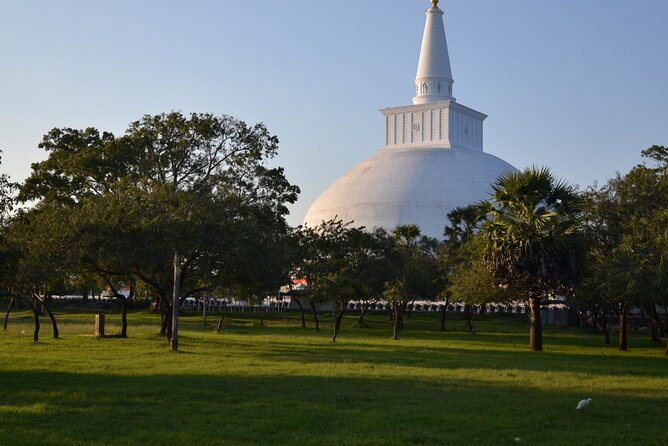
Jethawanaramaya is another of Anuradhapura’s great stupas. Built during King Mahasena’s reign, it once rose more than 120 meters and ranked among the tallest brick structures in the world.
Its huge brick body makes it feel different from the gleaming white Ruwanwelisaya. The monument reflects both religious ambition and serious engineering skill. You can look at it as a sacred object, an archaeological site, or a record of what ancient builders could accomplish with brick and labor.
A 25-minute stop lets you see the main monument and receive the essential explanation. If you want to linger at every angle, this tour may feel quick. If your aim is to understand the city’s main landmarks in a single outing, the timing is sensible.
Moonstones, guardstones, and small details worth noticing
The Sandakada Pahana, or moonstone, is a carved semicircular stone usually placed at the base of a staircase or entrance. These stones are a distinctive feature of ancient Sri Lankan architecture, and their detailed designs reward a closer look.
The nearby Rathna Prasadaya and guardstone area continues that lesson. Over time, builders used stone instead of wood for guardstones, moonstones, and balustrades because stone lasted longer. These pieces may not command the same attention as a giant stupa, but they reveal how much thought went into thresholds and entrances.
This is where a guide earns his keep. On your own, you might walk past a moonstone in seconds. Navin can point out what to look for and explain how these architectural details relate to the wider religious setting.
Eth Pokuna, an ancient pool on a massive scale
Eth Pokuna, or Elephant Pond, is a very large ancient reservoir associated with the Anuradhapura Kingdom. It measures about 159 meters long and 52 meters wide.
The scale is the key feature here. This is not a small ornamental pool. Its size helps you understand the resources and organization required to support a large royal and monastic center. It also adds variety to the route, moving you away from enclosed temple spaces and toward monumental infrastructure.
You receive roughly 25 minutes at the site. The pond is best appreciated as part of the city’s wider system of water management and daily life. Navin’s explanations connect the practical function of the pool with the religious complex around it.
Thuparama, Sri Lanka’s oldest stupa
Thuparamaya is considered the oldest stupa in Sri Lanka, dating to the third century BC. King Devanampiya Tissa built it to enshrine the Buddha’s sacred collarbone relic.
Its importance comes from both age and religious association. By this point in the tour, you will have seen enormous later stupas, so Thuparama provides a useful comparison. It shows how the city’s sacred architecture developed across centuries.
The stop lasts about 25 minutes and is enough for a focused visit. As with the other religious sites, you should expect to remove your shoes. Bring water, take care on hot paving, and listen for the differences Navin draws between the monuments.
Isurumuniya Temple and carved stone
The final listed stop is Isurumuniya Temple, a rock temple built in the third century BC. It is known for intricate stone carvings and was originally a sanctuary for Buddhist monks.
This is a fitting finish because it combines rock, sculpture, religion, and early monastic history in one place. After a route dominated by enormous stupas, Isurumuniya brings your attention back to craftsmanship and smaller details.
You have about 25 minutes here. That may be enough for a first visit, but not for a slow study of every carving. The tour ends back at the meeting point in Anuradhapura, so you can continue your plans afterward.
What Navin adds to the experience
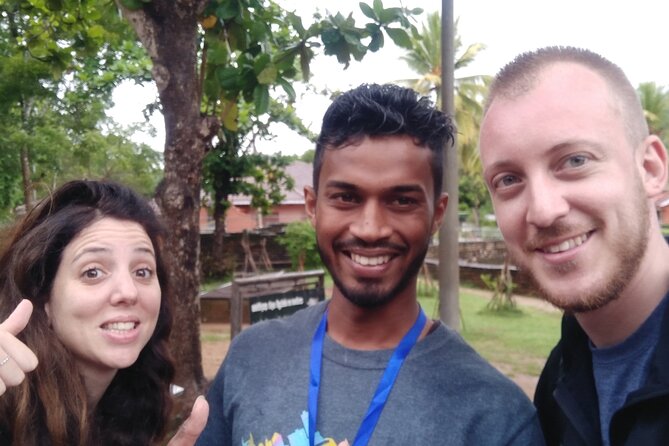
The strongest part of this tour is the guide’s role. Navin is described as friendly, lively, attentive, and easy to talk with. His English is strong enough for detailed questions, and he mixes historical explanation with stories about Buddhism, Sri Lankan culture, and everyday life.
That balance matters. A guide who only lists dates can make Anuradhapura feel like a long sequence of names. Navin’s approach is more conversational, with room for humor and questions. Some visitors even received onward travel tips, and one group continued to a local lunch recommendation after the tour.
The private setup gives you more control than a shared group. You can ask for more explanation at a favorite site, move along when you have seen enough, and keep the conversation suited to your interests. The route itself is busy, though, so do not expect unlimited time at all 12 stops.
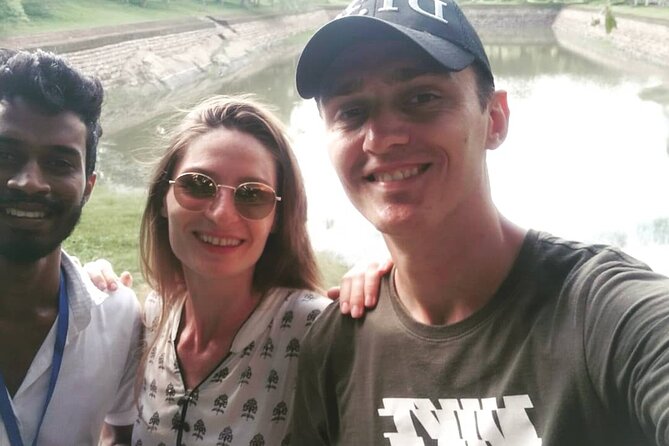
There is also a personal touch to the tuk-tuk transport. One child was allowed to sit next to Navin, and another group received a short lesson before getting to drive the tuk-tuk. Treat that as a possible courtesy rather than a guaranteed part of the tour, since it is not listed as an included feature.
Is $30 a good value?
The $30 tour price is reasonable for a private half-day outing that includes transport, a professional licensed guide, and bottled water. Hiring separate transport and arranging explanations at 12 sites could be more trouble, even before considering the time lost to navigation.
The important detail is the extra entrance fee. The old-town ticket costs $30 per person and is paid on-site by cash or card. That makes the real minimum cost $60 per person before any optional food or other spending.
I still see good value here if you want a focused introduction to Anuradhapura. You are paying not only for a vehicle but also for the ability to ask questions and understand what you are seeing. If you already know the city well and prefer to spend hours photographing one monument, a private guide covering 12 stops may feel too fast.
Timing, comfort, and who should book
The tour lasts approximately four to five hours. Morning departures can be a smart choice because the heat and crowds may be lighter, though the exact conditions can vary. Comfortable clothing, water, and thick socks are practical choices because shoes are not allowed at temple sites and the paving can become hot.
Hotel pickup is offered for convenience, and the tour begins and ends in Anuradhapura. Confirmation is provided at booking, and service animals are allowed. The activity is private, so only your group participates.
I would recommend it most strongly to:
- First-time visitors with limited time in Anuradhapura
- Couples or families who want their own guide and vehicle
- People curious about Buddhism and Sri Lankan culture
- Anyone who wants the major sites explained rather than simply photographed
- Parents who need a flexible, engaging guide for children
I would hesitate only if you want a full-day archaeological study, a very slow pace, or complete independence. Twelve stops in four to five hours means you will see the highlights, not every corner of the ancient city.
Free cancellation is available up to 24 hours before the start time for a full refund. Changes or cancellations made inside that window are not refunded, and poor weather or failure to meet the minimum number of participants can lead to a new date or full refund.
Should you book this Anuradhapura tour?
Book it if you want to make sense of Anuradhapura quickly and prefer a friendly private guide to a self-guided circuit. Navin’s ability to explain Buddhism, history, and culture in a relaxed way is the main reason this experience feels more personal than a basic car ride between ruins.
Go in knowing that the old-city entrance ticket costs another $30 per person and that the schedule is brisk. Pack thick socks, start early if possible, and treat the 12 stops as an introduction rather than the final word on Anuradhapura. For a first visit, that is a sensible trade.
FAQ
How long does the private Anuradhapura tour last?
The experience lasts approximately four to five hours.
What sites are included?
The route includes Jaya Sri Maha Bodhi, Brazen Palace, Ruwanwelisaya, Abhayagiri Stupa, Twin Baths, the Samadhi Statue, Jethawanaramaya, a Sandakada Pahana moonstone, Rathna Prasadaya and its guardstone, Eth Pokuna, Thuparamaya, and Isurumuniya Temple.
Is hotel pickup available?
Yes. Hotel pickup is offered, and the activity ends back at the meeting point in Anuradhapura.
Is the old-city entrance fee included?
No. The old-town entrance fee is paid on-site and costs $30 per person. Payment can be made by cash or card.
Is this a private tour?
Yes. Only your group participates, with private transportation, a professional licensed tourist guide, and a driver.
Can I cancel for a full refund?
You can cancel at least 24 hours before the experience begins for a full refund. Cancellations or changes made less than 24 hours before the start time are not refunded.
Recently listed around Anuradhapura
- Yala National Park: 7 hours or 12 hours Leopard Wild Safari★ 4.7 · 11 reviews
- Hurulu Eco Park: 3-Hour Morning or Evening Safari★ 4.9 · 11 reviews
- Minneriya National Park : Private Safari★ 4.9 · 11 reviews
- Minneriya National Park 4×4 jeep Safari Include Entrance Fee★ 4.8 · 12 reviews
- Safari Adventure in Minneriya national Park Sri Lanka★ 5.0 · 13 reviews
- Day Tour from dambulla to Sigiriya & Polonnaruwa★ 5.0 · 13 reviews
- Private Day Trip to Sigiriya , Dambulla and Pidurangala Rock★ 4.5 · 14 reviews
- Day tour trips from Anuradhapura to multiple cities as your choice★ 5.0 · 14 reviews
Anuradhapura Tours, compared.
Minneriya National Park Elephant Jeep Safari Private Tour
Read our review →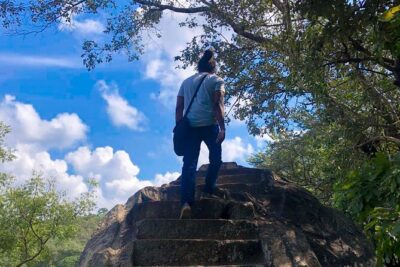
Explore & Ride the history of anuradhapura with Vogel Tours
Read our review →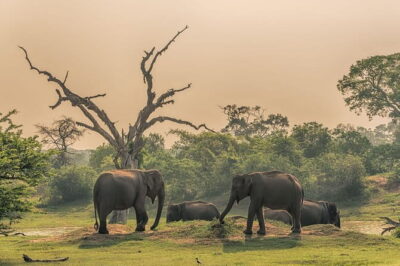
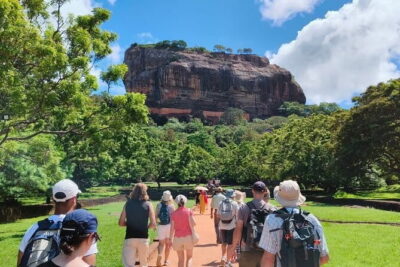
Sigiriya Hike & Minneriya Safari Private Full Day Tour
Read our review →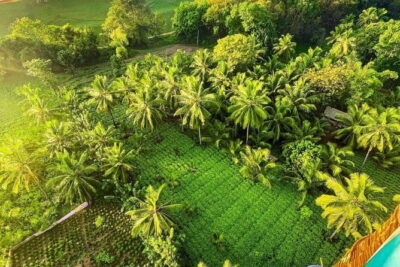
Sigiriya & Habarana: Sunrise Hot Air Balloon Ride Experience
Read our review →
Minneriya National Park Safari – Private Jeep with Hotel Pickup
Read our review →
Delve Into Ancient Anuradhapura with Optional Visit to Mihintale
Read our review →
Browse the lists this tour appears in