
Reviewed · ELLA TOURS
Ella: Sri Lankan Cooking Class with Neranji at Homestay
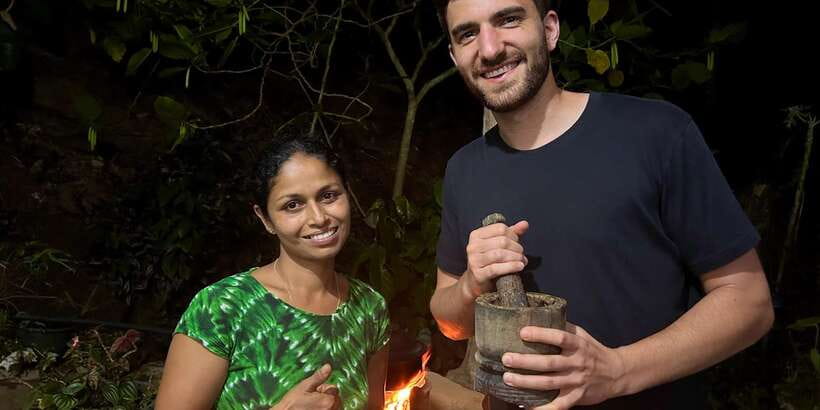
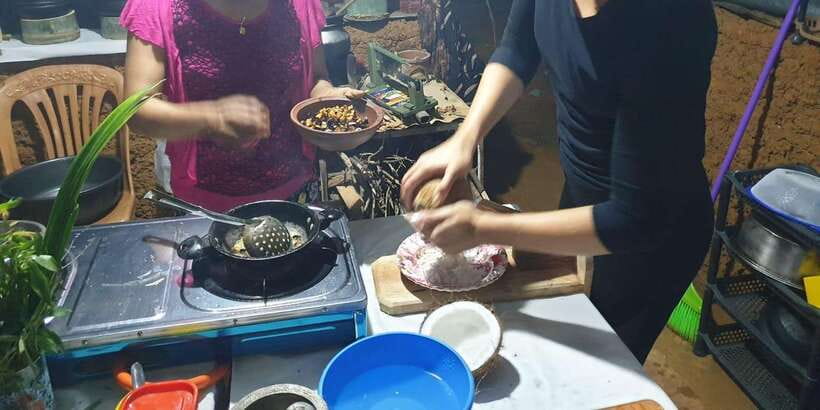
The best part of this Ella cooking class is that you work in Neranji’s home kitchen, not a polished hotel classroom. You learn by chopping, stirring, grinding spices, cleaning rice, and making coconut milk, then sit down to eat the feast you helped prepare. I like the seasonal ingredients and the chance to learn old cooking methods alongside practical shortcuts for a home kitchen.
I also like that Neranji adjusts recipes to your spice preference and explains how to replace local ingredients with items found in Western supermarkets. The main consideration is that this is a shared, hands-on class rather than a private lesson, and the group size can vary, so check the current arrangement when booking. People with food allergies should not book this activity.
Key points at a glance
- Cook in Neranji’s home kitchen: The setting gives the class a personal, family-run feel.
- Learn more than recipes: Neranji covers spices, coconut milk, traditional tools, and older cooking methods.
- Choose your menu: Options include dhal, potato, pumpkin, fish, chicken, jackfruit, banana flower, sambols, salads, papadom, and roti.
- Eat what you prepare: The class ends with a full Sri Lankan meal, making the $19 price especially good value.
- Take the lesson home: You receive recipes and special spices or ingredients to help recreate the dishes later.
- Plan special dishes early: Banana flower, jackfruit, mango, sweet onion curry, and coconut roti need advance ingredient planning.
What this Ella cooking class is really like
This is a 2 to 3 hour introduction to Sri Lankan home cooking, led by Neranji at her homestay in Ella. The emphasis is on participation. You do not simply watch a chef prepare a plate while someone explains the steps. You help make the meal.
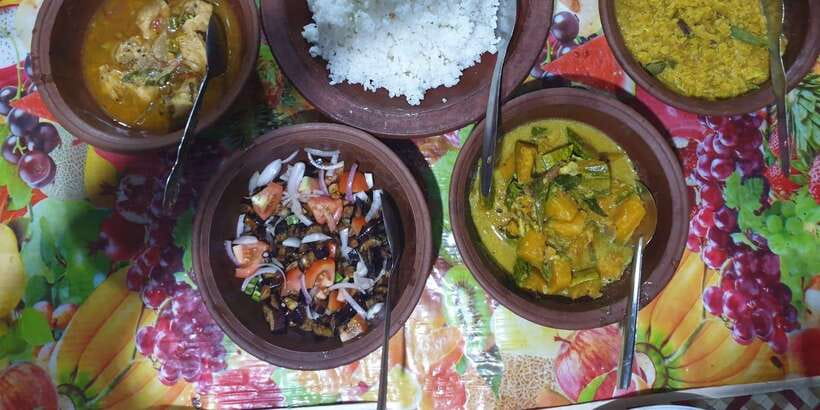
The class is built around the foods Sri Lanka does especially well: several small curries, fresh sambols, eggplant salad, papadom, and roti. The exact combination can vary according to seasonal produce and the option you choose. That flexibility is useful because it lets you focus on food you are most likely to cook again at home.
Neranji’s teaching style is clear and patient. English and Sinhalese are offered, and the practical nature of the lesson makes it easy to follow. You can ask questions as you go, rather than trying to remember them during a long demonstration.
The setting matters. A homestay kitchen offers a closer look at ordinary Sri Lankan food preparation than a restaurant meal does. You see the tools, ingredients, and methods used in a local family setting. It feels less like a performance and more like being invited into someone’s daily cooking routine.
More Cooking Classes in Ella:
- Ella: Traditional Sri Lankan Cooking Class
★ 4.9 · 788 reviews - Ella : Cooking class with amazing Spice Garden Tour
★ 5.0 · 239 reviews - Ella Sri Lanka : Mom’s Kitchen Cooking class
★ 5.0 · 113 reviews
Arriving at the homestay kitchen
Your meeting point can vary depending on the option booked, and transportation to and from the class is not included. That means you should check the confirmed meeting details before setting out. Some sessions finish late enough that transport deserves a little thought, although Neranji’s husband has driven participants back to parts of Ella on some occasions.
The kitchen itself has been described as a cozy outdoor cooking area with a pleasant view. Do not expect a large cooking school with individual workstations. You are visiting a family home, so the atmosphere is informal and shared.
That is one of the strengths of the experience, but it also sets expectations. If you want a private chef lesson with a fixed menu and your own cooking station, this may feel more communal than polished. If you want local contact and a relaxed meal with other people, the format works well.
The activity is listed as a small group limited to 10 participants. One session was described as having 12 people, so the actual number may occasionally be higher. A larger group can mean less individual chopping time, but it also creates a sociable meal at the end. If group size is important to you, ask before booking.
Learning Sri Lankan spices and preparation
Sri Lankan food can look simple on the plate, but the flavor depends on small choices made throughout the cooking. Neranji explains the spices and shows how ingredients are prepared before they reach the pot.
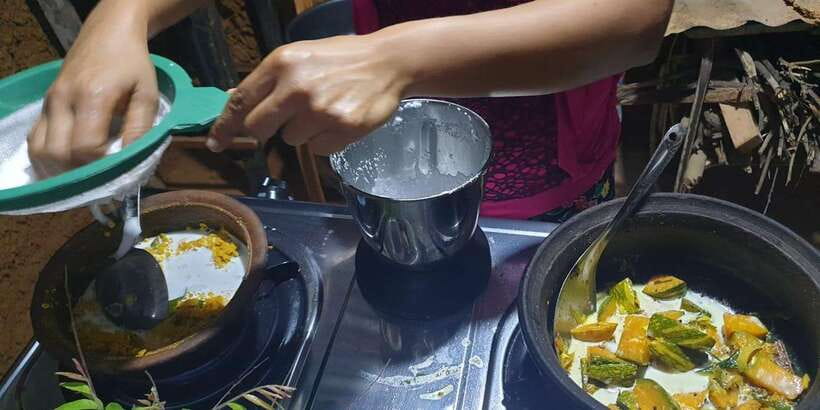
You may learn how to balance seasoning in a dhal, build flavor in a vegetable curry, or use coconut in several forms. A particularly useful lesson is making coconut milk from scratch. This gives you a better sense of why coconut appears in so many Sri Lankan dishes and how it changes the texture of a curry.
The class also covers traditional methods and kitchen tools. One session included cleaning rice and learning older techniques, while still showing how modern equipment can make the process easier. That mix is valuable for home cooks. You gain a sense of the traditional method without being told that you must recreate every step exactly.
Neranji also explains how local ingredients can be substituted with products available in Western supermarkets. This is an excellent detail for anyone who wants to continue cooking after returning home. A recipe that requires one difficult-to-find leaf or fruit is less useful than a recipe that tells you what to use instead.
The food is not treated as a fixed formula. Spice levels can be adjusted to suit the group, which is helpful if you enjoy Sri Lankan flavors but are not used to strong heat. You should still tell Neranji your preferences at the start.
Choosing your curries and side dishes
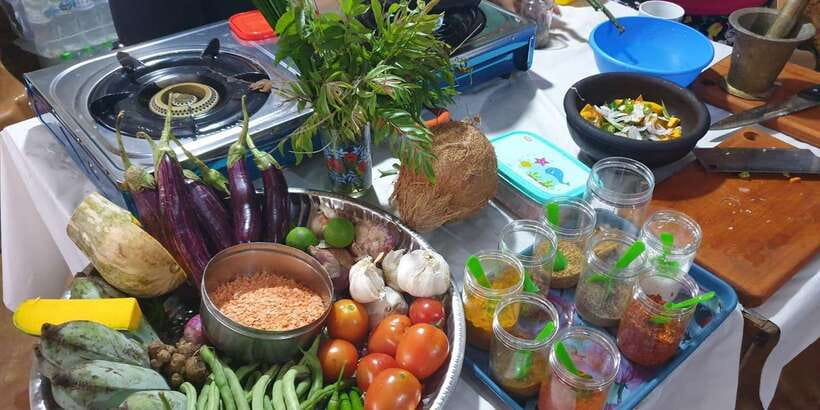
The standard choices cover familiar Sri Lankan favorites. You might prepare potato, dhal, pumpkin, beans, fish, or chicken curry. These are good starting points because they show how the same basic approach can work with different ingredients.
Vegetarians and vegans are welcome, and the menu has plenty of plant-based possibilities. Dhal, pumpkin, potato, beans, eggplant, carrot sambol, coconut sambol, and roti can create a satisfying meal without meat or fish. Tell the host your dietary preference when arranging the class so the menu can be planned properly.
The sides are just as important as the curries. Eggplant salad, papadom, carrot sambol, and coconut sambol bring different textures and levels of freshness to the meal. This is a useful lesson in how Sri Lankan food is served: not as one large dish, but as a collection of small preparations that work together.
Coconut roti is a favorite choice for many participants. It is also a practical recipe to learn because it can be made with fairly simple ingredients. You may prefer this option if you want a hands-on bread preparation rather than another curry.
The special dishes require planning. Banana flower curry, jackfruit curry, sweet onion curry, mango curry, and coconut roti are available by arrangement, but you need to request a special dish at least 24 hours ahead so the ingredients can be organized. Do not wait until you arrive if one of these is the main reason you want to take the class.
More workshops and classes in Ella:
- Ella: First Class Scenic Train Ticket To/From Nanuoya
★ 4.2 · 19 reviews - Organic cooking class sigiriya (kumara & family)
★ 5.0 · 650 reviews - Sri Lanka Cooking Class with Granny
★ 5.0 · 587 reviews - Galle: Traditional Gems & Jewellery Workshop with Transfers
★ 4.9 · 539 reviews
Cooking, eating, and meeting other people
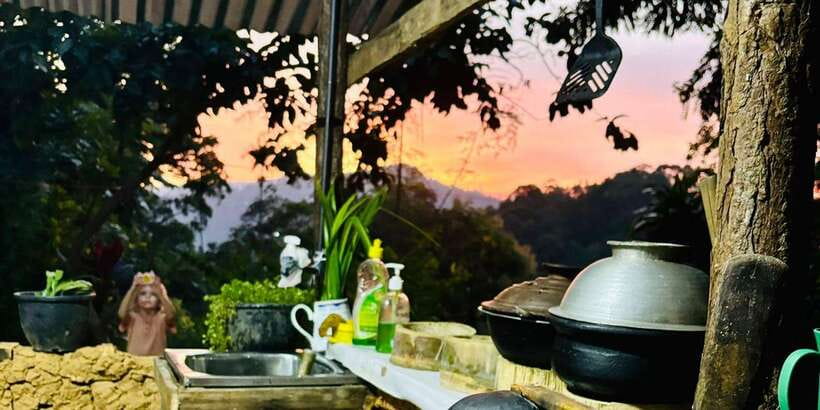
The class leads naturally into a shared meal. Once the curries and side dishes are ready, you sit down and eat what the group has made. This is more than a tasting. You get a proper meal, and the variety of dishes lets you see how the separate recipes fit together.
That meal is a strong part of the value. At $19 per person, you are paying for instruction, ingredients, recipes, spices, and dinner. A restaurant meal might be easier, but it would not show you how the dishes were made or give you skills to use later.
The eating portion also gives the group time to relax. Sessions bring together people staying in and around Ella, and the meal offers an easy way to meet others without forcing a formal social activity. You can talk about the food, compare spice preferences, and share travel plans.
There is a small practical point here: if several groups attend at once, the cooking may feel collaborative rather than highly personalized. Some people will enjoy chopping and preparing together. Others may prefer more direct time with the instructor. The class is best for people who are happy to share kitchen tasks.
The food itself is the most consistently praised part of the experience. Dhal, pumpkin curry, aubergine salad, coconut roti, and mixed rice and curry meals have all been singled out as memorable. That does not guarantee that every dish will suit your taste, but it does show that the class puts real attention on the final meal, not just the lesson.
Recipes, spices, and useful skills to take home
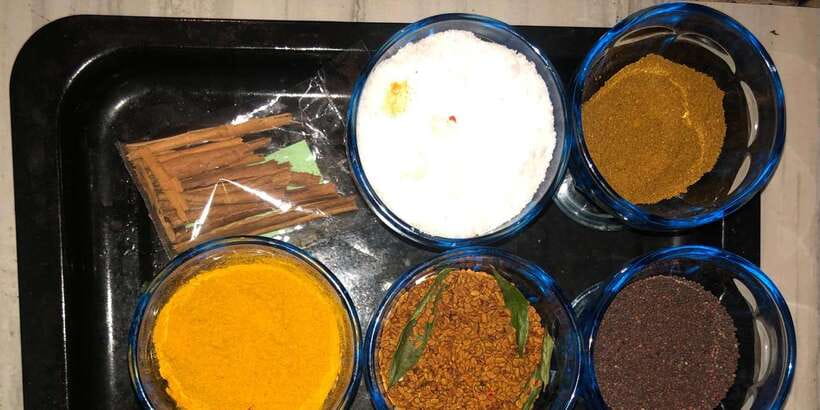
You receive recipes for the dishes prepared during the class. Neranji also shares special spices and ingredients for participants to take home. In some cases, she sends the recipes afterward if you ask.
This follow-up support makes the class more useful than a one-evening activity that ends at the kitchen door. You can note which substitutions work in your own country, ask for a recipe you want to repeat, and try to rebuild the meal while the techniques are still fresh.
The most valuable skill may be learning how to judge flavor rather than memorizing measurements. Sri Lankan home cooking often depends on taste, texture, and timing. Watching Neranji explain these small adjustments can help you cook with more confidence.
You also get context about local ingredients and food traditions. A garden visit has been part of at least one session, with an explanation of what is grown and when it is used. This helps connect the finished curry to the produce and seasons behind it.
If you are an experienced cook, you may find the class useful for its techniques rather than its basic chopping. If you rarely cook, the clear steps and short menu make the lesson approachable. Either way, bring a phone or small notebook if you want to record details, since the pace includes both demonstration and group participation.
Price, timing, and practical value
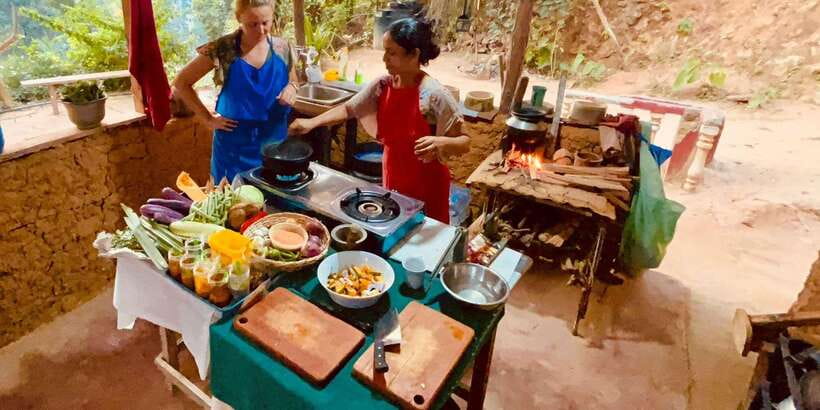
At $19 per person, this is a strong-value activity in Ella. The price covers the cooking class, the prepared dishes, the meal afterward, recipes, and spices or ingredients to take home. It also supports a female-run local business and family homestay, giving your money a direct local connection.
The class lasts 2 to 3 hours. A morning start can lead into lunch, while an afternoon or evening session can finish with dinner. One morning group completed three curries and a salad in time for lunch, while several evening sessions lasted a little over two hours.
The exact starting time depends on availability. If you have a tight sightseeing schedule, allow the full three hours rather than assuming you will be finished quickly. Cooking several curries from fresh ingredients takes time, and the shared meal is part of the experience.
Free cancellation is available up to 24 hours before the activity for a full refund. You can also reserve and pay later, which is handy if your plans around Ella are still changing. Transportation is not included, and the meeting point may differ by booking option, so these are the two details I would confirm first.
Food allergies are listed as a reason not to take this activity. If you have a serious allergy, do not rely on a last-minute adjustment. The class involves a range of spices, coconut, and other ingredients, and the activity is specifically marked as unsuitable for people with food allergies.
Who should book this cooking class
I would recommend this class to anyone who wants more than a quick restaurant meal in Ella. It suits curious eaters, home cooks, families, couples, solo visitors, and people who enjoy meeting others while doing something practical.
It is especially good for vegetarians and vegans because the menu includes many naturally plant-based dishes. It also works for mixed groups, since the menu can include vegetables alongside fish or chicken, and spice levels can be discussed.
Families can benefit from the hands-on format. One family of five found that making several dishes together became a favorite activity during a Sri Lanka trip. Children who enjoy helping in the kitchen may get more from this than from a long cultural talk, although the activity information does not specify a minimum age.
You should think twice if you dislike group cooking, have a food allergy, or want a tightly timed private lesson. The home setting is warm and personal, but it is not designed as a luxury culinary studio.
The class is also a good choice if you are staying in Ella for several days and want a break from walking and sightseeing. Cooking gives you a slower look at local life, and the recipes make the experience useful after your visit.
Final call: book it if food is part of your travel
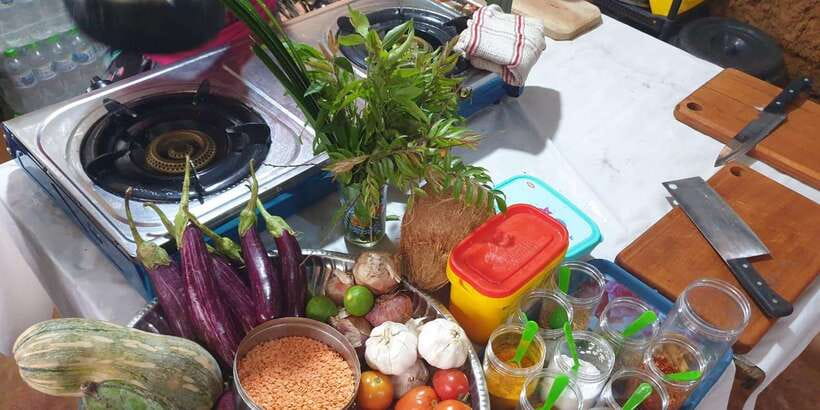
I would book Cook with Neranji if you want to understand Sri Lankan food from the kitchen outward. The combination of fresh seasonal produce, traditional techniques, clear English instruction, a home setting, and a full meal makes the $19 price easy to justify.
Choose your preferred dishes in advance, especially banana flower curry, jackfruit curry, mango curry, sweet onion curry, or coconut roti. Confirm the meeting point, transport plan, and current group size. If you have a food allergy, skip this activity.
For most visitors, the best reason to book is simple: you do not just eat Sri Lankan food in Ella. You learn how to make it, enjoy it with the people in your group, and carry the recipes and spice lessons into your own kitchen.
FAQ
Where does the cooking class take place?
The class takes place in Neranji’s home kitchen at her homestay in Ella. The meeting point may vary depending on the option booked.
How long does the activity last?
The cooking class lasts 2 to 3 hours. Starting times depend on availability.
How much does the class cost?
The listed price is $19 per person.
What food can I learn to cook?
Possible dishes include potato, dhal, pumpkin, beans, fish, or chicken curry, eggplant salad, papadom, carrot sambol, coconut sambol, and coconut roti.
Are special Sri Lankan dishes available?
Yes. Special options include banana flower curry, jackfruit curry, sweet onion curry, mango curry, and coconut roti. You need to request a special dish at least 24 hours before the class so the ingredients can be arranged.
Is the cooking class suitable for vegetarians and vegans?
Yes. The class welcomes vegetarians and vegans, and the menu includes several vegetable, dhal, sambol, salad, and coconut-based dishes.
Is transportation included?
No. Transportation to and from the cooking class is not included.
What languages are available?
The instructor teaches in English and Sinhalese.
How many people can join?
The activity is described as a small group limited to 10 participants. Group size can vary by session.
What is included after the class?
You eat the dishes prepared during the class and receive recipes for the food made. Special spices and ingredients are also included for participants to take home.
Recently listed around Ella
- Ella: Safari Day Trip to Yala & Udawalawe with Lunch★ 4.7 · 10 reviews
- From Galle/Weligama/Mirissa/Tangalle: Day Trip to Ella★ 4.9 · 10 reviews
- Ella: Ravana and Upper Diyaluma Falls Guided Tour★ 5.0 · 10 reviews
- All Inclusive Ella From/To Kandy Scenic Train Journey★ 3.4 · 11 reviews
- From Ella: Shuttle to Tangalle/Hiriketiya with Yala Safari★ 4.8 · 12 reviews
- From Tangalle/Hiriketiya: Ella Transfer & Udawalawe Safari★ 4.7 · 12 reviews
- ELLA Lipton Seat Tea Test & Pluck 9Arch, Waterfalls, & Lunch★ 4.7 · 12 reviews
- From Ella: Tea Adventure in Haputale with Village Lunch★ 4.8 · 13 reviews
Ella Tours, compared.

Drop to Tangalle/Hiriketiya/Mirissa/Galle & Yala Tour
Read our review →
Little Adam’s Peak, Nine Arches Bridge & Waterfalls
Read our review →Drop to Tangalle/Hiriketiya/Mirissa/Galle & Yala Tour
Read our review →
Drop to Tangalle/Hiriketiya/Mirissa & Yala Safari
Read our review →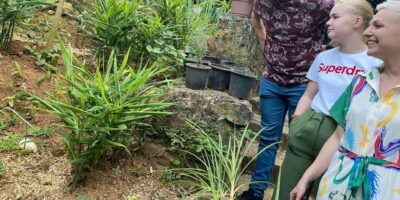
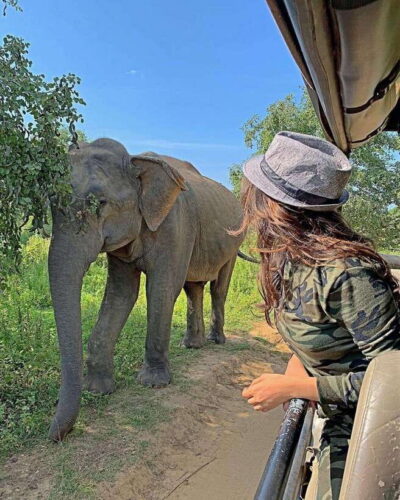
Yala Safari with Tangalle/Mirissa/Galle Drop-off
Read our review →
Ella Rock, 9 Arch, Little Adams Peak, & Waterfall Tour
Read our review →Browse the lists this tour appears in