
Reviewed · GALLE TOURS
Galle: Traditional Sri Lankan Cooking Class
Sri Lankan cooking is best understood at the cutting board, not behind a restaurant table. In this three-hour class near Galle, you work in a local family kitchen, handle the ingredients, learn how spice mixes are made, and eat the meal you helped prepare. Hosts including Malik, his mother, and Manogi are named in the experience details, so the session has a personal, home-based feel.
I like two things right away: the family setting and the chance to taste several dishes rather than one token recipe. Fresh local ingredients, a welcome watermelon juice in at least one session, and buffalo curd with treacle for dessert make this feel like a meal with a story, not simply a cooking demonstration.
The main thing to understand is the pace. You may assist with chopping, shopping, and adding spices while the main cook handles much of the cooking. If you want to prepare every dish alone, step by step, this may feel more like a guided family meal than a formal culinary course.
Key points before you book
- A real home kitchen: You cook in a local family home rather than a purpose-built studio.
- Several dishes in three hours: One session produced eight vegan dishes after a dietary request.
- Spice lessons matter: You learn about ingredients and may help make the spice mixes used in the meal.
- A full meal is included: Your cooking ends with lunch or dinner, plus dessert.
- Private and English-speaking: The class is for a private group, with an English-speaking instructor.
- Plan your appetite: The portions can be generous, so arrive hungry and about 15 minutes early.
A family kitchen near Galle, not a cooking school set
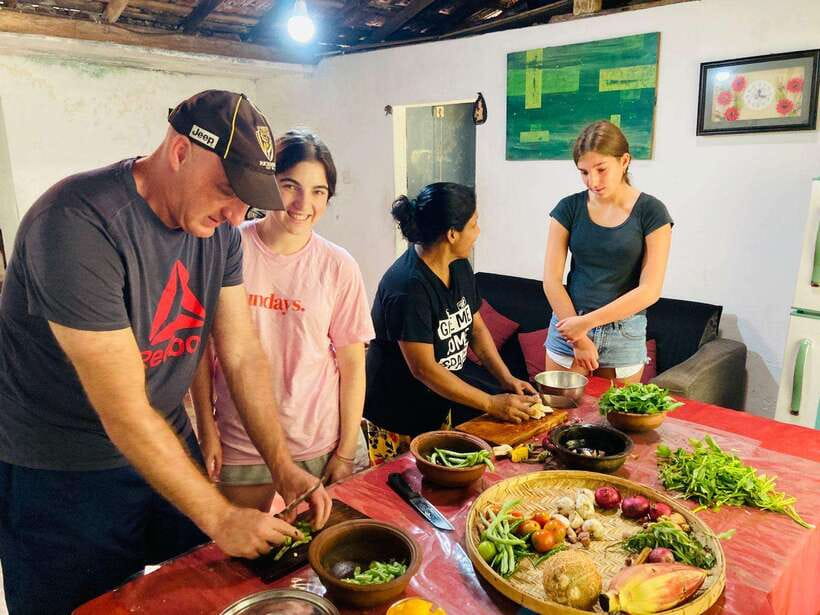
The most appealing part of this class is the setting. You are not led into a polished studio designed to look local. You are welcomed into a family kitchen in Kotapola, where the cooking happens in the household’s own space.
That distinction matters. A studio can be tidy and easy to use, but a family kitchen gives you a better sense of how food is prepared at home. You see the practical rhythm of the room, the way ingredients are handled, and the close link between cooking and hospitality.
The class is described as a Galle experience, while the stated location is Kotapola. Check the exact meeting details before you leave your hotel, especially if you are planning your day around Galle. Hotel pickup and drop-off are not included.
Finding the house may require a little patience. Map directions are said to be the easiest option, and an English-speaking local can give directions by phone if you have trouble. I would save the location in advance, keep your phone charged, and arrive 15 minutes early rather than trying to locate the kitchen at the start time.
More Cooking Classes in Galle
- Sea waves sri lankan cooking class
★ 5.0 · 467 reviews - Galle Unawatuna Cooking Class
★ 5.0 · 142 reviews - Galle Fort cooking class
★ 5.0 · 60 reviews
Your first welcome: juice, introductions, and local context
The session begins with a friendly welcome drink. One participant specifically received refreshing watermelon juice, a small touch that sets the tone for the afternoon.
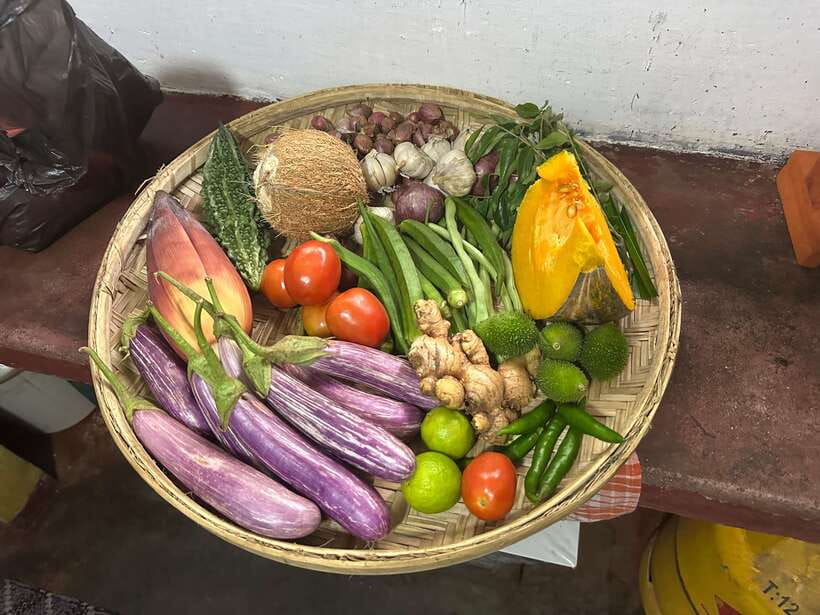
The introduction is not just a quick roll call before the cooking starts. The hosts explain the ingredients and their place in Sri Lankan food. You learn why spices are used, how they are combined, and how tropical vegetables fit into the meal.
The useful part here is the connection between ingredient and culture. Cinnamon, spice blends, vegetables, and other local products are not presented as a list to memorize. They become part of the meal you are about to eat. That makes the lesson easier to remember when you return home and try the recipes again.
The English instruction should make the class accessible to most visitors. Still, home cooking moves quickly, and the balance between explanation and action may vary by host. If you want to ask about a particular spice or technique, ask as you go rather than waiting until the end.
Cutting, seasoning, and the hands-on part
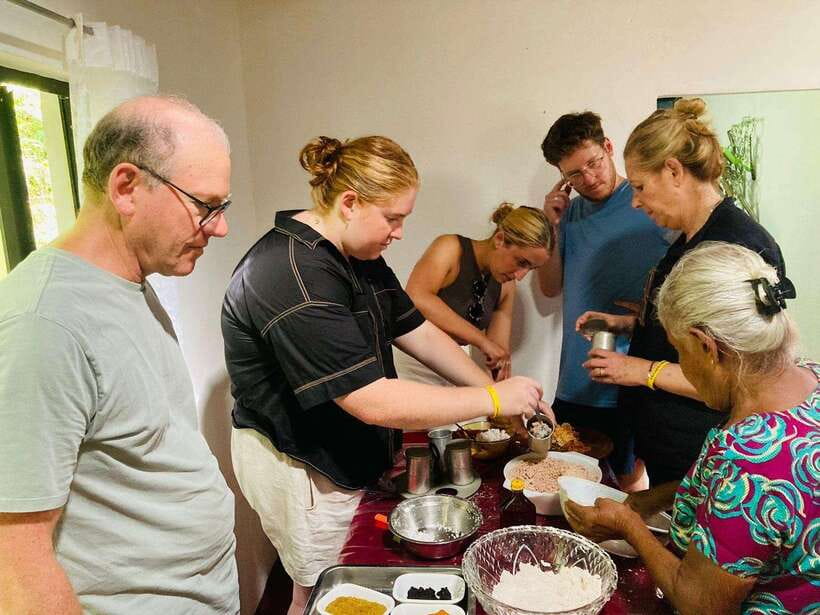
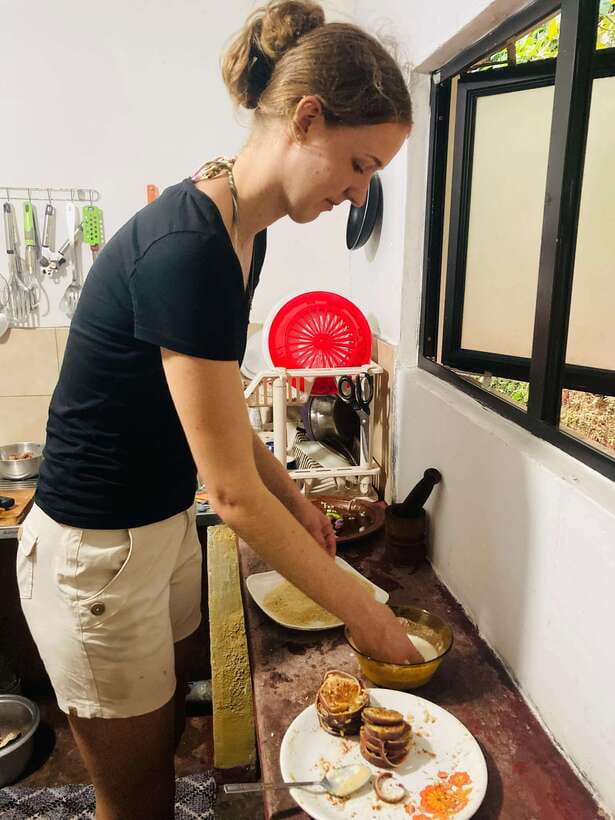
The practical work can include cutting ingredients, helping with shopping, adding spices, and assisting with preparation. You get to handle the food and take part in the process, but you should not assume that you will independently cook every dish from start to finish.
This is the class’s biggest point of difference from a long professional cooking course. The local cook remains in charge of the meal. That approach keeps the session within three hours and allows you to taste a broad spread of food, but it also means the experience is partly demonstration and partly participation.
One session produced eight vegan dishes after the couple requested a plant-based meal. That is a remarkable amount of food for a three-hour class, though it also explains why the work may be divided between you and the host. If every person had to cook eight dishes alone, lunch would arrive very late.
I like this format for visitors who want to understand Sri Lankan home food without spending a whole day in a kitchen. You gain useful skills, see local methods, and still have time for the rest of your Galle-area plans.
For serious home cooks, set expectations clearly. Ask how many dishes you will actively prepare and which steps you will perform yourself. The experience is likely to suit you if you enjoy learning by watching, helping, tasting, and asking questions. It may disappoint you if your main goal is a formal lesson in which you control every pan.
The spice mixes are the real lesson
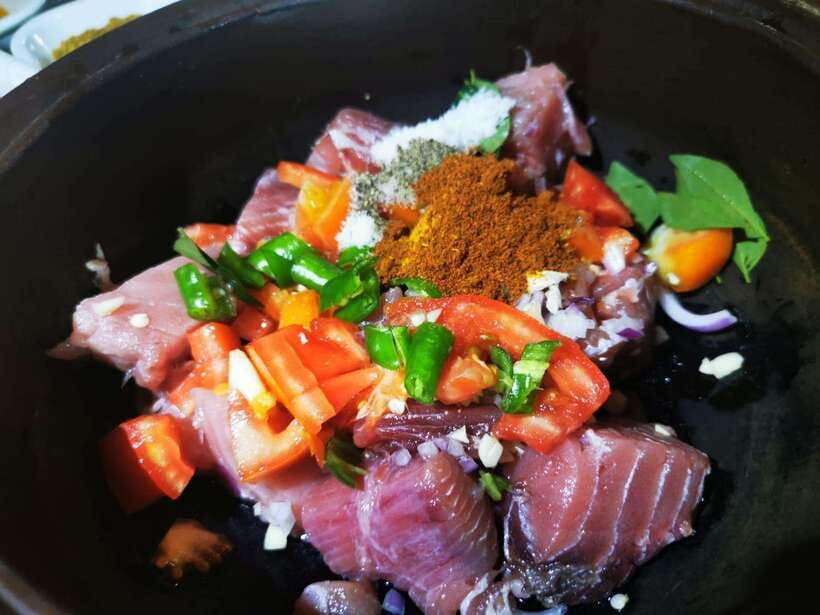
Sri Lankan food is not only about heat. It is about the balance of spices, the way ingredients are prepared, and the timing of each addition. The class gives you a chance to learn about those choices while the meal is being made.
The spice-mix lesson is especially useful. Instead of simply eating a finished curry and trying to guess what went into it, you can see how the seasoning is built. That is the kind of small detail that changes how you cook once you get home.
The hosts also explain the cultural importance of ingredients. You may learn more from a local family about everyday food customs than from a restaurant menu, where the dish arrives with little context.
Do not expect a printed cooking manual unless the host provides one. The information supplied for the class promises practical skills and instruction, but it does not state that written recipes are included. Take notes on your phone if you want to recreate the meal later, while staying attentive to the cooking.
A different sort of day out of Galle:
- Whales and Dolphins Watching-Luxury Super Grade Cruiser(Hotel Pick up offered)
★ 5.0 · 1,268 reviews - Galle: Traditional Gems & Jewellery Workshop with Transfers
★ 4.9 · 539 reviews - Galle Fort Walking tour
★ 4.9 · 285 reviews - Snorkeling with Turtles in Mirissa
★ 5.0 · 268 reviews
A generous meal with vegan options and dessert
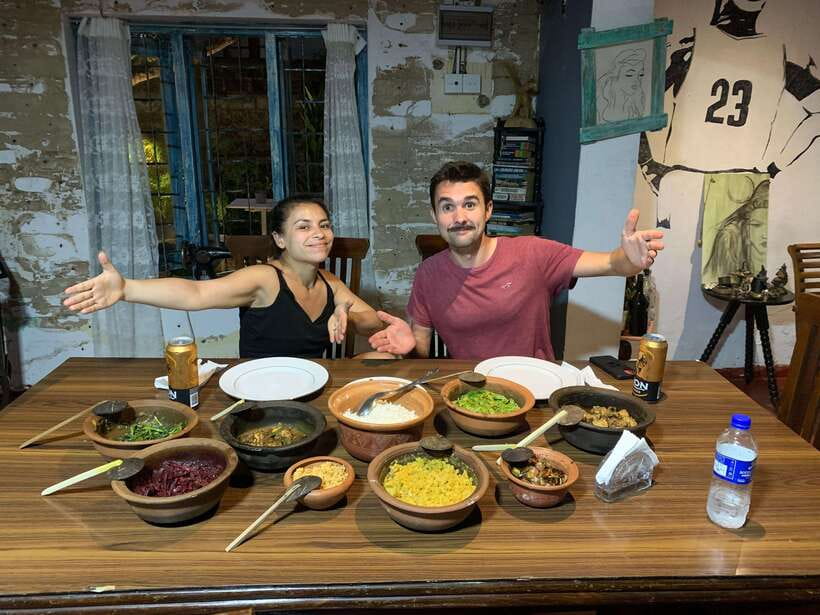
The class includes lunch or dinner made from the prepared food. This is not a small tasting plate at the end. The food can be substantial, and one participant advised arriving without eating breakfast or lunch first because there was so much to enjoy.
The exact menu is not fixed in the supplied details, which is normal for a family cooking session. You should expect traditional Sri Lankan dishes made with fresh local ingredients, but the number and type of dishes can depend on the host and your dietary request.
Vegan cooking is possible with advance notice. A requested vegan menu once included eight dishes, all made with fresh local ingredients. Tell the provider about allergies or dietary restrictions before the session, not when the chopping has already begun.
Dessert is included. Buffalo curd with treacle was served after one class, giving you a taste of a classic Sri Lankan finish that differs from the cakes and ice cream common on many tour menus.
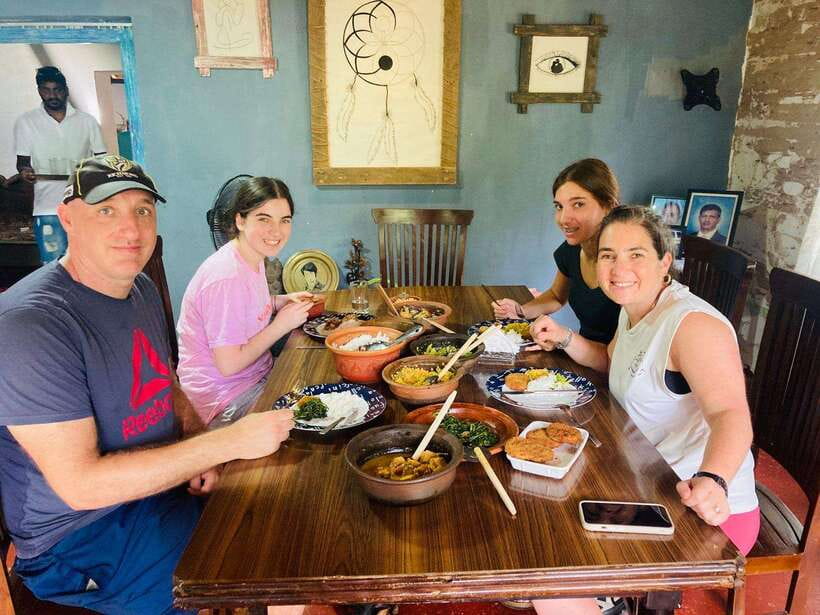
The meal is also where the social side of the activity pays off. You do not simply leave after the final pan is switched off. You sit down with the food, which gives the class the feeling of sharing a household meal.
What the host style may be like
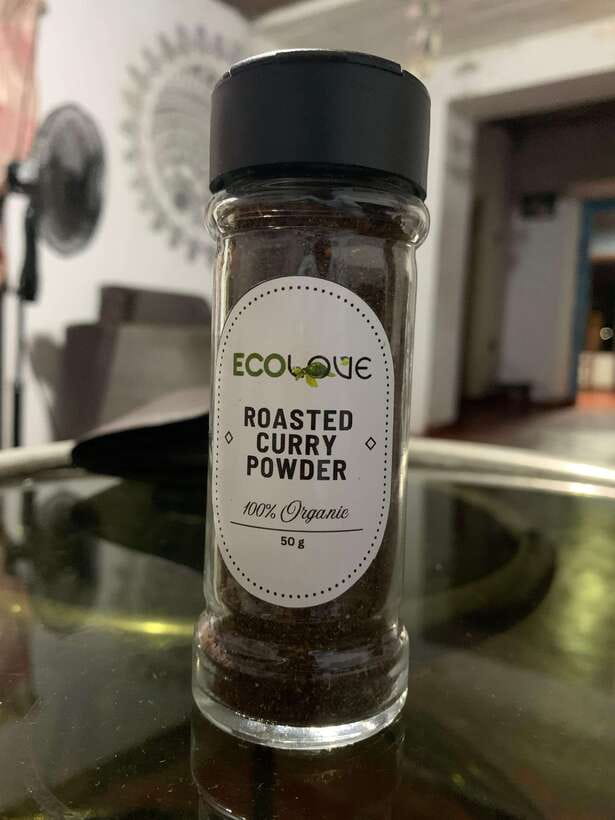
The tone is warm and personal. Descriptions of the hosts include kind, welcoming, and home-like treatment, and that matches the design of the activity: a local family shares its kitchen and food customs with you.
Different sessions may involve different family members. Malik and his mother are named in connection with one class, while Manogi is praised as a skilled chef in another. You might meet one of them or another local host arranged by Ceylon Eco Love Tours.
That variation is worth keeping in mind. A home-based experience is less standardized than a hotel cooking school. The strength is personal contact and a sense of place. The tradeoff is that the pace, menu, and amount of hands-on work may not be identical every time.
The private-group format helps. You do not have to compete with a large class for access to the cutting board or ask questions over a crowd. It also makes the activity a good fit for couples, families, and small groups who want a shared cultural experience.
Price and value at $40 per person
At $40 per person, the value depends on what you want from a cooking class. You receive about three hours of instruction, ingredients, equipment, a welcome drink, a full lunch or dinner, and dessert. You also receive access to a family setting that would be difficult to arrange independently.
For a visitor who mainly wants a cheap meal, this is not the right comparison. A local restaurant will cost less. The price makes more sense when you count the teaching, food preparation, cultural explanation, and time spent with the hosts.
The strongest value comes from the breadth of the meal. If your session includes several dishes, spice-mix instruction, dessert, and a relaxed meal at the end, you get more than a single recipe lesson.
Transport changes the calculation. Hotel pickup and drop-off are not included, so you must arrange your own way to the meeting point. If you are already staying nearby, that is a minor issue. If you are based far from Kotapola, factor in travel time and transport cost before booking.
The booking terms add useful flexibility. You can cancel up to 24 hours before the activity for a full refund, and the reserve-now, pay-later option lets you hold a place without paying immediately.
Who should choose this class?
I would recommend it most strongly to people who care about food as a way to meet local people. You do not need advanced cooking skills. Curiosity and a willingness to help are more important.
It is a good choice for:
- Couples looking for a private activity with a personal feel
- Families who want a meal they prepare together
- Vegetarians and vegans who notify the host in advance
- Food lovers interested in spice blends and local ingredients
- Visitors who prefer a family home to a commercial cooking studio
- Anyone who wants a three-hour cultural activity near Galle
The class may be less suitable for a trained cook who wants precise control over every stage. It may also be a poor fit if you need a tightly timed activity with a fixed menu and guaranteed transport.
Wear comfortable clothes and shoes suitable for cooking. You may be standing, cutting, handling ingredients, and moving around a working kitchen. The activity is listed as wheelchair accessible, but because it takes place in a private home, I would confirm the exact access arrangements before booking if you have specific mobility needs.
Practical planning for the day
Keep the morning or afternoon around the class fairly open. The cooking lasts three hours, but the meeting point and your own transport can affect the total time.
Eat lightly beforehand. You want enough energy for the class, but the prepared meal and dessert can be generous. Arriving hungry is sensible, as long as you are comfortable cooking first.
Tell the provider about allergies and dietary restrictions in advance. Vegan preparation has been accommodated, but advance notice gives the host time to plan the ingredients and menu.
Use the map directions and keep the phone contact available. The meeting information says an English-speaking local can help by phone if you have trouble finding the place. That is useful, but it is still wise to download the location or screenshot the directions before setting out.
The class starts at available times shown during booking. Since hotel transfers are not included, make sure the start time works with your own transport plan.
Should you book the Kotapola cooking class?
Book it if you want a family meal with a cooking lesson attached, rather than a formal culinary course. The private setting, personal hosts, spice instruction, broad menu, and included dessert make this one of the more satisfying ways to connect food with daily life in Sri Lanka.
Go in knowing that the head cook may handle the main work. You will assist, learn, taste, and take part, but you may not cook every dish alone. That is not a flaw if you want a warm cultural exchange. It is an important limitation if you are seeking a rigorous, step-by-step class.
At $40, the experience offers good value for a private three-hour session with food, drinks, equipment, and dessert included. I would book it for couples, small groups, and plant-based eaters who give advance notice. I would also leave room in my appetite and my schedule, because the best part comes when the cooking ends and the whole meal reaches the table.
FAQ
Where does the Sri Lankan cooking class take place?
The stated location is Kotapola, Sri Lanka, in the Galle area. The class takes place in a local family kitchen rather than a commercial cooking studio.
How long does the cooking class last?
The activity lasts three hours.
How much does the class cost?
The price is $40 per person.
Is the cooking class private?
Yes. It is offered for a private group.
Is instruction available in English?
Yes. The instructor language is English, and an English-speaking local can also help with directions by phone.
What is included in the price?
The price includes a local culinary expert, cooking ingredients, equipment, a welcome drink, lunch or dinner with the prepared food, and desserts.
Is hotel pickup and drop-off included?
No. You must arrange your own hotel pickup and drop-off or travel to the meeting point independently.
Can I request vegan food?
Yes. Vegan preparation has been accommodated, but you need to request it in advance.
What should I wear?
Wear comfortable clothing and shoes suitable for cooking.
Is the class wheelchair accessible?
The activity is listed as wheelchair accessible. If you have particular access requirements, confirm the arrangements for the private home before booking.
Can I cancel for a refund?
Yes. You can cancel up to 24 hours in advance for a full refund.
Do I have to pay when I book?
No. The reserve-now, pay-later option allows you to reserve a place without paying immediately.
More workshops and classes in Galle
- Surf lesson in weligama by surf and stay Srilanka .
★ 5.0 · 95 reviews - PRIVATE Surf Lesson for Beginners
★ 5.0 · 80 reviews - Galle: Cooking Class at a Local Home and Market Tour
★ 5.0 · 47 reviews - Galle : Traditional Jewellery making workshop
★ 4.9 · 34 reviews
Recently listed around Galle
- Surfing Lessons at Unawatuna★ 4.5 · 11 reviews
- Sinharaja Rain Forest Tours (Full Day)★ 5.0 · 11 reviews
- Mix it Like a Lankan in Unawatuna★ 5.0 · 11 reviews
- Galle to Colombo Airport Private Taxi 247 Lowest Price Mini Bus, Car, Van★ 4.5 · 11 reviews
- Paradise Turtle Watching Tours★ 5.0 · 11 reviews
- Mirissa/Weligama to Colombo Airport Private Taxi Transfer★ 5.0 · 12 reviews
- Yala National Park Private Safari trip from Galle/Unawatuna/Mirissa★ 5.0 · 12 reviews
- Scuba Diving in Unawatuna★ 5.0 · 12 reviews
Galle Tours, compared.

Whales and Dolphins Watching-Luxury Super Grade Cruiser(Hotel Pick up offered)
Read our review →
Traditional Gems & Jewellery Workshop with Transfers
Read our review →



Galle/Mirissa/Hiriketiya: Drop to Ella & Udawalawa Safari
Read our review →
Browse the lists this tour appears in