
Reviewed · GALLE TOURS
Galle Fort Walking tour
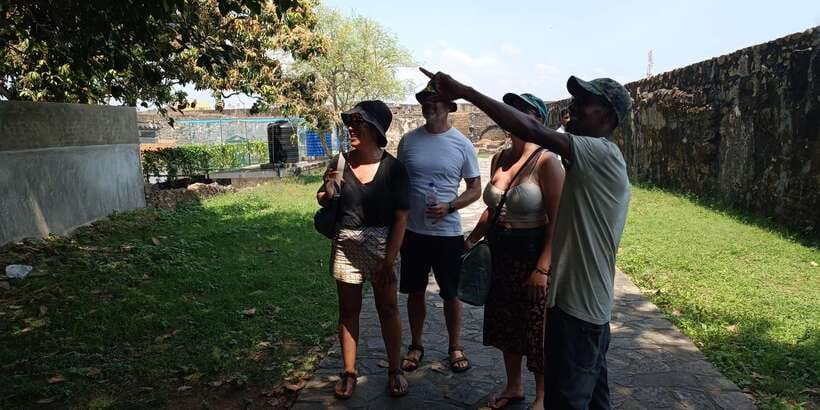
Galle Fort is best understood from its walls. This tour begins near the Clock Tower and Moon Bastion, then follows the ramparts past the Sun and Star Bastions before turning into the old streets. The fort’s stonework is impressive, but the real value is hearing how colonial rule, religion, trade, Sri Lankan politics, and daily life fit together.
I like two things here. First, Madawa Galagedara brings far more than a list of dates, explaining the fort in the wider story of Sri Lanka. Second, the pace is easy and conversational, with room for questions and a sense of humor. The main consideration is the heat: much of the walk is exposed, so morning or late afternoon is the smart choice.
Key Points
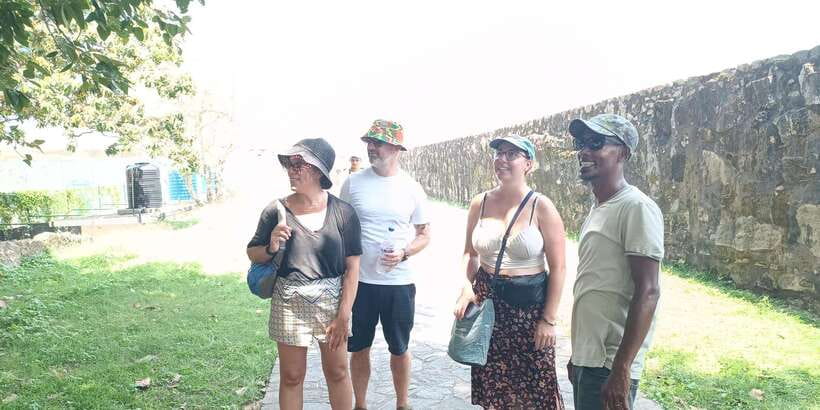
- A 90-minute walk along Galle’s ramparts: See Moon, Star, Sun, and Flag Rock Bastions without rushing.
- Madawa’s wider Sri Lankan context: The conversation can reach culture, religion, politics, economics, and everyday life.
- Colonial buildings with a story: Visit the Dutch Reformed Church, Dutch Hospital, cinnamon store, court square, and Amanhalla hotel.
- A useful late-afternoon option: A 4:30 pm start can bring cooler air and a chance to finish near sunset.
- English tour with questions welcome: Madawa is praised for clear English and patient answers.
- Good value at $15: The fee includes a professional guide and entrance fees, while refreshments are extra.
Why Galle Fort Makes Sense on Foot
Galle Fort is not a single monument you walk into, photograph, and leave. It is a functioning town inside thick defensive walls, with lanes, churches, former warehouses, hotels, shops, cafés, and homes packed into the old grid.
That mixture can be confusing if you explore alone. You may notice a large Dutch building or a rough section of rampart without knowing why it matters. A guide gives those details a place in the larger story.
This walk begins under the Galle Fort Clock Tower. When you enter through the newer entrance, the tower is on your right. That makes the meeting point fairly easy to find, though I would still arrive a little early so you are not searching for the group among traffic and pedestrians.
The listed location is Kotapola, but the actual meeting point and route are in Galle Fort. The practical detail that matters is simple: make your way to the clock tower inside the fort.
More Walking Tours in Galle
- Galle Fort Walking Tour with a Resident
★ 5.0 · 88 reviews - Galle Fortt Guided Walking Tour with a Local
★ 4.9 · 33 reviews - Galle Fort Heritage Walk by a Certified Heritage Interpreter
★ 5.0 · 31 reviews
Moon Bastion and the First View
The opening section takes you to Moon Bastion, a high point on the fort. It is a good place to begin because you can see how the defensive walls use height, angles, and open sightlines.
Madawa explains the fort’s past here, then leads you toward Star Bastion and Sun Bastion. These names are easier to remember when you are standing among the fortifications rather than reading them from a sign.
Expect roughly ten minutes around the Clock Tower and another ten minutes at Moon Bastion before the longer circuit begins. The pace is not a forced march. You have time to look around, take photographs, and ask a question before moving on.
The exposed position is also your first warning about the weather. Bring a hat, sunscreen, and water. The tour information specifically recommends all three, and that advice is worth taking seriously in the tropical sun.
Following the Ramparts Past Four Bastions
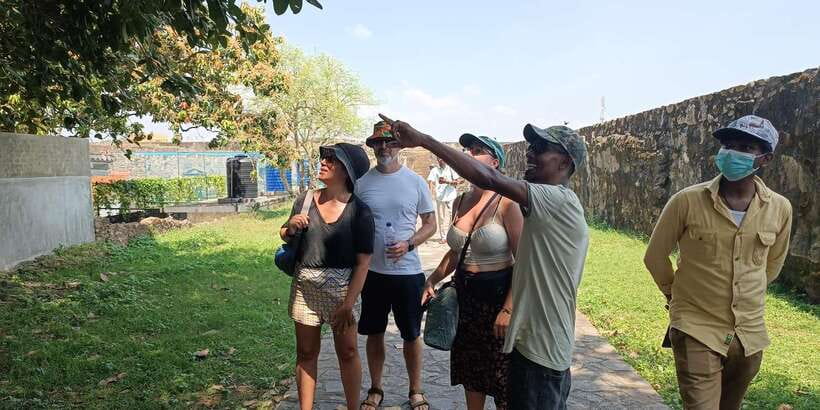
The ramparts are the physical heart of the experience. From the walls, you get a sense of why Galle was such a useful port and defensive position, while also seeing the fort as a place where people now live, work, eat, and walk.
The route includes Moon, Star, Sun, and Flag Rock Bastions. Each section gives you another angle on the fort’s design. You are not simply walking in a straight line around a wall. The changing elevations and corners help you read the structure as a military site.
The walk along the walls is also the most scenic part. You may find broad views, sea air, old stone, and plenty of light for photographs. Still, this is a history walk first, not a dedicated photo tour. If your only aim is sunset pictures, you will get more from the tour by listening to the explanations and saving a few minutes for photographs at the end.
Past the ramparts, the group moves into the streets. This shift is important. The fort stops looking like a military shell and starts making sense as a town shaped by trade, faith, administration, and changing ownership.
Dutch Reformed Church and Amanhalla Hotel
The route includes the Dutch Reformed Church and the Amanhalla hotel. These places help show how different parts of the colonial town worked together.
The church gives the tour a chance to discuss religion and the Dutch presence. The Amanhalla hotel offers another view of the old fort, linking colonial architecture with the way historic buildings are used today.
I appreciate that the route does not treat the fort as a frozen museum. You get the old structures, but you also hear about the living place around them. That makes the experience more useful than simply collecting a few facts about dates and rulers.
The guide’s wider knowledge is a major part of the value. Questions can move beyond the building in front of you and into Sri Lankan society, culture, language, religion, politics, and everyday life. Several people who took the tour praised Madawa’s ability to explain complex subjects in plain English.
That conversational style may suit you especially well if you want to understand Sri Lanka rather than only photograph its colonial façades.
More Galle Fort walks:
- Galle Fort cooking class
★ 5.0 · 60 reviews - Galle Fort and City Cycling Tour – Choice of E-Bike or Manual
★ 5.0 · 28 reviews - Galle Fort Walk with Glamorous Stories
★ 5.0 · 17 reviews - From Colombo to Galle Fort and Unawatuna Beach Day Trip
★ 4.5 · 27 reviews
Cinnamon Storage and Court Square
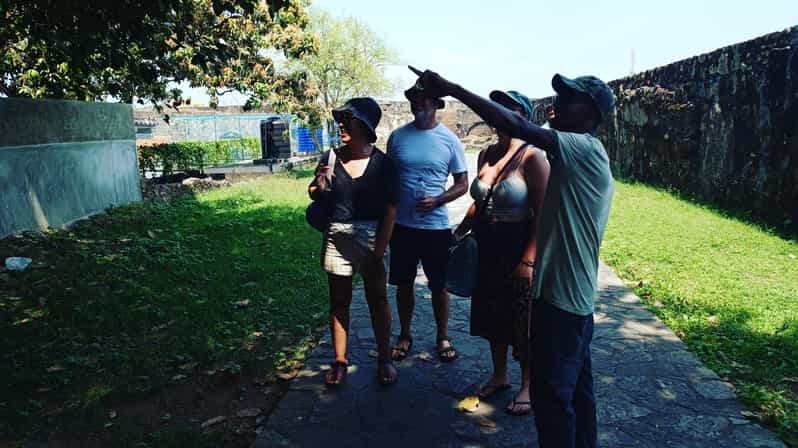
The walk continues to a Dutch cinnamon storage building and Court Square. These are two of the more useful stops for understanding the fort as a center of trade and government.
Cinnamon is closely tied to Sri Lanka’s place in international commerce, and a storage building gives that trade a physical setting. You can see how the fort’s economy depended not only on cannons and walls but also on goods moving through the port.
Court Square adds an administrative layer. Here, the story shifts from commerce to law and public authority. Madawa uses the buildings and open spaces to explain how the colonial settlement was organized.
This is where a local guide can save you from walking past important places. The fort’s streets are pleasant, but many buildings do not announce their past in a way that is immediately clear. The tour points out details you might otherwise treat as background.
The group may pause while Madawa explains a building or answers several questions. That is a strength if you enjoy conversation, though one person found the group size slightly large. If you prefer a private, very quiet walk, this may not feel as personal as a one-to-one guide.
Dutch Hospital and the Lighthouse
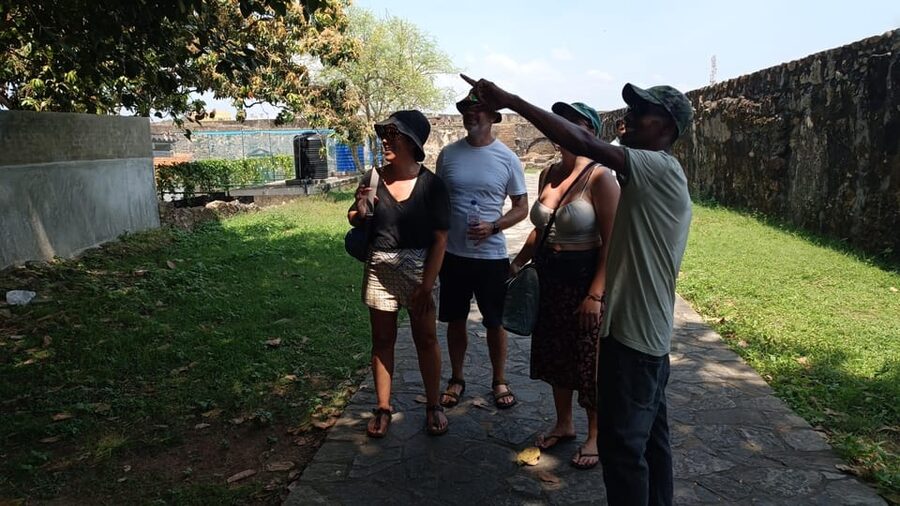
The former Dutch Hospital is another key stop. Madawa explains its history before leading the group toward the lighthouse and Flag Rock Bastion.
The hospital helps complete the picture of the fort’s public life. It was not only a place for soldiers and officials. It also needed systems for health, administration, storage, worship, and trade.
The lighthouse gives the walk a clear visual landmark and a natural point to pause. From here, the route reaches Flag Rock Bastion, another section of the defenses with strong views and a sense of the fort’s position beside the sea.
The route is not built around entrance tickets to a long list of interiors. Instead, you see the exterior setting and hear the story tied to each place. Entrance fees are included, but the supplied details do not promise access to every building. Keep that in mind if you are looking for an indoor museum visit.
Lighthouse Street, Drainage, and Pedlar’s Street
After the lighthouse, the tour follows Lighthouse Street and points out an old drainage system. This may sound like a minor detail, but it is one of the most useful kinds of detail in a historic town.
Drainage tells you how people solved ordinary problems long before modern infrastructure. It also reminds you that a fort needed more than walls and weapons to survive. Water, sanitation, storage, and movement all shaped how the settlement worked.
The final stretch moves along Pedlar’s Street, ending at Pedlar’s Corner Cafe. This is a practical finish because you can continue exploring the street afterward, stop for a drink on your own, or use the old town as the starting point for the rest of your day.
Refreshments are not included, so bring water from the start. You may also want a drink after the walk, especially if you choose a midday departure.
Madawa’s Guiding Style
The strongest part of the experience is Madawa himself. His English is described as excellent, and he combines clear explanations with humor rather than delivering a stiff lecture.
That matters in Galle because the subject can become dense quickly. The fort’s past includes several colonial periods, shifting political power, religion, trade, and the wider story of Sri Lanka. Madawa keeps the tone relaxed while still giving the material weight.
He also welcomes questions. You can ask about Galle, Sri Lankan history, society, culture, politics, or current life, and the tour is designed to make room for that exchange.
The best approach is to arrive with a few things you genuinely want to know. A guided walk becomes much more useful when you ask about what you see, rather than waiting for a memorized speech to finish.
People who prefer a guide who stays strictly on the advertised route may find the wider discussion a little broad. I see that as an advantage for most people, especially on a first visit to Sri Lanka, but it is worth knowing that this is not only a fortification tour.
Choosing the Best Time of Day
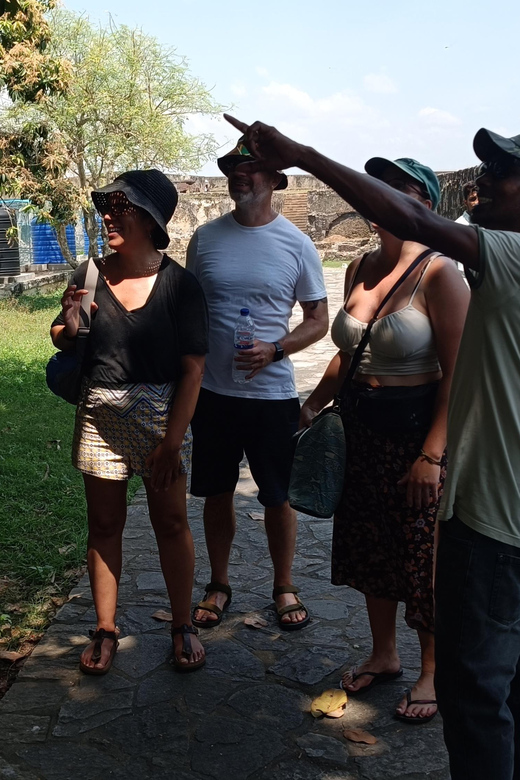
The tour lasts 1.5 hours, and timing affects comfort more than almost anything else.
An early-morning start is a good choice if you want cooler conditions and clearer energy for the ramparts. Late afternoon is another strong option. A 4:30 pm departure can bring a more comfortable temperature, with the possibility of watching the sunset from the fort walls after the tour.
The route includes open ramparts and streets with limited shade. Midday may still work if that is your only option, but you should carry water, sunscreen, and a hat. Sunglasses are also sensible, based on the practical experience of people who took the walk.
The end of the route is Pedlar’s Corner Cafe, not the Clock Tower. Plan that into your next activity. You will finish inside the fort, so you can keep walking from there, but you will not automatically return to the meeting point.
Is $15 a Fair Price?
At $15 per person, this is a strong value if you want context rather than a simple stroll. The price includes a professional English-speaking guide and entrance fees. Refreshments are separate.
You are paying for 90 minutes of local explanation, route planning, and the chance to ask questions about Sri Lanka as well as Galle. That is useful in a place where the most interesting details are often not obvious from the street.
The value is highest if you take the tour near the beginning of your stay in Galle. You will learn the layout of the fort, hear which buildings matter, and gain background that can improve the rest of your time there.
If you already know Galle’s colonial story well and only want independent time for photographs, you may prefer to walk alone. For most first-time visitors, the modest price makes a guide a sensible addition.
Free cancellation up to 24 hours before the start and the option to reserve now and pay later make the booking relatively flexible. Starting times depend on availability.
Who Will Enjoy This Walk?
I would recommend this tour to you if you want:
- A clear introduction to Galle Fort in a short amount of time
- A relaxed walking pace rather than a rushed sightseeing circuit
- History linked to modern Sri Lankan society
- A guide who can answer questions in English
- A mix of ramparts, streets, churches, warehouses, public buildings, and local details
- A tour that works well for a first visit
It is also suitable for a wide range of ages, as long as you are comfortable walking for 90 minutes in warm weather. The activity is not suitable for people over 95, according to the stated restrictions.
I would think twice if you dislike group walks, have difficulty with exposed heat, or want extensive time inside museums and historic buildings. The route is mainly outdoors and the strength is the guide’s explanation of the places you see.
What to Bring and How to Prepare
Wear light clothing and comfortable shoes. The provided advice is straightforward: take a hat, sunscreen, and water.
You do not need to prepare a long reading list. A little curiosity is enough. Think about whether you want to ask about colonial rule, cinnamon, religion, local politics, the tsunami, or everyday Sri Lankan life. Madawa’s ability to handle questions is one of the tour’s best features.
Keep your camera ready on the ramparts, but do not let photographs take over the walk. The fort’s details are easier to appreciate when you stop to look at the stonework, street plan, drainage, and old buildings as parts of one working town.
Should You Book the Galle Fort Walking Tour?
Yes, if you want a short, well-priced introduction led by someone who can connect Galle Fort to Sri Lanka as a whole. Madawa’s clear English, humor, patience, and broad knowledge are the main reasons to book.
Choose an early or late departure to avoid the worst heat. Bring water, expect a group setting, and remember that the tour ends at Pedlar’s Corner Cafe. If that sounds like your kind of sightseeing, $15 buys a useful first look at Galle, with enough local context to make the rest of your stay more rewarding.
FAQ
Where does the Galle Fort walking tour start?
The meeting point is under the Galle Fort Clock Tower. Enter the fort through the new entrance and you will see the clock tower on the right.
Where does the tour finish?
The walk finishes at Pedlar’s Corner Cafe at the end of Pedlar’s Street.
How long does the tour last?
The tour lasts 1.5 hours, or 90 minutes.
What language is the tour in?
The live tour guide speaks English.
Who leads the tour?
The experience is provided by Madawa Galagedara, a professional local guide.
What places are included on the route?
The route includes the Clock Tower, Moon Bastion, Star Bastion, Sun Bastion, the ramparts, Amanhalla hotel, Dutch Reformed Church, Dutch cinnamon storage building, Court Square, Dutch Hospital, lighthouse, Flag Rock Bastion, Lighthouse Street, an old drainage system, and Pedlar’s Street.
Are entrance fees included?
Yes. Entrance fees are included in the tour price.
What should I bring?
Bring a hat, sunscreen, and water. Refreshments are not included.
Recently listed around Galle
- Surfing Lessons at Unawatuna★ 4.5 · 11 reviews
- Sinharaja Rain Forest Tours (Full Day)★ 5.0 · 11 reviews
- Mix it Like a Lankan in Unawatuna★ 5.0 · 11 reviews
- Galle to Colombo Airport Private Taxi 247 Lowest Price Mini Bus, Car, Van★ 4.5 · 11 reviews
- Paradise Turtle Watching Tours★ 5.0 · 11 reviews
- Mirissa/Weligama to Colombo Airport Private Taxi Transfer★ 5.0 · 12 reviews
- Yala National Park Private Safari trip from Galle/Unawatuna/Mirissa★ 5.0 · 12 reviews
- Scuba Diving in Unawatuna★ 5.0 · 12 reviews
Galle Tours, compared.

Whales and Dolphins Watching-Luxury Super Grade Cruiser(Hotel Pick up offered)
Read our review →
Traditional Gems & Jewellery Workshop with Transfers
Read our review →


Galle/Mirissa/Hiriketiya: Drop to Ella & Udawalawa Safari
Read our review →
Browse the lists this tour appears in