
Reviewed · ELLA TOURS
Ella: Traditional Sri Lankan Cooking Class
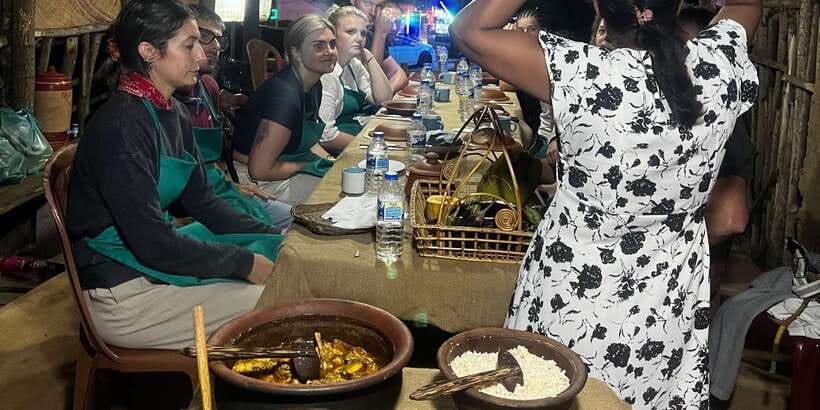
The best part of this Ella cooking class is that it shows you Sri Lankan food as it is made at home, not as a polished restaurant demonstration. Ranjani leads you through an open-air kitchen, works with fresh ingredients, and uses old-fashioned tools and methods, including traditional coconut preparation. You finish by eating the shared meal from a banana leaf.
I like two things right away. First, Ranjani explains what each spice and ingredient does, including its common health uses, so you learn more than a list of recipes. Second, the class gives everyone a chance to chop, mix, season, and help cook, while the friendly group setting makes it easy to meet people.
The main consideration is the format. You work together at one kitchen station rather than cooking an individual dish at your own bench. That makes the class social and traditional, but it may disappoint you if you want complete control over a personal menu or hands-on time with every recipe.
Key points at a glance
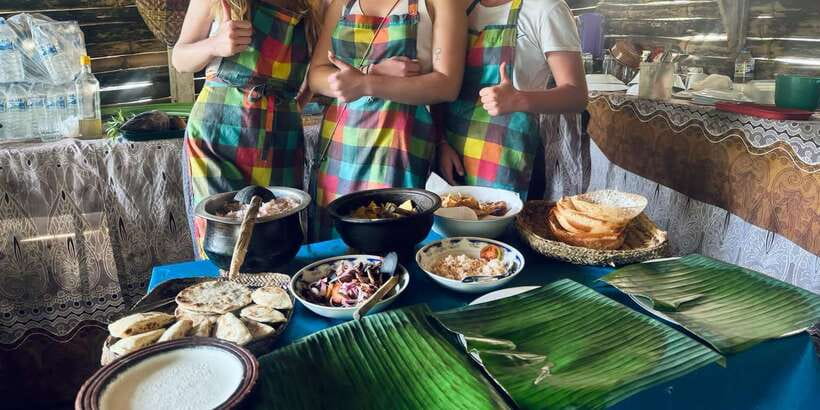
- Traditional open-air kitchen: Cook in a classic Sri Lankan setting with greenery around you and good ventilation.
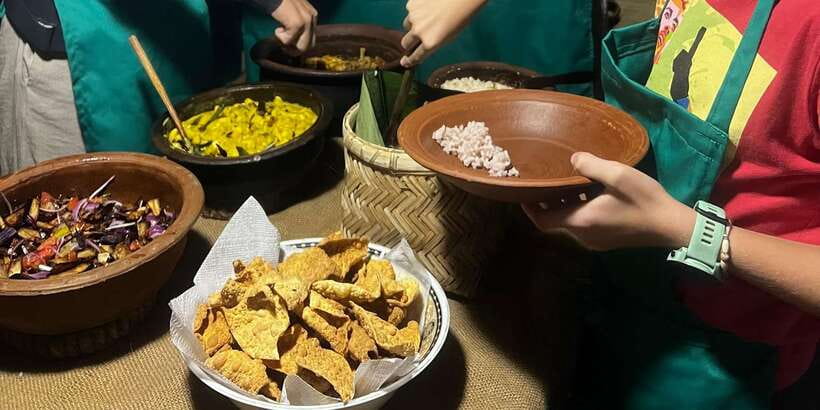
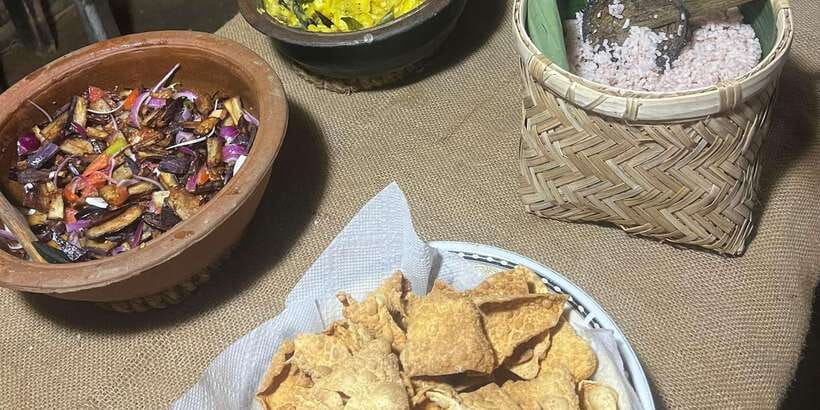
- Several dishes in one class: The menu can include dhal, chicken curry, aubergine salad, coconut sambol, papadam, hoppers, string hoppers, rice and curry, or honey roti.
- Ranjani’s ingredient lessons: Learn how spices, herbs, coconut, and fresh produce are used in Sri Lankan home cooking.
- Shared, generous meal: Sit down together and eat the finished food from banana leaves, with bottled water included.
- Small-group atmosphere: The listed group size is limited to eight, though group numbers can vary, so confirm the setup if space matters to you.
- Useful take-home recipes: Recipes are sent digitally through WhatsApp after the class.
Entering Chamathka’s open-air kitchen
You check in with staff at the Chamathka Cooking Class, where Ranjani welcomes you into an open-air kitchen. This setting matters. You get fresh air while cooking, see the surrounding greenery, and watch traditional preparation methods up close rather than standing in a modern demonstration room.
The class has a homely feel. A welcome tea and biscuits may be served before the cooking begins, giving you a few minutes to meet the other participants and settle in. That small start helps the evening feel like an invitation into a local kitchen rather than a formal lesson.
Ranjani is the central personality of the experience. Her teaching style combines cooking instructions with explanations about ingredients, spices, herbs, and their health benefits. If you have never cooked Sri Lankan food before, this context is useful because the cuisine depends on knowing how ingredients work together, not simply copying measurements.
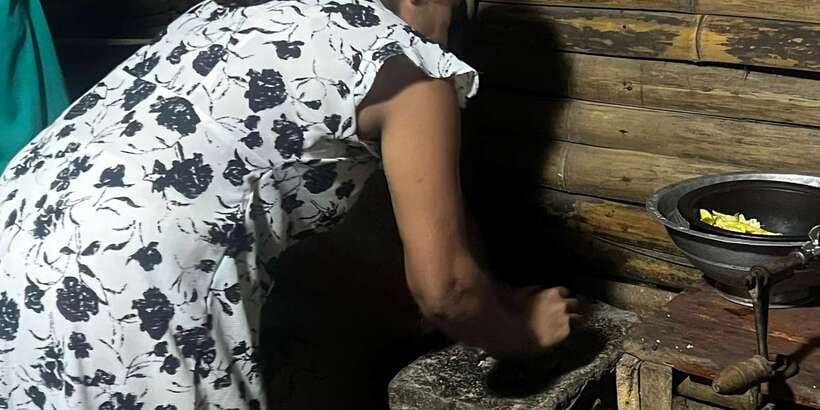
The kitchen also gives you a look at tools and techniques that may be unfamiliar. One part of the class can involve grating coconut and making coconut milk by hand. You may also see traditional cutting and preparation tools that look very different from the equipment in a European or North American kitchen.
That authenticity has a trade-off. Old-fashioned equipment can make the lesson more interesting, but it also means the class is not built for speed. The session may run longer than the advertised two hours, especially when there is a large amount of food to prepare and eat.
More Cooking Classes in Ella:
- Ella: Sri Lankan Cooking Class with Neranji at Homestay
★ 5.0 · 276 reviews - Ella : Cooking class with amazing Spice Garden Tour
★ 5.0 · 239 reviews - Ella Sri Lanka : Mom’s Kitchen Cooking class
★ 5.0 · 113 reviews
Fresh ingredients and the Sri Lankan spice cupboard
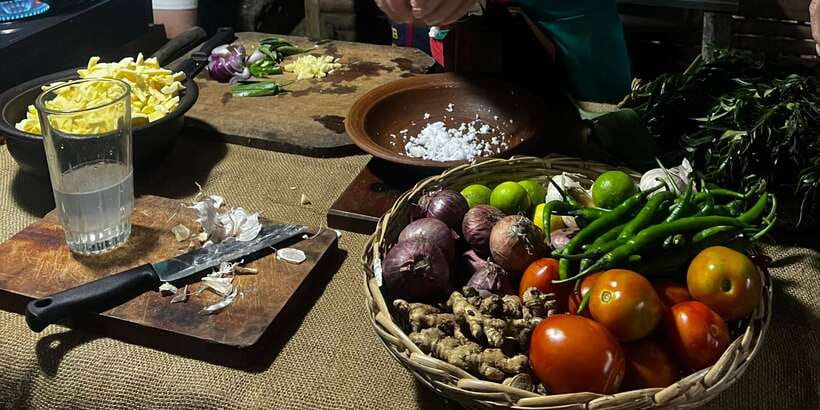
The first practical lesson is an introduction to the ingredients. Fresh vegetables and other produce bring color to the table, but the real focus is on the way Sri Lankan cooks build flavor with spices, coconut, herbs, and careful cooking methods.
Ranjani explains the purpose of the ingredients as she works. You learn how spices are used in the dishes and how traditional cooking can produce food that is both full of flavor and based on fresh produce. The health advice is part of the class’s identity, and it adds useful background to the cooking.
I find this especially valuable because Sri Lankan food can seem difficult to recreate at home. A dish may look simple, but its taste depends on when ingredients are added, how coconut is prepared, and how the spices are handled. Seeing those steps in person makes the recipes easier to understand.
The exact menu is not fixed in the information provided, so you should not book expecting one precise set of dishes. Past menus have included dhal curry, chicken curry, aubergine salad, coconut sambol, papadam, rice and curry, hoppers, string hoppers, and honey roti. Vegetarian and vegan needs can be accommodated in some cases, but tell the provider in advance.
One useful point for home cooks is that Ranjani chooses recipes that can be possible to make outside Sri Lanka. Some ingredients may be harder to find in Europe, Australia, or elsewhere, but the class is designed to leave you with ideas you can use at home. It is worth asking about substitutions during the lesson.
Cooking dhal, curry, sambol, and more
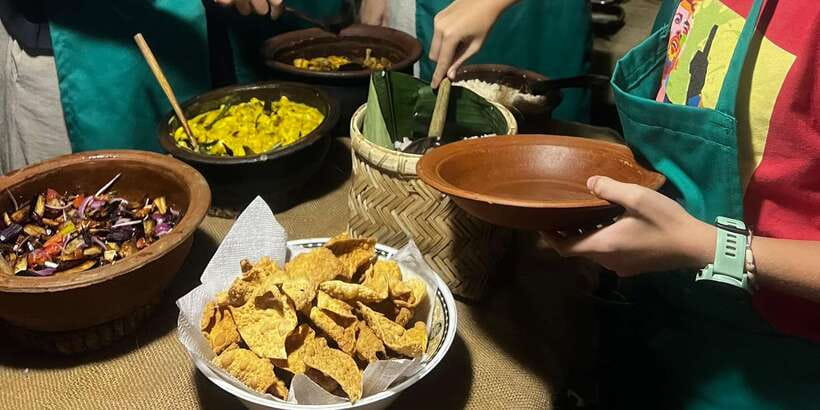
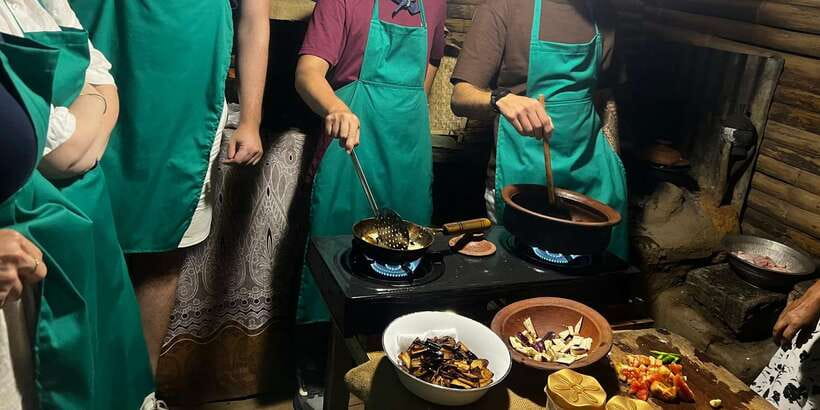
The class is a group cooking session, not a set of private workstations. Ranjani demonstrates the more complex steps and then invites participants to take turns preparing ingredients and helping with the cooking.
That arrangement has two clear benefits. You can watch the full process before trying a task, and you can share the work with people from different countries. It also means the meal includes several dishes without asking each person to cook a complete menu alone in two hours.
The dishes themselves offer a good introduction to Sri Lankan cooking. Dhal curry shows how a few basic ingredients can become a fragrant, comforting dish. Chicken curry may be included for those who want a meat option, while aubergine salad and coconut sambol add different textures and sharper flavors.
Hoppers are bowl-shaped pancakes, often associated with Sri Lankan breakfast and street food. String hoppers offer another lesson in texture and shaping. Honey roti gives the menu a sweeter finish, while rice and curry provides the familiar center of a Sri Lankan meal.
You may not personally prepare every dish from start to finish. One participant’s account makes this point clearly: the class suits people who enjoy helping with a shared meal, but not those who expect an individual cooking station and a plate made only by themselves.
Still, the hands-on element is real. You can expect opportunities to chop, mix, season, taste, and assist with different steps. In a larger group, you may have to wait for your turn, and one participant found the kitchen a little crowded. The listed limit is eight people, but group size appears to vary at times, so contact the provider if this is important to you.
Why the health explanations add value
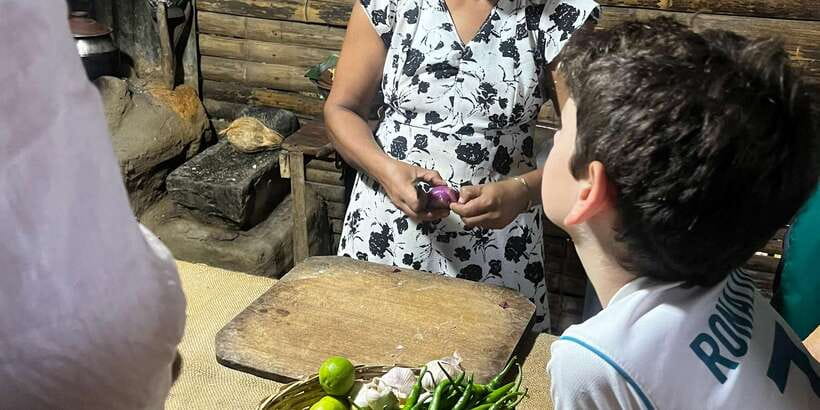
Food tours often teach you what a dish contains. This class goes a step further by explaining how herbs and spices are used beyond the plate. Ranjani discusses the health benefits associated with ingredients as she cooks, giving you a better sense of how food and home remedies can overlap in Sri Lankan culture.
You should treat these comments as cultural and culinary information, not as medical advice. Their value is in understanding why certain ingredients appear so often in local cooking and how families traditionally use them.
I also like the way these lessons slow the class down. You are not just watching a curry come together. You are learning why coconut is prepared in a certain way, how fresh produce changes a dish, and how spices contribute to both flavor and daily cooking traditions.
This is one reason the activity appeals to people who want more than a meal. You leave with methods and explanations that help you recreate the food, rather than simply remembering that it tasted good.
More workshops and classes in Ella:
- Ella: First Class Scenic Train Ticket To/From Nanuoya
★ 4.2 · 19 reviews - Organic cooking class sigiriya (kumara & family)
★ 5.0 · 650 reviews - Sri Lanka Cooking Class with Granny
★ 5.0 · 587 reviews - Galle: Traditional Gems & Jewellery Workshop with Transfers
★ 4.9 · 539 reviews
Eating from a banana leaf
When the food is ready, everyone sits down to eat the meal prepared by the group. The banana leaf works as both a serving surface and a small cultural lesson. It avoids the need for disposable plates and gives the meal a distinctly local character.
Expect a generous spread rather than one modest portion. Dishes can include several curries, dhal, sambol, vegetables, papadam, and rice, depending on the menu. Some participants have found there was enough food for second helpings, with extra food remaining at the end.
This shared meal is the social heart of the class. You have cooked beside the people at the table, so the conversation comes naturally. It is a relaxed way to spend an evening in Ella, particularly if you are traveling alone or want an activity that is not another viewpoint or train ride.
The food is also the strongest reason to consider the class. The cooking lesson is useful, but the reward is sitting down to a full Sri Lankan meal while the techniques are still fresh in your mind. Bottled water is included.
Two hours, with a little flexibility
Classes normally begin at 11:00 AM or 5:00 PM. The provider can sometimes adjust the time if you contact them ahead of time, which is useful if you are coordinating the class with a train journey, a walk, or another Ella activity.
The scheduled duration is two hours. Plan for extra time if you have a car waiting or a tight evening schedule. Cooking, serving, and eating can push the experience closer to two and a half hours, especially when the group is large or the menu contains many dishes.
The 5:00 PM class makes a good evening activity. You can spend the afternoon around Ella and then finish the day with dinner. The midday session may suit you better if you have evening plans or prefer to eat your main meal earlier.
Transportation to the meeting point is not included. You need to make your own way to Chamathka Cooking Class, so allow time to reach the check-in point and confirm the exact meeting details before setting off.
The instructor speaks English and Singhalese. The class is therefore practical for English-speaking visitors, with the food preparation providing plenty of visual guidance as well.
Is $19 good value?
At $19 per person, I consider this a strong-value activity if you want a meal, a cultural experience, and recipes to take home. The price includes the instructor, fresh ingredients, the cooking lesson, the finished meal, and bottled water.
You are not paying only for dinner. You are also paying for the preparation, the chance to use traditional methods, the explanations about ingredients, and the social setting. A good meal in Ella may cost less than the class, but it will not give you the same chance to learn how it was made.
The value is greatest for people who will actually use the recipes afterward. Recipes are sent digitally through WhatsApp after the session, and some participants have also received a recipe PDF when they asked. Save the message before leaving Sri Lanka, especially if you plan to cook the dishes soon.
The price is less compelling if you want a private lesson or individual instruction. Since the group shares one kitchen and one final meal, this is closer to a hosted cooking gathering than a one-to-one professional course.
Who should book this class?
I would choose this experience if you want to understand Sri Lankan food through everyday techniques. It works well for couples, solo visitors, families, and small groups who enjoy cooking together and sharing a meal.
It is also a good choice for vegetarians and some vegans, as the menu can include several plant-based dishes. Do not assume every menu will suit your diet. Contact Ranjani before booking so the kitchen can plan around your needs.
The class is a smart rainy-day option in Ella. You are still doing something tied closely to the place, and the open-air kitchen provides shelter while keeping you connected to the surrounding greenery.
I would think twice if you need a tightly timed activity, dislike communal cooking, or want to prepare every dish yourself. You may also prefer a smaller class if you find crowded workstations frustrating. The provider lists a group limit of eight, but the actual setup has not always been identical.
Cancellation is flexible, with a full refund available when you cancel at least 24 hours ahead. You can also reserve now and pay later, which helps if your Sri Lankan route is still changing.
My verdict on Ranjani’s Ella cooking class
I recommend this class for its combination of traditional technique, generous food, and warm teaching. Ranjani’s explanations about spices and ingredient uses give the experience more substance than a basic recipe demonstration, while the shared kitchen keeps it friendly and informal.
Book it if you want to cook as part of a group, eat several Sri Lankan dishes, and take practical recipes home through WhatsApp. Skip it only if you need your own workstation, a fixed two-hour finish, or a fully private lesson.
For $19, it is an easy activity to fit into an Ella stay, and one of the better ways to turn a good Sri Lankan meal into a skill you can carry home.
FAQ
Where does the cooking class take place?
You check in with staff at the Chamathka Cooking Class in Ella, Sri Lanka.
How long does the class last?
The scheduled duration is two hours, though cooking and eating may take longer. Allow up to about two and a half hours if you have transport or another appointment afterward.
What time do classes normally start?
Classes normally take place at 11:00 AM and 5:00 PM. The provider may be flexible if you contact them in advance.
Who teaches the class?
The experience provider is Ranjani. The class is offered in English and Singhalese.
What dishes might I cook?
Possible dishes include hoppers, rice and curry, string hoppers, honey roti, dhal curry, chicken curry, aubergine salad, coconut sambol, and papadam. The exact menu can vary.
Is the meal included?
Yes. Fresh ingredients, the cooking class, the finished meal, and bottled water are included.
Do I need to arrange transportation?
Yes. Transportation to the meeting point is not included, so you must make your own way to Chamathka Cooking Class.
How do I receive the recipes?
The recipes are sent digitally through WhatsApp after the class.
Recently listed around Ella
- Ella: Safari Day Trip to Yala & Udawalawe with Lunch★ 4.7 · 10 reviews
- From Galle/Weligama/Mirissa/Tangalle: Day Trip to Ella★ 4.9 · 10 reviews
- Ella: Ravana and Upper Diyaluma Falls Guided Tour★ 5.0 · 10 reviews
- All Inclusive Ella From/To Kandy Scenic Train Journey★ 3.4 · 11 reviews
- From Ella: Shuttle to Tangalle/Hiriketiya with Yala Safari★ 4.8 · 12 reviews
- From Tangalle/Hiriketiya: Ella Transfer & Udawalawe Safari★ 4.7 · 12 reviews
- ELLA Lipton Seat Tea Test & Pluck 9Arch, Waterfalls, & Lunch★ 4.7 · 12 reviews
- From Ella: Tea Adventure in Haputale with Village Lunch★ 4.8 · 13 reviews
Ella Tours, compared.

Drop to Tangalle/Hiriketiya/Mirissa/Galle & Yala Tour
Read our review →
Little Adam’s Peak, Nine Arches Bridge & Waterfalls
Read our review →Drop to Tangalle/Hiriketiya/Mirissa/Galle & Yala Tour
Read our review →
Drop to Tangalle/Hiriketiya/Mirissa & Yala Safari
Read our review →
Sri Lankan Cooking Class with Neranji at Homestay
Read our review →
Yala Safari with Tangalle/Mirissa/Galle Drop-off
Read our review →
Ella Rock, 9 Arch, Little Adams Peak, & Waterfall Tour
Read our review →Browse the lists this tour appears in