
Reviewed · GALLE TOURS
Galle Fort Walk with a Local
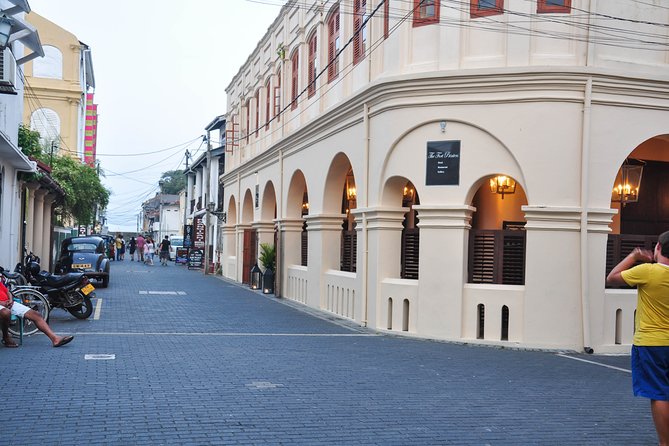
Galle Fort is more than a pretty wall beside the sea. It is a small, living town shaped by Portuguese soldiers, Dutch builders, British administrators, and generations of local families. This two-hour walk takes you through its cobbled lanes, museums, churches, old government buildings, and ramparts, ending at the Galle Lighthouse.
I like the family connection to Galle, which can bring everyday detail to the history. I also like the early start option, since a 6:30 a.m. walk is far more comfortable before the tropical heat builds. The main drawback is the pace: two hours gives you a useful introduction, but not enough time for every museum and side street.
Key points
- A private walk for two to 12 people: You get personal attention without joining a large coach group.
- History in layers: Portuguese, Dutch, and British work can be seen in the fort walls, buildings, drains, churches, and street plan.
- Local guides with family ties: Guides named Chirath and Shirat have led walks that include personal stories and practical advice.
- Ramparts and lighthouse: The route includes a walk beside the fortifications and a view of the Galle Lighthouse.
- Tea or king coconut break: A short refreshment stop adds a local touch, though the cost is your responsibility.
- Useful for a first visit: The walk ends where it begins, making it easy to continue exploring on your own.
Entering Galle Fort from Lighthouse Street
You meet your guide outside National Tea Rooms at 10 Lighthouse Street, inside the old fort area. The starting point is central and near public transportation, but you should allow a little time to find it if this is your first visit to Galle Fort.
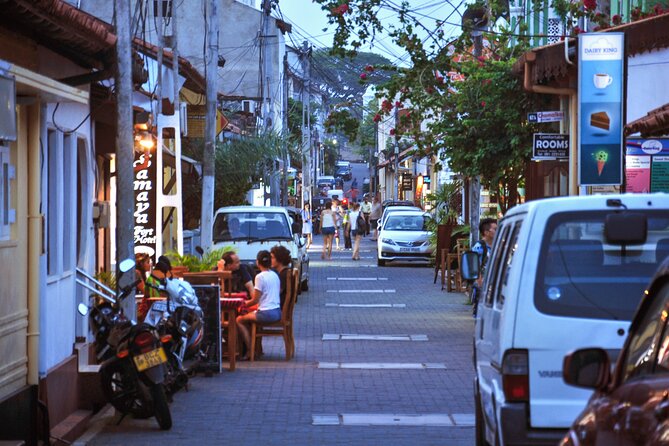
From there, the fort opens like a compact town rather than a single monument. You walk through narrow lanes lined with low houses, shops, restaurants, museums, churches, and former administrative buildings. The cobbles and uneven surfaces give the place character, but they also make firm shoes a smart choice.
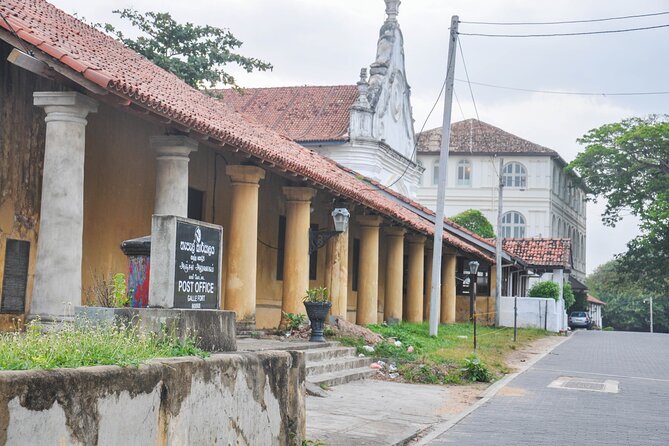
The guide’s job here is important. Galle Fort is easy to admire and surprisingly easy to misunderstand. A Dutch-looking house may sit beside a later British building, while an old street name may reveal the fort’s former European administration. A guide can connect those pieces instead of leaving you with a string of attractive but unrelated sights.
The experience is private, but it requires at least two people to book. Groups can include up to 12 people, so the amount of personal attention may vary at the upper limit. For two people or a small family, the format should feel more flexible than a standard group tour.
More Walking Tours in Galle
- Galle Fort Walking tour
★ 4.9 · 285 reviews - Galle Fort Walking Tour with a Resident
★ 5.0 · 88 reviews - Galle Fortt Guided Walking Tour with a Local
★ 4.9 · 33 reviews
Three empires in one compact town

Galle’s port was known as far back as 1400 BC and was an important cinnamon export point. That early trading role helps explain why outside powers cared so much about this stretch of coast.
The Portuguese arrived in the 1500s and made Galle their headquarters. Their first defenses used earth and palisades, and their arrival changed the town’s earlier religious and civic setting. The Dutch captured the fort in the 1600s and built the stone defenses that give Galle its most recognizable form today.
The Dutch expanded the fort with high ramparts, bastions, a church, storm drains, administrative buildings, and homes. Their work was practical as well as military. The fort was planned as a functioning settlement, with space for government, trade, worship, storage, and daily life.
The British took control in 1796 and added their own buildings. Their period is also linked to the lighthouse first built in 1938, though the beacon you see today is a replica. As you walk, the guide helps you separate these periods and understand how one power adapted what the previous one left behind.
I find this layered story more useful than a simple list of dates. You can look at a wall or building and ask who made it, why it was needed, and how the fort changed after control shifted. That turns the walk into a lesson in architecture, trade, and power without requiring a specialist background.
Cobblestones, gabled houses, and old street names
The prettiest part of the walk is often the time between formal sights. Galle Fort’s streets have low, gabled houses and Dutch street names, with shutters, courtyards, and old facades mixed among modern businesses.
The fort is not a preserved stage set. People still live and work here. Shops sell clothing, crafts, jewelry, and souvenirs. Restaurants occupy old buildings. That mix gives the walk a sense of ordinary life, though it also means the experience is not a silent museum visit.
A guide can point out former government buildings and monuments that you might pass without noticing. The value is not only in seeing the facade, but in learning how the building fitted into the old town. You may also receive recommendations for places to eat and shop after the walk, which is useful if Galle is a one-day stop.
One caution: shopping may enter the experience. A guide has taken participants to a gem shop, and one account praised that stop while another felt it distracted from the fort’s story. If you prefer a strictly historical walk, say so at the start. Clear communication should help keep the focus where you want it.
Museums that put objects behind the dates
The museum visits give the fort’s story a physical side. Instead of hearing only about Portuguese, Dutch, and British rule, you can see artifacts and archival material linked to Galle Fort and its harbor.
This part is especially helpful if you are visiting Galle for only one day. A walk through streets can leave you with broad impressions, while museum displays can show how trade, government, religion, and port life worked in practice.
The exact museum sequence is not specified, so you should not expect a fixed list of every institution in the fort. The experience description says the main museums are included, and entrance fees are presented as part of the tour. At the same time, the booking details list the local guide under inclusions, so I would confirm which admissions are covered before setting out.
Two hours is enough for an introduction, not a museum marathon. Your guide will need to balance indoor displays with the streets and ramparts. If a particular museum matters to you, ask about it when you meet. That is one advantage of a private activity: the route may be easier to discuss than on a large scheduled tour.
More Galle Fort walks:
- Galle Fort cooking class
★ 5.0 · 60 reviews - Galle Fort Heritage Walk by a Certified Heritage Interpreter
★ 5.0 · 31 reviews - Galle Fort and City Cycling Tour – Choice of E-Bike or Manual
★ 5.0 · 28 reviews - Galle Fort Walk with Glamorous Stories
★ 5.0 · 17 reviews
Walking the ramparts to Galle Lighthouse

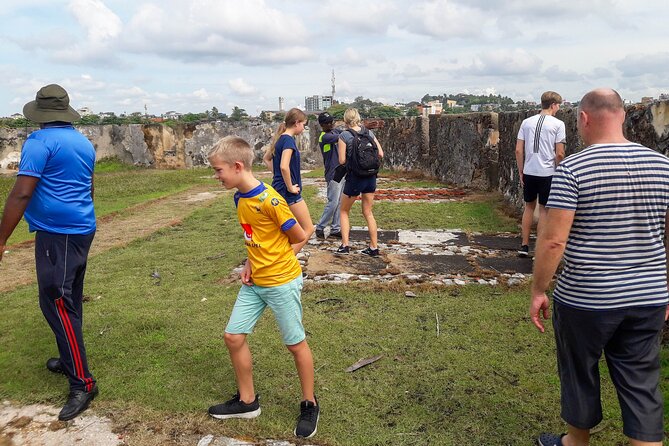
The ramparts are the most memorable outdoor section. From the fort walls, you can look toward the sea and understand why Galle mattered as a harbor and defensive post.
The walk leads toward Galle Lighthouse, one of the fort’s best-known sights. The present beacon is a replica of the lighthouse first built by the British in 1938. It makes a strong visual endpoint, especially after the tighter lanes and shaded buildings inside the fort.
The ramparts are not just a photo stop. They show the scale of the Dutch defensive plan, with broad stone walls and bastions arranged around the fort. Your guide can help explain how these defenses protected the harbor and why the fort remained useful under later British rule.
You should expect steps and a moderate amount of walking. One group of five adults described the route as a medium walking tour and noted that people with severe leg problems or asthma should take the steps into account. Hats and comfortable walking shoes are recommended, and I would treat those suggestions as practical advice rather than decoration.
Heat is another real consideration. An early start can make a major difference. One walk began at 6:30 a.m., before the sun became harsh, and covered the main sights at a comfortable time. The exact start time should be confirmed when booking, but an early morning slot is worth requesting if available.
Tea, king coconut, and a local pause
The walk includes a break for Ceylon tea or king coconut milk. These drinks are not included in the price, but the pause gives you a chance to sit, ask questions, and see a more personal side of the fort.
The meeting point is National Tea Rooms, and the guide connected with the experience has a family link to a tea shop founded by his grandfather for local people. That detail gives the stop more meaning than a generic cafe break. It connects the tour to a family story and to the everyday tea culture of Galle.
You should still budget for your own drink. Food and drinks, personal expenses, and hotel transfers are excluded. The pause is best viewed as an optional local moment, not a meal stop.
The guide names appearing in the available feedback include Shirat and Chirath. Both are described as local guides with strong ties to Galle, but guide assignments can change. If having one of them matters to you, ask the operator before booking rather than assuming a particular person will lead your walk.
How the guiding may shape your experience
The strongest accounts describe a guide who explains Galle’s history clearly, answers questions about UNESCO status and restoration, and adds humor. Chirath is described as arriving on time, offering detailed historical information, and helping with food and shopping suggestions.
That kind of personal attention is the main reason to choose this tour instead of walking alone. Galle Fort has enough signs and maps for independent exploring, but a local guide can explain restoration work, family connections, and the difference between periods of construction.
The experience is not perfectly uniform. One account describes a pleasant guide who spoke very little and gave a date that did not match the signage. The guide was kind and took the participant to a gem shop, but the historical explanation felt less certain.
I would handle this in a simple way. Ask questions early. If a date or claim seems unclear, ask the guide to explain it. Tell the guide if you want more history, less shopping, or extra time in museums. A private walk works best when you take part in shaping it.
The guide’s family background can be a real advantage, but it is not a substitute for careful historical detail. I would book this for the local perspective and the ability to ask questions, while keeping your expectations sensible about academic-level interpretation.
Is $65 per person good value?

At $65 per person, this is not the cheapest way to see Galle Fort. You can walk the streets and ramparts independently, and many exterior sights can be viewed without paying an admission fee.
The value comes from the private format. You are paying for a guide devoted to your group, a planned route, museum visits, historical context, and help making sense of the fort’s mixed architecture. For a small group, that can be worthwhile, especially if you have only a few hours in Galle.
Group discounts are available, though the exact reduction is not stated. Since the minimum booking is two people and the maximum is 12, the price may make more sense for a couple, family, or small group sharing the experience than for one person traveling alone.
The tour also saves planning time. You do not need to work out which streets connect to the ramparts, which museums fit into a short visit, or how Portuguese, Dutch, and British periods overlap. For me, that practical guidance matters most when Galle is part of a larger Sri Lankan itinerary.
The price does not cover hotel pickup or drop-off, meals, drinks, or personal purchases. You meet at the fort and finish there, so include your own transport arrangements. If you already have a strong interest in colonial architecture and enjoy researching independently, the cost may feel high. If you want a clear introduction with a local voice, it is easier to justify.
Who should book this walk?
I would recommend it to first-time visitors who want the main story of Galle Fort without spending half a day reading signs. It also suits anyone staying briefly in Galle, since the route covers the key setting, museums, ramparts, and lighthouse in about two hours.
It works well for couples and small private groups who prefer questions and conversation over a fixed lecture. Families may also like the compact format, though the cobbles, heat, and steps require reasonable walking ability.
History fans should find the mix of port trade, fort design, colonial buildings, and museum objects useful. Architecture lovers will appreciate the low gabled houses, old street names, churches, monuments, and administrative buildings.
I would be less quick to recommend it to someone who wants a long, slow museum visit or a highly specialized military history tour. The route covers many elements, so each one receives limited time. It is also not the right pick if you need hotel transportation included.
Wear comfortable shoes, bring a hat, and consider requesting the earliest available start. Keep some money for tea, king coconut, food, and shopping. Most people can participate, but the route includes steps and a moderate amount of walking.
Cancellation and simple planning notes
You receive confirmation at booking, and the activity accepts mobile tickets. Free cancellation is available when you cancel at least 24 hours before the local start time. Cancellations or changes made within 24 hours are not accepted for a refund.
The tour starts and ends at National Tea Rooms, 10 Lighthouse Street, Galle 80000. Since there is no hotel pickup or drop-off, plan your own way to and from the fort.
The experience is private, but booking requires at least two people. The group limit is 12. If you are booking close to your visit, confirm the start time, guide name, museum admissions, and any preferred focus such as architecture, restoration, or trade history.
Should you book Galle Fort Walk with a Local?
Book it if you want a short, guided introduction to Galle Fort with a local voice and a route that mixes streets, museums, ramparts, and the lighthouse. The family connection to Galle, the chance to ask questions, and the private format give it more character than a simple self-guided stroll.
Think twice if you want total control over your pace, dislike shopping stops, or plan to spend hours inside museums. The experience covers a lot in two hours, and the quality of historical explanation may depend on the guide assigned.
For most first visits, I see the best value in booking for an early morning and using the walk to get your bearings fast. Afterward, you can return to the buildings, shops, or museums that caught your attention and explore them at your own speed.
FAQ
Where does the Galle Fort walk begin?
The tour begins outside National Tea Rooms at 10 Lighthouse Street, Galle 80000, Sri Lanka.
Where does the tour finish?
The activity ends back at the meeting point at National Tea Rooms.
How long does the walking tour last?
The tour lasts approximately two hours. One itinerary description lists about one hour and 30 minutes for the Galle stop, so confirm the exact timing when booking.
How many people can join the private tour?
A minimum of two people is required per booking, and a maximum of 12 people can participate. Only your group takes part in the private activity.
Is the Galle Fort entrance fee included?
The tour information says entrance fees are included. Since the inclusions section specifically lists the local guide, confirm which museum or other admissions are covered before the tour.
Are food and drinks included?
No. Food and drinks are not included. You can stop for Ceylon tea or king coconut milk, but you pay for your own drink.
Is hotel pickup provided?
No. Hotel pickup and drop-off are not included. You must make your own way to the meeting point and leave from there afterward.
What should I wear or bring?
Comfortable walking shoes and a hat are recommended. The route includes cobbled streets, ramparts, and steps, so you should be prepared for moderate walking and warm conditions.
Recently listed around Galle
- From Colombo: Day Trip to Galle City, Koggala and Unawatuna★ 4.2 · 3 reviews
- Private Half Day Safari Tour to Yala NP From Tangalle and Drop Back★ 4.5 · 3 reviews
- Udawalawe National Park Safari Tour★ 4.7 · 3 reviews
- From: Ella – YALA Safari – Drop off: Arugam Bay / Arugambay★ 5.0 · 3 reviews
- Galle Instagram Tour: Most Famous Spots (Private & All-Inclusive)★ 5.0 · 3 reviews
- Stilt-Fishing Experience in Ahangama★ 4.0 · 3 reviews
- Galle Sightseein Rickshaw Tour★ 4.5 · 3 reviews
- Fully Private Udawalawe National Park Safari Tour★ 5.0 · 3 reviews
Galle Tours, compared.

Whales and Dolphins Watching-Luxury Super Grade Cruiser(Hotel Pick up offered)
Read our review →
Traditional Gems & Jewellery Workshop with Transfers
Read our review →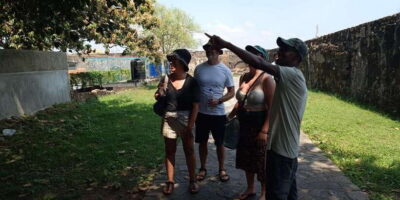




Galle/Mirissa/Hiriketiya: Drop to Ella & Udawalawa Safari
Read our review →
Browse the lists this tour appears in