
Reviewed · MIRISSA & WELIGAMA TOURS
Weligama: Pottery Workshop with Tea and Snacks
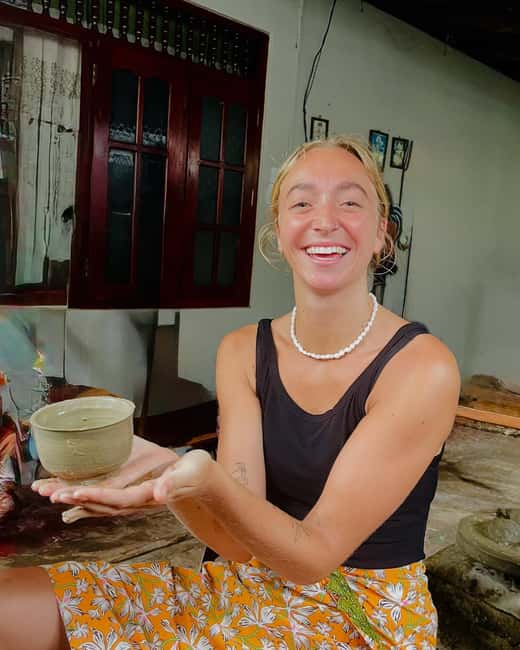
The most appealing part of this experience is its setting: you learn pottery in a working family home, not a polished tourist studio. The couple hosting you have practiced the craft since their teenage years, so the lesson connects your clay-covered hands with a living Sri Lankan tradition.
I like the generous time at the wheel and the chance to hear the story behind pottery in Sri Lanka. I also like the tea, local sweetmeats, and master-made souvenir, which turn a short class into a warm visit with a family. The main consideration is simple: your own piece is not glazed or kiln-fired instantly, so you should not expect to leave with a finished pot made during the class.
Key points at a glance
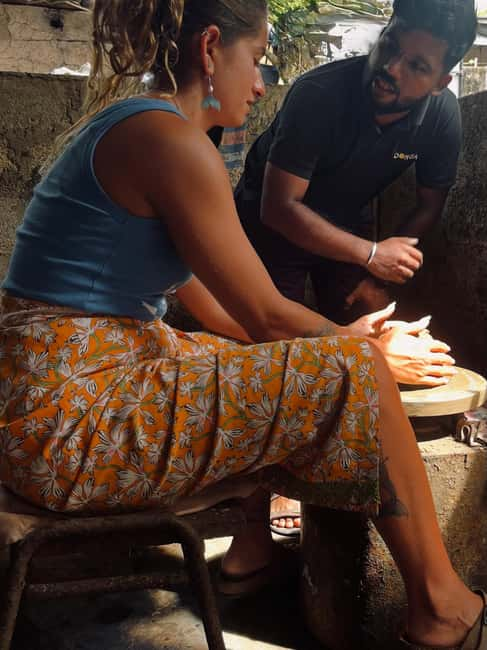
- Traditional family setting: The workshop takes place at a potter’s home rather than a Western-style studio.
- Real wheel time: You get hands-on practice shaping clay on a traditional potter’s wheel.
- Personal instruction: The English-speaking guide explains clay preparation, pottery traditions, and the firing process.
- Tea with local sweets: The final 30 minutes offer time to sit, eat sweetmeats, and talk with the organiser.
- A practical souvenir: You take home a pottery piece made by the master potters.
- Good for children: Kids receive paint to decorate their own mini-pots.
A pottery lesson inside a Sri Lankan family home
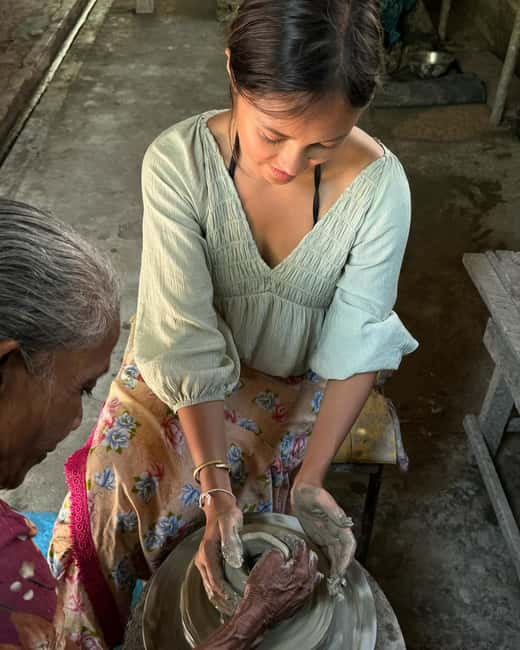
This 2.5-hour experience offers a close look at pottery as a family trade. You are not simply shown a row of finished bowls and asked to buy one. You learn how clay is prepared, how it is shaped, and what happens before it reaches the kiln.
That difference matters. In a standard craft class, the focus is often on producing a neat object before the session ends. Here, the focus is on seeing the whole process and trying the difficult part yourself. You will probably make something uneven. That is part of the point.
The setting also shapes the visit. The hosts work from a private home, and the activity is arranged as a private group. You should expect a personal exchange rather than a large class with several tables and a fixed script.
The family has worked with pottery since their teenage years. That gives the talk a useful human angle. You are learning about a craft passed through generations, while also seeing how a local family is trying to keep it going. Your booking helps support the potters’ income and may encourage younger family members to continue the work.
The guide speaks English and French. English communication has been particularly useful here because the pottery explanation includes both practical steps and background about Sri Lanka. If you want to ask questions as you work, that language support is important.
More workshops and classes in Mirissa & Weligama:
- Surf & Stay – Private Surf Lesson Experience in Weligama
★ 4.5 · 29 reviews - Surf & Stay: Private Surf Lesson in mirissa
★ 4.4 · 15 reviews - Sri Lanka: Cooking Class
★ 4.4 · 6 reviews
Meeting at Kumbalgama Railway Station
The stated starting point is Kumbalgama Railway Station, where a representative of the host meets you. You then go to the workshop, spend about two hours on the pottery portion, and finish with 30 minutes of tea and snacks before returning to the station.
This arrangement is worth noting when you plan your day. The experience is connected with Weligama, but the meeting point is specifically Kumbalgama Railway Station and the workshop location is given as Kotapola. Check the exact start time and meeting instructions when you book, rather than assuming the class begins in central Weligama.
The station meeting point gives you a clear place to begin, but you still need to allow time to find the representative. Keep your phone available and arrive with enough margin to avoid turning the first part of the experience into a rush.
The total duration is short enough to fit into a half-day plan. I would avoid placing a tightly timed excursion immediately afterward, though. Pottery sessions can run at a relaxed pace, and the tea conversation is part of the experience rather than a quick drink served on the way out.
Learning how Sri Lankan pottery begins
The workshop opens with an explanation of the pottery tradition and the work that comes before the wheel. You learn about preparing the clay and the steps involved in kilning it.
This is one of the most useful parts for anyone who has never tried pottery. The wheel gets the attention, but clay preparation and firing determine what can be made. Hearing about these stages helps you understand why a finished pot is not an instant result.
The hosts explain the work from their own experience, which gives the lesson a practical tone. You can ask about the traditional process and see how a local potter thinks about the material. The focus is not only on making a souvenir. It is also on showing the skill and patience behind everyday pottery.
I would pay close attention here, especially if you are bringing children. Young visitors often want to get straight to the spinning wheel, but the opening explanation gives them a better idea of why the clay behaves as it does.
The guide’s English is described as strong, and the experience is also available in French. That makes the explanation easier to follow, particularly when you are learning new terms and trying to work at the same time.
Taking your turn at the traditional wheel
After the introduction, you get time to make your own piece on the potter’s wheel. This is the hands-on core of the visit, and it is also where expectations matter most.
A spinning wheel looks simple until you try to control wet clay with both hands. You need to keep the clay centered and apply steady pressure as it turns. The class gives you time to learn and practice without making the session feel like a race.
You might create a small vessel, cup, or another basic form. The exact result depends on your hands, the clay, and how quickly you get comfortable. The supplied information does not promise a particular shape, so treat the process as the main reward rather than ordering a specific object.
I like that this is not presented as a quick demonstration where you touch the clay once and step aside. You get genuine time at the wheel. That makes the $40 price easier to assess, since the value comes from instruction, practice, conversation, snacks, and support for a local craft family.
The class does not include instant glazing or instant kilning. Your pottery made during the activity will not be transformed into a finished, fired object before you leave. This is the key limitation, and it should be clear before you book.
Instead, you take home a piece made by the master potters. That souvenir gives you something finished and practical, while your own attempt remains part of the learning process. You also have the option to make personal pottery purchases, but those are not included in the price.
A few more Mirissa & Weligama days to line up
- Mirissa: Unforgettable Snorkeling Experience with Turtles
★ 4.9 · 1,064 reviews - From Mirissa / Galle / Tangalle to Yala Safari & Drop- Ella
★ 4.6 · 124 reviews - Mirissa: Snorkeling Experience with Turtles
★ 4.5 · 123 reviews - YALA SAFARI TOUR from TANGALLE/HIRIKETIYA/MIRISSA/GALLE
★ 4.8 · 121 reviews
Tea, sweetmeats, and time to talk
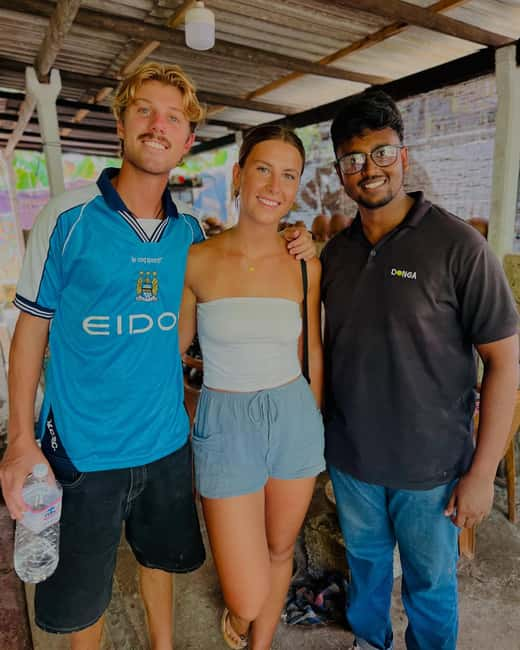
The final 30 minutes are set aside for tea and local sweetmeats. This may sound like a small addition, but it changes the pace of the afternoon.
After working with clay, sitting down for tea gives you time to ask questions and talk with the organiser. The food is part of the local welcome, not just a packaged refreshment added to the schedule. It also gives you a chance to discuss what you have seen without trying to keep your hands on the wheel.
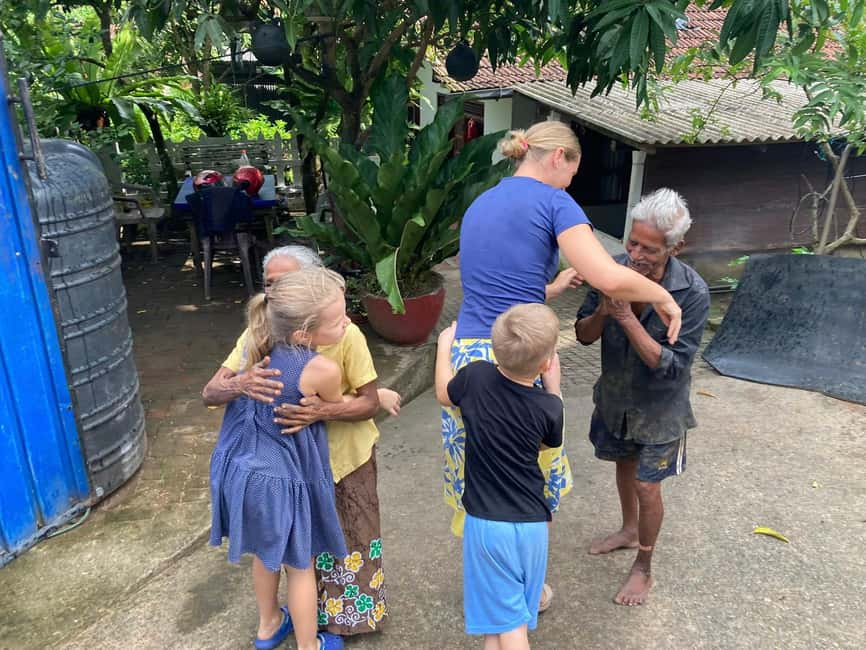
The hospitality is one of the strongest parts of the experience. The mood is warm and personal, with time to meet the family and talk about the work. If you enjoy connecting an activity with the people who make it possible, this half-hour adds real value.
You should still think of it as a simple local snack, not a full meal. If you are hungry, eat beforehand or plan another meal after returning to Kumbalgama Railway Station.
What children can do
Children are included in a useful way. They receive paint to decorate their own mini-pots, giving them a project while adults spend time at the wheel.
This makes the activity more flexible for families, although the experience is not suitable for babies under one year. Parents should also remember that pottery involves wet clay and a traditional work setting, so young children will need supervision.
The private-group format helps here. Your family or small party can move at its own pace instead of trying to keep up with strangers. The supplied information does not give a minimum or maximum group size, so check availability for your preferred date.
The children’s painting activity also solves a common problem with craft workshops: young participants often want an immediate result. A painted mini-pot gives them something creative to finish during the visit, while the wheel work follows a slower timetable.
Why the $40 price can make sense
At $40 per person, this is not the cheapest way to fill two and a half hours in the Weligama area. Its value depends on what you want from a craft experience.
You are paying for a private, hands-on session, instruction about pottery traditions, an explanation of clay preparation and kilning, time on the wheel, tea and sweetmeats, and a pottery piece made by the master potters. You are also putting money into a small local family business rather than a large commercial attraction.
The price is easier to justify if you value personal contact and practical learning. It is less suitable if your main goal is to produce a finished pot and carry it home the same day.
The experience also offers flexibility through reserve-now-and-pay-later booking, and you can cancel up to 24 hours in advance for a full refund. Those terms reduce the risk when your Sri Lanka plans are still changing.
Personal pottery purchases are not included. If you want extra pieces, bring that possibility into your spending plan and ask the host what is available during the visit.
The honest limits of a home workshop
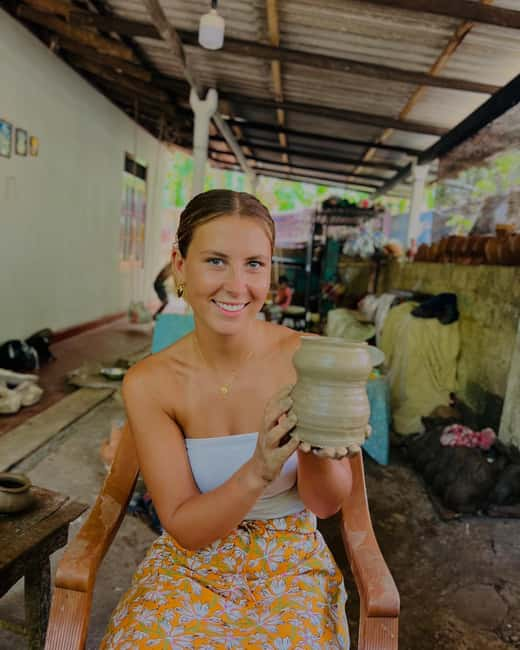
You should not compare this class with a Western pottery studio. The setting is a traditional potter’s home, and the activity is designed around local practice rather than studio polish.
That means the experience may feel more informal and less equipment-focused. There is no promise of instant firing, finished glazing, or a professionally packaged piece made by you. If those details are essential, this may not be the right class.
For me, the informal setting is also the reason to book. You see pottery as a family livelihood, meet the people behind it, and work with the process as it is practiced locally. The setting is part of the lesson.
The workshop is wheelchair accessible, which makes it easier for more people to take part. The provider also lists English and French instruction, and the group type is private. Weapons, sharp objects, alcohol, drugs, intoxication, fireworks, explosives, nudity, and see-through clothing are not allowed.
Who will enjoy this pottery experience most
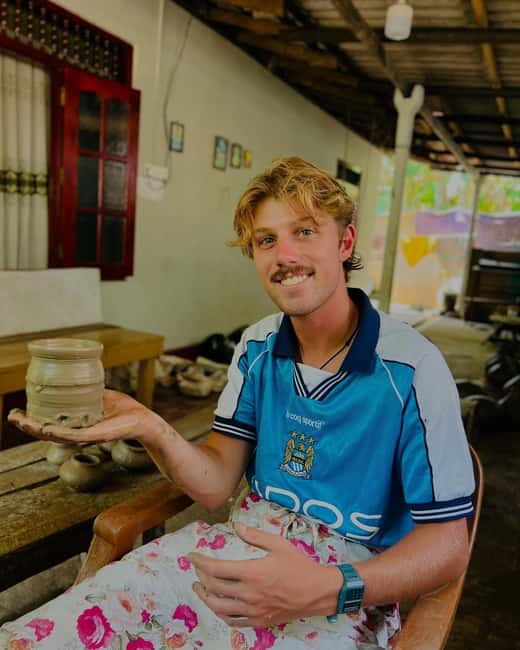
I would recommend this activity to you if you enjoy small-scale cultural experiences and prefer meeting local makers to visiting a large attraction. It suits couples, families with older children, and anyone who wants a calm creative break from sightseeing.
It is also a good choice if you are curious about how traditional crafts survive today. The family’s work, income, and younger generation are part of the story, so the visit offers more than a simple clay lesson.
You will get the most from it if you are comfortable with an imperfect result. Pottery takes practice, and the class gives you a taste of that skill rather than a guaranteed masterpiece.
I would be more cautious about booking if you want a polished studio, advanced techniques, glazing, or a kiln-fired object made during your session. The hosts are clear about those limits, and it is better to choose this activity for its contact with the craft and family, not for instant production.
Practical advice before you go
Wear clothes and shoes that can handle a little clay. The provided information does not list a dress code beyond the restrictions on see-through clothing, but pottery is a hands-on activity, so comfortable clothing is sensible.
Plan around the full 2.5 hours. The wheel session lasts about two hours, while tea and sweetmeats take the final 30 minutes. Do not treat the snack stop as an optional extra if you want the complete experience.
Confirm the meeting details at Kumbalgama Railway Station and check the available starting times before booking. The class is connected with Weligama but operates at a home in Kotapola, so the exact transport plan matters.
Keep your expectations clear: you make a piece during the workshop, but you take home a finished piece made by the master potters. If you want to buy additional pottery, that cost is separate.
Should you book the Kotapola pottery workshop?
Book it if you want a personal introduction to Sri Lankan pottery with real wheel time, local tea, and a family setting. The private format, clear English instruction, and unhurried practice make it a strong choice for a half-day cultural activity.
Skip it if you need instant glazing, kiln firing, or a Western-style studio. For everyone else, the $40 fee offers a thoughtful mix of learning, hospitality, and direct support for local artisans. The uneven pot you make may not be the souvenir you carry home, but the process is likely to be the part you remember.
FAQ
Where does the pottery workshop begin?
The meeting point is Kumbalgama Railway Station, where a representative of the host will meet you.
How long does the experience last?
The full experience lasts 2.5 hours. About two hours are used for the workshop, followed by 30 minutes of local snacks and tea.
Where does the pottery class take place?
The workshop takes place in a traditional potter’s home in Kotapola, in the Weligama area.
What will I learn during the workshop?
You will learn about Sri Lankan pottery traditions, the history of pottery making, clay preparation, the potter’s wheel, and the kilning process.
Do I get to use a potter’s wheel?
Yes. You receive hands-on time to create your own pottery piece on a traditional potter’s wheel.
Can I take home the piece I make?
Instant glazing and kilning are not available. You can take home a pottery piece made by the master potters as a souvenir.
Are tea and snacks included?
Yes. Tea and local sweetmeats are included during the final 30 minutes of the experience.
Can children take part?
Children can take part, and they receive paint to decorate their own mini-pots. The activity is not suitable for babies under one year.
Is the workshop wheelchair accessible?
Yes. The activity is listed as wheelchair accessible.
What languages are available?
Instruction is available in English and French.
Is this a private group activity?
Yes. The group type is private.
Can I cancel the booking?
You can cancel up to 24 hours in advance for a full refund. You can also reserve now and pay later.
Recently listed around Mirissa & Weligama
- All Inclusive Mirissa Whale & Dolphin Watching + Snorkeling★ 3.9 · 3 reviews
- Mirissa/Galle/Hikkaduwa: Transfer to Ella & Udawalawa Safari★ 5.0 · 3 reviews
- Mirissa: Whale & Dolphin Watching Cruise with Breakfast★ 3.4 · 3 reviews
- Scuba Diving in Mirissa★ 5.0 · 4 reviews
- Mirissa: Cooking Class with Beer and Meal★ 3.3 · 4 reviews
- From Galle/Weligama/Mirissa/Matara: Day Trip to Sinharaja★ 5.0 · 5 reviews
- Mirissa: Whale Watching Cruise★ 3.1 · 5 reviews
- Sri Lanka: Cooking Class★ 4.4 · 6 reviews
Mirissa & Weligama Tours, compared.
Unforgettable Snorkeling Experience with Turtles
Read our review →
From Mirissa / Galle / Tangalle to Yala Safari & Drop- Ella
Read our review →

YALA SAFARI TOUR from TANGALLE/HIRIKETIYA/MIRISSA/GALLE
Read our review →
From Mirissa/Galle/Hikkaduwa: Udawalawa National Park Safari
Read our review →
All Inclusive Mirissa Whale and Dolphin Watching Boat Ride
Read our review →
Surf & Stay – Private Surf Lesson Experience in Weligama
Read our review →
Browse the lists this tour appears in