
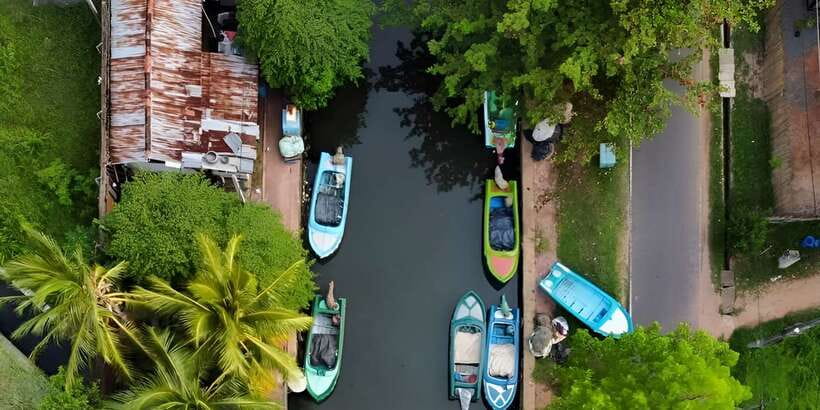
Reviewed · NEGOMBO TOURS
Negombo Heritage Walking Tour
Negombo’s story comes at you through smells, sounds, and street corners on this three-hour heritage walk. You begin at a Hindu temple, pass through produce stalls, follow King George’s Drive beside the sea, then reach the fish market, Dutch Fort, lagoon, and St. Mary’s Church.
I like the way the route shows Negombo as a multicultural city, not just a beach stop. I also like the local scale: you see vegetables, fruit, fishing boats, dry fish, spicy snacks, and working streets rather than only polished monuments. The main drawback is the heat. Start early if you can, since the walk can feel tough by noon, especially with little shade.
Key points to know before you book
- A local view of Negombo: Your English or Hindi-speaking guide explains the city’s Hindu, Christian, fishing, colonial, and food traditions.
- The fish market is part of the real working city: Lellama and the dry fish center are useful, lively, and strongly scented.
- The route is easy to understand geographically: You move from Sea Street and the market toward the coast, fort, lagoon, and church before returning to the temple.
- Guide Shashi is named by several guests: He is described as friendly, flexible, and good at explaining food, spices, customs, and local life.
- Snack tasting is included: Refreshments and Sri Lankan spicy snacks or sweets are planned, though one booking did not receive them.
- Morning is the smart choice: The walk lasts three hours, and the sun becomes a serious factor later in the day.
Why this walk gives Negombo more meaning
Negombo can be easy to reduce to an airport hotel, a beach, and a quick stop before heading elsewhere in Sri Lanka. This walking tour gives you a better reason to stay a little longer. It connects everyday life with the city’s past, using streets and markets as the main exhibits.
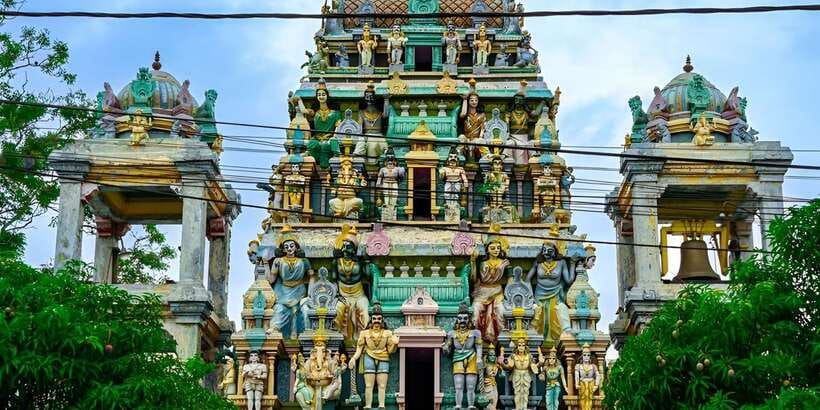
The route begins at Sri Mutthu Mari Amman Temple on Sea Street. From there, you move through a local vegetable and fruit market, then along King George’s Drive toward the coast. The name refers to King George’s visit to the city, while the road itself leads you through fishing activity and dry fish processing.
That combination is the tour’s strength. You are not only looking at old buildings. You are seeing how the city works now, while your guide explains the people, customs, and events that shaped it.
The tour costs $14 per person, a modest price for three hours with a live guide, sightseeing, snack tasting, and refreshments. I consider that good value if you want an introduction to Negombo and plan to ask questions along the way. It is less suitable if you want a silent stroll focused only on architecture, since the market and fish sections are central to the experience.
The average rating is 4.7 from 27 ratings, and the strongest praise focuses on the guides. Shashi is mentioned by name several times. He is described as friendly, clear in English, willing to answer questions, and ready to adjust the walk to special interests. Another guide is praised for giving useful local tips and setting a gentle pace.
One practical warning matters. A replacement guide arrived 30 minutes late on one booking after the first guide became ill. That appears to have been an isolated disruption, but you should contact the provider after booking to arrange a convenient start time and confirm the plan.
More History Tours in Negombo:
- Heritage & Cultural Walk in Negombo
★ 5.0 · 11 reviews - Day tour to Sigiriya,Dambulla & Polannaruwa (3 word heritage places) from Kandy
★ 5.0 · 99 reviews - Explore & Ride the history of anuradhapura with Vogel Tours
★ 5.0 · 62 reviews
Starting at Sri Mutthu Mari Amman Temple
Meet your guide in front of Sri Mutthu Mari Amman Temple. This is a fitting starting point because it places Negombo’s Hindu heritage at the front of the story rather than treating it as a side note.
The temple sits on Sea Street, an important part of the city route. Your guide introduces the setting and explains what makes Negombo a mixed cultural center. The information provided does not promise a formal temple ceremony or interior visit, so think of this stop mainly as an orientation point and cultural introduction.
For a first meeting, this location is practical. You know exactly where to look for the guide, and the temple gives you a clear landmark. Wear clothing suitable for a religious setting, even though the tour details do not state a formal dress code.
The initial guided walk lasts about 15 minutes. Use this opening to tell your guide what interests you most. If you care about food, churches, fishing, colonial buildings, or local customs, say so early. Shashi is specifically praised for responding to individual interests.
Reading Negombo through its fruit and vegetable market
The local market is one of the best reasons to choose a walking tour instead of a standard sightseeing drive. Stalls sell vegetables and fruit, and your guide can help you connect the produce with Sri Lankan cooking and daily life.
This is also where the tour becomes more useful than a simple photo stop. You can ask about unfamiliar ingredients, spices, snack habits, and the way food moves through the city. One guide is praised for explaining local food and spices, which makes this part especially valuable if you enjoy visiting markets but are unsure what you are seeing.
The market visit is listed as part of the walk rather than as a shopping stop. You should not expect a long tasting session here. The planned snack tasting comes later, with Sri Lankan spicy snacks or sweets and refreshments.
Markets can feel crowded, noisy, or wet underfoot, though no specific conditions are promised for this visit. Keep your belongings close and stay near the guide when the route becomes busy. The point is to watch and learn, not to rush through the stalls.
Following King George’s Drive toward the fish trade
King George’s Drive runs parallel with the Indian Ocean and links the city’s colonial name with its working waterfront. The road is named for King George’s visit, but the most interesting detail here is not the royal connection. It is the fishing activity along the route.
You pass an area where anglers work, along with a dry fish processing center. This is an honest part of the walk, and the smell is strong. The tour description even jokes that you walk until you have had enough dry fish smell. That warning is useful. If you dislike intense seafood odors, this section may test your patience.
For me, it is also the kind of stop that gives a place character. Dry fish is not arranged for display. It is part of the local food economy, and seeing the processing area helps explain why fishing matters so much to Negombo.
You will want sunglasses and sunscreen, both listed as items to bring. The road’s coastal position may mean sun exposure, and the walk continues for several hours. Carry water if you normally need extra hydration, though refreshments are included as part of the experience.
More Walking Tours in Negombo:
- Galle Fort Walking tour
★ 4.9 · 285 reviews - Galle Fort Walking Tour with a Resident
★ 5.0 · 88 reviews - Colombo Walking Tour with Ajeet De Soyza
★ 5.0 · 43 reviews - Sigiriya: Rock Fortress Private Guided Walking Tour
★ 4.8 · 34 reviews
Seeing Lellama, Negombo’s fish market
The fish market, known as Lellama, is one of the route’s most direct encounters with local commerce. After the dry fish center, you enter a market tied to the city’s fishing life rather than a market designed for visitors.
Your guide explains what is happening around you and helps place the market in the wider story of Negombo. This is the point where the city’s coastal setting becomes practical and visible. Fishing boats, fish handling, sellers, and buyers all make more sense after you have walked along King George’s Drive.
The stop is scheduled for about 20 minutes. That is enough time for a guided look, but not a leisurely market study. Bring a flexible attitude. Markets can be wet, pungent, and active, and the appeal here is authenticity rather than comfort.
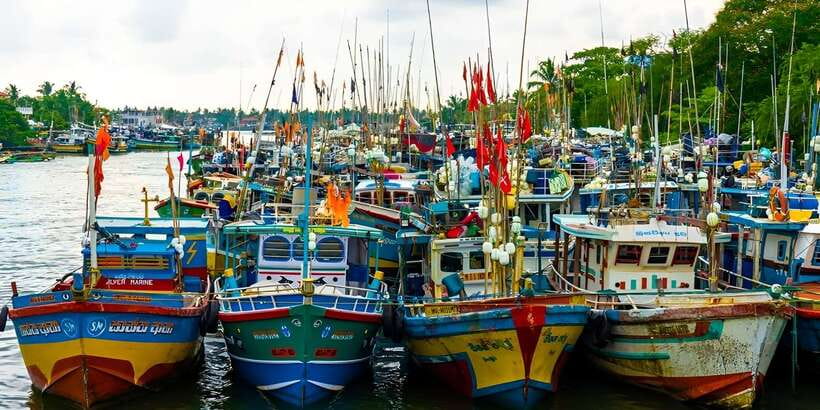
Photography may be tempting, especially around the boats, but ask before photographing people or close-up work. The tour information specifically points to the nearby Kothlawala Bridge as a good place for pictures of fishing boats.
Crossing Kothlawala Bridge and reaching the lagoon
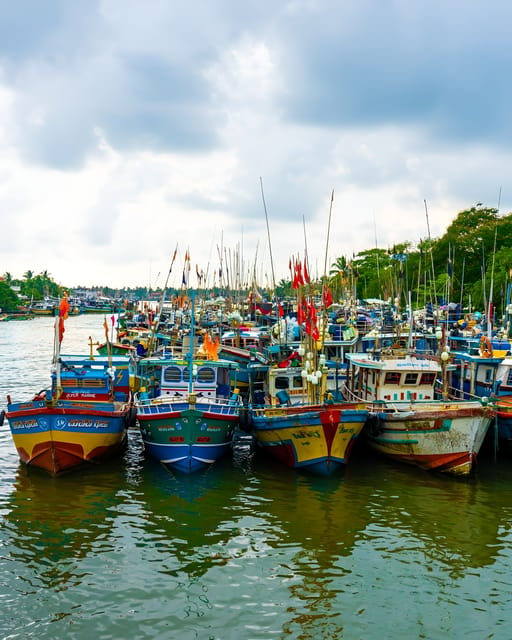
At Kothlawala Bridge, you get a chance to photograph fishing boats and see the water from a different angle. The stop links the fish market with Negombo Lagoon, one of the tour’s key natural and working-city views.
The lagoon visit lasts about 20 minutes and includes guided sightseeing. This is not described as a boat ride, so expect to view the lagoon on foot rather than from the water. Its value comes from seeing the setting that supports the fishing activity you have just encountered.
The bridge also helps you understand the route. You cross, look back toward the boats, then walk to the opposite side before continuing to the next part of the tour. This small change in viewpoint makes the waterfront easier to read.
If you like taking photographs, this is likely one of the strongest stops. Still, do not count on a long pause. The walk keeps moving, and the focus is on explanation as much as pictures.
The Dutch Fort, prison, and colonial traces
The route continues toward the old Negombo Dutch Fort and the prison area. The fort is a reminder that Negombo’s location made it important to European powers and regional trade. The tour also takes you near the prison, which comes before the fort area.
Do not expect a large, fully preserved European fortress. The appeal is in seeing the remains within the modern city and learning how the colonial period fits into Negombo’s wider past. Your guide provides the context that the surviving structures alone may not supply.
The Dutch Fort visit is listed at about 20 minutes, including guided sightseeing and walking. That is enough for an overview and photographs, but not an archaeological study. If colonial architecture is your main interest, you may wish the stop were longer. If you prefer a broad city story, the shorter visit works well because it leaves room for the markets, lagoon, and churches.
The supplied highlights also name St. Stephen’s Church, while the detailed route names St. Mary’s Church and the description refers to St. Mary’s Cathedral. Since the church stop is described in more than one way, confirm the exact church included when you arrange your start time. That small check can prevent confusion for anyone choosing the tour mainly for religious architecture.
St. Mary’s Church and the city’s Christian side
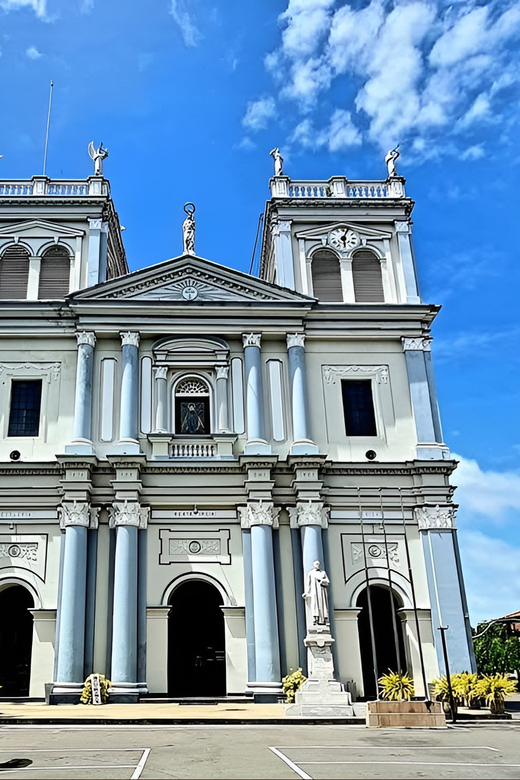
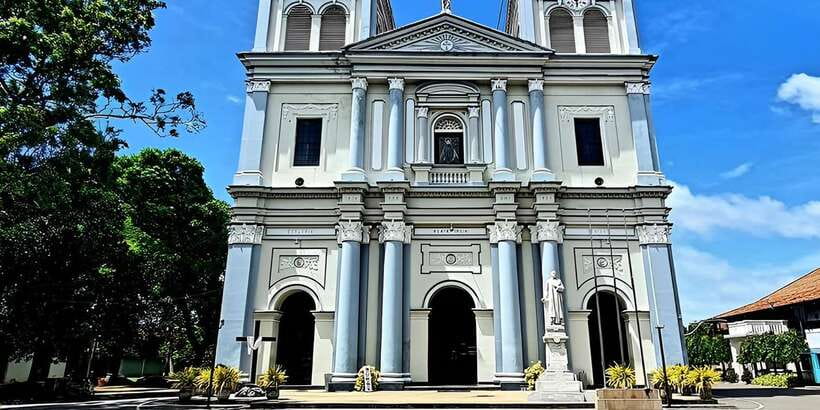
The church stop gives the walk another cultural turn. After Hindu temple, market, fishing, Dutch, and lagoon scenes, you see Negombo’s Christian heritage in a major place of worship.
The detailed route identifies St. Mary’s Church, while the description calls it St. Mary’s Cathedral. Either way, the church is intended as a sightseeing and guided stop of roughly 20 minutes. Your guide explains its place in the city rather than simply pointing out the building and moving on.
This balance is one of the walk’s best features. Negombo is presented through several communities and periods, not a single official story. The tour begins and ends at the Hindu temple, but the route includes Christian churches and Dutch colonial remains, with fishing life tying the city together.
The church is also close to the final refreshments and snack tasting. You can expect quick Sri Lankan spicy snacks or sweets with refreshments. If you have a low tolerance for chili, ask what is being served before trying it. One booking did not include the advertised food and drinks, so it is sensible to confirm this when you contact the provider.
Returning to the temple with a taste of local food
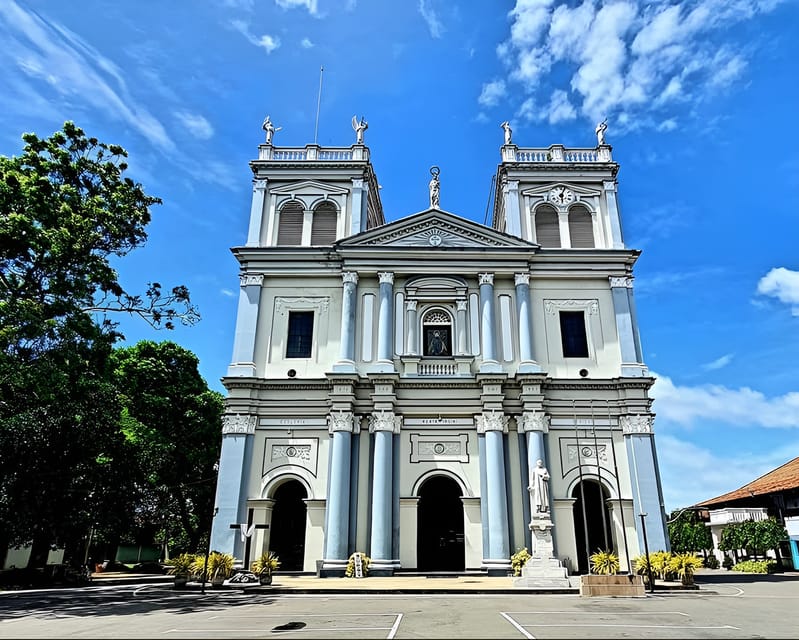
After St. Mary’s Church, the walk returns to Sri Mutthu Mari Amman Temple. This circular route is convenient because you finish where you started, rather than needing to find transport from a different part of town.
The refreshment stop adds a small but useful food lesson. Sri Lankan sweets and spicy snacks offer a final connection to the market and spice explanations from earlier in the walk. It is not presented as a full meal, so do not book this expecting lunch.
The tour’s food element works best as a sample and conversation point. Ask your guide what you are eating, how it is normally served, and where you might find similar snacks later. The guides are praised for local tips, so this is a good time to request suggestions for the rest of your stay.
Timing, heat, and what to bring
The tour takes three hours, with the main stops generally lasting 15 to 20 minutes. Much of the experience is walking between those stops, and several sections are exposed to the sun.
I would choose a morning start. One guest specifically found the heat difficult by 12:00, and that advice fits the route. The coast, market streets, bridge, and fort area can all feel hot, especially when you are moving at a steady pace.
Bring:
- Sunglasses
- Sunscreen
- Comfortable walking shoes
- Clothing suitable for visiting a Hindu temple and church
Only sunglasses and sunscreen are formally listed, so the shoe and clothing advice is practical rather than a stated rule. Contact the provider after booking to agree on a convenient starting time. English and Hindi are available, and the guide is live rather than audio or self-guided.
The cancellation policy is flexible: you can cancel up to 24 hours in advance for a full refund. You can also reserve and pay later, which helps if you are still arranging your Negombo stay.
Who will get the most from this $14 walk?
I would choose this tour if you have a short stay in Negombo and want a useful introduction without paying for a private vehicle or a full-day excursion. The $14 price is strong value for three hours of guiding, several distinct areas, and planned refreshments.
It suits people who enjoy street life, food, local history, religious buildings, fishing, and questions. It is also a good first-day activity because the guide can point out local places and explain how the city fits together.
You may want another option if you dislike fish smells, markets, heat, or walking on active streets. The fort and church stops are relatively brief, so architecture fans should not expect an in-depth specialist tour. The experience is broad rather than narrowly focused.
I would also confirm two details before setting out: the exact church included, and whether snacks and refreshments will be served. Most of the available feedback praises the guides and the food element, but one delayed booking had both a late start and no advertised snack service.
Should you book the Negombo Heritage Walking Tour?
Book it if you want to see the working side of Negombo and understand how Hindu, Christian, Dutch, fishing, and food traditions share the same city. The route is varied, the price is low, and guides such as Shashi add the local explanation that makes ordinary streets meaningful.
Choose a morning start, wear sun protection, and expect the fish market and dry fish center to smell exactly as they should. If you do that, this is a practical, good-value way to turn a brief Negombo stop into a clearer picture of Sri Lankan city life.
FAQ
How long does the Negombo Heritage Walking Tour last?
The tour lasts three hours, including guided walks and sightseeing at the temple, market, fish market, Dutch Fort, lagoon, and church.
Where does the tour start?
The meeting point is in front of Sri Mutthu Mari Amman Temple on Sea Street. The tour also returns to this temple at the end.
Which languages does the guide speak?
Live guiding is available in English and Hindi.
What places are included?
The route includes Sri Mutthu Mari Amman Temple, a local fruit and vegetable market, Lellama fish market, the dry fish center, the Dutch Fort area, Negombo Lagoon, Kothlawala Bridge, and St. Mary’s Church. The tour information also names St. Stephen’s Church, so confirm the exact church stop when arranging your start time.
Are snacks and refreshments included?
Yes. The activity includes refreshments and a snack tasting menu, with Sri Lankan spicy snacks or sweets. One booking did not receive the advertised food and drinks, so confirm this with the provider.
What should I bring?
Bring sunglasses and sunscreen. A morning start is advised because the walk can become hot by around noon.
Can I cancel or pay later?
You can cancel up to 24 hours before the tour for a full refund. The reserve-now-and-pay-later option lets you book without paying immediately.
Recently listed around Negombo
- Sri Lanka Private Tour Pick Up & Drop Off – Colombo Intl Airport★ 5.0 · 10 reviews
- Colombo Sri Lanka Full Day Trip to Dambulla and Sigiriya★ 5.0 · 10 reviews
- Private arrival transfer from the Airport to your booked hotel in Negombo★ 4.5 · 10 reviews
- Scuba Diving For Beginners★ 5.0 · 10 reviews
- Sri Lanka Personal Tour Driver in a Private Vehicle★ 5.0 · 10 reviews
- Negombo: Sunset lagoon boat tour with hotel transfers★ 5.0 · 11 reviews
- Private Journey to Sigiriya Majestic Rock Fortress from Colombo★ 5.0 · 11 reviews
- Negombo: Hamilton Canal to Colombo by Boat via Muthurajawela★ 4.7 · 11 reviews
Negombo Tours, compared.
Negombo city tour by Tuk Tuk Hotel Pickup & Guide
Read our review →A Multi Day Tour Around Sri Lanka with Our Personal Driver
Read our review →
Wilpattu National Park Jeep Safari from Negombo / Waikkal (All Inclusive)
Read our review →
Half-Day Negombo City Tour with Ayurvedic Massage & Local Lunch
Read our review →
Sri Lanka 8 Tage 7 Nächte Tour mit privatem Fahrer
Read our review →
Browse the lists this tour appears in