
Reviewed · SIGIRIYA & DAMBULLA TOURS
Day tour sigiriya to anuradhapura
Anuradhapura gives you a different view of Sri Lanka from the famous rock at Sigiriya. Instead of one dramatic climb, you spend the day moving through a huge ancient city of stupas, monasteries, sacred trees, and stone carvings, with Mihintale adding an important religious site outside town.
I like the very small group size, capped at three people, and the convenience of pickup and return at your Sigiriya address. I also like the range of stops: you see both major monuments such as Ruwanwelisaya and quiet details such as the Moonstone and Twin Baths. The drawback is the length. With nine stops packed into 8 to 10 hours, some visits may feel brief, and all admission fees are extra.
Key points to know before booking
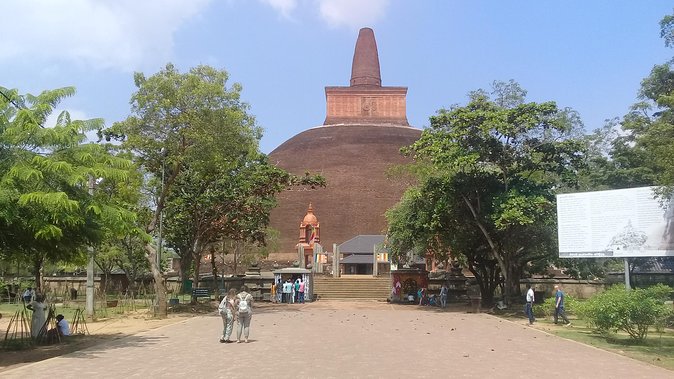
- Nine major stops in one day: The route covers Thuparamaya, Ruwanwelisaya, Jaya Sri Maha Bodhi, Abayagiriya, Isurumuniya, the Twin Baths, the Moonstone, Abhayagiri Dagaba, and Mihintale.
- A maximum of three people: This is far more personal than a large coach trip and makes pickup from your Sigiriya accommodation simple.
- Round-trip transport from Sigiriya: You begin and end at the meeting point in Sigiriya, with no need to arrange a separate return.
- Admission fees are not included: Budget separately for all site tickets and taxes before you set out.
- Expect a full day: The stated duration is about 8 to 10 hours, so this works best when you have a spare day in the Sigiriya area.
- Two bottles of water are supplied: You still need practical clothing and should be ready for sun, walking, and temple visits.
Why Anuradhapura makes a good second day from Sigiriya
Sigiriya and Anuradhapura are often paired because they show two very different sides of ancient Sri Lanka. Sigiriya is a single, powerful monument, a rock fortress reached by a climb. Anuradhapura spreads across an extensive sacred area, where the scale comes from repeated stupas, old monastic centers, reservoirs, trees, and ceremonial paths.
This trip does not include a climb of Sigiriya Rock Fortress. Instead, it uses Sigiriya as your base and takes you to Anuradhapura for the day. That distinction matters when you plan your schedule. If you want to visit the rock itself, you need to arrange that separately.
I see the tour as a useful choice if you have already allowed enough time for Sigiriya and do not want to handle transport to Anuradhapura on your own. The direct pickup removes much of the planning. A group of no more than three also means you are not managing the pace of a full bus.
The route is ambitious. Nine places in one day gives you a broad introduction, but it does not promise long, quiet visits at every monument. I would book it for an overview, then note which site deserves a return visit if you have extra time.
More ways up Sigiriya rock:
- From Colombo: Sigiriya and Dambulla Day Trip with Safari
★ 4.7 · 842 reviews - Organic cooking class sigiriya (kumara & family)
★ 5.0 · 650 reviews - From Sigiriya: Minneriya National Park Private Jeep Safari
★ 4.9 · 415 reviews
Starting with Thuparamaya, Sri Lanka’s first Buddhist temple
Thuparamaya is a fitting first stop because it introduces the religious importance of Anuradhapura. Located in the sacred area of Mahamewna Park, its stupa dates to the reign of King Devanampiya Tissa, given here as 247 to 207 BC, and is described as the earliest dagoba built on the island.
You have about 30 minutes here. That is enough to see the monument and take in its place within the sacred zone, but it is not a long study visit. Remember that the admission ticket is not included.
I would use this stop to notice the age and purpose of the site rather than rush straight to photographs. A dagoba is a Buddhist reliquary monument, so the rounded form is not simply decorative. It reflects the role these structures played in Buddhist worship.
Ruwanwelisaya and the grand scale of Anuradhapura
The one-hour stop at Ruwanwelisaya gives you more time with one of the city’s major monuments. Built by King Dutugemunu around 140 BC, this hemispherical stupa contains relics and remains sacred to many Buddhists.
This is one of the places where Anuradhapura can feel much larger than expected. You are not just looking at an old building. You are seeing a major religious monument that has continued to matter long after the ancient kingdom ended.
Allow yourself time to look beyond the central dome. The surrounding space, the approach, and the act of visiting a living sacred place all form part of the experience. Dress and behave respectfully at Buddhist sites, and follow any instructions about footwear or photography given on arrival.
The admission fee is extra, so keep that cost in mind as you calculate the real price of the day.
Jaya Sri Maha Bodhi, a living sacred site
Jaya Sri Maha Bodhi is a sacred fig tree in the Mahamewna Gardens. It is said to be a southern branch of the original Sri Maha Bodhi at Buddha Gaya in India, the tree associated with the Buddha’s enlightenment.
You have one hour here, which is useful because this is not a monument you understand by taking one quick picture. The tree is alive, protected, and part of an active religious setting. The mood is different from that of a large stupa. You are observing an important sacred object that continues to receive devotion.
I would slow down here. Look at the setting and watch how people approach the site, while keeping your own visit quiet and respectful. This stop adds meaning to the day because it connects Anuradhapura’s old stone monuments with a living tradition.
More ancient city days:
- Polonnaruwa Day Tour With Minneriya NP Elephant Safari
★ 4.9 · 32 reviews - Private Polonnaruwa Sightseeing Day Tour from Sigiriya
★ 5.0 · 31 reviews - Private Polonnaruwa Ruins & Minneriya Safari Tour from Sigiriya
★ 5.0 · 18 reviews - Polonnaruwa Sight Seeing Tour and Minneriya Elephant Safari
★ 4.8 · 18 reviews
Sorting out the Abayagiriya and Jetavanaramaya stop
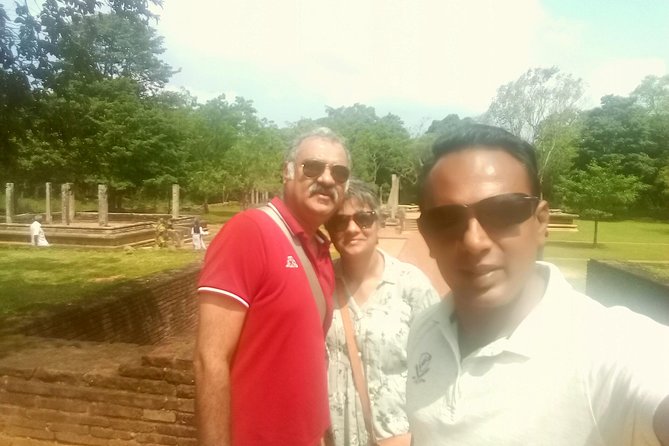
The fourth stop is labeled Abayagiriya Stupa, while the description refers to Jetavanaramaya in the ruins of Jetavana monastery. The information supplied for the tour connects this stop with a stupa that reached 122 meters, or about 400 feet, and was once the tallest stupa in the world and the third tallest structure of its time.
That distinction in naming is worth noticing before you book. Anuradhapura has several important monastic complexes, and the names can be confusing when they are written differently across tour descriptions. If the exact monument matters to you, ask the provider to confirm which site you will visit.
The planned stop lasts 30 minutes. That gives you a strong look at the scale of the ruin, but little time for a detailed exploration. I would treat it as a focused monument visit and save extended archaeological study for another day.
Isurumuniya Temple and its unusual traditions
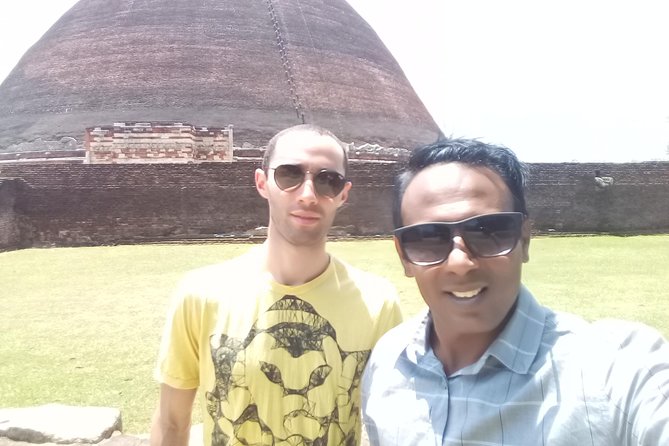
Isurumuniya receives one hour on the schedule. The supplied background connects the temple with Pulasthi Rishi and the birth of King Ravana, and describes the place as having about 5,000 years of written history. It also refers to the temple as one of three star gates in the world, a claim that should be treated as local tradition rather than established archaeological fact.
The temple was built by King Devanampiya Tissa, and its setting adds variety to the route. After several large stupas, a temple stop can feel more intimate and personal.
I would listen carefully to the explanation here and separate legend from documented history. That does not make the stories less interesting. It gives you a better understanding of how Sri Lankan sacred places carry both formal religious traditions and local tales.
As with the other temples, respectful dress and conduct are important. The ticket is not included.
The Twin Baths reveal practical ancient engineering
The Twin Baths, or Kuttam Pokuna, are among the most rewarding smaller stops on the route. You have 30 minutes to see the paired bathing pools, described as some of the finest examples of ancient Sri Lankan bathing tanks.
Large stupas show ceremonial and religious ambition. These pools show something more practical: careful planning, water management, and attention to the daily needs of a monastic community. Look at the shape, steps, and arrangement of the pools rather than treating them as two simple stone tanks.
This is a good place to keep your expectations realistic. Thirty minutes will let you understand the design and take photographs, but it will not give you time to examine every feature in depth. Still, I like having this stop included because it breaks up the sequence of major religious monuments.
The Moonstone, where small details matter
The Anuradhapura Moonstone, or Sandakada pahana, is a carved semicircular stone slab usually placed at the bottom of a staircase or entrance. It is a distinctive feature of ancient Sinhalese architecture.
You have another 30-minute visit here. That may sound short, but the Moonstone rewards close looking rather than a long walk. Study the carving and its position at the entrance. The detail helps you understand how ancient builders used thresholds to mark a change from one space to another.
I would not rush this stop just because it is smaller than a stupa. The Moonstone is exactly the kind of architectural feature you can miss when a tour focuses only on famous monuments.
Abhayagiri Dagaba and a major monastic center
The later Abhayagiri Dagaba stop lasts one hour and covers the former Abhayagiri Vihara, described as a major monastery site associated with Mahayana, Theravada, and Vajrayana Buddhism. It is also described as one of the world’s most extensive ruins and one of Anuradhapura’s most sacred Buddhist sites.
This is one of the day’s larger historical areas, so an hour gives you a chance to grasp its importance. The value here comes from seeing a monastery complex rather than one isolated monument. You get a better sense of how religious life once operated across a broad area.
The route includes both stops with similar names, Abayagiriya and Abhayagiri. I would confirm the order and exact locations with your guide on the day. Clear information will help you avoid confusion and make the most of the limited time.
Mihintale adds a hilltop religious setting
Mihintale is the final listed stop and receives one hour. It lies about 12.875 kilometers, or eight miles, east of Anuradhapura, near the Anuradhapura to Trincomalee Road. The site is associated with Missaka Pabbata, a mountain peak rising about 300 meters, or 1,000 feet.
The background connects Mihintale with accounts in the Dipavamsa and other Buddhist traditions. Its position outside Anuradhapura adds a change of setting after a day among ruins and stupas.
The schedule does not specify how much climbing is involved during your visit, so ask the guide what the one-hour stop will cover. Do not assume that every part of the hill can be seen comfortably within that time. If you have mobility concerns, this is one of the places to discuss before departure.
Mihintale can be a strong final stop because it gives the day a wider religious context. It is not simply another old structure. It is a place tied to the spread and practice of Buddhism in Sri Lanka.
What the $120 price really covers
At $120, the value depends on how much you value private-style transport and saved planning time. The maximum group size is three, and round-trip transfers from your chosen Sigiriya address are included in the basic arrangement. That makes the price easier to justify for a small group sharing the cost.
The tour also supplies two bottles of water. That is useful, but the price does not include entrance fees, taxes, or other listed costs. You need to budget for every site admission separately, and the day includes many stops where fees may apply.
The itinerary is packed enough that you are paying for access to a wide range of places in one day, not for long guided time at each one. If you want a slow archaeological visit, the schedule may feel too tight. If you want to see the main religious and architectural sights without arranging several transfers, the convenience has real value.
Timing, comfort, and what to bring
Plan for 8 to 10 hours. The exact length may depend on road conditions, the time spent at each place, and how the day is handled between stops.
Wear comfortable shoes and clothing suitable for temple visits. The supplied information confirms bottled water, but it does not say that meals or extra drinks are included, so plan accordingly. You should also be ready for a full day of walking and outdoor sightseeing.
The small group is a practical advantage. You can ask questions and adjust the pace more easily than on a large group outing, though nine stops still place limits on how long you can linger.
A mobile ticket is provided, and confirmation is received at booking. The activity begins in Sigiriya and ends back at the meeting point. It is near public transportation, and most people can participate according to the stated tour information.
Who should book this Anuradhapura day trip?
I would choose this tour if you are staying in Sigiriya, want to see Anuradhapura in one day, and prefer a simple door-to-door arrangement. It suits people who enjoy seeing many sites and gaining a broad sense of an ancient capital rather than spending an entire morning at one monument.
It is also a good fit for a couple, family, or small group of friends because the maximum of three people keeps the outing personal. The route includes famous monuments and smaller details, so you get a more rounded day than a simple stupa-only visit.
I would hesitate if you dislike long days, need generous rest breaks, or want to explore every complex slowly. The admission fees are also a real extra cost, and the $120 price should not be treated as the complete budget.
The experience has a strong rating of 4.7 from 45 ratings, with 93 percent recommending it. Those figures suggest a generally dependable outing, but the practical facts matter more for your decision: a small group, a long schedule, direct transfers, and extra admission costs.
Should you book it?
Book this trip if Anuradhapura is high on your list and you have only one free day from Sigiriya. The chance to see Thuparamaya, Ruwanwelisaya, Jaya Sri Maha Bodhi, the Twin Baths, Abhayagiri, and Mihintale in one organized outing is useful.
Skip it if you want a slow, unhurried archaeological day or if you have already arranged transport and can visit at your own pace. For most people with limited time, though, the combination of a tiny group and round-trip Sigiriya transport makes this a practical way to reach one of Sri Lanka’s most important ancient sites.
FAQ
Where does the tour start?
The tour starts in Sigiriya, Sri Lanka, with pickup from your chosen Sigiriya address.
Where does the tour end?
The activity ends back at the meeting point in Sigiriya.
How long does the day trip last?
The stated duration is approximately 8 to 10 hours.
How many people can join the tour?
The tour has a maximum of three participants.
Are entrance fees included?
No. All entrance fees, fees, and taxes are excluded from the tour price.
What is included in the tour?
Two bottles of bottled water are included for participants.
Which places are visited?
The listed stops are Thuparamaya, Ruwanwelisaya, Jaya Sri Maha Bodhi, Abayagiriya Stupa, Isurumuniya Temple, Twin Baths, Anuradhapura Moonstone, Abhayagiri Dagaba, and Mihintale.
Is the tour available with a mobile ticket?
Yes. The experience offers a mobile ticket.
What happens if bad weather cancels the tour?
This experience requires good weather. If it is canceled because of poor weather, you will be offered another date or a full refund. You can also cancel at least 24 hours before the start time for a full refund.
Recently listed around Sigiriya & Dambulla
- Minneriya National Park Safari in a 4×4 Vehicle★ 4.5 · 10 reviews
- Sigiriya Village Tour and Lunch with Hotel Pick up from Sigiriya★ 5.0 · 10 reviews
- Wasgamuwa: Wasgamuwa National Park Private 3-Hour Safari★ 4.9 · 10 reviews
- Small Group Sigiriya Village Tour with Typical Lunch★ 4.0 · 10 reviews
- Kandy: Sigiriya, Dambulla & Wildlife Safari Private Tour★ 4.3 · 10 reviews
- Sigiriya To Kandy Private Transfer: Visit Dambulla Temple★ 4.9 · 11 reviews
- Sigiriya: Sunrise or Sunset Kayaking Tour★ 4.8 · 11 reviews
- Kandy To Sigiriya Drop Tour- – Private Tour★ 5.0 · 11 reviews
Sigiriya & Dambulla Tours, compared.
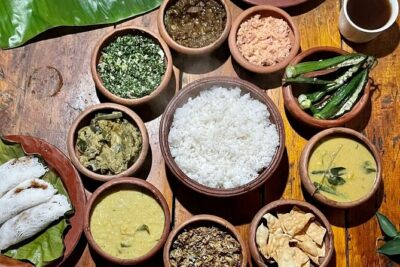
Organic cooking class sigiriya (kumara & family)
Read our review →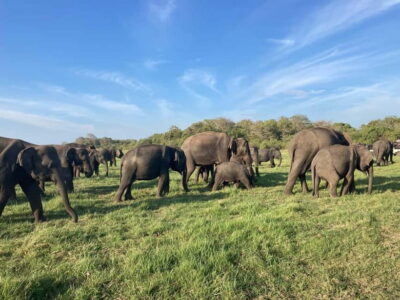
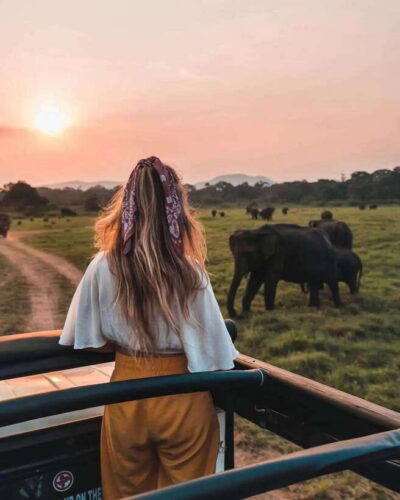

Private Jeep Safari at Minneriya National Park to Visit Elephants
Read our review →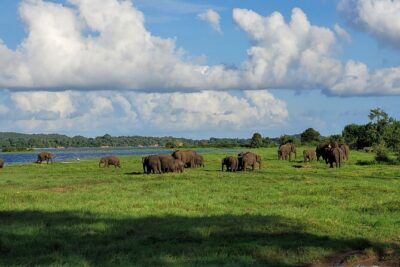
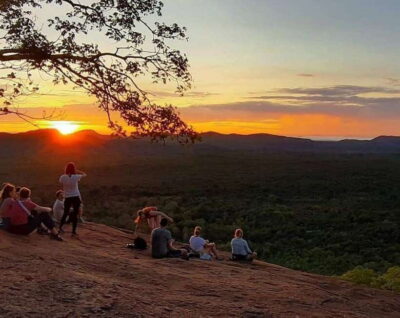
Sunrise or Sunset Hike Pidurangala Rock with Scenic Views
Read our review →Browse the lists this tour appears in