
Reviewed · SIGIRIYA & DAMBULLA TOURS
Malee Cookery Lessons
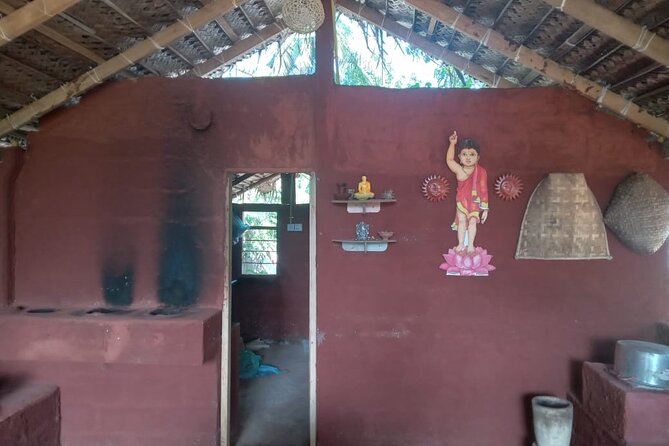
The best part of Malee Cookery Lessons is the setting: you cook inside a real village home, with Malee and her daughter guiding you through a traditional Sri Lankan meal. This is not a polished restaurant demonstration. You work with old-style cooking tools, fresh ingredients, and the family’s own methods.
I like the hands-on format, especially because you help prepare the food instead of simply watching. I also like the generous menu: about eight curries and side dishes, including a seafood dish, dal, and sambals such as banana-flower sambal. The main thing to consider is the timing. The class begins at 1:00 pm and lasts about three hours, so you should arrive hungry and keep your afternoon free.
Key points at a glance
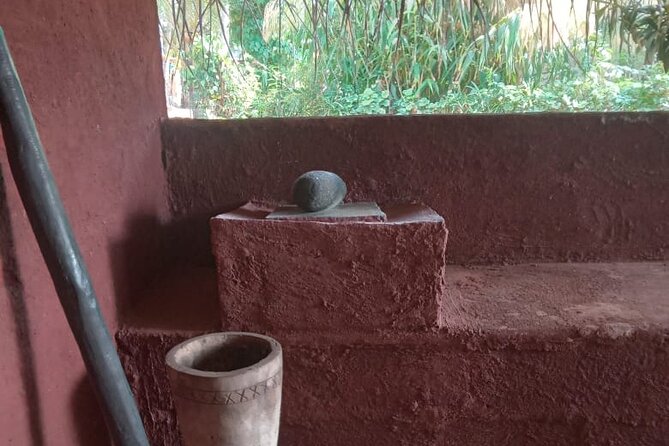
- A real home kitchen: Cook with Malee and her daughter in an authentic village setting near Sigiriya.
- Eight Sri Lankan dishes: The meal can include curries, vegetables, dal, sambals, rice, and seafood.
- Traditional cooking methods: Use primitive tools alongside a few modern ones, with techniques you can repeat at home.
- Private experience: Only your group takes part, which makes it easier to ask questions and take an active role.
- Fresh garden ingredients: The cooking focuses on local produce, with ingredients coming from Malee’s garden when available.
- Strong value at $30: Three hours of instruction and a full meal make this one of Sigiriya’s more useful food experiences.
Cooking Sri Lankan food inside Malee’s village home
Many cooking classes take place in a purpose-built studio. Malee’s lesson offers something more personal. You enter an authentic village kitchen and cook with a local family, using the space and methods that shape everyday Sri Lankan food.
Malee leads the class, with her daughter helping during preparation. The mood is informal and friendly, and the private format means you are not trying to hear instructions over a large crowd. You can ask about ingredients, cooking times, spice levels, and the differences between dishes as you work.
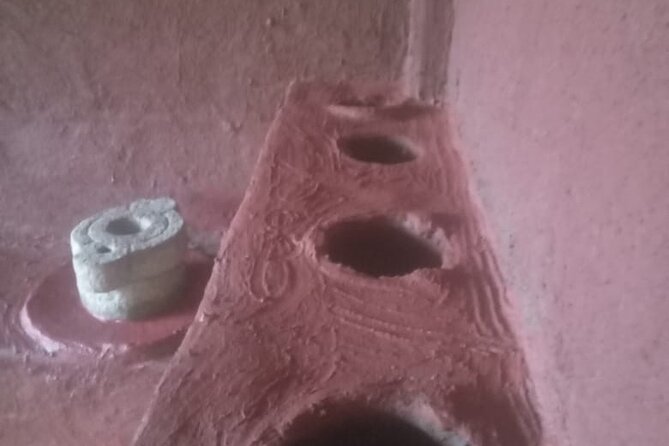
I like this kind of experience because the kitchen itself becomes part of the lesson. The tools are not simply props. Some are traditional and basic, while others are modern enough to help you recreate the dishes at home. That balance matters. You get a sense of how Sri Lankan food was prepared in the past, without leaving you helpless when you return to your own kitchen.
The setting also gives the class a sense of place. You are not just learning a curry recipe in a generic room. You are seeing how food is prepared in a Sri Lankan household near Sigiriya, where rice, vegetables, coconut, spices, and sambals form the backbone of the meal.
More workshops and classes in Sigiriya & Dambulla:
- Organic cooking class sigiriya (kumara & family)
★ 5.0 · 650 reviews - Sajee’s Place Cooking Class
★ 5.0 · 237 reviews - Cooking Class: Sajee’s Place Cooking Class sigiriya
★ 5.0 · 117 reviews
A three-hour meal, not a quick demonstration
The experience starts at 1:00 pm and takes roughly three hours. That length is useful because Sri Lankan cooking is built from several separate dishes rather than one main plate. You need time to prepare, season, cook, taste, adjust, and finally sit down to eat.
The class is described as a demonstration of healthy Sri Lankan curries, but the format is also practical and hands-on. You roll up your sleeves and take part in the preparation. Even if you are not confident in the kitchen, the steps are designed to be easy to follow.
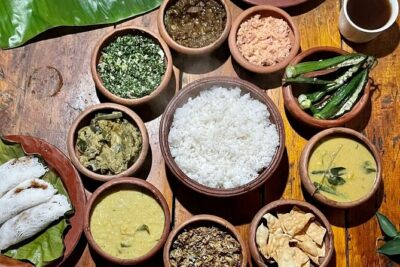
The menu centers on approximately eight dishes. The exact combination may vary, but examples include chicken curry, several vegetable curries, dal, rice, and two sambals. One sambal may use banana flower, an ingredient many visitors have never prepared before. A seafood dish is also included in the stated menu, adding another side of Sri Lankan cooking.
This is a useful lesson in how a Sri Lankan rice-and-curry meal works. Instead of treating curry as one recipe, you see how several small dishes create contrast. One may be creamy, another dry, another hot, another mild, and another sharp with coconut or chili. That variety is a key reason Sri Lankan food feels so generous even when each dish uses fairly simple ingredients.
What you actually cook
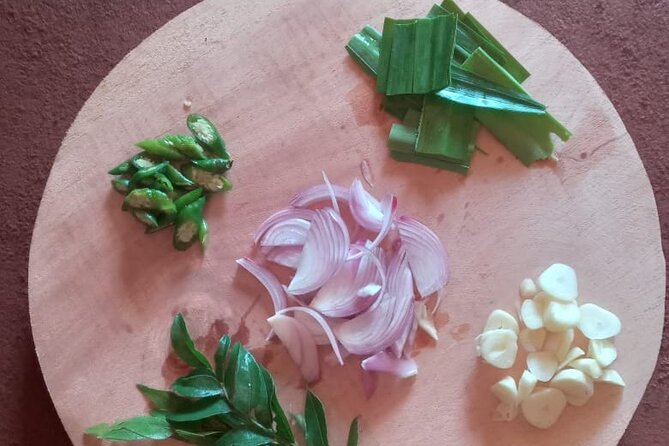
The cooking begins with preparation. You help handle the ingredients and learn how the different components fit together. The focus is not on a single signature dish, but on building a complete meal from several curries and accompaniments.
The curry selection may include chicken, seafood, and vegetables. The vegetable dishes are especially useful for cooks at home because they show how ordinary produce can take on different flavors through spices, coconut, and cooking time. You also prepare dal, a staple that provides a creamy, comforting contrast to the sharper side dishes.
Sambals add a different lesson. They are not heavy curries, but small, strongly flavored accompaniments that brighten the plate. The use of banana flower in one sambal gives you a chance to work with a distinctly local ingredient rather than sticking to familiar international vegetables.
Rice completes the meal. Once the dishes are ready, everyone sits down and eats what they have prepared. This final meal is not an extra snack tacked onto the class. It is the payoff for the work, and the large menu means you can compare the results side by side.
You should not eat a big lunch before arriving. Three hours of cooking and tasting can produce a substantial amount of food, and the meal is designed to be shared at the end. If you arrive full, you may miss part of the best part.
Traditional tools with practical lessons for home
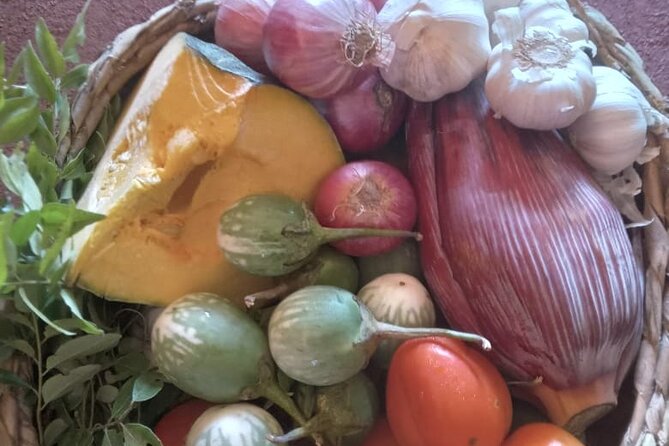
One of the most interesting details is the mix of primitive and modern tools. Traditional equipment shows you how Sri Lankan families have prepared food for generations. Modern tools make the recipes more manageable once you return home.
That combination keeps the class from becoming a museum display. You learn the character of old cooking methods, but you also gain ideas for adapting them. The point is not to copy every tool exactly. It is to understand the order of preparation, how the spices are used, and how the dishes are brought together.
Pay attention to the small practical choices. The same vegetable can taste very different depending on whether it is cooked into a soft curry, kept fairly dry, or mixed into a sambal. The class gives you a chance to see those differences directly instead of reading about them on a menu.
Malee’s approach also makes the lesson approachable for beginners. You do not need advanced kitchen skills to take part. The instructions are easy to follow, and the family atmosphere helps keep the pace relaxed. Experienced cooks will still find value in the unfamiliar ingredients and traditional methods.
A few more Sigiriya & Dambulla days to line up
- From Colombo: Sigiriya and Dambulla Day Trip with Safari
★ 4.7 · 842 reviews - From Sigiriya: Minneriya National Park Private Jeep Safari
★ 4.9 · 415 reviews - From Sigiriya: Minneriya National Park Elephant Safari
★ 4.8 · 365 reviews - Private Jeep Safari at Minneriya National Park to Visit Elephants
★ 5.0 · 338 reviews
Fresh produce and the taste of a home meal
Several dishes use ingredients from Malee’s garden. Fresh produce matters here because the menu depends so heavily on vegetables, herbs, coconut, and spices. The result is closer to a home meal than to a restaurant tasting menu.
The food is described as healthy, but that does not mean plain. Sri Lankan cooking gets its character from layered seasoning and contrasting textures. A meal can be vegetable-heavy and still full of heat, sweetness, sourness, and fragrance.
I especially like that the menu is not limited to one curry and a side of rice. Preparing four vegetable curries, dal, sambals, and a meat or seafood dish gives you a better understanding of the island’s cooking than a short lesson focused on one recipe.
There is also room for regional context. Sri Lankan cuisine changes between the low country, hill country, and northern parts of the island. This class introduces those differences through the ingredients and styles used in the meal, though it is best viewed as an introduction rather than a formal regional food course.
Why the private format makes a difference
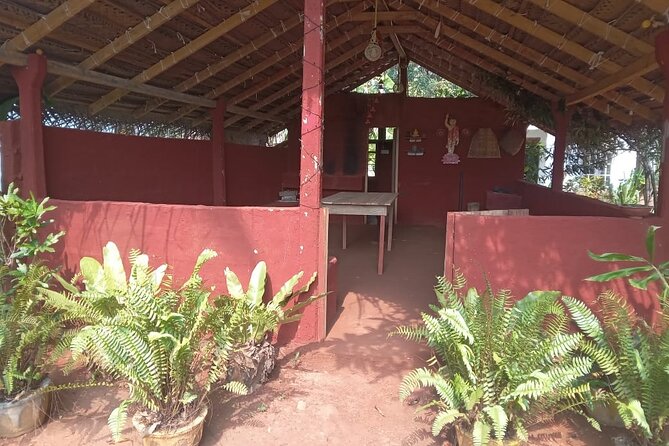
This is a private activity, so only your group participates. That is a strong advantage for a cooking class. You can take your time with unfamiliar steps, ask questions without holding up a large group, and choose how much of the preparation you want to handle.
A private class also works well for families. One group of five was able to take part together, with everyone involved in the cooking. Children or less experienced cooks can watch closely, while more confident participants take on extra preparation.
The tradeoff is that the experience may feel less social if you hoped to meet other people. A shared class can bring together cooks from different places, while this one focuses on your group and the host family. You are paying for privacy and personal attention rather than a large group atmosphere.
Pickup is offered, and the location is near public transportation. Since the class takes place in a village home, confirm the pickup details when booking if you are staying outside central Sigiriya. The mobile ticket is convenient, and confirmation is provided at booking.
Is $30 a fair price?
At $30 per person, the value is strong if you want more than a meal. You receive about three hours of instruction, a private session, a large selection of food, and the chance to eat the dishes you helped prepare.
The price also includes the setting. You are not paying only for ingredients and recipes. You are getting time with a local family and access to a home kitchen, which is usually more personal than a standard restaurant lesson.
The value is best for people who enjoy participation. If you only want to sample Sri Lankan food, a restaurant meal will be quicker and may cost less. If you want to understand how the food is made, practice the steps, and take ideas home, the class offers much more.
The menu is also generous. The meal may include chicken or seafood, four vegetable curries, dal, two sambals, rice, and fruit. You may not finish every dish, but that abundance is part of the experience. Come hungry and expect a long, satisfying lunch that runs into the afternoon.
The small drawbacks to keep in mind
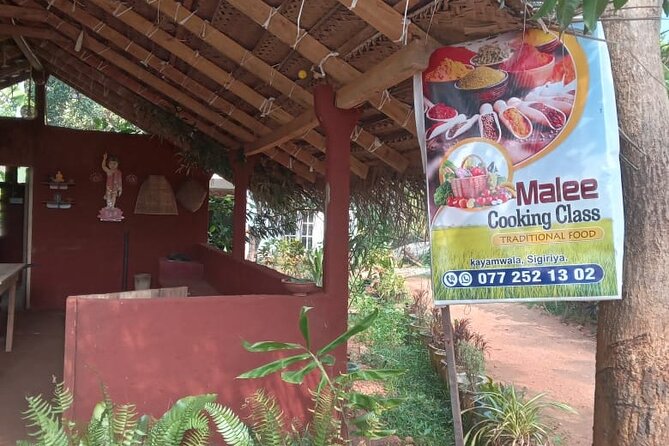
The three-hour schedule is the main consideration. This is not a quick stop between visits to Sigiriya Rock and another attraction. Starting at 1:00 pm means you should plan your sightseeing around it.
The traditional kitchen setting may also mean fewer conveniences than a modern cooking school. That is part of the appeal, but anyone seeking a polished studio, printed recipe cards, or formal culinary instruction should check expectations before booking. The supplied details promise practical instruction and traditional methods, not a professional chef certification course.
The menu can also be substantial. If you have dietary restrictions, ask before booking so the host can confirm what can be adjusted. The stated food includes seafood, chicken, vegetables, dal, sambals, rice, and fruit, but the available details do not specify a formal allergy or dietary accommodation policy.
Finally, the class is listed as a private activity, not a large cultural performance. The experience depends on taking part. You will get more from it if you are willing to chop, stir, taste, and ask questions.
Who will enjoy Malee Cookery Lessons most?
I would recommend this class to anyone who wants a close look at everyday Sri Lankan food. It works particularly well for:
- First-time visitors to Sri Lanka: You get a broad introduction to curries, dal, rice, and sambals in one sitting.
- Home cooks: The mix of traditional and modern tools makes the recipes more realistic to repeat at home.
- Families and couples: A private class lets everyone work at a comfortable pace.
- Vegetable lovers: The menu gives vegetables a central role rather than treating them as minor sides.
- Food-focused visitors in Sigiriya: The lesson fills a half-day and adds a local experience to a visit focused on ancient sites and scenery.
It may be less suitable if you dislike spicy food, do not enjoy hands-on activities, or have only a short window in Sigiriya. The class is about taking part, not simply sitting down to eat.
Booking, timing, and cancellation
The experience starts at 1:00 pm and lasts approximately three hours. Pickup is offered, mobile tickets are accepted, and the location is near public transportation.
You can cancel for a full refund if you do so at least 24 hours before the local start time. Cancellations or changes made within 24 hours are not refunded or accepted, so check your sightseeing plans before confirming.
Should you book this cooking class?
Book Malee Cookery Lessons if you want to spend an afternoon cooking and eating with a local family, not just watching a staged demonstration. The private village kitchen, broad menu, traditional tools, fresh garden ingredients, and full meal make the $30 price easy to justify.
I would be especially keen to book it after a morning at Sigiriya, when you are ready for a proper meal and a slower pace. Arrive hungry, allow the full three hours, and tell Malee about any food restrictions in advance. Skip it only if your schedule is tight or you prefer a quick tasting over hands-on cooking.
FAQ
Where does Malee Cookery Lessons take place?
The class takes place in an authentic village kitchen hosted by Malee and her local family near Sigiriya, Sri Lanka.
What time does the class start?
The listed start time is 1:00 pm.
How long does the cooking lesson last?
The experience lasts approximately three hours.
How many dishes will I prepare?
About eight dishes are prepared. The menu includes curries and one seafood dish, with examples including chicken curry, vegetable curries, dal, sambals, rice, and fruit.
Is this a private cooking class?
Yes. Only your group participates in the activity.
Is pickup available?
Yes. Pickup is offered, and the location is also near public transportation.
What is the cancellation policy?
You can receive a full refund if you cancel at least 24 hours before the experience start time. Cancellations and changes made less than 24 hours before the start time are not refunded or accepted.
Recently listed around Sigiriya & Dambulla
- Minneriya National Park Safari in a 4×4 Vehicle★ 4.5 · 10 reviews
- Sigiriya Village Tour and Lunch with Hotel Pick up from Sigiriya★ 5.0 · 10 reviews
- Wasgamuwa: Wasgamuwa National Park Private 3-Hour Safari★ 4.9 · 10 reviews
- Small Group Sigiriya Village Tour with Typical Lunch★ 4.0 · 10 reviews
- Kandy: Sigiriya, Dambulla & Wildlife Safari Private Tour★ 4.3 · 10 reviews
- Sigiriya To Kandy Private Transfer: Visit Dambulla Temple★ 4.9 · 11 reviews
- Sigiriya: Sunrise or Sunset Kayaking Tour★ 4.8 · 11 reviews
- Kandy To Sigiriya Drop Tour- – Private Tour★ 5.0 · 11 reviews
Sigiriya & Dambulla Tours, compared.

Organic cooking class sigiriya (kumara & family)
Read our review →

Private Jeep Safari at Minneriya National Park to Visit Elephants
Read our review →

Sunrise or Sunset Hike Pidurangala Rock with Scenic Views
Read our review →Browse the lists this tour appears in