
Reviewed · COLOMBO TOURS
Colombo Social and Political Walk
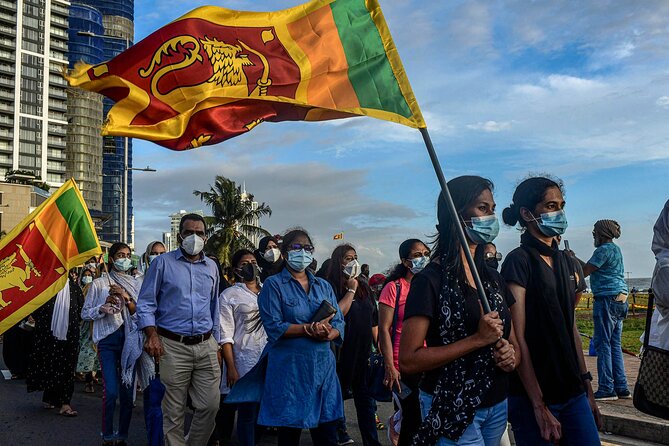
Colombo’s best stories are not all found inside museums. This 2.5-hour social and political walk connects Port City, Pettah, the World Trade Center, Old Parliament, Independence Square, and BMICH to explain how Sri Lanka’s modern state took shape and why the country is facing such severe shortages and disruption today. I like the documentary-style flow and the fact that the discussion aims for balance rather than telling you what political view to adopt.
I also like the route’s mix of ordinary commerce and official power: Pettah market gives you a street-level setting, while parliament, conference halls, and financial towers show how the country presents and governs itself. Guide Chami is specifically praised for knowing the subject well. The main consideration is that this is a serious, information-heavy walk, not a light sightseeing stroll, and the broad route may feel demanding if you want lots of time at each landmark.
Key points to know before booking
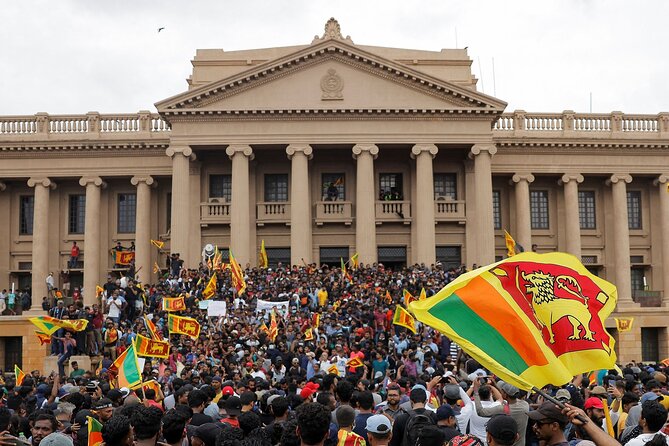
- A politics and economics lesson on foot: The walk links Colombo’s markets, business towers, government buildings, and national monuments.
- Chami leads the experience: The guide is singled out for being very well informed about Sri Lanka’s recent history and political background.
- The route runs from The Kingsbury Colombo to BMICH: You start at 5:00 pm and finish at the Bandaranaike Memorial International Conference Hall.
- The present crisis is central: Expect discussion of food, fuel, electricity, business, and healthcare problems alongside older political events.
- Small enough for discussion: The group is capped at 25 people, which matters on an experience built around questions and conversation.
- A $35.99 choice for serious learners: The price makes the most sense if you want context and analysis, not simply a list of Colombo sights.
Why this Colombo walk feels different from ordinary sightseeing
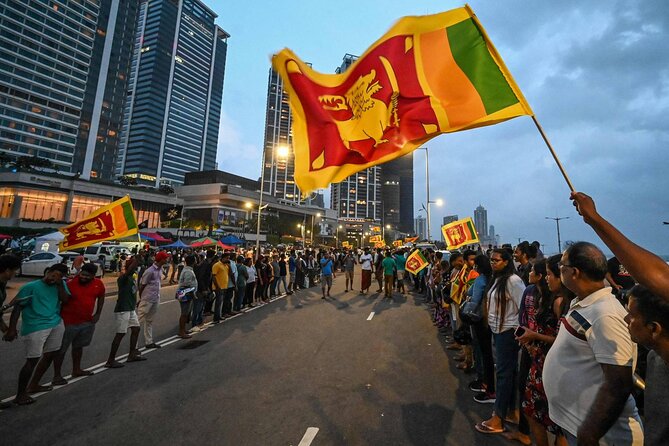
Most city walks use monuments as stops between short bits of history. This one uses the city itself as evidence. A new development, an old market, a financial center, and a national memorial each help explain a different part of Sri Lanka’s story.
The experience begins with the creation of the modern state and moves toward current events. That gives you a useful structure. Instead of hearing isolated facts about Colombo, you follow a timeline and see how social and political choices affect daily life.
Sri Lanka’s crisis is not treated as a side note. Shortages of food, fuel, and electricity have disrupted businesses and healthcare services, so the walk sets current events against the country’s political and economic background. I find that useful because a headline rarely explains how a national crisis reaches markets, offices, public institutions, and ordinary routines.
The approach is described as balanced and non-biased. That does not mean the subject will feel neutral or easy. Politics rarely does. It means you are encouraged to form your own view rather than accept a packaged answer.
More Walking Tours in Colombo:
- Colombo Walking Tour with Ajeet De Soyza
★ 5.0 · 43 reviews - Glimpse Of Colombo City Walk
★ 4.5 · 11 reviews - Galle Fort Walking tour
★ 4.9 · 285 reviews
The Kingsbury Colombo at 5:00 pm
Your meeting point is The Kingsbury Colombo at 48 Janadhipathi Mawatha. The start time is 5:00 pm, and the experience lasts about two hours and 30 minutes.
That timing gives the walk an evening shape. You are not signing up for a full-day program, yet the subject matter is too substantial to rush through in an hour. The length should allow Chami to explain events, connect them to places, and respond to questions.
I would arrive ready to listen from the first minute. This is not an outing where the most important content comes only at the final monument. The opening discussion sets up the political and social themes that make later stops matter.
You receive a mobile ticket, and confirmation is provided when you book. The group can include up to 25 people. That is not a private tour, but it is a manageable size for a guide-led discussion. If you want a one-to-one political seminar, this is not it. If you like hearing a clear presentation while still having a chance to ask questions, the limit is helpful.
Colombo Port City and the shape of modern development
Colombo Port City introduces the newer side of the capital. Its place on this route suggests a discussion of development, investment, urban change, and the way Sri Lanka imagines its economic future.
You should not expect this stop to function as a standard architectural tour. Its value is in the questions it raises. Who benefits from major development? How does a country attract investment during an economic crisis? What does a new commercial district say about national priorities?
The location works well early in the walk because it gives you a modern reference point. Later, when you visit older commercial and political areas, you can compare different versions of Colombo rather than seeing each place as a separate attraction.
The supplied information does not promise interior visits or extended sightseeing here. I would treat Port City as a discussion setting and a visual starting point, not as a ticketed attraction included in the experience.
Pettah market, where national issues meet daily trade
Pettah market brings the discussion down to street level. Markets are useful places to talk about supply, prices, shortages, work, and the practical effects of economic decisions. Here, the subject is less abstract than it can be in an office district.
The market also gives the route social range. Colombo is not only government buildings and corporate towers. It is also the place where people buy and sell goods, manage household needs, and feel economic pressure in direct ways.
I like this stop because it can help connect the crisis to ordinary life without turning the walk into a simple market visit. You will still be listening to political and economic analysis, so do not book this expecting a long free period to shop or browse independently.
Pettah may also be one of the livelier parts of the route. Keep your attention on the guide and expect the setting to compete with the talk. That is part of the point, but it means you may not catch every sentence if you drift too far from the group.
A few more Colombo days to line up
- Colombo: Private Tuk-Tuk City Tour with All Entry Fees
★ 4.9 · 2,154 reviews - Sri Lanka Personal Tour Driver in private vehicle
★ 5.0 · 747 reviews - Colombo Tuk Tuk City Tour -Sightseeing Entry Fees & Food Included
★ 5.0 · 678 reviews - Udawalawe National Park: Elephant Safari with Expert Guide
★ 4.9 · 641 reviews
Good market and the difference between commerce and policy
Good market is another commercial stop on the route. The itinerary provides no further detail about this location, so I would not attach a specific political meaning to it before you hear Chami explain it.
Its presence reinforces the walk’s interest in commerce and society. Along with Pettah, it gives you another chance to consider how markets reflect a country’s wider conditions. The discussion may help you connect policy and economics with the places where goods are traded and consumed.
I appreciate that the route does not stay within official Colombo. A political walk that visits only monuments can feel detached from real life. Commercial stops make the subject more grounded.
At the same time, the stop list does not promise tastings, shopping time, or a food-focused component. If your main goal is eating or purchasing local products, choose a dedicated market tour instead.
Tea Avenue and the Dilmah Building
Tea Avenue, at the Dilmah Building, adds a specifically Sri Lankan economic and commercial theme. Tea is one of the country’s best-known products, and this stop gives the guide a natural place to discuss business, branding, trade, and national identity.
The key benefit is the connection between a familiar product and larger questions about the state and economy. You may already know Sri Lanka for tea, but this walk asks you to think about what that reputation means within a modern economy.
The stop is also a reminder that the walk is not only about elections or government decisions. Social and political life includes companies, exports, public images, and the industries that shape how a country is seen abroad.
There is no stated promise of a tasting or an interior tour. I would approach Tea Avenue as a landmark used for explanation, not as a separate tea experience.
World Trade Center, a view of Colombo’s financial side
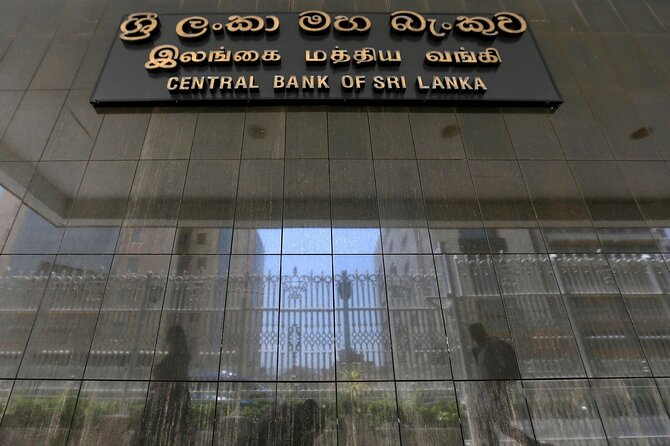
The World Trade Center shifts the focus toward finance and international business. Its inclusion makes sense after Port City and the market stops, since the route has already introduced development, local trade, and a national product.
This is where the economic side of the walk may become especially clear. Sri Lanka’s problems are not only political headlines. They affect business operations, investment, public services, and confidence in the country’s future. A major commercial landmark gives those issues a visible setting.
I like the contrast between the World Trade Center and Pettah. One represents formal, international-facing commerce, while the other places you closer to everyday trade. The comparison can help you understand that economic pressure is felt across very different parts of the city.
Again, the details supplied do not include entry to the building or an observation deck. Expect an exterior stop and commentary unless the operator tells you otherwise.
Old Parliament and the roots of political power
Old Parliament gives the walk a direct connection to government. Here, the discussion can move from economic effects to the institutions and decisions behind them.
This is likely to be one of the most important stops for anyone who wants the political side of the experience. The walk is not simply naming former offices or photographing a grand building. It uses the setting to explain how the modern state developed and how political choices connect with current events.
I value the placement of Old Parliament after commercial stops. You have already considered markets, business, and finance. The government building then gives you a place to ask how those areas are managed, regulated, or affected by national policy.
The route does not promise an interior visit. Plan on learning from the guide outside rather than touring the building’s rooms.
Independence Square and the story of the modern state
Independence Square moves the story into national identity and the creation of the modern state. It is a fitting place to discuss the meaning of independence, the country’s political development, and the ideals attached to public symbols.
This stop should appeal to you if you want historical context rather than only crisis reporting. Current shortages and service disruptions did not appear from nowhere. The walk tries to show the longer chain of events that helps explain how Sri Lanka arrived at its present situation.
Independence Square also offers a change of mood from markets and financial buildings. It is a national space, so the guide can address how a country remembers itself and presents its political story.
The information supplied does not specify a long break or free time here. Keep the emphasis on the guided explanation. You may have time to look around, but the purpose is to connect the site to the wider argument of the walk.
BMICH, the final stop and a useful closing point
The walk ends at BMICH, the Bandaranaike Memorial International Conference Hall, on Bauddhaloka Mawatha. This final stop gives the experience a formal setting for closing the discussion.
As an international conference hall, BMICH fits the route’s interest in diplomacy, public institutions, and Sri Lanka’s place in the wider world. It also provides a clear endpoint after a route that has moved through markets, commerce, government, national memory, and development.
The ending matters because this is an information-heavy experience. By the time you reach BMICH, you have several different settings to compare. The final discussion can help tie together the social and political themes rather than leaving you with disconnected facts.
The listed finish is BMICH, not the original meeting point. Plan your evening from there. The supplied details do not state transportation back to The Kingsbury Colombo, so you should make your onward plans with the endpoint in mind.
What $35.99 buys you
At $35.99 per person, this walk costs more than a basic stroll that points out buildings and gives short historical notes. The value rests in the guide’s interpretation, the route’s unusual subject, and the chance to ask questions about a difficult national situation.
I think the price is fair for the right audience. You are paying for a focused political and social briefing that uses Colombo as its classroom. Chami is specifically described as very well informed, and that matters here because a weak guide would reduce this experience to broad claims and familiar dates.
The value is less clear if you mainly want photographs, shopping, food, or relaxed sightseeing. Several stops are included because of what they represent, not because you will spend a long time exploring each one. The walk rewards attention and curiosity.
A maximum of 25 people keeps the format from becoming enormous. Still, the exact amount of personal discussion will depend on the group and the questions people bring. I would book it for insight, not for a private guide experience.
Who should choose this experience
I would recommend the walk to you if you want to understand Sri Lanka beyond temples, beaches, and scenic views. It suits readers who follow politics, economics, modern history, or the effects of national crises on everyday life.
It is also a good choice early in a Colombo stay if you want a framework for later independent sightseeing. Afterward, you may look at a market, office district, or government building with more questions in mind.
You may want to skip it if you prefer a relaxed introduction with jokes, food samples, or a strong focus on architectural detail. The tone is serious, the subject can be difficult, and the format is designed to give you a lot of information in a short time.
The walk is open to most people, but good weather is required. Since the experience runs for about two and a half hours and uses several city locations, comfortable footwear and water are sensible choices, though those items are not listed as formal requirements.
Booking, weather, and cancellation details
Free cancellation is available if you cancel at least 24 hours before the 5:00 pm start time. Cancellations made inside that window are not refunded, and changes are not accepted within 24 hours.
The experience can be canceled for poor weather or because the minimum number of participants is not met. In either case, you are offered another date or experience, or a full refund. Confirmation arrives at booking, and the mobile ticket is convenient for a city walk.
The experience is booked an average of 19 days ahead, which suggests you should not leave it until the last moment if your Colombo dates are fixed. That is especially sensible if this is a key part of your plan and you want room to reschedule for weather.
Should you book the Colombo Social and Political Walk?
Book it if you want a serious, place-based explanation of Sri Lanka’s political and economic story. The route gives you more than a standard city walk by placing Pettah market beside Port City, the World Trade Center, Old Parliament, Independence Square, and BMICH.
I especially like the contrast between daily commerce and official power, plus the clear focus on current shortages and disruption. Chami’s strong grasp of the subject is another reason to consider it.
Skip it if you want a casual sightseeing loop or plenty of independent time at each stop. At $35.99, the best value comes from listening closely, asking questions, and accepting that the main attraction is the analysis rather than entry into a collection of buildings.
FAQ
How long does the Colombo Social and Political Walk last?
The experience lasts approximately two hours and 30 minutes.
What time does the walk start?
The walk starts at 5:00 pm.
Where does the experience begin?
It begins at The Kingsbury Colombo, 48 Janadhipathi Mawatha, Colombo, Sri Lanka.
Where does the walk finish?
The experience ends at BMICH, the Bandaranaike Memorial International Conference Hall, on Bauddhaloka Mawatha, Colombo 00700.
What locations are included?
The route includes Colombo Port City, Pettah market, Good market, Tea Avenue at the Dilmah Building, the World Trade Center, Old Parliament, Independence Square, and BMICH.
How many people can join?
The activity has a maximum group size of 25 people.
Can I cancel for a full refund?
Yes. You can cancel at least 24 hours before the start time for a full refund. Cancellations within 24 hours are not refunded. If poor weather or an insufficient minimum group causes the operator to cancel, you are offered another date or experience, or a full refund.
Recently listed around Colombo
- Sigiriya & Dambulla Day Tour★ 5.0 · 3 reviews
- Safari Day Tour to Sigiriya Lion Rock and Golden Cave Temple★ 5.0 · 3 reviews
- Shore Excursion Colombo Port to Mount Lavinia Beach & Colombo city For 4 – 6 Pax★ 4.5 · 3 reviews
- Explore The Colombo City by Private Tuk Tuk or Car★ 4.7 · 3 reviews
- Private day tour to Sigiriya and Dambulla from Colombo★ 5.0 · 3 reviews
- Day Excursion to Yala National Park From Colombo★ 4.5 · 3 reviews
- Colombo: Lotus Tower Celebration Dining Experience with Cake★ 4.4 · 3 reviews
- Airport Taxi Transfers from Colombo Airport to Sigiriya★ 4.5 · 3 reviews
Colombo Tours, compared.
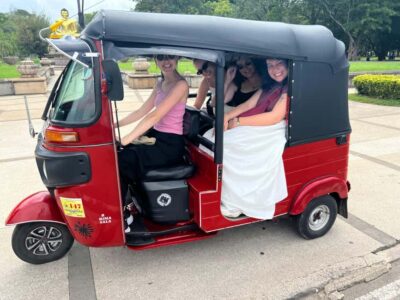
Private Tuk-Tuk City Tour with All Entry Fees
Read our review →
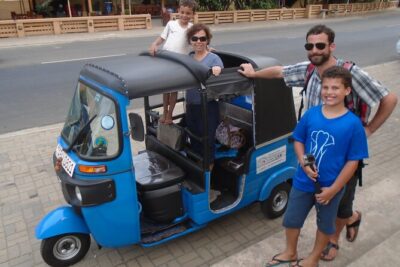
Colombo Tuk Tuk City Tour -Sightseeing Entry Fees & Food Included
Read our review →
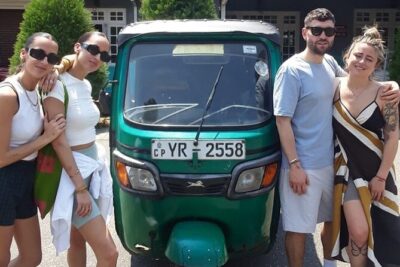
Colombo Private Tuk-Tuk City Tour with All Entry Fees Included
Read our review →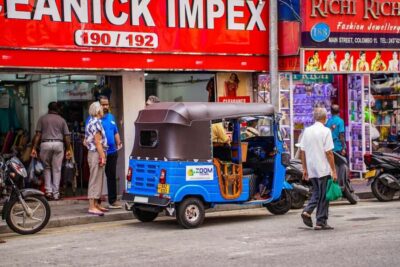
Private Tuk-Tuk City Tour with Guide & All Tickets
Read our review →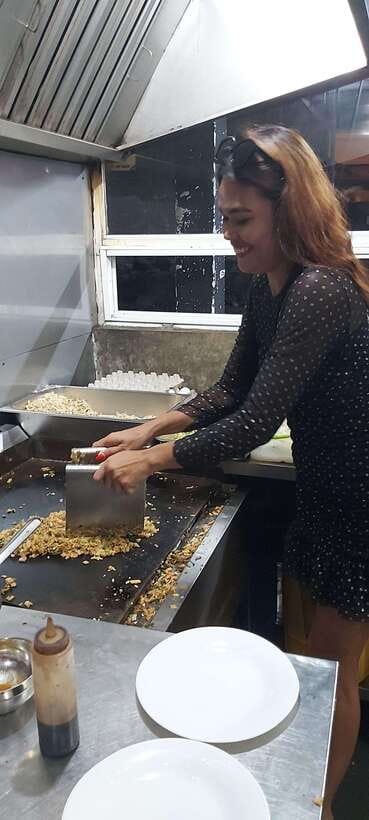
Colombo Local Food Tour by Tuk Tuk – All Inclusive
Read our review →Tuk Trip is Very Cheap in Colombo (All-inclusive ) city tour
Read our review →Browse the lists this tour appears in