
Reviewed · ANCIENT CITIES TOURS
Polonnaruwa Ancient City Private Day Tour (Hidden Gems)
Polonnaruwa is best understood as a living history lesson, not a quick checklist of ruins. This private tour takes you from the Archaeological Museum and royal palace to the exquisite Vatadage, Hindu shrines, monasteries, Gal Vihara, and a sunset viewpoint over the great Parakrama Samudraya reservoir.
I like the private format, which lets you ask questions and set the pace, and I like the guide-led storytelling from Tharindu, also called Tarry or Thari in some bookings. The tour also includes a generous local rice-and-curry meal, a welcome pause after hours among sunlit stone monuments.
The main consideration is cost and transport. The $30 tour price does not include the separate $30 site entry fee, private transportation, or an air-conditioned vehicle. The schedule is full, and four to six hours among ancient ruins can become tiring in the midday heat.
Key points at a glance
- A private guide named Tharindu or Tarry: Expect clear explanations, strong English, and plenty of room for questions.
- Thirteen stops in about 6 to 7 hours: The route covers royal buildings, Buddhist and Hindu sites, sculpture, gardens, food, and a reservoir sunset.
- Gal Vihara is the visual high point: Four famous rock-cut Buddha images give the ancient city its unforgettable final flourish.
- A useful look at Sri Lanka’s mixed religious past: Shiva Devalaya No. 2 adds a Hindu chapter to a mainly Buddhist site.
- Rice and curry is built into the day: Priyamali Gedara Road includes a 90-minute meal stop.
- Budget for another $30 per person: Site admission is not included, and neither are transport, lunch costs, snacks, or tips.
Why this private Polonnaruwa tour works
Polonnaruwa was one of Sri Lanka’s great medieval capitals, and its ruins are spread over a broad archaeological zone. That matters because you cannot simply stroll from one monument to the next in a neat old-town grid. A vehicle is useful, especially when the heat rises, and a guide helps turn scattered walls and stone foundations into a readable story.
The private setup is the strongest part of the experience. You are not tied to a large group’s questions, walking speed, or photo stops. If you want more time at sculpture, architecture, or religious sites, you can ask. The guide can also explain the small details that are easy to miss, such as carvings, building plans, and the way royal power and Buddhist worship shaped the city.
Tharindu, also known as Tarry, receives especially strong praise for his English, patience, enthusiasm, and command of Sri Lankan history. One useful practical note is that the tour can run beyond its scheduled time if the conversation keeps going. That sounds pleasant if you love history, but you should allow flexibility in your day.
More ancient city days:
- Private City Day Tour in Anuradhapura
★ 5.0 · 383 reviews - Explore & Ride the history of anuradhapura with Vogel Tours
★ 5.0 · 62 reviews - From Anuradhapura: All Inclusive Full Day Safari at Wilpattu
★ 4.4 · 50 reviews
Starting at the Archaeological Museum
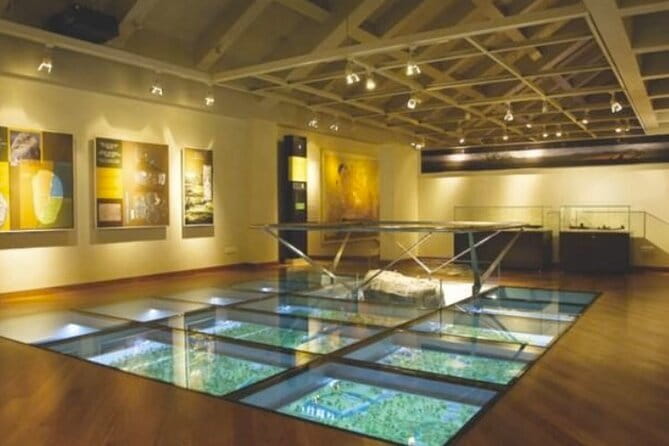
The tour begins at the Archaeological Museum near the main entrance to the heritage area. The museum is a sensible first stop because it gives you objects and background before you face the larger ruins outside.
You have about 30 minutes here. Use it to get your bearings and ask your guide to explain the period, rulers, and religious traditions you will encounter later. Admission is not included, so confirm how the museum charge relates to your site ticket before setting out.
This stop may feel modest beside the major monuments, but it helps you read Polonnaruwa with more confidence. A broken column or carved stone is easier to understand once you know what kind of building it came from.
Royal power at Parakramabahu’s palace
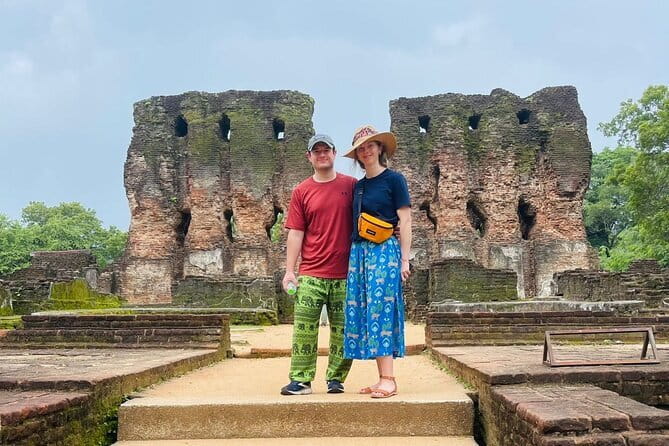
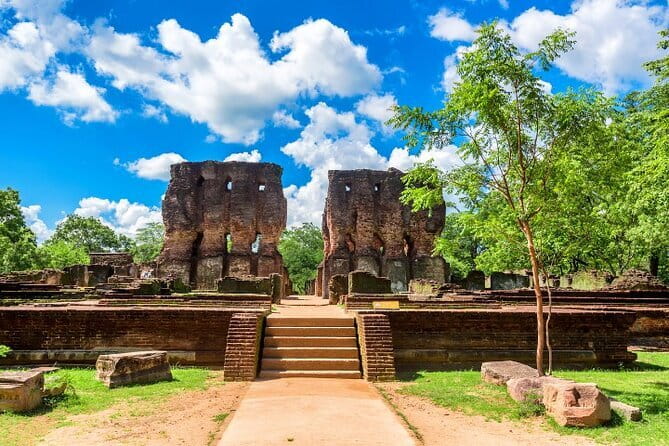
The Palace of King Parakramabahu gives you the first strong sense of scale. It was once described as a seven-story royal residence, though what remains today is a massive brick shell and a series of walls that hint at its former height.
The visit lasts about 30 minutes. The palace is not a complete building, so do not expect rooms filled with furnishings. The interest is in the surviving structure and in imagining how much labor, planning, and authority were needed to create a royal complex in the 12th century.
A private guide is useful here. Without context, the palace can look like a large ruin with empty openings. With explanation, those walls begin to suggest a court, a residence, and a center of government.
The Vatadage and the Sacred Quadrangle
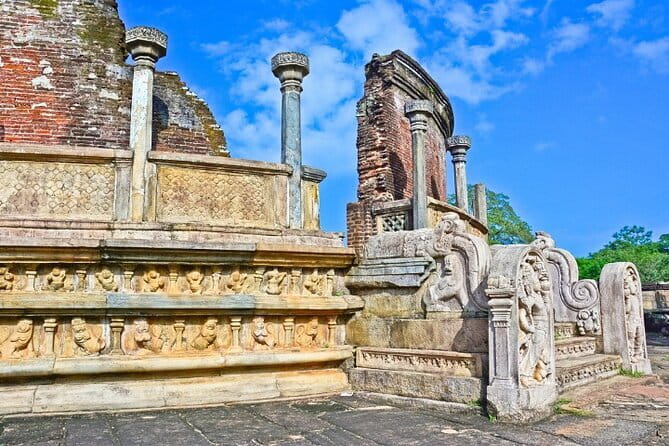
The Polonnaruwa Vatadage is one of the day’s essential stops. This circular relic house is known for its careful proportions, concentric steps, guardstones, moonstones, and carved details. It protected a sacred stupa and sits within the Sacred Quadrangle, the most concentrated group of important religious buildings in the ancient city.
Plan on 45 minutes. This is one place where you will want time for both close inspection and photographs. Look at how the circular form guides movement toward the center, and notice the way sculpture and architecture work together rather than appearing as separate decoration.
The Vatadage can be a rewarding test of your guide’s ability to explain detail. Ask about the carvings, the entrances, and the building’s religious purpose. Admission is not included in the tour price, so your $30 site fee is an important part of the budget.
A few more Sri Lanka days to line up
- Colombo: Private Tuk-Tuk City Tour with All Entry Fees
★ 4.9 · 2,154 reviews - Udawalawe National Park | Private Safari Tour
★ 5.0 · 1,499 reviews - Kandy Private Guided City Tour by Tuk Tuk
★ 4.9 · 1,307 reviews - Sri Lanka Personal Tour Driver in private vehicle
★ 5.0 · 747 reviews
A Hindu shrine in a Buddhist capital
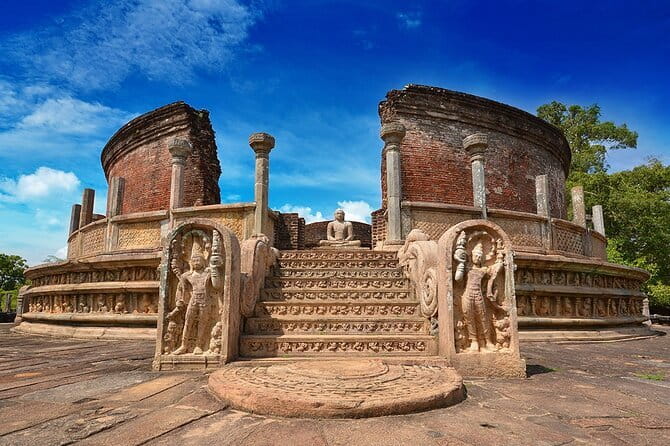
Shiva Devalaya No. 2 takes only about 15 minutes, but it adds needed range to the day. This well-preserved Hindu temple reflects South Indian Dravidian influence and shows that Polonnaruwa was not a place shaped by one tradition alone.
The contrast is valuable. After Buddhist monuments, you see a shrine dedicated to Shiva and a different architectural language. One booking included a Hindu blessing, which made the stop especially memorable, but you should not assume that a ceremony will occur on every visit.
Because the stop is short, listen closely to the guide’s explanation and take time to look at the stonework. It is an easy site to rush past, yet it adds a clear cultural layer to the ancient capital.
Pabalu Vehera and Rankoth Vehera
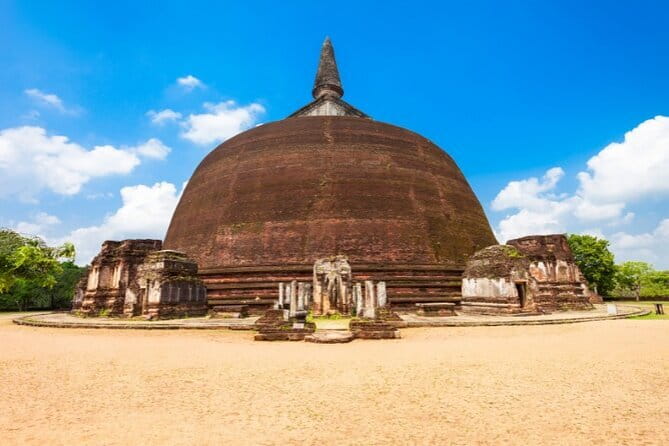
Pabalu Vehera is a smaller, distinctive stupa associated with the reign of King Parakramabahu I. The visit lasts around 15 minutes, making it a quick contrast with the more elaborate Vatadage.
Rankoth Vehera takes another 15 minutes and is the largest stupa in Polonnaruwa. It was built during the reign of King Nissanka Malla and gives you a stronger sense of the city’s religious scale. Even when the schedule is tight, these stupas help show how worship and royal patronage shaped the skyline.
Do not judge these stops only by how long you spend there. The short visits work as a sequence: one stupa offers unusual form, the other offers size and power. Your guide can connect them to the rulers and building programs that appear throughout the day.
Monastic life at Alahana Pirivena

The Alahana Pirivena Complex was built by King Parakramabahu I in the 12th century. It was a monastic and educational center, so it shifts the focus from kings and stupas to the daily religious life that supported Polonnaruwa.
You have about 30 minutes here. The complex helps explain that an ancient capital was more than a palace surrounded by monuments. It needed places for study, worship, medical care, residence, and administration, even if the surviving remains do not reveal every part of that system.
This is another stop where a guide adds real value. A good explanation can help you picture the complex as an organized institution rather than a collection of foundations in grass.
Gal Vihara, the day’s great sculpture stop

Gal Vihara is the artistic high point. The 12th-century complex contains rock-cut Buddha images carved directly into a granite outcrop, including the famous reclining figure. The calm expressions, smooth surfaces, and scale of the statues make this one of Sri Lanka’s most memorable ancient sites.
The planned visit is about 30 minutes, but many people will want longer. The tour guide’s enthusiasm may stretch the schedule here, especially if you have questions about the poses, facial expressions, and relationship between the statues.
Dress and behavior matter at Buddhist sites. Your guide can help you understand the expected approach, and you should allow time to look quietly rather than treating Gal Vihara as a quick photo stop. The site entry fee is separate from the tour price.
Thivanka Image House and royal sculpture
The Thivanka Image House is a short 15-minute stop with a different mood. Built during Parakramabahu I’s reign, it is known for its size and artwork. The building gives you a chance to consider how Buddhist images were housed indoors, not only carved into open rock.
The tour then reaches the Statue of Parakramabahu I, planned for about 30 minutes. The 12-foot figure is associated with one of Polonnaruwa’s most important rulers and offers a direct visual link to the king whose building projects appear at several earlier stops.
These sites work well together. Thivanka focuses on religious art and interior space, while the royal statue points back to political authority. I would ask the guide to connect Parakramabahu’s rule with the palace, monastery, and other monuments already seen.
The 90-minute rice-and-curry break
Priyamali Gedara Road includes a 90-minute stop for traditional Sri Lankan rice and curry. The meal is described as steamed rice with an assortment of curries, giving you a proper break rather than a rushed snack between monuments.
The tour price does not include lunch, even though the stop itself is listed as free. Confirm the meal cost and what is served before ordering. The long pause is useful because the itinerary packs in many sites, and you will appreciate shade, food, and time off your feet.
This is also one of the more grounded parts of the day. Ancient temples can feel grand and distant. A local meal brings the experience back to present-day Sri Lanka, even if the exact dishes and price are not specified.
Deepa Uyana and the reservoir at sunset
Deepa Uyana, also called King Nissankamalla’s Pleasure Garden, offers a quieter change of pace. It was designed as a royal retreat for relaxation and entertainment, and the visit lasts about 30 minutes.
The garden stop helps balance the temples and ruins. Ancient cities needed spaces for pleasure as well as worship and government, and this site gives you a glimpse of that royal side of life. The description does not specify how much of the original garden survives, so expect a historic site rather than a fully restored palace garden.
The final stop is Parakrama Samudraya View Point, with about 30 minutes for sunset. The reservoir, known as the Sea of Parakrama, is one of the day’s best visual endings. Water, sky, and the old capital’s history come together here, giving you a calm finish after a busy circuit of monuments.
Price, transport, and the real cost
At $30 per person, the guiding fee looks modest for a private 6 to 7 hour experience. But the real cost is higher. You must add the $30 per-person site entry fee, and the tour also excludes private transportation, an air-conditioned vehicle, breakfast, lunch, snacks, and tips.
The transport detail deserves attention. The meeting point is the Archaeological Museum in Polonnaruwa, and the activity returns there. Private transportation is not included, so ask how you will move between the spread-out stops before booking. One booking used an air-conditioned car, which was particularly useful in the midday heat, but you should not assume that vehicle is part of the standard price.
Bottled water is included. I would still plan for sun protection, comfortable walking shoes, and extra drinking water if permitted. The itinerary is long, and the combination of heat, stone surfaces, and repeated short walks can wear you down.
Who should book it
This is a good fit for you if you want history explained in plain English, prefer a private guide, and would rather see a broad range of Polonnaruwa than focus on only the headline monuments. It also suits couples and small groups who want to ask questions without holding up strangers.
The tour is especially useful if you are curious about architecture, Buddhist sculpture, royal power, and the connection between Sri Lanka and South India. It is less suited to you if you want a slow, unstructured day at only two or three sites. Thirteen stops create variety, but the pace can feel busy.
Most people can participate, and the meeting point is near public transportation. Confirmation arrives at booking, and free cancellation is available up to 24 hours before the start time. The activity is private, so only your own group takes part.
Should you book this Polonnaruwa day tour?
Book it if a guide’s explanation matters as much as the ruins themselves. Tharindu, Tarry, or Thari is praised for strong English, enthusiasm, patience, and detailed knowledge of Polonnaruwa and Sri Lankan history. The private format, broad route, local meal, and sunset finish make this a useful full-day introduction.
Before paying, settle three points: the separate $30 entry fee, the transport arrangement, and the lunch cost. If you can handle a long, warm day and want the ancient capital brought into focus through stories and context, this tour offers good value. If you need a shorter visit, choose a smaller custom route and give Gal Vihara, the Vatadage, and the palace priority.
FAQ
Where does the tour begin and end?
It begins at the Archaeological Museum in Polonnaruwa, Sri Lanka, and ends back at the same meeting point.
How long does the tour last?
The experience lasts approximately 6 to 7 hours. Individual stops range from 15 minutes to 1 hour and 30 minutes.
Is the tour private?
Yes. Only your group participates in the activity.
Is the Polonnaruwa entry fee included?
No. The site entry fee is listed separately at $30 per person. Admission is also marked as not included for several stops.
Is transportation included?
No. Private transportation and an air-conditioned vehicle are not included in the stated price. The tour does return to the meeting point.
What is included in the price?
Bottled water is included. Breakfast, lunch, snacks, tips, private transportation, an air-conditioned vehicle, and the site entry fee are not included.
Recently listed around Sri Lanka
- Minneriya National Park Safari in a 4×4 Vehicle★ 4.5 · 10 reviews
- Coastal Ride to Galle from Colombo★ 4.5 · 10 reviews
- One Day Udawalawe Safari from Galle/Mirissa/Unawatuna/Hikkaduwa★ 5.0 · 10 reviews
- Ella: Safari Day Trip to Yala & Udawalawe with Lunch★ 4.7 · 10 reviews
- Sri Lanka Private Tour Pick Up & Drop Off – Colombo Intl Airport★ 5.0 · 10 reviews
- Sigiriya Village Tour and Lunch with Hotel Pick up from Sigiriya★ 5.0 · 10 reviews
- From Ella: Shuttle to Down South Any Location w Yala Safari★ 5.0 · 10 reviews
- Wasgamuwa: Wasgamuwa National Park Private 3-Hour Safari★ 4.9 · 10 reviews
Ancient Cities Tours, compared.
Explore & Ride the history of anuradhapura with Vogel Tours
Read our review →
Delve Into Ancient Anuradhapura with Optional Visit to Mihintale
Read our review →
Anuradhapura Heritage Mountain bike / bicycle Tour
Read our review →
Polonnaruwa Day Tour With Minneriya NP Elephant Safari
Read our review →
Sigiriya, Polonnaruwa & Dambulla “Trilogy” Day Tour from Colombo
Read our review →Browse the lists this tour appears in