
Reviewed · COLOMBO TOURS
Three Ancient Kingdoms Tour | from Colombo
Sri Lanka’s best-known ancient sites draw the crowds, but this private day trip takes you to three earlier capitals with a quieter, more local feel. You’ll see Dambadeniya’s royal remains, climb the stone staircase at Yapahuwa, and walk among the wide ruins of Panduwasnuwara.
I like the way the tour links the sites through the story of Sri Lanka’s royal capitals. I also like the private format, since your group can travel in an air-conditioned vehicle with an English-speaking chauffeur guide rather than follow a large coach.
The catch is the schedule. A 6:00 am start, long road transfers, midday heat, and a climb at Yapahuwa make this a full day. You should bring a packed breakfast, wear practical shoes, and have a moderate level of fitness.
Key points to know before booking
- Three royal capitals in one day: Visit Dambadeniya, Yapahuwa, and Panduwasnuwara, with ruins from several periods of Sri Lankan history.
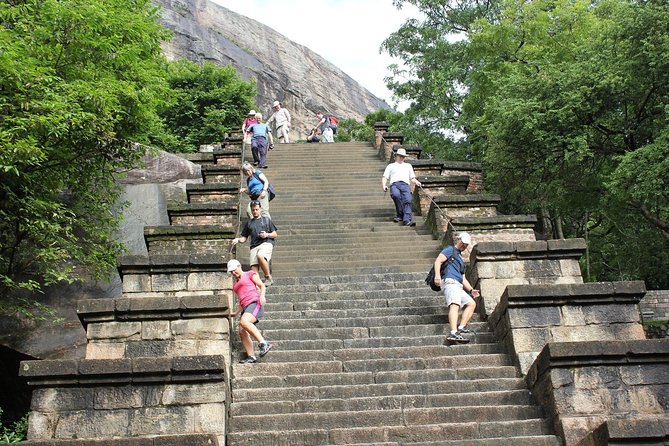
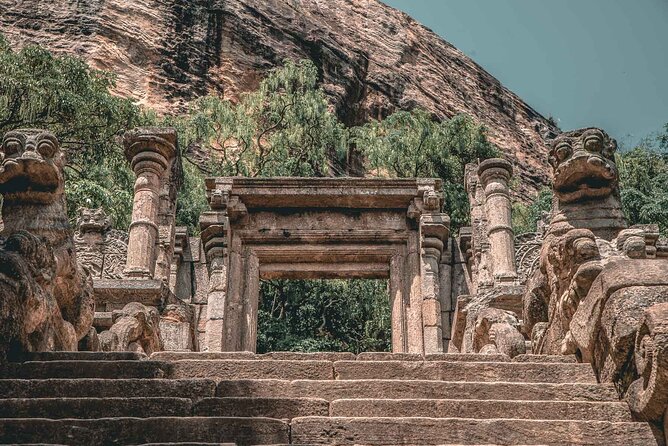
- Yapahuwa is the physical highlight: Climb a giant granite rock by way of broad steps decorated with detailed stone carvings.
- Dambadeniya offers palace remains: See gardens, walls, moats, and the excavated site of an earlier Temple of the Tooth.
- Panduwasnuwara covers a large area: Its nearly 12 hectares include palace ruins, a restored Temple of the Tooth, a museum, and Panda Wewa reservoir.
- The day begins early: Hotel pickup from Colombo is set for 6:00 am, with about two hours on the road before the first stop.
- Private transport keeps things simple: Your group travels in an air-conditioned vehicle with hotel pickup and drop-off included.
Why these three kingdoms matter
This is not a tour built around one famous monument. It is a day of connecting pieces. Each site reflects a different stage in the movement of Sri Lanka’s royal power, and each gives you a different way to read the past.
Dambadeniya was especially important in the mid-thirteenth century under King Parakramabahu II. He is remembered as a peaceful ruler and as a major supporter of Sinhalese literature. His poetic works, Kavisilumina and Visuddi Marga Sannasa, are part of that cultural legacy.
Yapahuwa came next as a capital in a period of pressure from South India. Its position on a high rock made it a defensible royal center, while its stairway gave the site a visual drama that Dambadeniya does not have.
Panduwasnuwara reaches much further back. It served as a capital in the fifth century BC, then was used again in the twelfth century. That long span explains why the ruins do not feel like one tidy historical chapter. Instead, you see remains from different periods spread across one large site.
I find that combination useful. If you visit only one major ancient city, you may remember a single palace or monument. Here, you can compare how rulers built capitals, protected sacred objects, managed water, and adapted old sites for new purposes.
A few more Colombo days to line up
- Colombo: Private Tuk-Tuk City Tour with All Entry Fees
★ 4.9 · 2,154 reviews - Sri Lanka Personal Tour Driver in private vehicle
★ 5.0 · 747 reviews - Colombo Tuk Tuk City Tour -Sightseeing Entry Fees & Food Included
★ 5.0 · 678 reviews
The 6:00 am departure from Colombo
The day starts with hotel pickup in Colombo at 6:00 am. The tour is private, so only your group takes part, and transport is provided in an air-conditioned vehicle.
The first drive to Dambadeniya takes about two hours. That is a sizeable stretch of road before sightseeing begins, but the early start helps fit three historic sites into roughly ten hours. I would treat the first ride as part of the day rather than expect a relaxed late-morning outing.
Food and drinks are not included. Bring a packed breakfast for the drive, as specifically advised for this schedule. A one-liter bottle of water per person is supplied, but you may still want extra water for the warm outdoor stops, especially if you plan to climb to the top of Yapahuwa.
The timing is fairly tight. Dambadeniya is scheduled for about one hour, followed by the drive to Yapahuwa. After around two hours at the fortress, you continue to Panduwasnuwara, then spend a short additional period connected with Yapahuwa. Exact road conditions can affect the day, so do not plan an important evening appointment immediately afterward.
Dambadeniya’s palace walls and Temple of the Tooth
Dambadeniya is the gentlest first stop. The visit lasts about one hour, and the focus is on the remains of the royal palace complex and the old Temple of the Tooth.
The excavated temple site matters because the Tooth Relic was once housed there. In Sri Lankan history, the relic was not simply a religious object. Its location was closely tied to royal authority, so an old Temple of the Tooth site also helps explain why capitals changed when rulers faced military threats.
Around the palace complex, you can see traces of gardens, walls, and moats. These features give the site more shape than a single ruined building would. Look for the way the remains suggest a planned royal center, with protected areas and formal grounds rather than scattered stones.
The stop is short, so listen carefully to the guide’s explanation and avoid rushing past the smaller remains. Dambadeniya is not presented as a complete palace that you can walk through. Its value lies in reading the surviving foundations and understanding the role the kingdom played in the thirteenth century.
The first stop is also a good reason to start with a guide. Without context, low walls and excavated foundations can be hard to interpret. An English-speaking chauffeur guide can connect the physical remains to King Parakramabahu II, the Temple of the Tooth, and the kingdom’s place between older and later capitals.
Yapahuwa and its broad carved staircase
Yapahuwa is the most dramatic stop on the route. The fortress was built on a huge granite rock that rises almost one hundred meters above the surrounding lowlands. Its setting recalls Sigiriya, but the design is different, and you should not expect a smaller copy of that famous fortress.
The route upward includes wide staircases, stone sculptures, and detailed carvings on pillars. These carved elements are the reason Yapahuwa deserves a generous portion of the day. At Dambadeniya, you study traces of a royal complex. At Yapahuwa, you physically move through the approach to a fortified capital.
The climb requires moderate physical fitness. The supplied information does not give a precise number of steps or a detailed surface description, so plan for an outdoor ascent rather than an easy walk from the vehicle to a monument. Good walking shoes will make the visit more comfortable, and water is important.
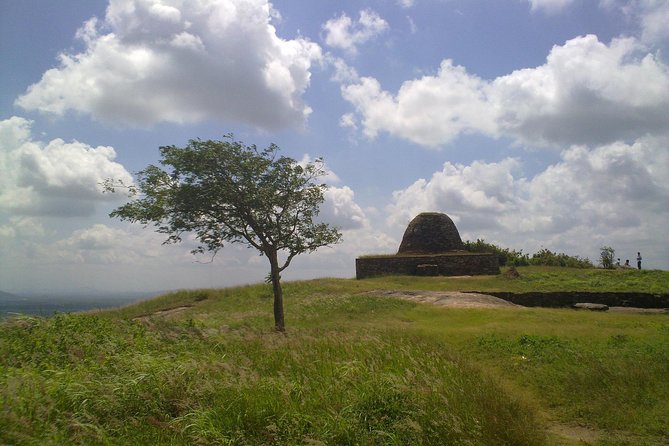
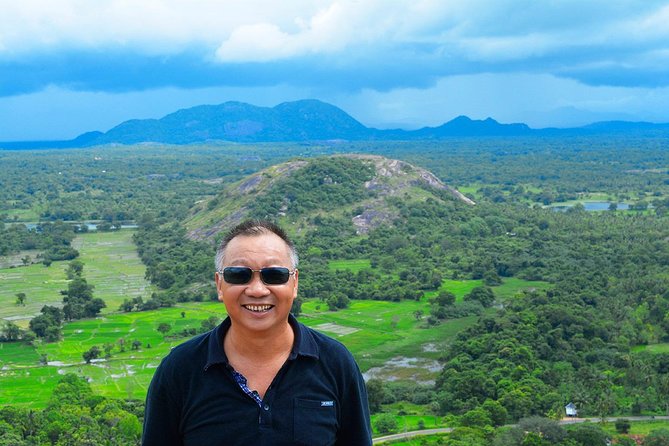
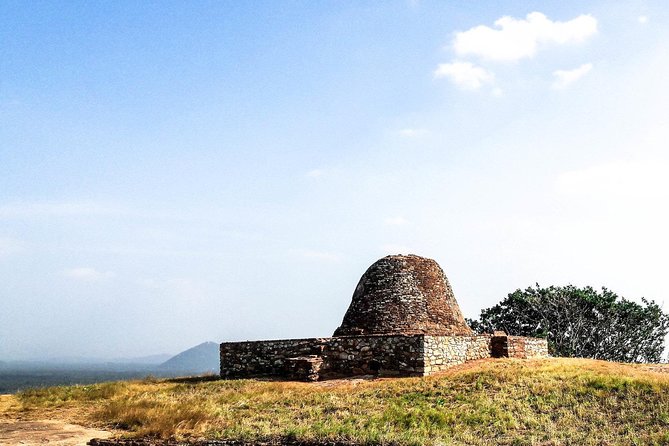
At the summit, you can see the ruins of a stupa, including statues and imagery associated with the Kandyan era. The rock’s height also gives you views over the surrounding lowlands. The view is a reward, but the climb and heat are part of the bargain.
Yapahuwa’s story adds another layer. In 1272, King Bhuvenakabahu moved the capital from Polonnaruwa to Yapahuwa because of invasions from South India and brought the Sacred Tooth Relic with him. After his death in 1284, the Pandyans invaded again and captured the relic. Yapahuwa was then largely abandoned as a royal capital and later used by Buddhist monks and religious ascetics.
That sequence helps you see why the site feels partly royal and partly religious. The fortress was designed for power and defense, but its later life changed its character. Your guide can point out the difference between the grand approach, the religious remains, and the signs of a capital that did not last long.
A different sort of day out of Colombo:
- Udawalawe National Park: Elephant Safari with Expert Guide
★ 4.9 · 641 reviews - Colombo Private Tuk-Tuk City Tour with All Entry Fees Included
★ 5.0 · 524 reviews - Colombo: Private Tuk-Tuk City Tour with Guide & All Tickets
★ 4.9 · 471 reviews - 08 Nights in Magical Sri Lanka
★ 5.0 · 443 reviews
Why Yapahuwa gets two mentions in the day
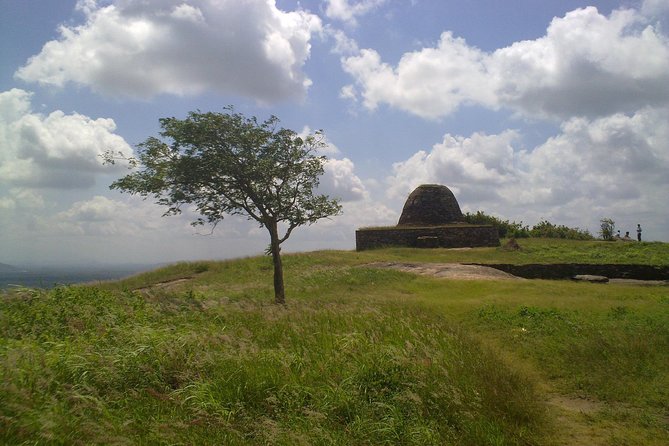
The schedule includes a two-hour visit to Yapahuwa Rock Fortress and a later thirty-minute stop described as Yapahuwa Ancient Kingdom. The supplied details repeat some of the same historical background, including the rock citadel, the transfer of the Tooth Relic, and the site’s later use by monks.
Because of that overlap, you should clarify the exact sequence with the operator when booking or before departure. The two entries may represent different parts or presentations of the same Yapahuwa area, but the provided information does not explain the distinction.
This is not necessarily a problem. Two hours gives you time for the main climb, while a separate short stop may focus on another point connected with the ancient kingdom. Still, clear timing matters on a ten-hour tour, especially after a long morning on the road.
Panduwasnuwara’s 12 hectares of ruins
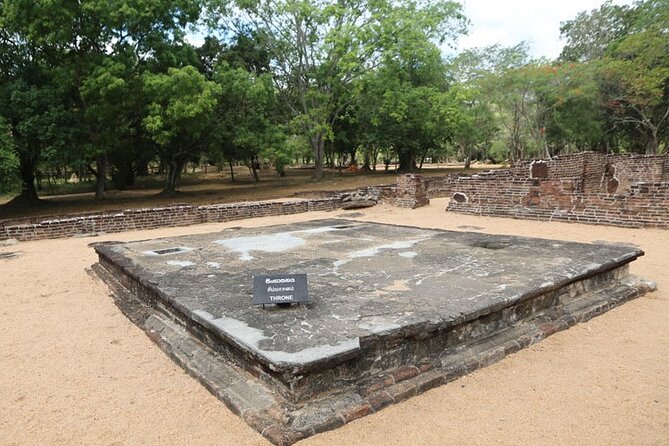
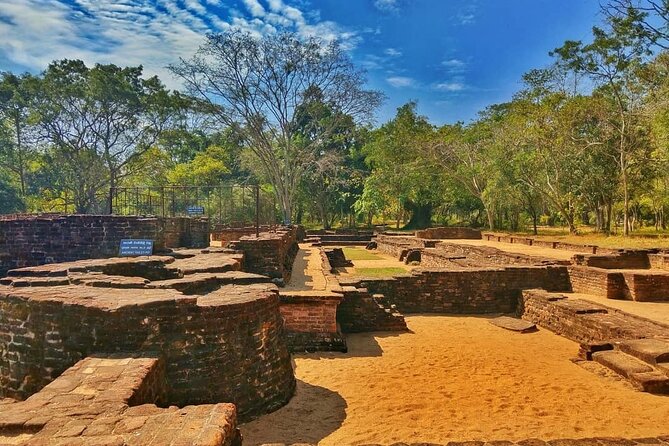
Panduwasnuwara is the broadest site of the day. The ancient city covers almost 12 hectares, so the visit feels less like viewing one monument and more like moving through the remains of an old settlement.
The city first served as a capital in the fifth century BC. It was used again in the twelfth century, which gives the site its unusual mix of ruins from widely separated periods. You may find the layers harder to grasp at first than the more focused story of Yapahuwa, but they make Panduwasnuwara especially useful for understanding how old royal centers could be reused.
One key sight is the recently restored remains of a two-storied former Temple of the Tooth. Like the temple site at Dambadeniya, it connects religious objects with royal capitals. Seeing both sites in one day lets you compare two places where the Tooth Relic once played a central role.
You will also see ruins of the royal palace and the artificial reservoir known as Panda Wewa. The reservoir is considered one of the earliest irrigation systems ever made by humans. That detail changes how you read the site. Panduwasnuwara was not only a place for kings and temples. It also depended on planned water management.
The museum adds useful support to the open-air ruins. The visit to the museum of Panduwasnuwara is part of the stop, though the available details do not specify its size or exact displays. Use it as a chance to put smaller objects and building remains into context before continuing around the site.
The planned stop lasts about one hour. Since the grounds are large, you will need to stay aware of time. A guide can help you focus on the palace, Temple of the Tooth, reservoir, and museum rather than trying to inspect every corner.
What the chauffeur guide adds
The experience includes an English-speaking chauffeur guide, hotel pickup, and drop-off. That combination is more useful here than it might be on a simple point-to-point transfer.
These sites have many remains that need explanation. A moat, low foundation, reservoir, or partial staircase does not always tell you its purpose on sight. The guide can help connect each ruin to the period, ruler, and changing role of the capital.
The guide also matters because the route covers three sites with overlapping names and long time spans. Dambadeniya belongs mainly to the thirteenth-century royal story. Yapahuwa’s key period centers on the late thirteenth century. Panduwasnuwara reaches back to the fifth century BC and returns to use in the twelfth century.
The company’s communication is another practical strength. Booking confirmation is provided at once, and the tour company keeps you updated with needed information. No individual guide name is supplied, so you should not book this expecting a particular named guide. The service is described by role rather than by a guaranteed person.
Is $85 a fair price?
At $85 per person, the value depends heavily on how much you want to see in one day and how many people are in your private group. The price includes hotel pickup and drop-off from Colombo, air-conditioned transport, an English-speaking chauffeur guide, and one liter of water.
It does not include food, drinks, or entrance fees. The Dambadeniya stop is listed with no admission charge, while admission fees for the other sites are not included. You should allow extra money for those costs instead of treating $85 as the final total.
For a private ten-hour outing from Colombo, the price can make sense if you would otherwise need to arrange a vehicle, driver, and separate visits yourself. You are paying for the long transfers as well as the sightseeing. Group discounts may improve the per-person value when several people share the booking.
The main value is access to places that are less commonly included in a standard first-time Sri Lanka route. If your priority is one famous ancient city with a slow, detailed visit, this tour may feel rushed. If you want a broad look at several former capitals and prefer private transport, the price is easier to justify.
Who should book this day trip?
I would recommend it most to visitors who enjoy archaeology, royal history, Buddhist heritage, and sites where imagination fills in the missing walls. You should be comfortable with a long day in a vehicle and a moderate climb at Yapahuwa.
It suits people staying in Colombo who want to reach the Northwestern Province without arranging several days of transport. The private format also works well for couples, families, or small groups who prefer to keep the day together.
I would be more cautious if you dislike early starts, outdoor ruins, or long road transfers. The tour has no included meals, and the schedule leaves limited room for a leisurely lunch or an unplanned stop. The physical demands are not described as extreme, but Yapahuwa is not a flat museum visit.
Weather is another consideration. The experience requires good weather. If poor conditions cause cancellation, you are offered a different date or a full refund. You can also cancel for a full refund if you do so at least 24 hours before the start time. Changes or cancellations made inside that period are not accepted.
Should you book the Three Ancient Kingdoms Tour?
Book it if you want a focused day of lesser-known royal sites and you value a private vehicle with an English-speaking chauffeur guide. The strongest parts are Yapahuwa’s carved staircase and rocktop setting, Dambadeniya’s palace and Tooth Relic remains, and Panduwasnuwara’s combination of temples, palace ruins, and early irrigation.
Skip it if you want a relaxed pace or a deep visit to just one major site. Three kingdoms in about ten hours means travel time and short visits. Bring breakfast, wear sturdy shoes, carry water beyond the supplied bottle if needed, and confirm how the two Yapahuwa entries fit together.
For the right kind of visitor, this is a smart way to look beyond Sri Lanka’s most famous ancient capitals and see how royal power, religion, defense, and water management shaped the island.
FAQ
What time does the tour begin?
Hotel pickup begins at 6:00 am from Colombo hotels.
How long does the tour last?
The tour lasts approximately 10 hours.
Which ancient kingdoms are included?
The day includes Dambadeniya, Yapahuwa, and Panduwasnuwara. Yapahuwa appears in two parts of the scheduled experience, including the main rock fortress visit and a shorter stop connected with the ancient kingdom.
Is transportation included?
Yes. Hotel pickup and drop-off from Colombo hotels are included, along with transport in an air-conditioned vehicle.
Are entrance fees and meals included?
No. Food, drinks, and entrance fees are not included. A one-liter bottle of water is provided for each person, and you are advised to bring a packed breakfast.
Is the tour suitable for everyone?
The tour requires a moderate level of physical fitness because the Yapahuwa visit includes a climb to the fortress. It also requires good weather.
Recently listed around Colombo
- Coastal Ride to Galle from Colombo★ 4.5 · 10 reviews
- Kandy: 4-Day Sri Lanka Full Circle Private Tour To Colombo★ 4.7 · 10 reviews
- Airport Taxi Transfers from Colombo Airport to Galle★ 4.0 · 10 reviews
- Colombo: Tuk Tuk City Highlights Tour with Lunch★ 5.0 · 10 reviews
- Kandy Day Tour From Colombo★ 5.0 · 10 reviews
- All Inclusive Sigiriya & Dambulla Day Tour from Colombo & Negombo★ 5.0 · 10 reviews
- Airport Transfer to/from Anywhere★ 4.5 · 11 reviews
- Glimpse Of Colombo City Walk★ 4.5 · 11 reviews
Colombo Tours, compared.
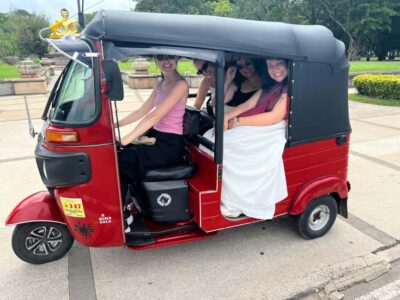
Private Tuk-Tuk City Tour with All Entry Fees
Read our review →
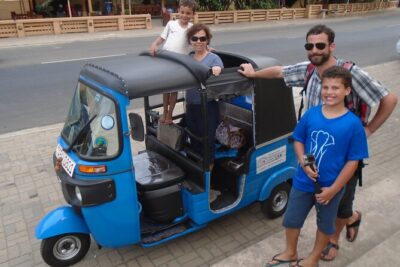
Colombo Tuk Tuk City Tour -Sightseeing Entry Fees & Food Included
Read our review →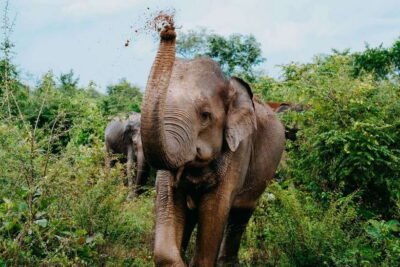
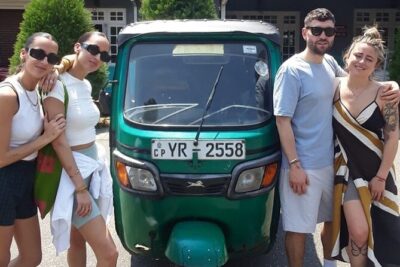
Colombo Private Tuk-Tuk City Tour with All Entry Fees Included
Read our review →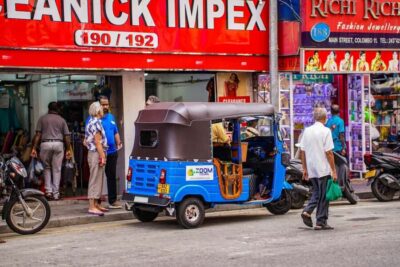
Private Tuk-Tuk City Tour with Guide & All Tickets
Read our review →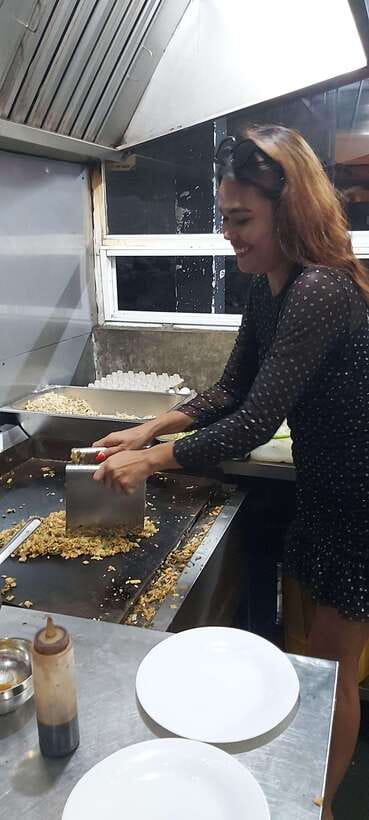
Colombo Local Food Tour by Tuk Tuk – All Inclusive
Read our review →Tuk Trip is Very Cheap in Colombo (All-inclusive ) city tour
Read our review →Browse the lists this tour appears in