
Reviewed · CYCLING TOURS
Tea Loops E-Biking
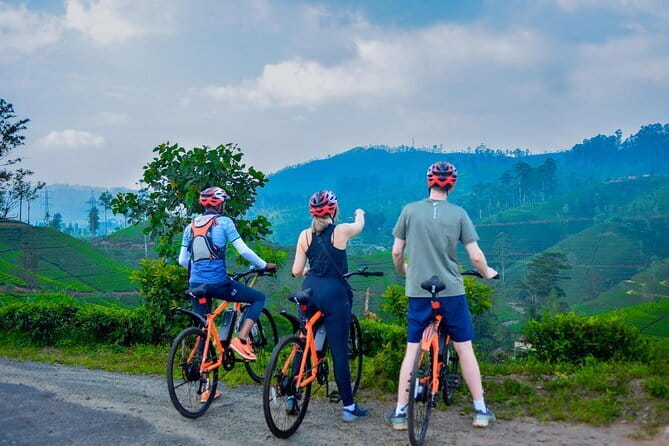
The best part of Tea Loops E-Biking is the easy run through quiet tea-country roads, where you can watch estates, villages, temples, and distant peaks pass by without the strain of a standard bicycle. Much of the route is downhill, and the electric assist makes the 25-kilometer loop manageable.
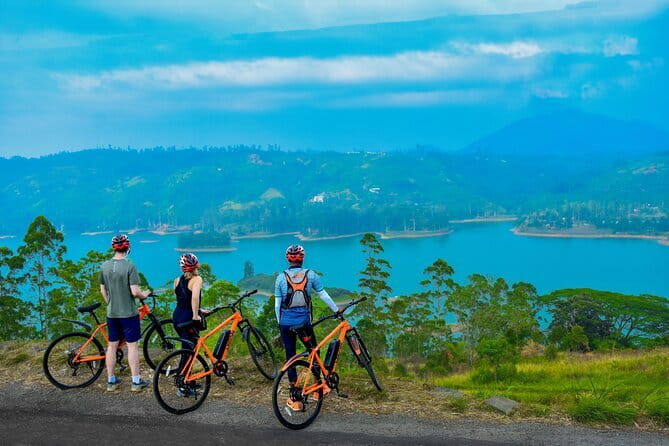
I like the small maximum group of four, which should make it easier to ride at a comfortable pace and stop for photos. I also like the mix of scenery and local life: this is not only a ride past tea bushes, but a route through plantation communities, past churches and Hindu temples, and beside views of Castlereagh Reservoir and Adams Peak.
The main consideration is transport. Pickup and drop-off are not included, so you need to arrange your own way to the starting point. The ride also depends on good weather, and 25 kilometers still calls for basic cycling comfort, even with electric assistance.
Key points to know before booking
- 25 kilometers through tea country: Expect a substantial scenic ride, not a short pedal around one estate.
- Mostly downhill riding: Electric assistance helps take the sting out of the distance, though you still need to handle a bicycle confidently.
- Four-person maximum: The small group suits people who prefer a quieter, more personal outing.
- Several strong viewpoints: Castlereagh View Point, Bogawanthalawa Valley, Maskeliya, Maussakelle, and Adams Peak add variety to the route.
- Tea factories and village life: You pass Norwood, Stockholm, Mahanilu, and Brunswick tea factories, along with homes, churches, and temples.
- Guides named by past customers: Sri, Lishaa, and Nandhu are among the guides associated with the experience.
Why this ride is different from a standard tea-estate visit
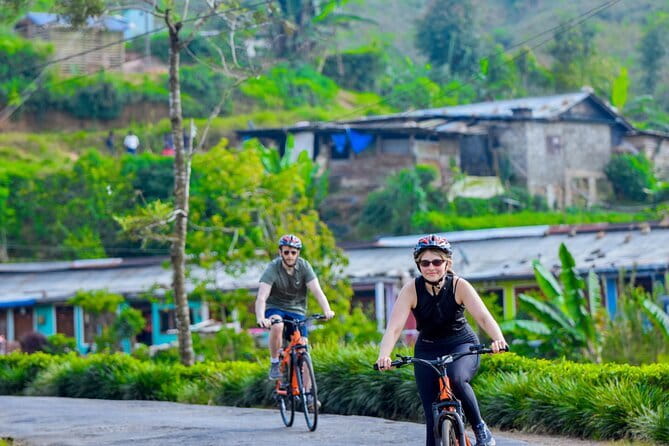
Many visits to Sri Lanka’s hill country keep you inside a vehicle. You stop at a tea factory, take a few photos, and move on. Tea Loops E-Biking gives you a slower view of the area. You hear the road, feel the cool mountain air, and have time to notice the small settlements between the tea estates.
The route covers about 25 kilometers in roughly two and a half hours. That is enough distance to make the outing feel like an actual excursion, but not so much that it takes the entire day. The electric bicycle matters here. The hill country is not flat, and the assistance lets you enjoy the setting instead of treating the ride as a test of fitness.
Past descriptions of the ride point to a downhill direction on quiet lanes. That is a useful detail. You still need to brake, steer, and stay alert, but you are less likely to spend the whole outing grinding uphill. If you love cycling but do not want a punishing mountain ride, this is the right sort of balance.
The maximum group size is four people. I consider that a real advantage for a route built around photo stops and changing scenery. A guide can keep a close eye on the group, and you are less likely to wait behind a long line of bicycles at every stop.
More Bike Tours in Sri Lanka:
- Half-Day Lagoon and Village Cycling Tour in Galle
★ 5.0 · 90 reviews - Anuradhapura Heritage Mountain bike / bicycle Tour
★ 5.0 · 34 reviews - Galle Fort and City Cycling Tour – Choice of E-Bike or Manual
★ 5.0 · 28 reviews
Riding through Norwood, Stockholm, Mahanilu, and Brunswick
The tea estates give the first major theme to the ride. You pass through the Ceylon tea regions around several named factories: Norwood, Stockholm, Mahanilu, and Brunswick. These names help you understand that the tea country is not one single attraction. It is a working area made up of estates, processing sites, roads, villages, and reservoirs.
A factory stop is not listed as a formal tour inside the buildings, so do not book this expecting a full tea-production demonstration. The value comes from seeing the factories as part of the area and understanding the scale of the tea district as you ride through it.
The scenery changes as the road moves between estate land and settled areas. Tea bushes create neat, patterned slopes, while villages bring a more human scale. You may see homes, local roads, and people going about their daily routines. That contrast is one of the strongest reasons to choose a bicycle over a car.
Several past accounts describe frequent stops for photographs. That makes sense on this route. Mountain views can appear suddenly around a bend, and the best view is not always the one marked on a map. You should expect a ride with pauses rather than a nonstop push to cover the full distance.
Churches, Hindu temples, and plantation villages
The cultural side of the ride is easy to miss if you focus only on the tea. Along the way, the route passes Hindu temples and churches, including All Saints Church, built in 1876 during the British colonial period.
All Saints Church gives the ride a clear historical marker. It connects the modern tea-growing region with the colonial structure that shaped much of the central highlands. You are not simply looking at old buildings for a photo. You are seeing how different religious and cultural communities became part of plantation life.
The Hindu temples add another layer. Their presence reflects the Tamil communities closely linked with Sri Lanka’s tea estates. You may not spend long at each landmark, but passing them by bicycle gives you a better sense of how religious sites fit into the villages rather than appearing as isolated monuments.
I like this part of the experience because it keeps the ride grounded. The route is scenic, but it is not only a parade of pretty views. You pass through places where people live and work. The guide can also help connect what you see with the area’s history and daily life. Sri, Lishaa, and Nandhu are names associated with the guiding team, and the available descriptions point to guides who focus on safety and information.
Castlereagh Reservoir and the best photo stops
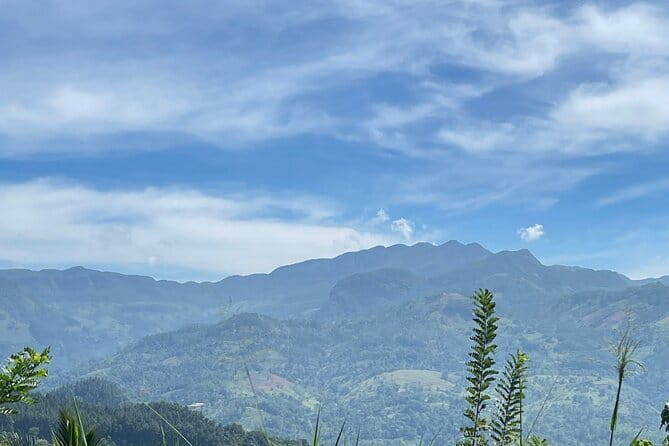
The most memorable views come from the high points above the water and valleys. Castlereagh View Point is a specific stop for broad views, while the route also highlights Bogawanthalawa Valley, Maskeliya town, Maussakelle, and Adams Peak.
Castlereagh Reservoir gives the ride a welcome change from rows of tea. Water, mountain slopes, and distant settlements create a wider view, especially from the higher road. You should allow time for photographs here, but keep your expectations practical. Weather in the central highlands can change quickly, and clouds may soften or hide the farthest peaks.
Bogawanthalawa Valley adds another large-scale view. From above, the roads and tea estates form patterns across the slopes. This is the kind of stop where the electric bike earns its keep: you reach a viewpoint without spending all your energy before the main scenery begins.
Maskeliya and Maussakelle bring the route closer to towns and reservoirs. These places help break up the ride. You are not looking at the same type of view for two and a half hours, and the route has enough variety to hold your attention.
Adams Peak is among the major sights named along the route. The mountain is an important symbol in Sri Lanka, and seeing it from the tea country gives you a different perspective than visiting the peak itself. This experience does not include a climb of Adams Peak, so treat the mountain as a distant or scenic feature, not the day’s main activity.
A different sort of day out of Sri Lanka:
- Colombo: Private Tuk-Tuk City Tour with All Entry Fees
★ 4.9 · 2,154 reviews - Udawalawe National Park | Private Safari Tour
★ 5.0 · 1,499 reviews - Kandy Private Guided City Tour by Tuk Tuk
★ 4.9 · 1,307 reviews - Whales and Dolphins Watching-Luxury Super Grade Cruiser(Hotel Pick up offered)
★ 5.0 · 1,268 reviews
What the electric bicycle changes
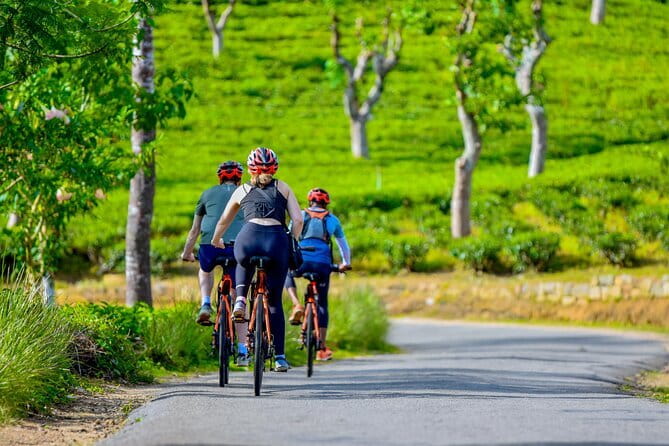
The e-bike is the reason this route can appeal to a broad range of cycling abilities. Electric assistance reduces the effort needed on climbs and lets you maintain a steady pace across a long route. It does not turn the bicycle into a motorbike. You still need to balance, steer, brake, and pay attention to the road.
The downhill direction mentioned in the ride descriptions is another plus. You get the pleasure of moving through the scenery with less physical strain. I would still avoid treating the ride as effortless. Twenty-five kilometers is a meaningful distance, and mountain roads can demand concentration even when the pedals feel easy.
The safety approach also sounds reassuring. One account describes a guide making safety the first priority, while another notes a tuk-tuk following the group for safety and possible support. The supplied details do not promise a support tuk-tuk on every departure, so I would confirm that point when booking rather than assume it is guaranteed.
The bicycles are described as new in one account. That should make the ride more comfortable, but it does not replace a basic equipment check. Before setting off, make sure the seat height, brakes, and electric assistance feel right. A small adjustment at the start can make a big difference over 25 kilometers.
Is $45 a fair price?
At $45 per person, this is not the cheapest way to see tea country. A public bus or shared tuk-tuk will cost less, and a private driver can take you to viewpoints without asking you to pedal. But those options do not offer the same close connection with the road or the same sense of covering ground under your own power.
The price looks fair if you value three things: a small group, electric bicycle use, and a guide-led route through several types of scenery. You are paying for more than a bicycle rental. The experience combines route planning, local guiding, safety support, scenic stops, and a 25-kilometer journey in a compact half-day format.
Snacks are included, which is useful on a ride of this length, though the information does not specify what kind or how much. You should not treat the snack as a full meal. Eat beforehand if you normally need substantial fuel for a long bicycle ride.
The value is strongest for people already spending time in Central Sri Lanka and looking for an active way to see the tea region. It is less compelling if you only want a quick factory visit or a short photo stop. The tour earns its price through movement and access, not through a long list of included meals or transport.
Timing, transport, and weather
The advertised duration is about two hours and thirty minutes. That figure likely includes riding and scenic pauses, but the exact rhythm may change with weather, group pace, and photo stops. You should leave extra room in your day rather than schedule an important train, flight, or fixed appointment immediately afterward.
Pickup and drop-off are not included. This is the most important practical detail to settle before paying. The experience is near public transportation, but being near public transportation does not mean the transfer will be simple, especially in mountainous tea country. Ask for the exact meeting point and allow enough time to reach it.
Confirmation is sent within 48 hours, subject to availability. The group is capped at four, so advance planning makes sense. The average booking lead time is 37 days, which suggests that you should not leave this until the last morning if the date matters to you.
Good weather is required. Rain can make roads less pleasant and reduce the views, so the operator may cancel and offer another date or a full refund. You can cancel for a full refund up to 24 hours before the start time. Inside that 24-hour window, payment is not refunded and changes are not accepted.
Who will enjoy this experience most
I would choose this ride if you enjoy active sightseeing but do not want a full-day cycling challenge. The electric assistance, downhill sections, and small group make it more approachable than a standard mountain bicycle tour.
It also suits anyone who feels a little tired of viewing Sri Lanka through a vehicle window. You get a closer look at the tea estates and villages, with the freedom to stop when the view deserves attention. The mix of temples, churches, factories, reservoirs, and mountain views keeps the outing from feeling one-note.
People who already love cycling will probably get the most from it. One past account described the ride as a favorite experience in Sri Lanka, especially for someone who enjoys biking. The route offers enough distance to feel satisfying without taking over your day.
You may want to skip it if you dislike bicycles, feel uneasy on downhill roads, or need guaranteed door-to-door transport. The tour is also weather dependent, and mountain views are never fully under your control. On a cloudy day, the ride can still offer tea estates and village scenes, but the long views may not appear.
What I would clarify before setting off
A few quick questions can prevent confusion:
- Ask for the exact meeting point, since transport is not included.
- Confirm the final route and expected direction, especially if downhill riding matters to you.
- Ask whether a following tuk-tuk is part of your departure or only used in some cases.
- Check what snacks are provided if you have dietary needs.
- Confirm the start time and leave room for weather-related changes.
- Tell the operator about your cycling experience so the guide can plan the pace.
These questions are not signs of overplanning. They are sensible for a small outdoor activity in a mountainous region.
FAQ
How long does Tea Loops E-Biking last?
The experience lasts approximately 2 hours and 30 minutes.
How far is the ride?
The route covers about 25 kilometers.
How many people can join?
The maximum group size is four travelers.
Is hotel pickup included?
No. Pickup and drop-off are not included, so you need to arrange your own transport to and from the activity.
What sights are included along the route?
The ride passes tea estates, the Norwood, Stockholm, Mahanilu, and Brunswick tea factories, plantation villages, Hindu temples, All Saints Church, Bogawanthalawa Valley, Maskeliya, Maussakelle, Castlereagh View Point, and views toward Adams Peak.
What happens if the weather is poor?
The experience requires good weather. If it is canceled because of poor weather, you can receive a different date or a full refund. You can also cancel for a full refund up to 24 hours before the start time.
Should you book Tea Loops E-Biking?
Book it if you want to see Sri Lanka’s tea country at bicycle speed, with electric assistance, a small group, and a route that mixes mountain views with real village life. The strongest features are the quiet roads, downhill riding, reservoir views, and the chance to pass tea factories, temples, and churches rather than visiting only one polished attraction.
I would be more cautious if you need included transport, dislike cycling, or are visiting during a period of unsettled weather. For everyone else, $45 buys a lively and well-focused way to experience Central Sri Lanka, especially if guides such as Sri, Lishaa, or Nandhu are available and you want a personal ride rather than a large group outing.
Recently listed around Sri Lanka
- From Dambulla/ Sigiriya: Ancient City of Polonnaruwa by Bike★ 4.1 · 3 reviews
- From Dambulla: Minneriya National Park wild Jeep Safari★ 5.0 · 3 reviews
- Trincomalee: Guided scooter City Tour★ 5.0 · 3 reviews
- Yala Safari – Yala National Park★ 5.0 · 3 reviews
- From Colombo: Day Trip to Galle City, Koggala and Unawatuna★ 4.2 · 3 reviews
- Discover Sigiriya Dambulla and Minneriya Park in Day Tour★ 5.0 · 3 reviews
- Udawalawe Private Safari with Picnic and Hotel Pickup★ 5.0 · 3 reviews
- Minneriya National Park Safari | Jeep with Tickets★ 5.0 · 3 reviews
Cycling Tours, compared.
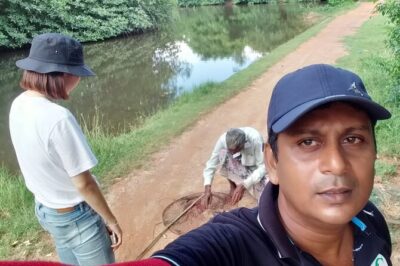
Half-Day Lagoon and Village Cycling Tour in Galle
Read our review →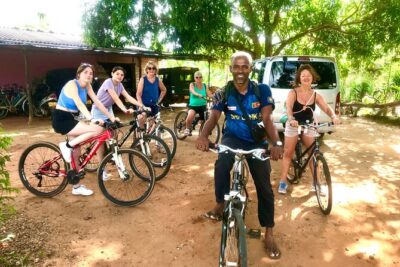
Anuradhapura Heritage Mountain bike / bicycle Tour
Read our review →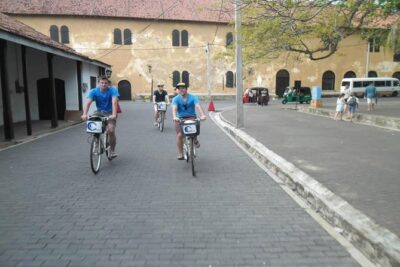
Galle Fort and City Cycling Tour – Choice of E-Bike or Manual
Read our review →
Browse the lists this tour appears in