
Reviewed · KANDY TOURS
Sri Lankan cooking class with Nilu Kandy( FREE PICKUP & Drop)
Sri Lankan cooking class with Nilu Kandy is less about watching a chef perform and more about learning how an everyday meal comes together. You’ll travel to a traditional home in a village near Kandy, handle local spices, cook with Nilu, and sit down to eat what you have made. The class runs for about four hours and is limited to eight people.
I like the easy hotel pickup and drop-off, especially since Janaka, Nilu’s husband, handles the drive and offers insight into Sri Lanka along the way. I also like the practical goal: you learn a simple curry you can recreate at home, using ingredients that are not hard to find. The main consideration is that this is a home-based class, not a polished culinary school, so anyone seeking a formal kitchen setup or a long menu may find it modest.
Key points about this Kandy cooking class
- Cook in a village home near Kandy: The setting gives you a look at everyday Sri Lankan life rather than a restaurant demonstration.
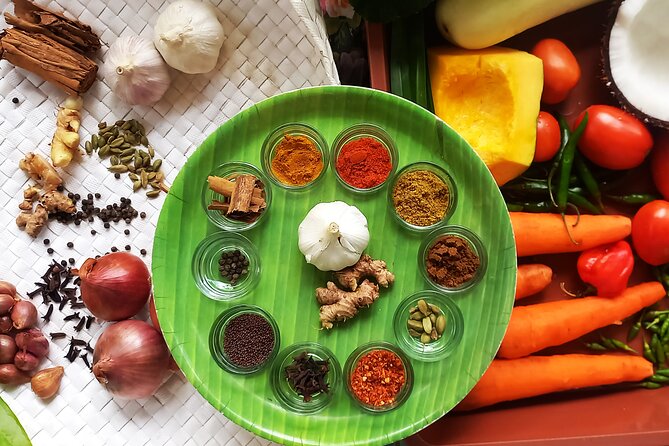
- Learn useful curry basics: Nilu focuses on local spices, ingredients, and simple techniques you can repeat at home.
- Make and eat your own meal: The class ends with a Sri Lankan meal prepared by your own hands.
- Pickup keeps the outing simple: Hotel pickup and drop-off are offered, with Janaka providing the drive.
- Small groups make the lesson personal: The class accepts no more than eight people.
- A four-hour food experience: You have enough time for the cooking, conversation, and meal without giving up a full day in Kandy.
Why the village setting matters
The strongest part of this experience is the change of setting. Instead of meeting in a commercial cooking studio, you go to a traditional Sri Lankan home in a village near Kandy. That matters because food makes more sense when you see where it belongs. Curry is not just a menu item here. It is part of the daily rhythm of home cooking.
You should expect a relaxed, personal setting rather than a staged show. The information provided does not specify every room or cooking tool, so I would not book this expecting a carefully designed professional kitchen. The appeal is the ordinary home atmosphere, where the meal feels connected to local life.
The village location also adds a little travel value beyond the recipe. You are not simply transported to a classroom, taught a few steps, and sent away. Janaka’s drive to the location can give you a chance to talk about Sri Lanka, and his English is described as excellent. That makes the transfer useful rather than dead time.
For many people, this kind of setting is the point. You get a closer look at how a Sri Lankan family shares food and hospitality. If you prefer a tightly timed class with printed recipes, chef uniforms, and a large menu, you may want a more formal cooking school instead.
More Cooking Classes in Kandy
- Sri Lanka Cooking Class with Granny
★ 5.0 · 587 reviews - Kandy Village Cooking Class
★ 5.0 · 536 reviews - Private Traditional Sri Lankan Cooking Class in Kandy with Hotel Transfers
★ 5.0 · 115 reviews
Pickup from Kandy and the drive with Janaka
Pickup is one of the most useful features here. The experience offers pickup and drop-off, and the supplied details describe an easy hotel pickup. Janaka, Nilu’s husband, is the person associated with the drive, and the journey to the village can include conversation about Sri Lanka.
That arrangement removes one of the usual Kandy problems: working out how to reach a home outside the center. You do not have to spend part of the morning finding the right bus, arranging a tuk-tuk, or worrying about whether a driver understands the destination. The transfer is part of the experience.
You should still check the pickup details when you book, since the supplied information does not name specific hotels or give a pickup timetable. The activity is also near public transportation, so the class is not cut off from the wider area, but the included pickup is likely the easier choice for most people.
The drive is not just a practical shuttle. Use it to ask questions. You might find it a good time to learn more about daily life in Sri Lanka, food customs, or the area around Kandy. The length of the drive is not provided, so I would avoid planning another fixed activity immediately after the class.
Meeting Nilu and learning the basics
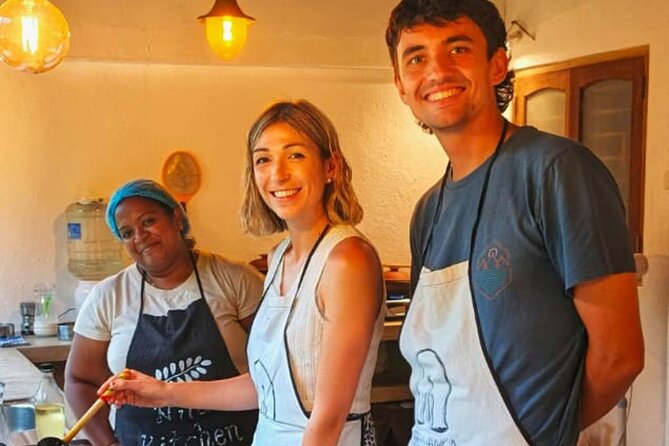
Once you arrive, Nilu introduces the foundations of Sri Lankan cooking. The focus is not on making a complicated banquet. It is on learning how to use local spices and ingredients in a way that produces a meal you can repeat in your own kitchen.
That practical focus is a real strength. A cooking class is poor value if you leave with a recipe that requires a dozen ingredients you cannot find at home. Here, the stated aim is to help you cook a simple Sri Lankan curry with ingredients that are easy to find. You learn a method, not just a dish.
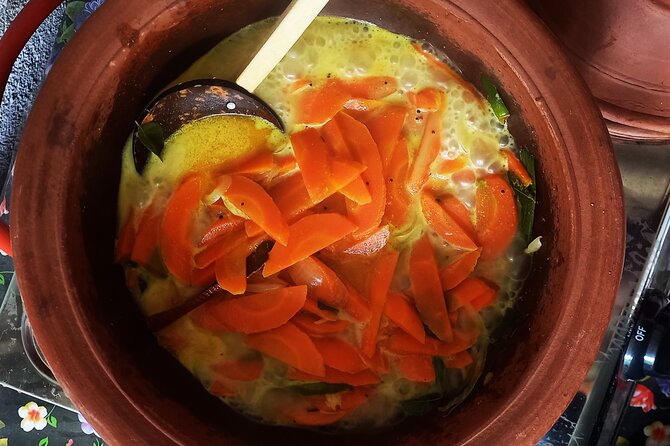
The class may include dhal curry and/or pumpkin curry. The wording means you should not assume both dishes are guaranteed every time. The precise menu can vary, so ask Nilu what will be prepared if one particular curry is important to you.
Dhal curry is a useful place to start because it is a familiar Sri Lankan staple and a good way to learn how seasoning changes a basic ingredient. Pumpkin curry offers a different taste and texture, along with a lesson in how vegetables work with spices and coconut-style curry techniques. The available details do not list every ingredient or cooking step, so I would not expect a full recipe card for a long series of dishes.
What you should gain is a clearer sense of sequence and balance. You learn how to handle the ingredients, how local spices are used, and how simple components become a finished curry. That knowledge can be more useful than memorizing exact quantities.
Handling Sri Lankan spices at home
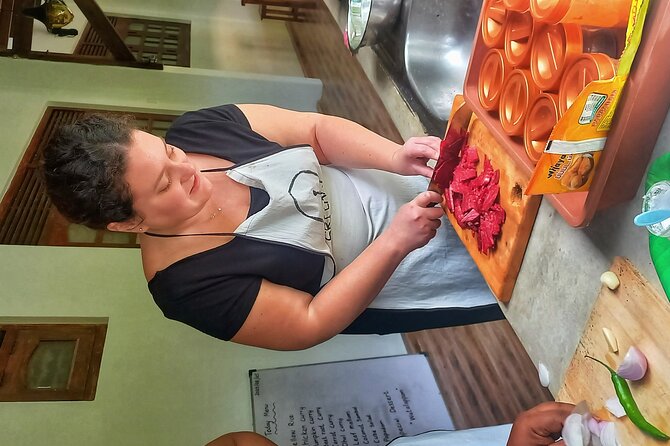
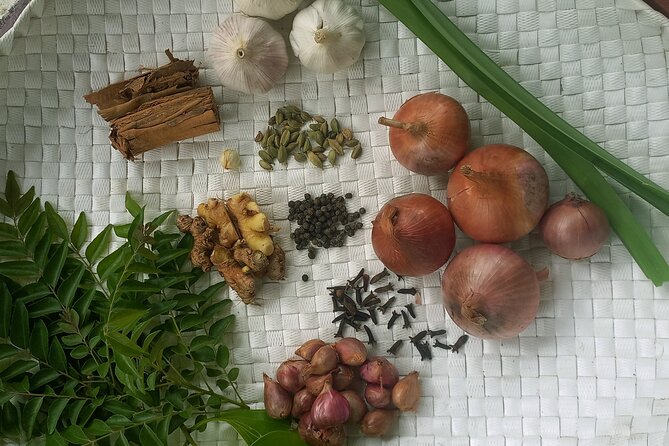
The class pays special attention to local spices and ingredients. For a first-time visitor, this is often the part that feels hardest to copy after returning home. Sri Lankan food can taste complex, but the complexity comes from how ingredients are combined and cooked, not simply from adding more spice.
Nilu’s stated aim is to make the food accessible. You are meant to leave able to prepare a simple curry with ingredients available at home. That makes the lesson suitable for a curious beginner who may not have a Sri Lankan grocery shop nearby.
I like this approach because it keeps the class grounded. You are not being asked to become a professional cook in one afternoon. You are learning a useful base and gaining enough confidence to try it again. The class also gives you a reason to pay attention to aroma, texture, and timing instead of treating the recipe as a rigid list.
You should remember that the exact result at home will depend on the ingredients you can find. The class can show you the basic technique, but local produce and spices may not taste exactly the same elsewhere. Take mental notes about substitutions, and ask Nilu which ingredients matter most if you plan to recreate the dish.
A different sort of day out of Kandy:
- Kandy Private Guided City Tour by Tuk Tuk
★ 4.9 · 1,307 reviews - From Kandy: Sigiriya Rock & Dambulla Cave Temple Adventure
★ 4.9 · 785 reviews - Kandy to Ella Train Tickets – Reserved Seats
★ 4.5 · 523 reviews - From Kandy: Pinnawala Day Tour
★ 4.8 · 331 reviews
Cooking the meal, not just watching it
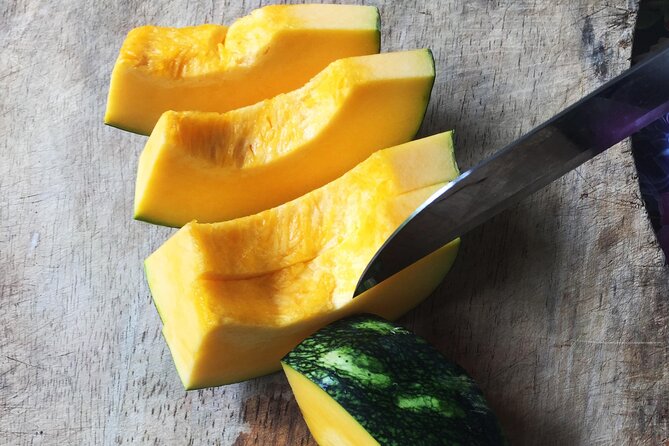
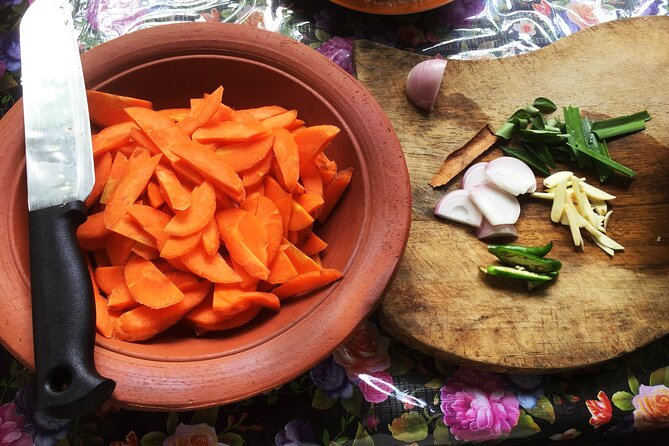
The experience promises hands-on cooking followed by a meal made with your own hands. That distinction matters. Demonstrations can be entertaining, but they do not always teach you what to do when the pot is in front of you and the heat is on.
Here, you take part in making the dishes. The available details do not spell out every task, so the amount of hands-on work may depend on the group and the menu. Still, the central purpose is participation, not a show from the side of the room.
A group limit of eight is helpful. It is small enough to make questions possible and large enough to keep the class social. If the group is full, you may have less control over every single step than you would in a private lesson, but the size should avoid the crowded feel of a large demonstration.
The four-hour duration gives the class room to breathe. You have time for instruction, preparation, cooking, and eating. It is not a quick stop squeezed between sightseeing visits. Plan it as a half-day activity, and avoid treating it as something you can finish in an hour before another appointment.
Sitting down to eat what you made
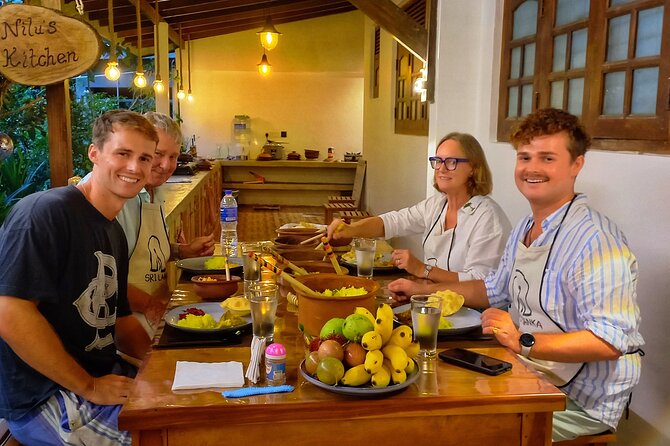
The meal at the end is not an extra detail. It is the payoff. After working with the ingredients, you can taste the finished curries and understand how the separate steps come together on the plate.
That final meal also helps you judge what you learned. You can notice the spice balance, texture, and flavor while the process is still fresh in your mind. If something tastes different from what you expected, you have a natural chance to ask Nilu why.
The experience is especially well suited to people who enjoy food as a way to connect with a place. You get a meal, but you also get the story of how that meal is made in a Sri Lankan home. The setting is simple, and that simplicity may be more meaningful than eating another restaurant curry without knowing how it was prepared.
Do not expect a restaurant-style tasting menu. The goal is a simple Sri Lankan meal, not a parade of courses. That is good news if you want a useful lesson and a satisfying lunch or dinner, but less so if you are looking for a broad survey of regional Sri Lankan cuisine.
What the $25 price buys you
At $25 per person, this is strong value for a four-hour activity that includes pickup and drop-off, instruction, cooking, and a meal. The price is especially appealing because it combines transport with a hands-on food experience. A cooking class alone can cost more once you add the cost and time of reaching a village outside the city.
The value is not based on the number of dishes. You are not paying for a large menu or a professional kitchen. You are paying for access to a local home, direct instruction from Nilu, help with spices and ingredients, and the chance to eat what you prepare.
Group discounts are offered, which may make the class more attractive for families or small parties. The maximum group size is eight, so a discount does not necessarily mean a huge class. Ask for the current group rate if you are booking for several people, since the exact discount is not provided.
The experience is also booked, on average, 14 days ahead. That does not guarantee it will sell out every day, but it is a useful warning. If this is important to your Kandy plans, reserve before you arrive rather than leaving it until the last morning.
Who will get the most from this experience
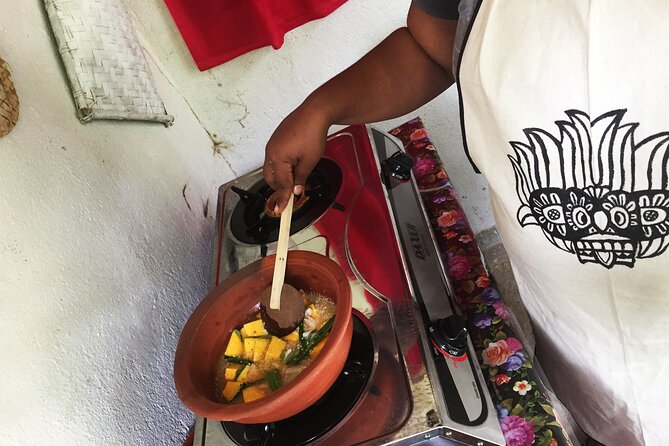
I would choose this class if you want food, conversation, and a look at ordinary life near Kandy in one half-day. It suits first-time cooks because the stated aim is to teach a simple curry rather than assume advanced kitchen skills.
It also suits anyone who likes taking a practical souvenir home. A photograph of a meal fades quickly. A curry you can make again gives the experience a longer life, especially if you write down the ingredients and ask about substitutions.
Couples, families, and small groups should find the format appealing. The group limit of eight keeps it from becoming an impersonal event, while group discounts may help with the cost. Solo visitors can also fit the activity, although the social feel will depend on who else books that date.
I would be more cautious if you need a fully specified menu, strict dietary planning, or a private class. The supplied details do not confirm dietary options, private bookings, exact dishes on every date, or the precise cooking facilities. Contact the provider before booking if any of those points are essential.
Booking, timing, and cancellation
Confirmation is received at the time of booking. Pickup is offered, mobile tickets are available, and the experience is near public transportation. These details make the booking process fairly simple, but you should still confirm your pickup point and start time directly if your accommodation is outside central Kandy.
The cancellation policy is generous if your plans may change. You can cancel at least 24 hours before the local start time for a full refund. Cancellations or changes made within 24 hours are not refunded or accepted.
The experience requires a minimum number of people. If the provider cancels because that minimum is not reached, you will be offered another date or experience, or you can receive a full refund. That is worth knowing when arranging a tightly timed itinerary.
Should you book Sri Lankan cooking class with Nilu?
Book it if you want a small, personal, reasonably priced activity that teaches you something useful. The combination of a village home, Nilu’s cooking instruction, Janaka’s pickup and conversation, and a meal you prepare yourself gives the class more substance than a standard restaurant visit.
The best reason to go is the practical lesson. You are not only eating dhal or pumpkin curry. You are learning how to work with Sri Lankan spices and how to adapt a simple recipe at home. The free pickup and drop-off make the $25 price even easier to justify.
Skip it if you want a formal culinary course, a guaranteed multi-dish menu, or detailed facilities and dietary information in advance. For everyone else, this is a thoughtful half-day choice in Kandy, especially if you book early and treat the village setting as part of the lesson.
FAQ
How much does the cooking class cost?
The price is $25 per person. Group discounts are available.
How long does the experience last?
The class lasts approximately four hours.
Is pickup available?
Yes. Pickup and drop-off are offered, and the experience information describes an easy hotel pickup.
Who leads the experience?
Nilu teaches the cooking class. Janaka, Nilu’s husband, handles the drive and can talk with you about Sri Lanka during the journey.
What dishes will I learn to cook?
The class focuses on simple Sri Lankan meals and may include dhal curry and/or pumpkin curry. The exact combination is not specified.
How many people can join?
The maximum group size is eight people.
Can I use public transportation to reach the experience?
The experience is near public transportation. Pickup is also offered.
What is the cancellation policy?
You can cancel at least 24 hours before the local start time for a full refund. Cancellations or changes made within 24 hours are not refunded or accepted.
More workshops and classes in Kandy
- Kandy Cooking Class with Granny
★ 4.9 · 95 reviews - Private Kandy Authentic Cooking Class
★ 5.0 · 65 reviews - Kandy: Interactive Batik Workshop
★ 5.0 · 51 reviews - Srilankan Cooking class by FFL kandy
★ 5.0 · 50 reviews
Recently listed around Kandy
- Kandy City Day Tour from Colombo, Negombo or Katunayake★ 5.0 · 10 reviews
- 3 Days Nature and Chill Tour of Ella, Nuwara Eliya and Haputale★ 5.0 · 10 reviews
- Knuckles Spice Trail Trek from Kandy★ 5.0 · 11 reviews
- Kandy Private City Tour With Local Guide★ 4.7 · 11 reviews
- Kandy & Pinnawala & Tea Factory Full Day Tour From Negombo★ 4.3 · 11 reviews
- Sigiriya and Dambulla Day Trip from Kandy★ 5.0 · 11 reviews
- Kandy City Tour with Mahaweli★ 5.0 · 11 reviews
- Kandy City Tour & Famous Ambuluwawa Tower with Friendly Chauffeur★ 5.0 · 11 reviews
Kandy Tours, compared.




Browse the lists this tour appears in