Reviewed · COLOMBO TOURS
Private Tour of Colombo with Ajeet De Soyza
Colombo reveals itself best in contrasts: a Dutch hospital now filled with shops and restaurants, a striking red mosque in old Pettah, Buddhist treasures at Gangaramaya, and modern business towers all within one city ride. With Ajeet De Soyza guiding privately, you can ask direct questions and spend more time on the parts that interest you.
I like the efficient mix of driving and walking, especially for a first look at a spread-out city. I also like that the tour tackles both famous sights and useful historical context, with bottled water, air-conditioning, private transport, and WiFi included. The main consideration is pace: seven listed stops in four to five hours means some visits are brief, and the National Museum’s one-hour stop may leave little room for lingering elsewhere.
Key points to know before booking
- A private guide named Ajeet De Soyza leads the experience in person, so your group can ask questions and discuss sensitive subjects directly.
- The tour links old and new Colombo, from the Dutch Hospital and Fort to the World Trade Centre area and modern administrative landmarks.
- Gangaramaya Temple requires an extra payment, listed as LKR 400 or about USD 2 per person.
- The National Museum receives the longest visit, with about one hour planned, but its entrance fee is not included.
- Private air-conditioned transport makes the route practical, particularly when Colombo’s sights are spread across several districts.
- The $100 price covers your private group, transport, taxes, bottled water, and WiFi, but not meals or museum and temple admission.
Why this Colombo tour works for a first visit
Colombo is not a city you understand from one postcard view. Its character comes from the way old districts, religious buildings, colonial remains, government monuments, and commercial towers sit close together. This tour gives you that broad picture in a single half-day.
The private format matters. A fixed group tour often has to move on when someone wants to ask about politics, religion, or the city’s colonial past. Here, Ajeet can respond to your questions as they arise. One especially useful detail from the available feedback is that he handled questions on potentially controversial subjects with thoughtful answers and historical context. That makes this a better choice for curious visitors than for anyone seeking only a quick collection of photo stops.
The route is also practical. You will not spend the entire outing walking under the sun, yet you will get out at key sites rather than viewing the whole city through a car window. Expect a blend of short walks, landmark visits, and drive-by views.
A few more Colombo days to line up
- Colombo: Private Tuk-Tuk City Tour with All Entry Fees
★ 4.9 · 2,154 reviews - Sri Lanka Personal Tour Driver in private vehicle
★ 5.0 · 747 reviews - Colombo Tuk Tuk City Tour -Sightseeing Entry Fees & Food Included
★ 5.0 · 678 reviews
Dutch Hospital and the business heart of Fort
The Old Colombo Dutch Hospital is a strong opening stop because it shows how Colombo reuses its past. Built during the Dutch colonial era, the structure is regarded as the oldest building in the Colombo Fort area. It now serves as a shopping and dining precinct, so the setting is historic without being preserved as a silent museum.
You have about 30 minutes here, with no admission charge listed. That is enough to look at the building, get your bearings, and see how the old structure functions today. I like this stop because it gives you an immediate sense of Colombo’s habit of placing present-day life inside old walls.
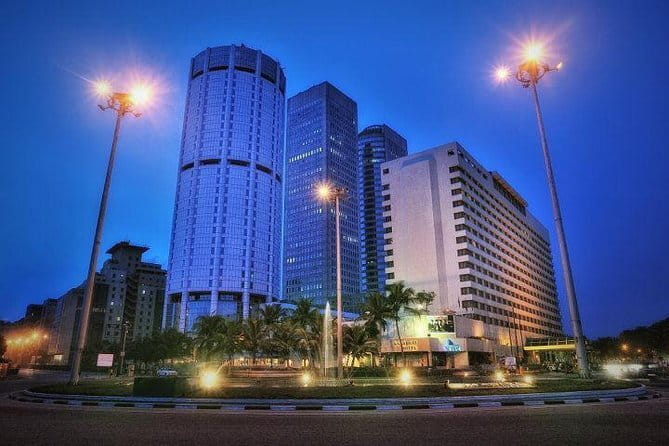
Fort follows with about 45 minutes. This is Colombo’s central business district and financial center, home to the Colombo Stock Exchange and the World Trade Centre. The contrast with the Dutch Hospital is the point. You move from colonial architecture to the city’s modern commercial identity in a short distance.
Do not expect a full architectural survey of Fort in 45 minutes. The stop is better understood as an orientation walk and drive through Colombo’s core. If you are interested in how the city works today, this section will be more useful than a route made only of historic monuments.
Pettah and the Red Mosque
The Jami Ul-Alfar Mosque, commonly called Sri Lanka’s Red Mosque, is one of the most eye-catching buildings on the route. It sits in Pettah, one of Colombo’s oldest districts, and its tall minarets can be seen from many nearby streets.
The planned visit lasts about 20 minutes, with no admission fee listed. That makes this primarily an exterior and neighborhood stop rather than a long religious visit. You will have time to take in the mosque’s unusual red-and-white appearance and understand its place in Pettah.
A short stop here is sensible, but it also creates one of the tour’s clearest compromises. Pettah deserves more time than 20 minutes if you want to explore it slowly. The district is part of the city’s everyday commercial life, yet this itinerary gives you a focused look rather than an extended walk through its streets.
Dress and behavior should be respectful around any place of worship. The supplied details do not specify visiting rules or interior access, so you should treat this as a landmark stop unless Ajeet advises otherwise on the day.
Gangaramaya Temple and a small extra fee
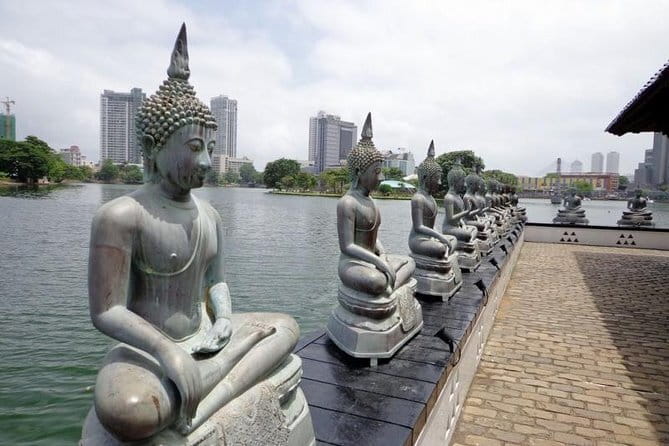
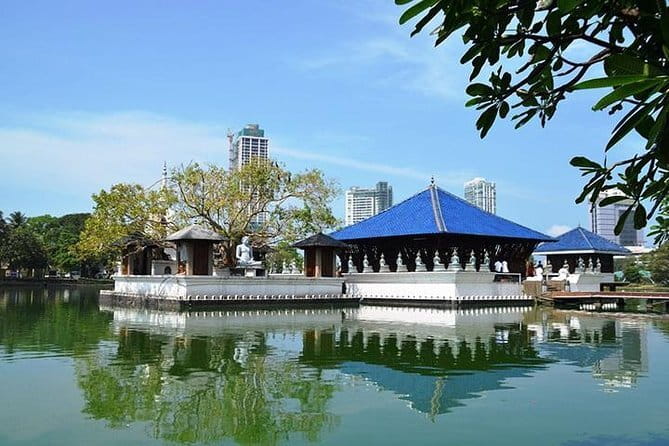
Gangaramaya Vihara is one of Colombo’s oldest Buddhist temples. It was started in the late 19th century by the scholar monk Hikkaduwe Sri Sumangala Nayaka Thera. The visit lasts about 30 minutes.
This is one of the tour’s most important cultural stops because it adds a religious dimension to the city tour. The temple is not simply another exterior landmark. You get a chance to see a place connected with Colombo’s Buddhist tradition and to ask Ajeet about its background.
There is a small but important pricing detail here. The additional information lists the entrance fee as LKR 400, or about USD 2, per person. The itinerary also labels the stop as having admission included, so the clearest practical reading is to confirm the fee with the guide when you book or before entering. Meals are not included either.
Thirty minutes is enough for a useful introduction, but not for a slow examination of every object or room. If Buddhist art and temple traditions are central to your interests, tell Ajeet early. The private format gives you a better chance of shaping the emphasis than a large scheduled group would.
A different sort of day out of Colombo:
- Udawalawe National Park: Elephant Safari with Expert Guide
★ 4.9 · 641 reviews - Colombo Private Tuk-Tuk City Tour with All Entry Fees Included
★ 5.0 · 524 reviews - Colombo: Private Tuk-Tuk City Tour with Guide & All Tickets
★ 4.9 · 471 reviews - 08 Nights in Magical Sri Lanka
★ 5.0 · 443 reviews
Drive-by views of Colombo’s civic landmarks

Two stops appear as drive-by points rather than timed visits: the Bandaranaike Memorial International Conference Hall and the Sri Lankan Parliament Complex.
The conference hall was built between 1970 and 1973 and was given to Sri Lanka by the People’s Republic of China in memory of Solomon Ridgeway Dias Bandaranaike. It adds a political and modern architectural layer to the route. You should think of it as a landmark to see and place in context, not as a building you will tour inside.
The Parliament Complex is another civic landmark. It houses the Parliament of Sri Lanka and sits in Sri Jayawardenepura Kotte, the administrative capital, on an island. Again, the value is in seeing how Colombo connects with the country’s governing institutions.
These drive-by elements are useful because they widen your understanding beyond the old Fort district. The drawback is simple: without a stated visit duration or entrance plan, you should not expect an extended stop, interior access, or detailed exploration. They work best for visitors who want a city overview rather than a specialist political architecture tour.
Independence Square and Sri Lanka’s modern identity
Independence Square receives about 30 minutes and no admission fee is listed. The nearby Independence Memorial Hall commemorates Sri Lanka’s independence from British rule and the restoration of full governing responsibility.
This stop gives the tour a clear national story. The Dutch Hospital and Fort point to colonial eras. Independence Square shifts the focus to the country’s post-colonial identity. Ajeet’s role is especially useful here because a monument can look simple if you do not know why it matters.
Half an hour is a reasonable amount of time for the grounds and memorial. It also provides a change of pace from the dense commercial districts. If you value open civic spaces and national history, this is likely to be one of the more meaningful stops.
The itinerary does not promise a formal guided interior visit, so plan around the outdoor monument and its setting. The tour’s strength is the connection between several places, not a long stay at one site.
Galle Face Green by the Indian Ocean
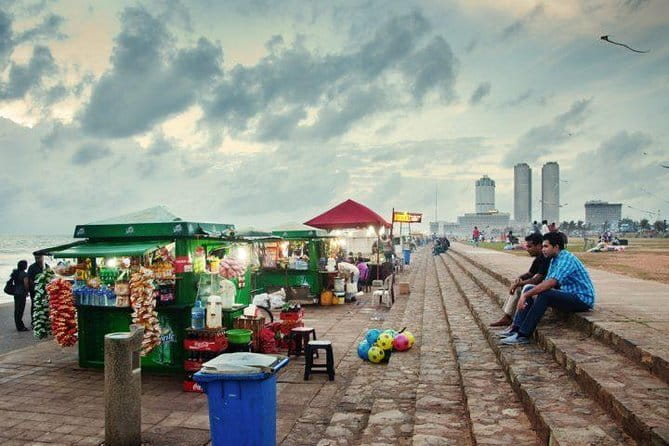
Galle Face Green is a five-hectare ocean-side urban park stretching about 500 meters along the coast in central Colombo. The stop lasts only 15 minutes, with no admission charge.
That short timing tells you what to expect: a quick coastal pause, not a long promenade. You can take in the open seafront setting and see how this public space fits into the business center nearby. After the tighter streets of Fort and Pettah, the change is welcome.
Fifteen minutes may feel rushed if you want a long walk or an unhurried sunset visit. Still, as part of a half-day city circuit, it makes sense. You get the coastal setting without giving up the museum hour or the other major landmarks.
Weather matters for this experience. The tour requires good weather, and if conditions force a cancellation, you are offered another date or a full refund. That policy is useful because several parts of the route are outdoors.
One hour at the Colombo National Museum
The Colombo National Museum is the final listed stop and receives about one hour. It is considered the largest museum in Sri Lanka and holds historically important objects, including the throne and crown associated with the Kandyan kings.
This is the stop where the tour’s earlier themes can begin to connect. After seeing colonial buildings, religious sites, civic monuments, and the commercial center, the museum gives you a place to look at Sri Lanka’s wider past through objects and displays.
The planned hour is generous compared with the other stops, but it is still not enough for a slow, complete museum visit. You should treat it as a focused introduction. Ask Ajeet what to prioritize if you have particular interests, since a private guide can help you use the hour well.
The museum admission fee is not included in the $100 price. That cost is separate from the LKR 400 or USD 2 temple fee, so budget for both if you plan to enter every paid site. The supplied details do not state the museum’s current ticket price, so confirm it before booking or at the entrance.
What the $100 price really covers
At $100, this is not a budget bus tour. It is a private experience, however, and that changes the calculation. The price includes private transportation, an air-conditioned vehicle, bottled water, WiFi onboard, all fees and taxes, and pickup. Your group alone participates.
For two people, that works out to $50 per person before extra entrance costs. For a larger private group, the per-person value improves. You are paying for control of the pace, direct access to one guide, and relief from arranging transport between districts.
I see the strongest value for couples, families, or small groups who want a broad introduction in limited time. The price is less compelling if you are comfortable using public transport, exploring independently, and visiting only a few places. It also makes less sense for a museum specialist who wants to spend most of a day inside the National Museum.
The air-conditioning and bottled water are practical inclusions, not decoration. Colombo sightseeing can involve heat, traffic, and repeated movement between districts. WiFi onboard may also help you stay connected during a day when you are switching between walking stops and vehicle travel.
Timing, pace, and who should book
The advertised duration is approximately four to five hours. That is a good length for a first orientation, particularly if you have a short stay in Colombo or want an overview before making your own plans.
The schedule is full. The timed stops add up to roughly three hours and 50 minutes, before counting the drive-by landmarks and travel between districts. That leaves limited room for traffic, extended conversations, shopping, meals, or unexpected changes.
I would book this if you want:
- A private introduction to Colombo rather than a single-site visit
- A guide who can answer questions and provide historical context
- A mix of walking and driving
- A comfortable vehicle with pickup, water, and WiFi
- A route that includes religious, colonial, civic, coastal, and museum sights
I would hesitate if you want a slow neighborhood walk, a long meal, extensive shopping, or a full museum day. The route is broad by design, so it gives you range rather than deep time at each place.
The tour is suitable for most participants, according to the supplied information, and it operates near public transportation. Confirmation is provided at booking. You should still allow a little flexibility because weather can affect the outing, and the schedule includes several outdoor stops.
Final call on Ajeet’s Colombo tour
Book this tour if you want to understand Colombo’s many sides in one well-packed half-day. The combination of Fort, Pettah, Gangaramaya, Independence Square, Galle Face Green, and the National Museum gives you more than a string of monuments. It shows how the city’s colonial past, faiths, government, commerce, and public life fit together.
The strongest reason to choose it is Ajeet De Soyza’s private guiding style, especially if you value clear answers and historical context rather than a memorized speech. The main caution is the pace. You will see a lot, but some stops are short, and the extra temple and museum fees should be added to your budget.
At $100, it is a sensible choice for a small group that values comfort and personal attention. If that sounds like your kind of first day in Colombo, this tour earns its place on your shortlist.
FAQ
How long does the private Colombo tour last?
The tour lasts approximately four to five hours.
Is hotel pickup available?
Pickup is offered, though the supplied details do not specify the exact pickup locations or times.
Is transportation private and air-conditioned?
Yes. The experience includes private transportation in an air-conditioned vehicle, along with onboard WiFi.
Who leads the tour?
Ajeet De Soyza conducts the tour in person.
Are entrance fees included?
All fees and taxes are included in the listed price, but the additional information specifies an entrance fee of LKR 400 or about USD 2 per person for Gangaramaya Temple. Admission to the Colombo National Museum is not included. Meals are also excluded.
What happens if bad weather cancels the tour?
The experience requires good weather. If it is canceled because of poor weather, you can choose another date or receive a full refund. Free cancellation is available when you cancel at least 24 hours before the start time.
Recently listed around Colombo
- Safari Day Tour to Sigiriya Lion Rock and Golden Cave Temple★ 5.0 · 3 reviews
- Sigiriya & Dambulla Day Tour★ 5.0 · 3 reviews
- Shore Excursion Colombo Port to Mount Lavinia Beach & Colombo city For 4 – 6 Pax★ 4.5 · 3 reviews
- Explore The Colombo City by Private Tuk Tuk or Car★ 4.7 · 3 reviews
- Private day tour to Sigiriya and Dambulla from Colombo★ 5.0 · 3 reviews
- Day Excursion to Yala National Park From Colombo★ 4.5 · 3 reviews
- Colombo: Lotus Tower Celebration Dining Experience with Cake★ 4.4 · 3 reviews
- Airport Taxi Transfers from Colombo Airport to Sigiriya★ 4.5 · 3 reviews
Colombo Tours, compared.
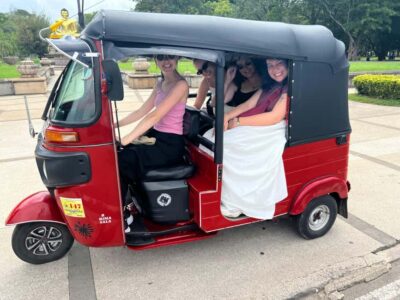
Private Tuk-Tuk City Tour with All Entry Fees
Read our review →
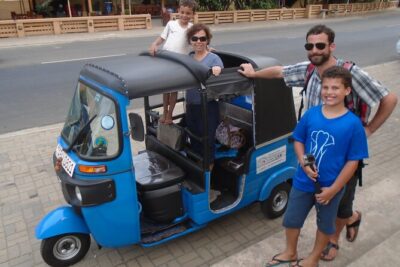
Colombo Tuk Tuk City Tour -Sightseeing Entry Fees & Food Included
Read our review →
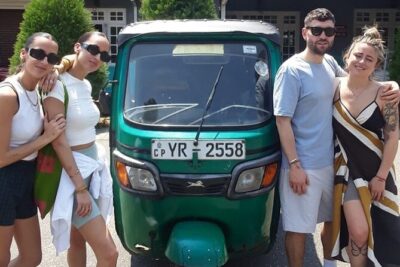
Colombo Private Tuk-Tuk City Tour with All Entry Fees Included
Read our review →
Private Tuk-Tuk City Tour with Guide & All Tickets
Read our review →