
Reviewed · HISTORICAL TOURS
Jaffna: Temples, Royal Palaces, and Coastal Heritage Tour
Jaffna’s story is best understood through its places of worship, old royal sites, colonial walls, and Tamil cultural institutions. This full-day outing connects them in one long, well-filled circuit, from the sacred Nallur Kandaswamy Temple to the sea at Kankesanthurai and the sunset waterfront at Pannai Park.
I like the local guide-led format, especially because guides such as Arun, Jeena, and Dilushan explain both Hindu customs and the difficult modern history of Jaffna. I also like the practical value: at $84, you get private transport, hotel pickup and return, entrance fees, a guide, and lunch. The main drawback is the pace. Ten hours in Jaffna’s heat, with many stops and plenty of walking, can feel tiring, and the tour is not suitable for wheelchair users.
Key points to know before booking
- Nallur Kandaswamy Temple gives the day its spiritual focus, with guidance on rituals, dress, and Hindu traditions.
- Manthiri Manai and Chankiliyan Thoppu bring the old Jaffna Kingdom to life through ruins, legends, and historic gateways.
- Keerimalai and KKS Beach add a welcome coastal break, so bring beachwear, sunscreen, and a change of clothes.
- Arun, Jeena, and Dilushan have different strengths, from temple customs and Tamil culture to colonial and postwar history.
- The $84 price covers the main costs, including transport, lunch, admissions, and hotel pickup and drop-off.
- Expect a long, warm day, with modest clothing required at temples and comfortable shoes needed throughout.
Why this Jaffna day tour works
Jaffna can be hard to read at first. Its important places are spread across the city and surrounding areas, and the meaning of a temple, royal ruin, or colonial building is not always obvious from a quick look. This tour gives you a local guide who can connect the sites instead of leaving you to piece the story together alone.
The route covers several sides of Jaffna. You see Hindu religious life at Nallur, the former seat of the Jaffna Kingdom at Manthiri Manai, the mystery of Nilavarai Well, sacred water at Keerimalai, and the island’s coastal character at KKS Beach. Later, the Public Library, Jaffna Fort, and Jaffna Museum turn the focus toward education, colonial rule, Tamil identity, and the more recent past.
I especially like that the day is not limited to monuments. You get time beside the water, a local lunch, a rest at your hotel, and a quiet ending at Pannai Park. That mix makes the schedule feel more human, although the number of stops means you should not expect long, unhurried visits everywhere.
More History Tours in Sri Lanka:
- Day tour to Sigiriya,Dambulla & Polannaruwa (3 word heritage places) from Kandy
★ 5.0 · 99 reviews - Explore & Ride the history of anuradhapura with Vogel Tours
★ 5.0 · 62 reviews - Kandy Heritage City Tour by tuktuk
★ 5.0 · 61 reviews
Starting in Jaffna or Nallur
Pickup is available from Jaffna or Nallur, with return to either area. Hotel pickup saves you the trouble of arranging separate transport, which matters in a city where the sites are scattered and the midday heat can be draining.
The exact vehicle depends on the number of people in your private group. The experience can involve a car, tuk tuk, scooter, or another suitable vehicle, and one outing was conducted by tuk tuk rather than motorbike. That flexibility is useful, but you should confirm the planned transport if you have strong preferences.
A tuk tuk can make the ride feel more connected to daily life, but it also offers less protection from sun, dust, and heat. A past participant was glad not to be on a motorbike for precisely those reasons. Wear sunscreen, carry water, and bring a hat even if your vehicle is enclosed.
Nallur Kandaswamy Temple and Jaffna’s spiritual center
Nallur Kandaswamy Temple is the day’s major religious stop. Its importance goes beyond architecture. This is a working Hindu temple and a central place for Jaffna’s Tamil religious life, so your guide can help you understand what you are seeing rather than treating the visit as a photo stop.
Arun received particular praise for explaining the order of Hindu rituals and the meaning behind the actions of worshippers. That sort of explanation is valuable because temple customs can otherwise look mysterious or easy to misread. You can ask questions about Hinduism, local practice, and the temple’s place in Jaffna culture.
Dress modestly here. Bring clothing that covers shoulders and knees, and be ready to remove footwear if required. Photography is allowed, but it should never interrupt worship or ignore local rules. Comfortable shoes are useful for the approach, though you may need to go barefoot inside certain sacred areas.
This is also one of the places where the tour’s pace matters. You will see several religious sites during the day, including Hindu temples and, according to one itinerary, a Buddhist temple. If Nallur interests you most, tell your guide early that you would value extra explanation here.
Manthiri Manai and the old royal road
Manthiri Manai offers a look at the former Jaffna Kingdom through the remains of a royal residence. The site is not a polished palace complex with a long sequence of intact rooms. Its appeal lies in the fragments, stories, and sense of what once occupied this part of the city.
Your guide can explain local legends connected with the ruins and place them within the story of Jaffna’s former rulers. I find this kind of stop more rewarding with a guide because the physical remains alone may not tell you much. Expect atmosphere and interpretation rather than a museum-style display.
Chankiliyan Thoppu, also called Chankili Gate, adds another royal-era marker. This ceremonial gateway is a quick stop, but it helps you picture the old kingdom’s routes and entrances. It is also a sensible place for photographs, especially if you enjoy recording the smaller pieces of a historic city rather than only its famous buildings.
The drawback is that both royal sites may feel modest if you expect grand palace interiors. Their value comes from the wider story, so listen closely and keep your expectations focused on historical context.
A different sort of day out of Sri Lanka:
- Colombo: Private Tuk-Tuk City Tour with All Entry Fees
★ 4.9 · 2,154 reviews - Udawalawe National Park | Private Safari Tour
★ 5.0 · 1,499 reviews - Kandy Private Guided City Tour by Tuk Tuk
★ 4.9 · 1,307 reviews - Whales and Dolphins Watching-Luxury Super Grade Cruiser(Hotel Pick up offered)
★ 5.0 · 1,268 reviews
Nilavarai Well and the rural road north
The drive to Nilavarai Well takes you through quieter rural and garden areas. That change of scene gives the day some breathing room after the city’s temples and ruins.
Nilavarai is known for its clear water and its mysterious depth, often described locally as a bottomless well. The stop works best as a short natural and cultural pause, not as a major attraction with a long visitor program. Your guide can explain the local importance and the stories attached to the spring.
I like this part of the route because it shows Jaffna beyond its central monuments. You see a quieter side of the region and get a better feel for the distances involved. At the same time, anyone looking only for major architectural sights may find the well less compelling than the temple or fort.
Keerimalai springs and KKS Beach
Keerimalai combines sacred water and the coast. The springs are regarded as healing waters, and the setting gives you a chance to slow down before the beach portion of the day.
Bring beachwear if you want to bathe. The tour information describes a beach bath and time at Kankesanthurai Beach, commonly called KKS Beach, where you can swim, sunbathe, and relax beside the sea. Pack a towel and a dry change of clothes, since those items are not listed among the included equipment.
This is one of the tour’s most useful breaks. Jaffna’s heat can make a long sightseeing day feel harder than expected, and time by the water gives you a physical reset. Still, swimming conditions and your own comfort will determine how much you enjoy it. You should not treat the beach stop as a guaranteed long swim session, since the day has many later appointments.
The coastline also adds a different side of Jaffna’s identity. After temples and royal ruins, you get open views and a calmer setting. Keep the schedule in mind, because lunch and a hotel rest follow this section.
Lunch and a midday rest
Lunch is included at a local restaurant, which improves the value of the $84 price and removes one planning task from a busy day. The meal is described as traditional, so you can expect a chance to eat local food rather than relying on a familiar international menu.
One particularly useful detail is that a temple meal may also be part of the day on some outings. A past itinerary included a free meal at a temple, showing that the exact food stop can vary with the guide and schedule. Do not assume the same meal arrangement every time, but ask your guide what is planned if food matters to you.
After lunch, you return to your hotel for a rest before the evening visits. This is a smart feature, not wasted time. One guide, Arun, even suggested a shaded afternoon siesta when a participant was tired after a cold night and a busy morning. That sort of flexibility can make the difference between enjoying the final stops and simply enduring them.
Jaffna Public Library and the meaning of cultural recovery
The evening begins at Jaffna Public Library, one of the city’s most important cultural landmarks. It is more than a handsome public building. The library represents learning, Tamil literary culture, loss, and recovery, making it a key stop for understanding Jaffna beyond ancient temples.
The visit is especially strong when your guide connects the library to the island’s recent history. Arun was able to discuss the period during and after the civil war, which gives the building a human and political context that you would not get from architecture alone.
Give this stop your attention even if you are not usually interested in libraries. It helps explain why education and cultural memory matter so much in Jaffna. The visit also balances the morning’s focus on older kingdoms and religious traditions.
The schedule places the library after a rest, which is helpful. You may still be warm and tired, but the evening portion is less physically demanding than the beach and temple circuit.
Jaffna Fort and views over the lagoon
Jaffna Fort shifts the story toward colonial rule. The 17th-century fort has broad ramparts and open views toward the lagoon, making it one of the better places to understand the city’s position and military importance.
Walking the walls is more rewarding than simply viewing the entrance. You can look across the water, take photographs, and see how the fort relates to Jaffna’s surrounding area. Bring your camera, but remember that the fort has exposed areas and little shade, so sunscreen and water remain useful late in the day.
Your guide can connect the fort’s colonial past with Jaffna’s more recent history. This is one of the tour’s strongest educational features. The day does not present colonial buildings as isolated relics. It places them alongside Tamil heritage and the effects of the civil war.
The fort requires walking on uneven historic surfaces, so sturdy shoes are a better choice than sandals. If you have limited mobility, ask before booking, since the experience is specifically not suitable for wheelchair users.
Jaffna Museum and Pannai Park at sunset
Jaffna Museum provides a compact look at Tamil and colonial heritage through artifacts and city history. After so many outdoor stops, an indoor museum visit gives the day a useful change of rhythm.
The museum may appeal most to you if you want objects and displays to support the stories told at earlier sites. It is not described as a large institution, so keep your expectations realistic. Its role in this tour is to add evidence and detail to the broader account of Jaffna.
The final stop is Pannai Park, where you can relax near the waterfront and take sunset photographs. This quiet ending is a good choice after a full day of temples, roads, ruins, springs, and fort walls. You get time to look back over the day rather than being dropped straight at the hotel after the last formal sight.
Pannai Park is also a reminder that this experience is not only about historical information. It gives you a peaceful public space and a little unstructured time, which many tightly scheduled day tours forget to provide.
Guides, language, and the private format
The tour offers English and Tamil guides, and the guide can shape the day in a major way. Arun is particularly strong on temple rituals, Hindu customs, colonial history, and the civil war period. Jeena brings local knowledge of Jaffna and Tamil heritage, while Dilushan was flexible with photography requests and adjusted the transport experience to a tuk tuk.
You book a private group rather than joining a large shared party. That makes it easier to ask questions, request photo pauses, or tell the guide when you need a short rest. The guide may also adapt the balance of temples, history, and scenery to your interests, though the full route still contains many scheduled stops.
The English and Tamil language choices suit most international visitors who want explanations in English or local communication in Tamil. If a particular subject matters to you, mention it at the start. For example, ask for more detail on Hindu practice at Nallur, Tamil heritage at the library, or colonial and postwar history at the fort.
Is $84 a fair price?
At $84 per person, this is a strong package if you plan to visit many of these places anyway. The price includes hotel pickup and return, transport, a professional local guide, entrance fees, and lunch. Paying separately for vehicles, admissions, meals, and a full day of local explanation could quickly approach the same amount.
The private format adds value for couples, families, and small groups. You are not paying only for a list of stops. You are paying for the route, the local interpretation, and the convenience of having the day arranged across Jaffna and its coastal sites.
The value is less clear if you want a slow day at one or two places. Ten hours is a lot, and the itinerary is ambitious. You may prefer a shorter outing if heat affects you, if you have limited walking ability, or if you want long time at the beach.
Personal expenses are not included, so budget separately for anything beyond the listed lunch and admissions. Free cancellation up to 24 hours before departure and the reserve-now, pay-later option also make the booking less rigid, provided those terms suit your plans.
Who should book this experience?
I would choose this tour if you want a first, broad look at Jaffna and care about understanding what you see. It suits people interested in Tamil culture, Hindu traditions, royal history, colonial sites, the civil war period, and coastal scenery all at once.
It is also a good choice if you are staying in Jaffna or Nallur and do not want to arrange several separate rides. The private guide and included transport are especially useful when you want to cover Nilavarai, Keerimalai, KKS Beach, the fort, and the city sites in one day.
I would think twice if your priority is a relaxed beach day or an in-depth visit to one temple. The tour covers a great deal, and the heat can make the final stops feel demanding. Wear modest clothing, bring water, sunscreen, a hat, comfortable walking shoes, a camera, and beachwear.
Should you book the Jaffna temples and heritage tour?
Book it if you want the widest useful introduction to Jaffna in one day, especially with a guide who can explain Tamil culture and the island’s complicated past. The strongest parts are the personal interpretation at Nallur, the royal ruins, the library, and the fort, with Keerimalai and KKS Beach providing welcome changes of pace.
Skip it if you need a gentle schedule, have mobility limitations, or dislike moving between many sites. For most independent visitors with only a short stay, though, the combination of transport, lunch, admissions, private guiding, and a full cultural route makes $84 a sensible buy.
FAQ
How long does the Jaffna tour last?
The tour lasts 10 hours. The sightseeing portion is listed as about 8.5 hours, with the full duration also covering the day’s transfers and scheduled breaks.
Where can pickup and drop-off take place?
Pickup is available from Jaffna or Nallur, and return is available to Jaffna or Nallur. Hotel pickup and drop-off are included.
Which languages are available?
The live tour guide is available in English or Tamil.
What does the $84 price include?
The price includes transport, hotel pickup and drop-off, a professional local guide, entrance fees to all listed sites, and lunch at a local restaurant.
What should I bring?
Bring comfortable shoes, a hat, camera, sunscreen, water, and beachwear. A dry change of clothes and towel are also sensible if you plan to swim, though they are not listed as included items.
Is the tour suitable for wheelchair users?
No. The tour is not suitable for wheelchair users, and several stops involve walking around historic and outdoor sites.
Recently listed around Sri Lanka
- From Dambulla/ Sigiriya: Ancient City of Polonnaruwa by Bike★ 4.1 · 3 reviews
- From Dambulla: Minneriya National Park wild Jeep Safari★ 5.0 · 3 reviews
- Trincomalee: Guided scooter City Tour★ 5.0 · 3 reviews
- From Colombo: Day Trip to Galle City, Koggala and Unawatuna★ 4.2 · 3 reviews
- Yala Safari – Yala National Park★ 5.0 · 3 reviews
- Discover Sigiriya Dambulla and Minneriya Park in Day Tour★ 5.0 · 3 reviews
- Udawalawe Private Safari with Picnic and Hotel Pickup★ 5.0 · 3 reviews
- Sigiriya & Dambulla Day Tour★ 5.0 · 3 reviews
Historical Tours, compared.
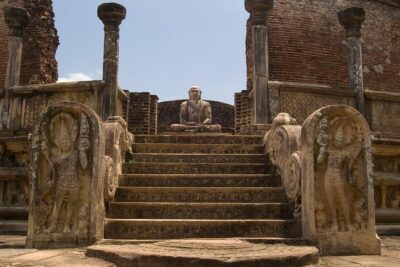
Day tour to Sigiriya,Dambulla & Polannaruwa (3 word heritage places) from Kandy
Read our review →
Explore & Ride the history of anuradhapura with Vogel Tours
Read our review →
Explore Colombo Heritage and Cultural Temples Tour by Tuk Tuk
Read our review →
Anuradhapura Heritage Mountain bike / bicycle Tour
Read our review →
Galle Fort Heritage Walk by a Certified Heritage Interpreter
Read our review →Browse the lists this tour appears in