
Reviewed · KANDY TOURS
Interactive Batik Workshop and Lessons in Sri Lanka
The most memorable part of this Kandy experience is the chance to make a real batik piece from start to finish in a family-run home studio. You are not just watching a demonstration. You choose a design, handle the wax tools, apply color, and take your finished work home.
I like the small group limit of 10, since it gives you time to ask questions and get personal help. I also like the warm setting: the workshop is run by an experienced couple, and the family welcome can make the morning feel more like a visit than a formal class.
The main consideration is time and patience. Batik involves repeated waxing, dyeing, drying, and removing wax, so this is a hands-on craft session, not a quick souvenir stop. Lunch and transportation are not included, and the 8:00 am start means you need to plan your morning carefully.
Key points at a glance
- Create your own souvenir: You make a batik cloth or similar finished item and take it home.
- Work with traditional tools: Try a funnel, tjanting, Henry tool, stamps, brushes, and wax-spraying methods.
- Learn the full process: The class covers fabric selection, drawing, waxing, dyeing, cracking, and wax removal.
- Family-run home studio: The workshop takes place in a cozy traditional setting operated by an experienced couple.
- Small class, direct help: With no more than 10 participants, the instructor can guide you when a technique feels tricky.
- Good value at $28: Equipment, cloth, materials, taxes, and herbal tea are included, while transport and lunch cost extra.
Starting at 8:00 am on Thalapiyannawa Road
The workshop begins at 8:00 am at Thalapiyannawa Road in Kandy and ends at the same meeting point. Since private transportation is not included, you need to arrange your own way there and back.
That detail matters more than it may seem. A morning craft class works best when you arrive on time, settled and ready to work. Batik has several connected stages, so arriving late could mean missing the initial design or fabric instructions. The exact meeting instructions should be checked when you book, since the stated start point is the meeting point rather than a hotel pickup.
The class lasts about three and a half hours. That gives you enough time to do more than paint a ready-made souvenir, but it also means you should keep the rest of your morning fairly open. I would not pair this with a tightly scheduled morning tour.
The group maximum is 10 people. That is large enough for a social class, but small enough for the instructor to move around and correct your technique. If you are traveling with family or friends, group discounts may be available, which improves the value for a shared activity.
More workshops and classes in Kandy:
- Sri Lanka Cooking Class with Granny
★ 5.0 · 587 reviews - Kandy Village Cooking Class
★ 5.0 · 536 reviews - Private Traditional Sri Lankan Cooking Class in Kandy with Hotel Transfers
★ 5.0 · 115 reviews
Entering a working batik home studio
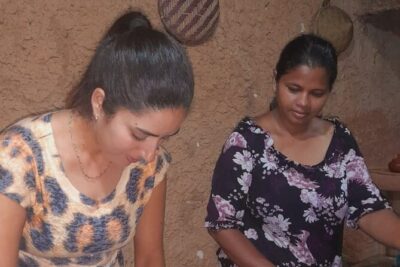
The workshop takes place in the home studio of an experienced couple who have worked in batik for many decades. You get to see the tools and equipment used in their day-to-day craft, rather than learning in a polished classroom built only for tourists.
I find that setting important. Batik is easier to understand when you see the working materials close up: wax containers, drawing tools, stamps, brushes, fabric, and dye equipment. The home studio also keeps the experience personal. You can ask why one tool is used instead of another, or how a certain pattern is made, and receive an answer directly from the people who practice the craft.
The welcome appears to be part of the morning. An herbal tea is included, and some sessions have also included snacks or food from the family. Still, lunch is specifically not included, so I would treat any extra refreshments as a pleasant possibility rather than something to plan your meal around.
The atmosphere may suit you if you prefer local contact and practical learning over a large commercial attraction. It may feel less structured than a museum workshop, but that is also part of its charm.
Choosing fabric and drawing your design
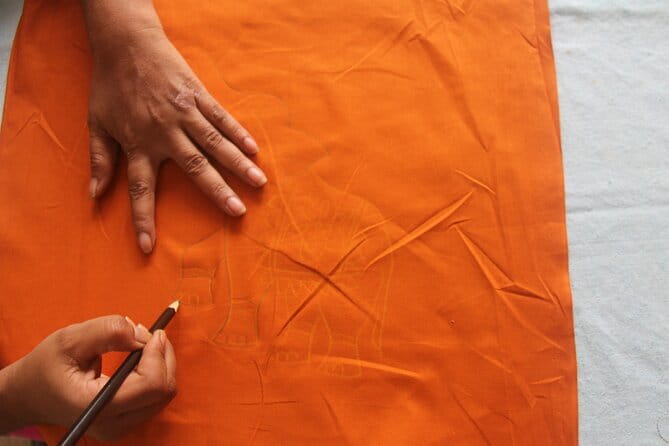
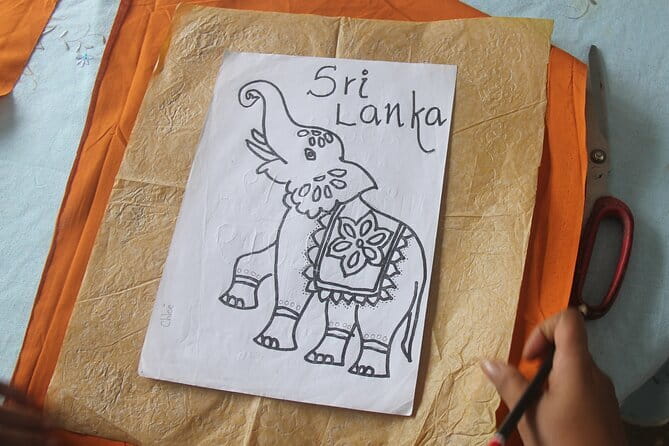
The first real task is selecting the fabric and deciding what you want to create. You then work out your design before applying wax.
This is a useful starting point because your design controls almost everything that follows. Wax marks areas that should resist the dye, so the lines you draw are not merely decoration. They create the boundaries that shape the finished colors and patterns.
If you are not confident at drawing, do not assume you need to arrive with an elaborate idea. The instructor personally guides participants who need help, and the small class size gives you room to ask questions. A simple pattern may be a better choice than an ambitious one, especially if this is your first attempt.
I would allow yourself time here. The temptation is to rush toward the colorful part, but a clear design makes the waxing and dyeing stages easier. The instructor can explain what is practical for the time available.
Learning wax with a tjanting and funnel

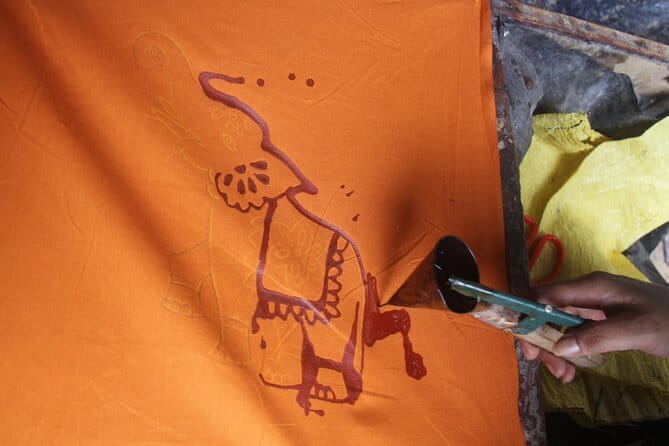
The wax stage is where the process begins to feel like a real craft rather than a painting exercise. You learn about wax mixtures and waxing techniques, then try traditional tools such as the funnel, tjanting, and Henry tool.
The tjanting is used to draw lines with liquid wax. A funnel and other tools allow different ways to place or spread the wax. You may also try wax spraying, stamping, and brush work, each of which creates a different surface effect.
This hands-on access is one of the strongest reasons to book the class. You are not handed a finished outline and asked only to add color. You handle the tools yourself under supervision, which lets you see how wax flows, how pressure affects a line, and why steady movement matters.
Expect some trial and error. Fine wax lines require control, and a first attempt may not look as neat as the instructor’s work. That is normal. The value is in understanding the technique and producing something that carries your own decisions.
A few more Kandy days to line up
- Kandy Private Guided City Tour by Tuk Tuk
★ 4.9 · 1,307 reviews - From Kandy: Sigiriya Rock & Dambulla Cave Temple Adventure
★ 4.9 · 785 reviews - Kandy to Ella Train Tickets – Reserved Seats
★ 4.5 · 523 reviews - From Kandy: Pinnawala Day Tour
★ 4.8 · 331 reviews
Cracking, stamping, and brush work
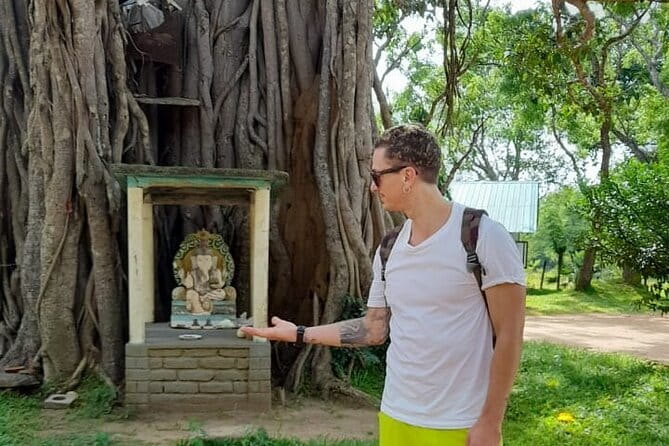
The class also covers cracking and stamping, which add texture and pattern to the cloth. Brush arts and wax designing give you other ways to shape the surface.
These steps are useful because batik is not limited to one style of line drawing. Cracking can produce irregular marks, while stamping creates repeated motifs. Brush work lets you handle the wax or color in a broader, less precise way.
You will probably find that the process rewards patience more than artistic confidence. A mistake cannot always be erased once wax or dye has been applied, so the instructor’s demonstrations and corrections matter. The session is designed to let you try each stage, but you still have to work carefully.
I especially like this part for families and friends. You can compare approaches without needing everyone to make the same design. One person might prefer neat stamped patterns, while another chooses broad brush marks or a more free-form layout.
Mixing dyes and building color
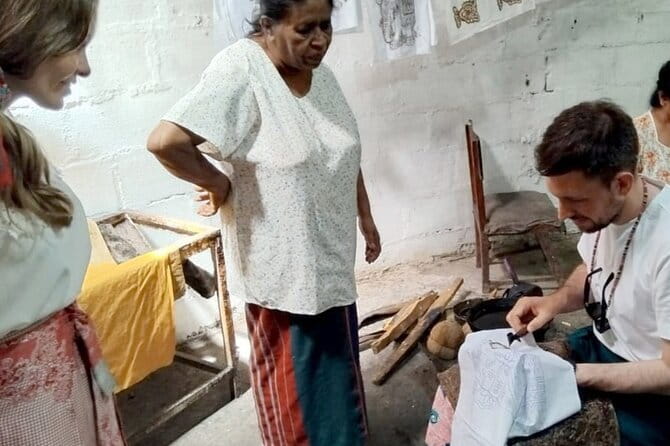
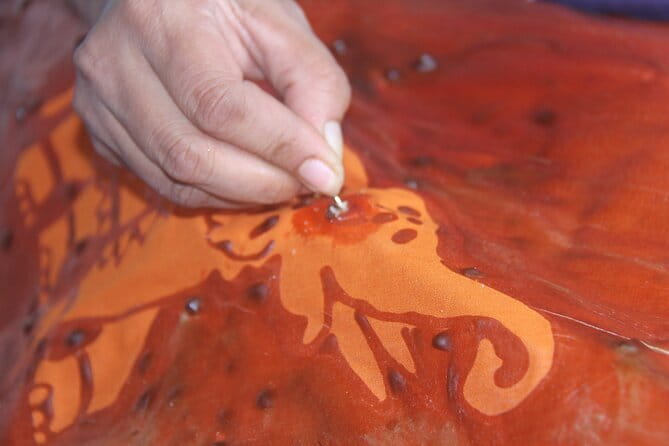
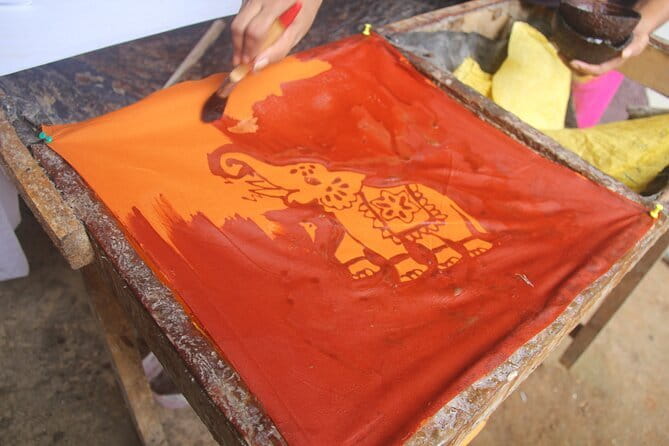
After the wax work, you learn about dyes and how they are applied. The workshop introduces several dye types, including naphthol dyes, vat dyes, and reactive dyes, along with dye mixtures and application techniques.
The important idea is that color is added in stages around the wax-resist design. The wax protects selected areas while the dye reaches the rest of the cloth. This is why the earlier drawing and waxing work matters so much: each choice changes the final pattern.
You get to try the relevant steps yourself, but the finished result will depend on your handling of the materials. The class is therefore part art lesson and part process lesson. You learn why the cloth changes as each layer is added, not simply which color to brush on.
The technical vocabulary may be more than you expected from a short workshop. That is a plus if you want a serious introduction to batik, but it could feel like a lot if you only want a fast craft activity. The instructor’s personal guidance should help keep the process manageable.
Removing the wax and seeing the final cloth
The final stages include wax burning and wax boiling, also called de-waxing. These steps remove the wax so the finished design can be seen clearly.
This reveal is the payoff of the morning. Until the wax is removed, parts of the design remain hidden or covered by the working process. Once the cloth is cleaned, you can see how your lines, stamps, cracks, brush work, and dye choices came together.
The finished piece becomes a souvenir with a story behind it. You did not simply buy a printed cloth in a shop. You can remember the design problem you solved, the wax line that took care, and the colors you chose.
The activity information says you create your own batik cloth, while one account describes making a bag. The exact finished item may depend on the project selected during your session, so I would ask the instructor at the start what form your piece will take. In either case, the important point is that you take your own work home.
What the $28 price really covers
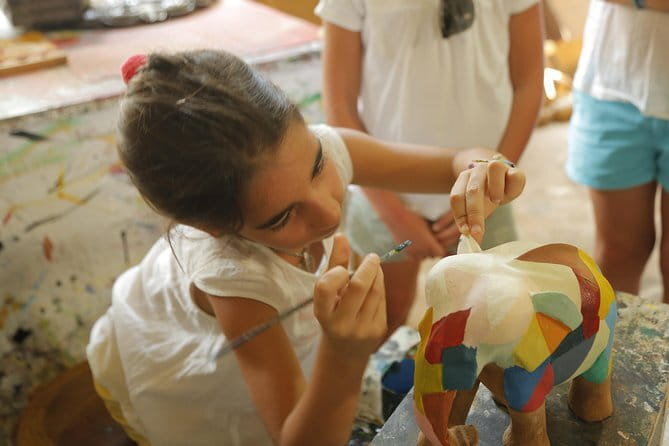
At $28 per person, I consider this a good-value half-day activity for Kandy. You receive about three and a half hours of instruction, all tools and equipment, cloth and other required materials, applicable fees and taxes, and herbal tea.
The price is especially fair because batik uses more than a brush and a piece of fabric. You get access to specialized tools, wax materials, dyes, and a working studio, along with guidance through several stages. Buying a similar lesson separately could involve paying for materials and instruction one piece at a time.
The price does not include private transportation or lunch. That keeps the base cost reasonable, but you should add local transport to your budget and make your own lunch plan. Some families may have offered extra food during a session, but it is not part of the stated inclusions.
Group discounts may help if you are booking for several people. The small maximum also protects the quality of the lesson. A cheaper class with a much larger group could leave you watching more than working.
Who will get the most from this class
I would recommend this workshop to anyone who likes making things with their hands and wants a souvenir tied to a specific place. It is a particularly good choice for couples, families, and friends who want to share an activity rather than split up for separate sightseeing.
It also suits you if you are curious about traditional techniques. The class covers the process from fabric selection through wax removal, and you get to use the same broad types of tools found in a working batik studio.
Parents should consider the child’s patience and interest. The activity is open to most participants, but the slow pace of waxing and dyeing may not suit a young child who wants instant results. The group format and personal help are useful, though, especially for beginners.
You may want to skip it if you dislike careful handwork, have only a short time in Kandy, or need hotel pickup. This is not a sightseeing tour with several stops. It is a focused morning spent making one thing.
Practical details before you reserve
Confirmation is received at the time of booking, and the activity accepts mobile tickets. The experience is capped at 10 participants, so booking well ahead is sensible, especially since it averages about 33 days of advance booking.
You can cancel for a full refund if you do so at least 24 hours before the local start time. Cancellations or changes made less than 24 hours before the 8:00 am start are not accepted for a refund.
Wear something you can work comfortably in, though the supplied information does not specify a dress code. Since you will handle wax and dyes, I would avoid bringing clothing you would be upset to stain. That is practical advice rather than a stated rule, but it is sensible for any hands-on dye session.
The meeting point is also the end point. Since lunch and transport are not included, plan those separately before you arrive.
Should you book the Kandy batik workshop?
I would book this if you want a personal, creative morning and like the idea of bringing home something you made yourself. The strongest features are the family-run setting, direct instruction, traditional tools, and full start-to-finish process for a modest price.
I would think twice only if your schedule is tight or if you want a polished, effortless activity. Batik takes concentration, and the finished cloth will show that it was made by you, not by a factory.
For most visitors who have three and a half hours to spare in Kandy, this is a worthwhile way to learn a local craft while meeting the people who practice it. Arrive ready to work, keep your design manageable, and leave enough time afterward to find lunch.
FAQ
Where does the batik workshop begin?
The activity begins at Thalapiyannawa Road, Thalapiyannawa Rd, in Kandy, Sri Lanka. It ends back at the meeting point.
What time does the workshop start?
The stated start time is 8:00 am.
How long does the activity last?
The workshop lasts approximately 3 hours and 30 minutes.
What is included in the price?
The price includes all tools and equipment, cloth and other materials needed for the program, all fees and taxes, and a refreshing herbal tea.
Is transportation or lunch included?
No. Private transportation and lunch are not included.
How many people can join, and can I cancel?
The activity accepts a maximum of 10 participants. You can cancel at least 24 hours before the local start time for a full refund. Changes or cancellations made less than 24 hours before the start are not accepted for a refund.
Recently listed around Kandy
- Discover Sigiriya Dambulla and Minneriya Park in Day Tour★ 5.0 · 3 reviews
- Kandy City Guided Day Tour by Tuk Tuk & Laxury Car★ 5.0 · 3 reviews
- Kandy: Ambuluwawa Day Tour by TukTuk with Local Guide★ 5.0 · 3 reviews
- Day Tour to Polannaruwa from Kandy by Lux Tours Lanka★ 5.0 · 3 reviews
- Kandy To Dambulla and Sigiria City Full Day by Laka Tours★ 5.0 · 3 reviews
- Evening Tour at the Last Kingdom of Sri Lanka, Kandy★ 5.0 · 3 reviews
- Full Day Tuk Tuk Tour – Explore Kandy with Local Expert★ 4.1 · 3 reviews
- Day Tour Kandy to Sigiriya with Dambulla Cave Temple Excursion★ 5.0 · 3 reviews
Kandy Tours, compared.





Browse the lists this tour appears in