
Reviewed · KANDY TOURS
Kandy: Interactive Batik Workshop
Creating batik gives you a rare souvenir: one you make yourself, not one pulled from a shop shelf. At this Kandy workshop, Anuja and her daughter Manugi show you how wax, cloth, and dye work together, then let you try the process with plenty of patient help. The hands-on work and the warm family-home setting are the main draw.
I like two things in particular. First, you learn the whole process, including wax application, dyeing, and dewaxing, rather than decorating a partly prepared item. Second, you can choose a template or make your own design, even writing your name in Sinhalese. The finished cloth becomes a personal memento of Sri Lanka.
The main consideration is finding the studio. The address is 218/6 Thalapiyannawa Road in Ampitiya, but several people had trouble with map directions and tuk-tuk drivers struggled to locate it. Allow extra time, and contact the hosts for help with the final ride.
Key points to know before you book
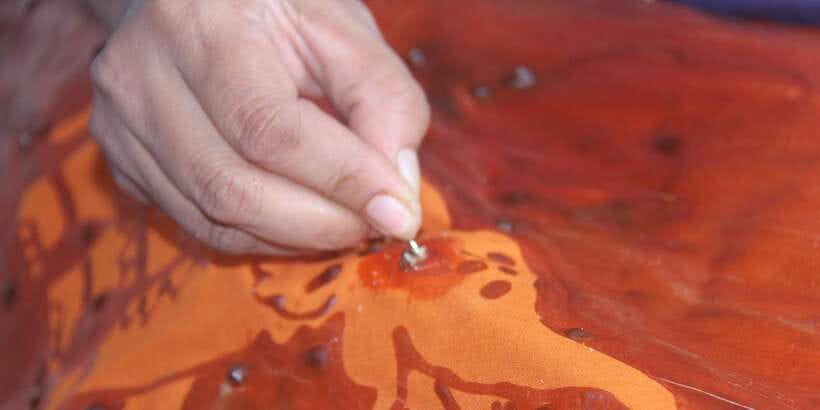
- A complete batik process: Learn drawing, waxing, dye mixtures, color application, and wax removal.
- Patient family instruction: Anuja leads the craft teaching, with Manugi helping in English.
- Creative freedom: Use a stencil, adapt a template, or draw something entirely your own.
- A small-group setting: Groups are limited to 10 people, making it easier to ask for help.
- Tea and a handmade souvenir: Herbal tea is included, and you take home the cloth you create.
- Plan your arrival: Transport is not included, and the studio can be tricky to locate.
Why batik makes a better souvenir than a quick craft stop
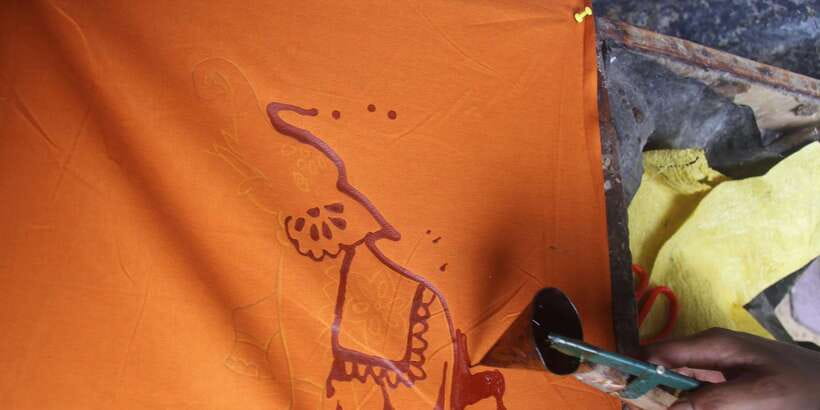
Batik is a resist-dyeing process. Wax blocks dye from reaching parts of the cloth, so each stage helps form the final pattern. You are not simply painting a picture onto fabric. You are learning to control where color can and cannot go.
That makes the craft more interesting than it first sounds. A clean line of wax protects one section. A later dye bath changes the uncovered fabric. When the wax is removed, the pattern appears. The result depends on several linked steps, so small imperfections become part of the handmade character.
The workshop also gives you useful cultural context. You learn about traditional wax batik and batik painting technology, then handle the tools yourself. For a short activity in Kandy, this offers a welcome change from sightseeing at temples, viewpoints, and historic buildings.
I especially like that the activity does not assume you are artistic. Several people arrived unsure of their creative ability and still left with a cloth they felt proud to take home. Anuja corrects mistakes when needed, but the process still gives you room to make your own choices.
More workshops and classes in Kandy:
- Sri Lanka Cooking Class with Granny
★ 5.0 · 587 reviews - Kandy Village Cooking Class
★ 5.0 · 536 reviews - Private Traditional Sri Lankan Cooking Class in Kandy with Hotel Transfers
★ 5.0 · 115 reviews
Arriving at the Ampitiya family studio
The meeting point is 218/6 Thalapiyannawa Road, Ampitiya, in Kandy’s Central Province. The workshop takes place in a family-home setting, which gives the morning a personal feel instead of the polished routine of a large commercial class.
Getting there needs attention. The location can be difficult to find through Google Maps, and local tuk-tuk drivers may not immediately recognize the exact house. You might find it easier to have the host communicate with your driver. The family has helped people reach the correct location and arrange a tuk-tuk back into town after the class.
Do not cut your arrival time too closely. The activity lasts three and a half hours, and a late start could reduce your time with the craft. Since transport is not included, you are responsible for getting to and from the studio.
The setting is part of the appeal, but it also means this is not a formal visitor center with obvious signs and a large reception desk. Keep the address handy, and ask nearby residents for directions if necessary. That simple precaution can save you from beginning the workshop flustered.
The first lesson: cloth, wax, and design
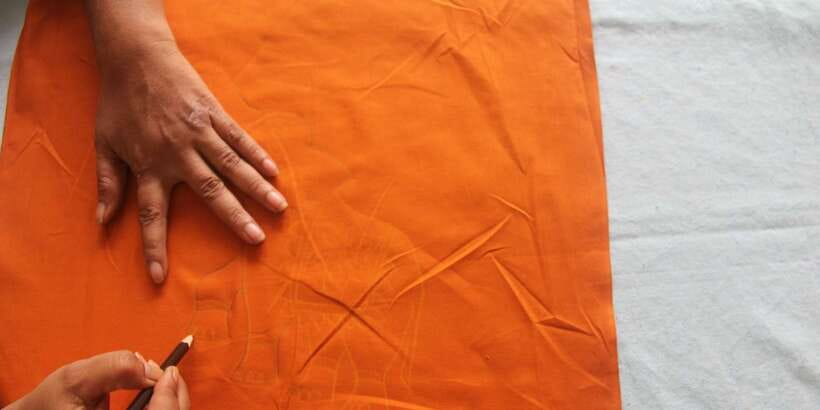
The class begins with an introduction to the materials and the general batik process. You select a piece of fabric and learn about the wax mixtures used to create the resist.
You then begin planning your design. If you prefer a clear starting point, templates are available and can be adapted. If you have a particular idea in mind, you can draw your own pattern. Writing your name in Sinhalese is one appealing option, especially if you want a souvenir tied closely to your time in Sri Lanka.
This choice matters. A template can help you produce a tidy result when you are new to batik. A freehand design gives you more control and personality, but it also requires greater care. You can follow the level of challenge that suits you rather than being forced into one design style.
The family’s teaching approach is patient and step by step. You receive demonstrations before trying each technique, then get help when your lines or wax application need correction. The small group limit of 10 means the class should feel more personal than a crowded art demonstration, though the amount of individual help can depend on the group size.
Working with the funnel, tjanting, and Henry tool
The tools are a memorable part of the activity. You may use a funnel, tjanting, and Henry tool to place wax onto the fabric. Each produces a different kind of mark, so the exercise feels like learning a small vocabulary of lines and textures.
The tjanting is used for controlled wax lines, while other tools help you vary the application. You also try techniques such as wax spraying, stamping, cracking, brush art, and wax designing. Some are straightforward. Others take a little practice to control.
Cracking is particularly useful if you like a more irregular pattern. Spraying and stamping can add texture, while brush work gives you a looser way to apply wax. You do not need to master every technique for the cloth to work, but experimenting helps you understand why handmade batik has such varied surfaces.
This is where comfortable clothing matters. Wax and dye are working materials, not neat desk supplies. A spare outfit is a smart idea, since the hosts specifically advise bringing a change of clothes in case paint gets onto what you wear.
The pace is relaxed rather than rushed. Many people find the repeated motions calming, but you still need to pay attention to the wax and the boundaries of your design. If you are bringing children or teenagers, the activity can suit them well, provided they are comfortable sitting and working carefully.
A few more Kandy days to line up
- Kandy Private Guided City Tour by Tuk Tuk
★ 4.9 · 1,307 reviews - From Kandy: Sigiriya Rock & Dambulla Cave Temple Adventure
★ 4.9 · 785 reviews - Kandy to Ella Train Tickets – Reserved Seats
★ 4.5 · 523 reviews - From Kandy: Pinnawala Day Tour
★ 4.8 · 331 reviews
Dyeing turns the drawing into fabric
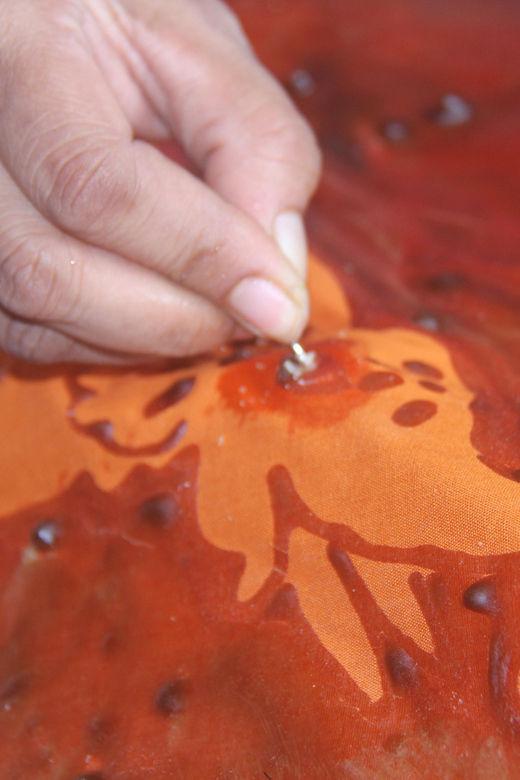
Once the wax design is in place, the workshop moves to dyes and their application. You learn about dye mixtures and techniques involving napthol dyes, vat dyes, and reactive dyes.
The technical terms may sound advanced, but the useful point is simple: different dyes behave differently, and the order and method of application affect the final cloth. Wax protects selected sections while the dye colors the rest. This explains why the earlier drawing stage matters so much.
You get to take part rather than simply watch. That makes the finished pattern easier to appreciate because you understand the work behind each section. If a line is slightly uneven or a color spreads in an unexpected way, you can see how those small changes arose.
Do not expect an industrial textile lesson with every chemical detail covered in depth. The workshop is designed around making your own piece within three and a half hours. You receive a practical introduction to the main methods, enough to understand the craft and complete a souvenir, but not a professional qualification.
That balance works well for a holiday activity. You gain a real sense of the process without spending a full day on technical theory. The class remains creative, social, and manageable for someone who has never handled batik tools before.
Wax burning and dewaxing reveal the final pattern
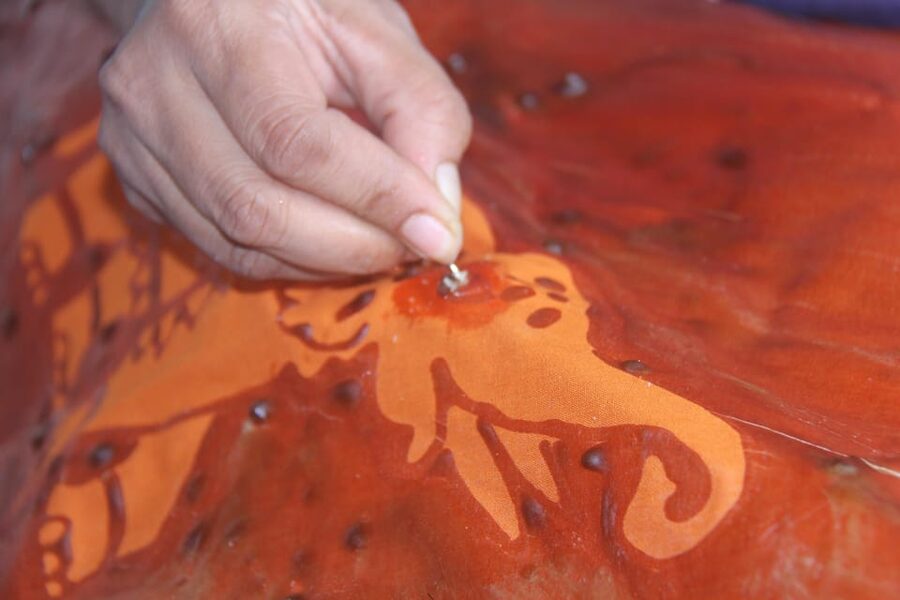
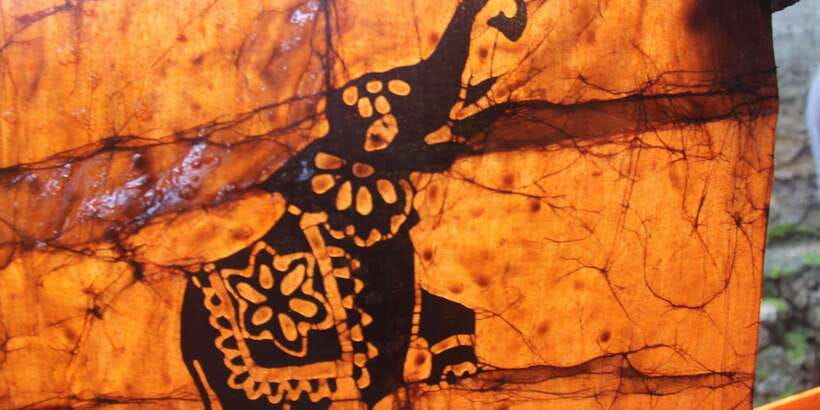
The last part of the process covers wax burning and wax boiling, also called dewaxing. This is the stage that reveals the design you have been building through the earlier steps.
Removing the wax can feel like a small unveiling. Until then, parts of the cloth remain protected and the full relationship between line, color, and blank space is not always easy to see. Dewaxing allows the final pattern to emerge.
You also learn that finishing the cloth is not an afterthought. One person was given care instructions after leaving, which is useful if you want the piece to last. Ask the hosts how to wash and store your finished batik before you depart.
The exact object you take home can vary with the design and session. The supplied details describe a batik cloth, while people have also made items such as a bag or laptop cover during their workshops. Confirm what format your session will produce if that matters to you. In every case, the value is in carrying home something made by your own hands.
Tea, conversation, and the family welcome
Herbal tea is included, and refreshments are often part of the warm welcome. Depending on the visit, the family has offered tea, sandwiches, breakfast, Sri Lankan desserts, or a homemade lunch.
Food beyond the herbal tea is not listed as an included part of the activity, so do not book this expecting lunch. Still, the hosts may offer something during your time there, and several people appreciated the chance to share food and conversation in the family home.
Anuja and Manugi are central to the experience. Anuja teaches the batik techniques, while Manugi speaks excellent English and helps with conversation and explanations. Other family members may assist in the workshop as well.
This personal contact gives the class a broader value. You are not only learning how to use wax. You have time to ask about the craft, talk about Sri Lankan culture, and see examples of work made by the family. For many people, that human exchange becomes as memorable as the cloth.
Is $28 good value for three and a half hours?
At $28 per person, this is reasonably priced for a three-and-a-half-hour activity that includes instruction, fabric, wax, dyes, tools, equipment, herbal tea, and a handmade souvenir.
The strongest value comes from the amount of participation. You are not paying mainly to watch an artisan work. You use the materials, try several techniques, and take part in the key stages from design through dewaxing.
The price also covers a small-group format, with no more than 10 participants. That limit matters for a craft class because you may need help with a tool, wax line, or design decision. A larger group would make the class less personal.
There are two limits to keep in mind. Transportation is not included, so your total cost will be higher if you need a tuk-tuk. Lunch is also excluded, even though refreshments or a meal may sometimes be offered by the family.
For a first introduction to Sri Lankan batik, I consider the price fair. It becomes especially good value if you care more about an authentic, personal activity than a standard sightseeing stop. If you only want a finished textile and have no interest in making it, buying fabric may be quicker.
Who will enjoy this Kandy activity most?
This workshop suits you if you like making things, want a quieter morning away from Kandy’s busy streets, or prefer meeting local people in a home setting. It is also a strong choice for couples, families, and teenagers. One family found it especially memorable for a teenage daughter.
You do not need previous art experience. Templates provide structure, and the instructors guide you through each stage. If you are confident with drawing, you can create your own design instead.
The activity may not suit you if you have back problems or are pregnant, as it is specifically listed as unsuitable for both. Comfortable clothes are advised, and a change of clothes is sensible because paint or dye may land on your outfit.
You should also be comfortable with a class that has some uncertainty. Handmade work is not perfectly predictable, and your cloth may not look exactly like the sample. That is part of the point, but people seeking a polished, identical result may prefer a shop-bought piece.
Booking, cancellation, and practical details
The workshop is conducted in English. The group is limited to 10 participants, and the total duration is three and a half hours. Starting times vary, so check availability for the date you want.
You can cancel up to 24 hours in advance for a full refund. A reserve-now, pay-later option is available, which helps if your Kandy schedule is still shifting.
Bring comfortable clothes and consider a spare set. Transportation to the studio and back is not included. Since the address can be hard to locate, arrange your ride with the host if possible rather than assuming every driver will find it from the map pin alone.
The main included items are:
- Hands-on batik instruction
- Cloth, wax, and dyes
- All tools and equipment
- Herbal tea
- Your finished batik cloth
Lunch is not included. Any extra food offered by the family should be treated as a welcome gesture, not something guaranteed by the booking.
Should you book the Kandy batik workshop?
I would book this if you want a personal Kandy experience and like the idea of taking home a souvenir with your own fingerprints in it. The patient teaching, family setting, English instruction, and complete batik process make it more rewarding than a short paint-and-leave class.
Before booking, plan the transport carefully and wear clothes you can risk marking. If you need a fully accessible activity, have back problems, are pregnant, or want a guaranteed lunch, this is not the right choice.
For most people who enjoy crafts, culture, and relaxed conversation, the $28 fee buys three useful hours and a keepsake you cannot duplicate. The hardest part may be finding the house. Once you arrive, the simple pleasure is learning a traditional Sri Lankan craft slowly, one wax line at a time.
FAQ
Where is the batik workshop held?
The studio address is 218/6 Thalapiyannawa Road, Ampitiya, in Kandy, Sri Lanka.
How long does the workshop last?
The activity lasts three and a half hours.
How much does the workshop cost?
The price is $28 per person.
What language is the workshop conducted in?
Instruction is provided in English. Manugi, one of the family instructors, speaks excellent English.
How many people can join the class?
It is a small-group activity limited to 10 participants.
What is included in the price?
The price includes hands-on instruction, cloth, wax, dyes, all required tools and equipment, and herbal tea.
Is transportation included?
No. Transport to and from the workshop is not included.
Should I bring anything?
Wear comfortable clothes. Bringing a change of clothes is useful in case paint or dye gets onto what you are wearing.
Who should not take this workshop?
The activity is not suitable for pregnant women or people with back problems.
Recently listed around Kandy
- 3 Days Nature and Chill Tour of Ella, Nuwara Eliya and Haputale★ 5.0 · 10 reviews
- Kandy City Day Tour from Colombo, Negombo or Katunayake★ 5.0 · 10 reviews
- Knuckles Spice Trail Trek from Kandy★ 5.0 · 11 reviews
- Kandy Private City Tour With Local Guide★ 4.7 · 11 reviews
- Kandy & Pinnawala & Tea Factory Full Day Tour From Negombo★ 4.3 · 11 reviews
- Sigiriya and Dambulla Day Trip from Kandy★ 5.0 · 11 reviews
- Kandy City Tour with Mahaweli★ 5.0 · 11 reviews
- Kandy City Tour & Famous Ambuluwawa Tower with Friendly Chauffeur★ 5.0 · 11 reviews
Kandy Tours, compared.




Browse the lists this tour appears in