
Reviewed · KANDY TOURS
Authentic Sri Lankan Cooking Class in Kandy by Local Family
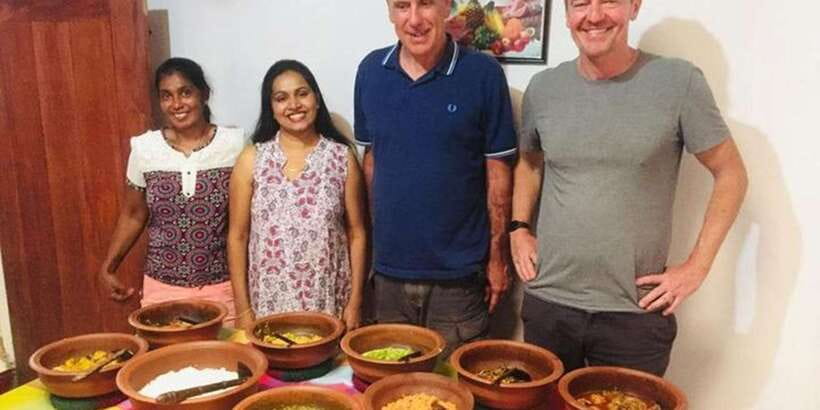
The most appealing part of The Best Kandy Kitchen is that you cook inside a real family home, not a polished school built for tourists. Near the large Buddha statue on Bahirawakanda Mountain, the house sits in a calm green setting, and the lesson is led by Dinesha, her sister, and her mother. Sometimes the children join in too.
I like the chance to visit a local market before cooking, and I like the sheer range of food: up to ten vegetable dishes, fish or chicken, coconut sambol, and coconut roti. The main consideration is time. Three hours is not long for such a large menu, so the family does much of the chopping and cooking while you season, learn, and take part.
Key points
- A family kitchen near Bahirawakanda Mountain: You see how Sri Lankan food fits into daily home life.
- A possible market visit with Dinesha: Learn about local vegetables and spices before cooking.
- Ten vegetable dishes plus a main course: Choose fish or chicken, then add sambol and coconut roti.
- A 100-year-old sambol stone: This traditional grinding board gives the lesson a memorable physical link to the past.
- A generous meal at the end: Save room, since the finished spread is the heart of the afternoon or evening.
- A very small group: The price is $99 for up to two people, making it best for a couple or two friends.
Arriving at a Kandy family home
The class takes place close to Kandy city center, near the Buddha statue at Bahirawakanda Mountain. That location matters because you are not being sent far outside town for a staged village visit. You remain near one of Kandy’s familiar sights, yet the setting changes quickly from city activity to a quiet home surrounded by greenery.
Pickup and drop-off are included around Kandy town. You should wait in your hotel lobby 10 minutes before the scheduled pickup time and provide your hotel details when booking. This is useful after a busy day of sightseeing, when finding a private home by yourself could be awkward.
The home kitchen is central to the experience. You are not simply watching a chef work at a demonstration counter. You are entering the sort of space where family meals are prepared every day, often several times a day. The teachers are Dinesha’s wife, sister, and mother, with the children sometimes appearing during the lesson.
That family setup gives the class a warm, informal tone. It also means the pace can feel less polished than at a cooking school. If you want exact measurements, professional equipment, and a carefully timed restaurant-style lesson, this may not be your best match. If you want a look at ordinary Sri Lankan cooking and family life, the home setting is the main reason to book.
More Cooking Classes in Kandy
- Sri Lanka Cooking Class with Granny
★ 5.0 · 587 reviews - Kandy Village Cooking Class
★ 5.0 · 536 reviews - Private Traditional Sri Lankan Cooking Class in Kandy with Hotel Transfers
★ 5.0 · 115 reviews
Starting at the market with Dinesha
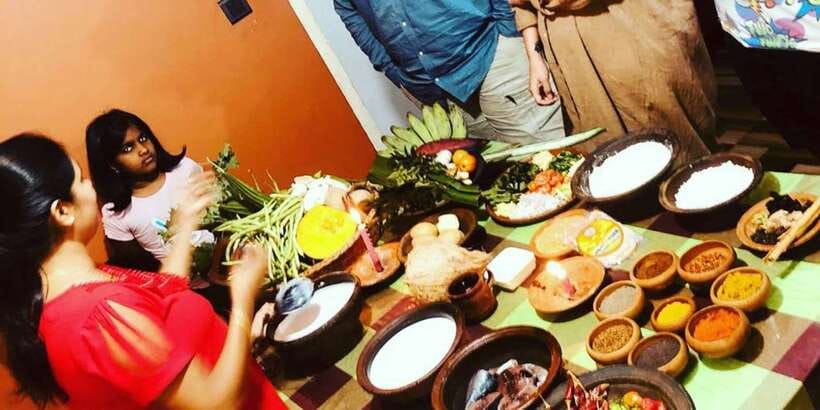
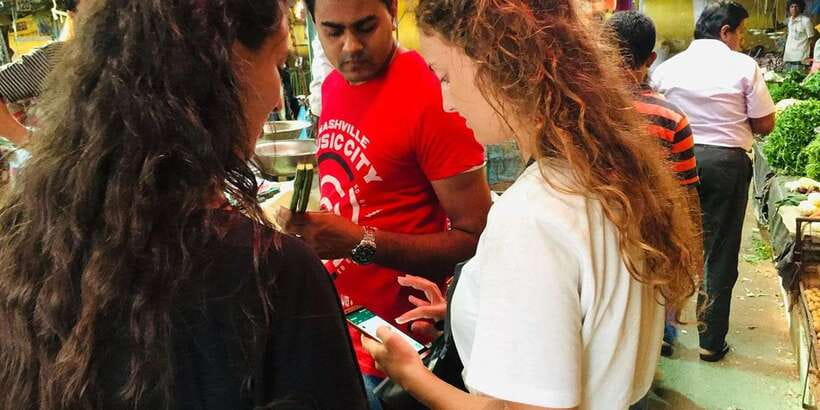
The market visit is offered for anyone who wants that extra part of the experience. Dinesha guides you through the local market, points out spices and vegetables, and helps gather ingredients for the meal.
This is a smart addition. Sri Lankan cooking depends on more than curry powder. Fresh vegetables, coconut, chilies, onions, and individual spices all affect the final taste, and seeing them before they reach the kitchen helps you understand what you are eating later.
The market also gives you a chance to ask questions before the cooking begins. You can learn what certain vegetables look like, how spices are used, and which ingredients are common in a Sri Lankan household. The supplied details do not promise a fixed market route or a set amount of market time, so think of it as an optional introduction rather than a separate market tour.
One useful practical point: the class is scheduled for three hours, and the market visit may be part of that overall outing. If you want a long market exploration followed by a slow cooking lesson, confirm the timing when arranging your pickup. The focus is the meal, not an extended shopping tour.
Learning from three generations of cooks
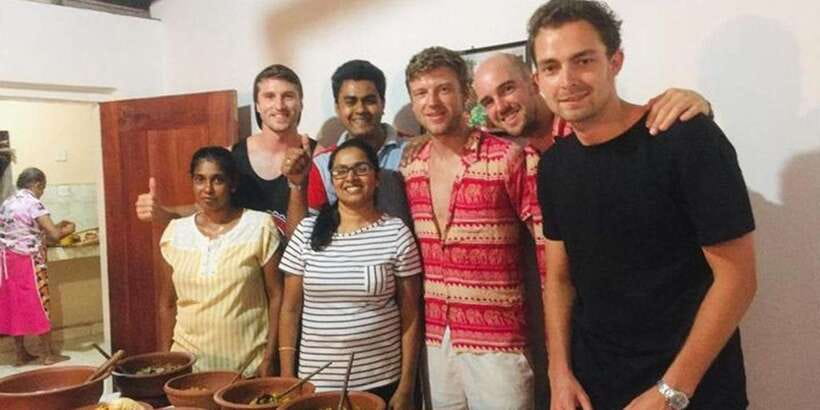
The family makes a point of explaining that there is no professional chef leading the lesson. Instead, the teachers are the wife, sister, and mother. That is not a weakness here. It tells you exactly what kind of class you are booking: home cooking taught by people who prepare these foods as part of daily life.
The family says women are especially experienced with traditional Sri Lankan cooking because they often prepare meals several times a day. You should read that as a description of household practice, not as a promise of formal culinary training. The benefit is practical knowledge: how ingredients are combined, how seasoning is judged, and how several dishes are managed at once.
The lesson is conducted in English. You can ask questions as you work, and the family explains the spices and cooking methods along the way. Dinesha’s sister and mother take an active teaching role, and Dinesha helps with the market and communication.
A particularly memorable object is the 100-year-old stone board used to make sambol. It is a small detail, but it shows how tools and methods can carry family history into a meal. Grinding ingredients on an old stone surface is also more hands-on than simply stirring a prepared mixture into a bowl.
Preparing ten vegetable dishes in three hours
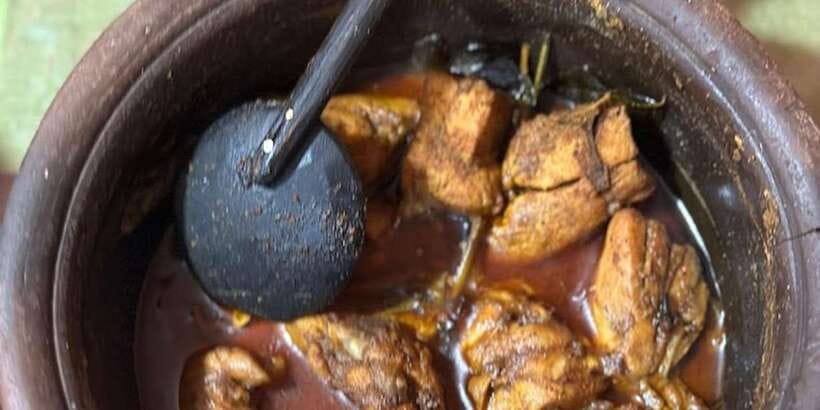
The menu is unusually large for a three-hour class. You prepare ten types of vegetable dishes, along with fish or chicken, coconut sambol, and coconut roti. The exact vegetables are not listed in advance, so the market and the family’s available ingredients help shape the meal.
That variety is a major strength if you want to understand the Sri Lankan way of eating. A plate may hold several small portions rather than one large serving of a single main course. Each vegetable preparation can have a different level of heat, texture, spice, or coconut flavor.
The drawback is that you cannot expect to personally cook every dish from beginning to end. With ten vegetable dishes on the menu, the family handles much of the cooking to keep the meal moving. You season the food, help with preparations, ask questions, and take part in the process, but some work is done for you.
I see this as a fair trade. A class in which you prepare two dishes slowly may give you more individual practice. Here, you get a broader picture of a Sri Lankan meal and several recipes to take home. The experience is better for learning the overall rhythm of the cuisine than for mastering one dish in minute detail.
You may also prepare snacks while the main dishes are underway. A welcoming tea and pancakes have been served during the kitchen visit, giving you something to enjoy while the family prepares ingredients. These touches help the class feel like a visit to a household rather than a lesson with a strict timetable.
A different sort of day out of Kandy:
- Kandy Private Guided City Tour by Tuk Tuk
★ 4.9 · 1,307 reviews - From Kandy: Sigiriya Rock & Dambulla Cave Temple Adventure
★ 4.9 · 785 reviews - Kandy to Ella Train Tickets – Reserved Seats
★ 4.5 · 523 reviews - From Kandy: Pinnawala Day Tour
★ 4.8 · 331 reviews
Choosing fish or chicken
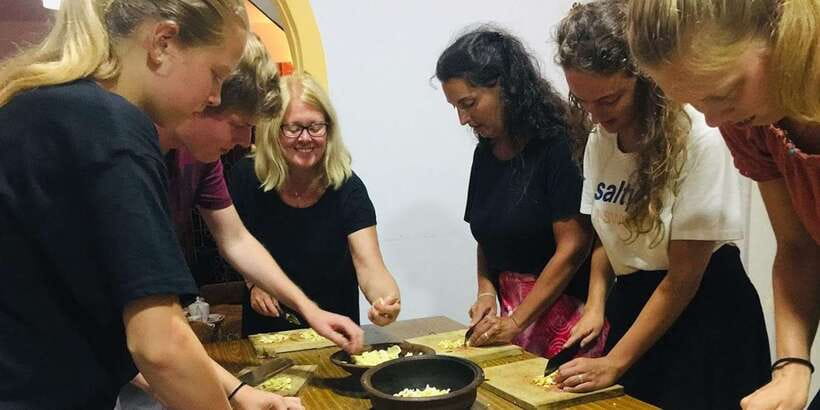
The included main course is your choice of fish or chicken. This gives you a simple way to shape the meal around your preferences, though the information provided does not specify how far the family can adapt the menu for allergies, religious needs, or other dietary restrictions.
If you have a serious food allergy or follow a strict diet, contact the provider before booking. Do not assume that a large menu automatically means every dietary request can be covered. The class is built around a set family meal, with fish or chicken as the stated choice.
The meat or fish is only part of the meal. The vegetable dishes, sambol, and roti are just as important, and the range of sides is where the lesson shows how Sri Lankan food is usually enjoyed. You will get a much better sense of the cuisine by tasting the whole spread together rather than focusing only on the main course.
Coconut sambol, roti, and the final feast
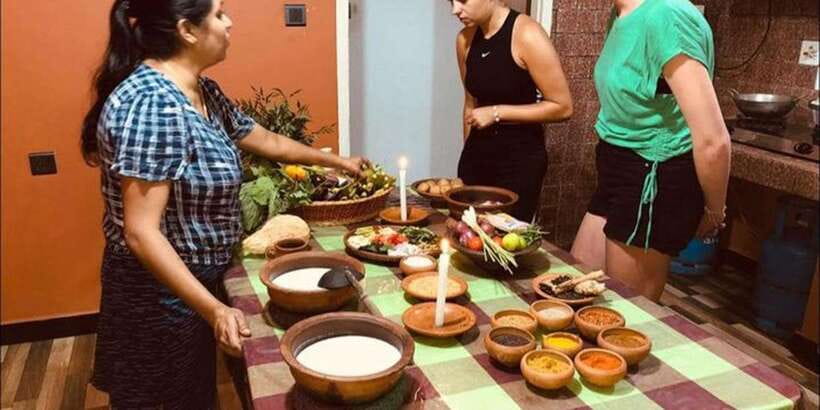
Coconut sambol is included, and it is one of the most useful recipes to learn because it brings freshness and heat to the meal. The old stone board used to make it gives you a glimpse of a method that predates modern kitchen appliances.
Coconut roti is also included. Making it adds a simple bread element to the class and gives you something that can be eaten alongside the curries. The supplied information does not spell out every step, so you should expect instruction at the family’s pace rather than a printed demonstration script.
At the end, you sit down to eat what has been prepared. This is not a token tasting. With ten vegetable dishes plus fish or chicken, sambol, and roti, the meal is substantial. I would not plan a full lunch immediately before the class, especially if you want to enjoy the spread rather than merely sample it.
The final meal also helps the separate recipes make sense. You can see how the dishes work together on one plate, how the sambol changes the flavor, and how the roti fits into the meal. It is a useful lesson in balance, not just a list of recipes.
What the $99 price means for two people
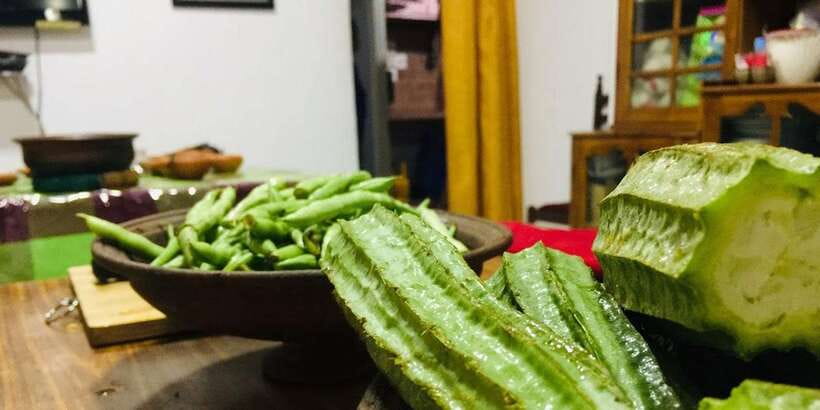
The price is $99 per group of up to two people. For a couple or two friends, that works out to $49.50 each before considering the included transportation and meal. The value is strongest if you use the full two-person booking, since the price is set by group rather than by individual.
You are paying for more than the cooking instruction. The package includes pickup and drop-off around Kandy town, the food, bottled water, the home visit, the optional market guidance, and the recipes at the end. A restaurant meal alone would not provide the family contact or the chance to ask how the dishes are made.
The quantity of food also helps the value. Ten vegetable dishes is an ambitious menu, and the end result is a full shared meal rather than a small sample. The tradeoff is that the family must do some of the cooking to fit everything into three hours.
For a solo visitor, the per-person cost is less attractive unless you are comfortable paying the group rate. For two people who want a private-feeling activity, it is easier to justify. The small group limit means you will not be lost in a large class, and the family can give attention to your questions.
The practical details that matter
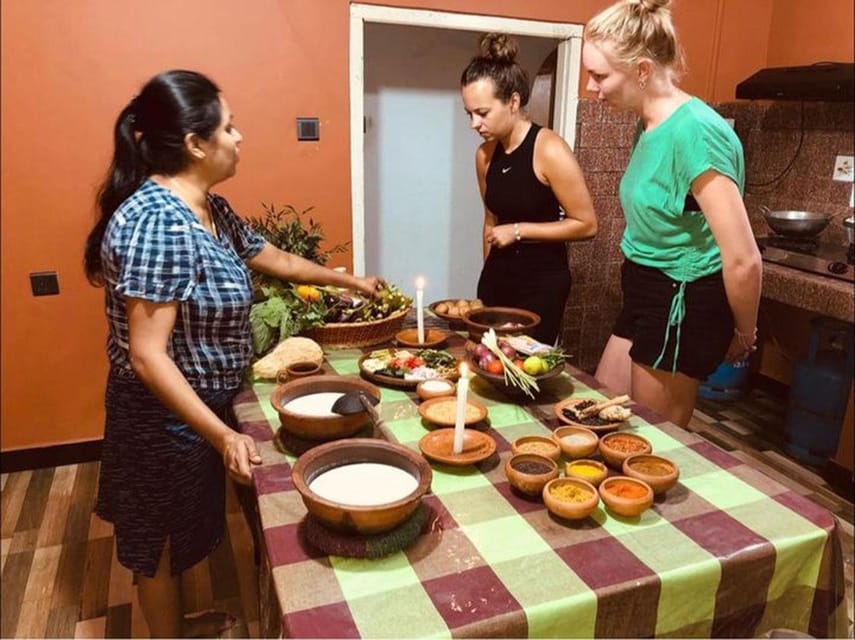
The class lasts three hours, with starting times based on availability. Pickup is included around Kandy town, but the supplied information does not give a fixed pickup schedule. Arrange the details in advance and be ready in your lobby 10 minutes early.
The class is taught in English. Bring a charged smartphone or camera if you want to record ingredients, techniques, or the finished meal. Cash is also listed among the suggested items, though no separate required cash payment is stated.
A change of clothes is recommended. That is sensible for a hands-on kitchen activity involving spices, coconut, and food preparation. Wear something comfortable and suitable for working around a home kitchen.
Pets are not allowed, although assistance dogs are permitted. The activity is not suitable for wheelchair users. These details are worth checking before you pay, since the class takes place in a private home rather than a purpose-built accessible venue.
Cancellation is free up to 24 hours before the activity for a full refund. You can also reserve now and pay later, which helps if your Kandy plans are still moving around.
Who will enjoy this class most
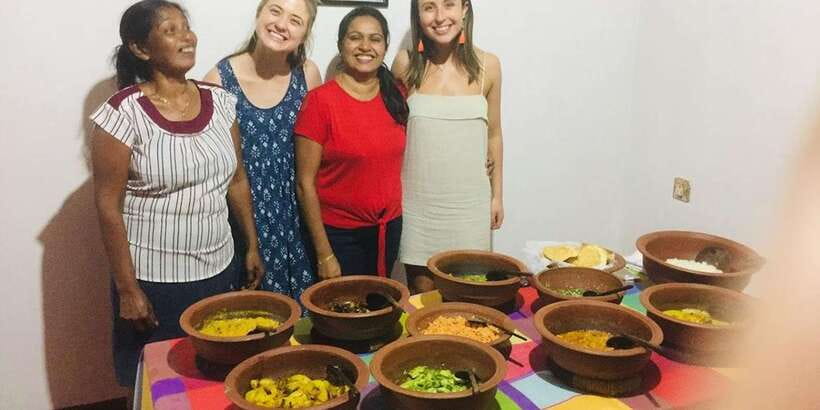
I would choose this class if you want food connected to family life. It suits couples, two friends, and anyone who prefers a small local activity to a formal culinary school.
It is also a good choice if you want to learn several dishes at once. The family gives you recipes at the end, so you have a practical record to use after returning home. The range of curries is more useful for a home cook than a single showpiece recipe.
Families may enjoy meeting the children, who sometimes join the lesson. The setting is informal and social, with tea, pancakes, and a shared meal helping the visit feel relaxed.
You may want to choose another class if you need full hands-on control of every recipe, strict dietary planning, wheelchair access, or a professional chef. The large menu means some preparation is handled by the family, and the private-home setting has fewer formal facilities than a commercial cooking school.
Should you book The Best Kandy Kitchen?
Book it if your idea of a good cooking class includes a local home, a generous meal, family conversation, and a broad introduction to Sri Lankan food. The old sambol stone, optional market visit, and three family teachers give the experience more character than a standard demonstration.
Go in knowing what it is. This is not a precision course where you independently prepare every dish. It is a shared household cooking session, with the family doing enough work to produce a remarkable number of dishes in three hours.
For two people, the $99 group price is reasonable because it covers transportation around Kandy, ingredients, instruction, recipes, and dinner. If you are hungry for Sri Lankan food and curious about how it is made at home, this is one of the more personal food activities you can add to a Kandy stay.
FAQ
Where does the cooking class take place?
The class takes place inside the family home near Kandy city center, close to the large Buddha statue at Bahirawakanda Mountain.
How long does the class last?
The cooking experience lasts three hours. Starting times depend on availability.
What food is included?
The menu includes ten types of vegetable dishes, your choice of fish or chicken, coconut sambol, and coconut roti. Bottled water is also included.
Can I visit a local market?
Yes. If you want the market experience, the family can guide you through a local market and explain the spices and vegetables.
Who teaches the class?
The teachers are the host’s wife, sister, and mother. The host’s three young daughters sometimes join the cooking session.
Is hotel pickup included?
Yes. Pickup and drop-off are included around Kandy town. You should wait in your hotel lobby 10 minutes before the scheduled pickup time.
Is the class wheelchair accessible?
No. The activity is not suitable for wheelchair users. Pets are not allowed, although assistance dogs are permitted.
More workshops and classes in Kandy
- Kandy Cooking Class with Granny
★ 4.9 · 95 reviews - Private Kandy Authentic Cooking Class
★ 5.0 · 65 reviews - Kandy: Interactive Batik Workshop
★ 5.0 · 51 reviews - Srilankan Cooking class by FFL kandy
★ 5.0 · 50 reviews
Recently listed around Kandy
- 3 Days Nature and Chill Tour of Ella, Nuwara Eliya and Haputale★ 5.0 · 10 reviews
- Kandy City Day Tour from Colombo, Negombo or Katunayake★ 5.0 · 10 reviews
- Knuckles Spice Trail Trek from Kandy★ 5.0 · 11 reviews
- Kandy Private City Tour With Local Guide★ 4.7 · 11 reviews
- Kandy & Pinnawala & Tea Factory Full Day Tour From Negombo★ 4.3 · 11 reviews
- Sigiriya and Dambulla Day Trip from Kandy★ 5.0 · 11 reviews
- Kandy City Tour with Mahaweli★ 5.0 · 11 reviews
- Kandy City Tour & Famous Ambuluwawa Tower with Friendly Chauffeur★ 5.0 · 11 reviews
Kandy Tours, compared.




Browse the lists this tour appears in