
Reviewed · SAFARI
Jeep Safari at Kumana National Park
Kumana is the kind of park that rewards patience and sharp eyes. Its 35,664 hectares include wetlands, river country, forest, and the Kumana Villu mangrove swamp, a major nesting area for water birds. A private jeep gives you a good chance to cover more ground than you could on foot, while a local guide watches for movement in the scrub.
I like the private six-person limit, which keeps the outing personal and lets your group share the vehicle without strangers. I also like the simple setup: pickup from your door and bottled water remove two small hassles in Sri Lanka’s heat. The main point to weigh is that the $100 price does not include the national park entrance fee, and wildlife sightings can never be promised.
Key things to know before booking
- Kumana Villu draws water birds in May and June, when the mangrove swamp can fill with nesting activity.
- The private jeep covers more ground than a walking outing, a useful advantage in a park spread across 35,664 hectares.
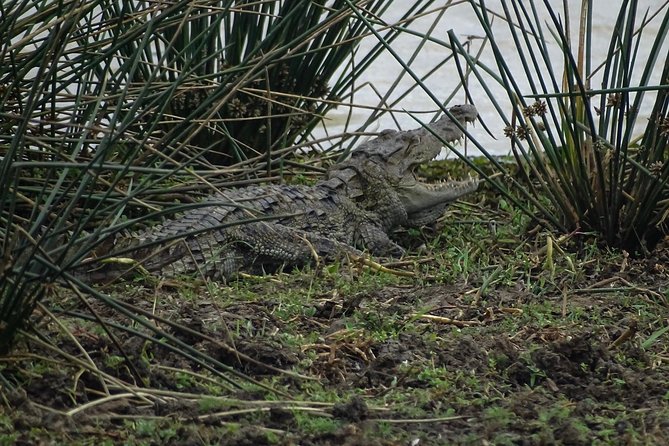
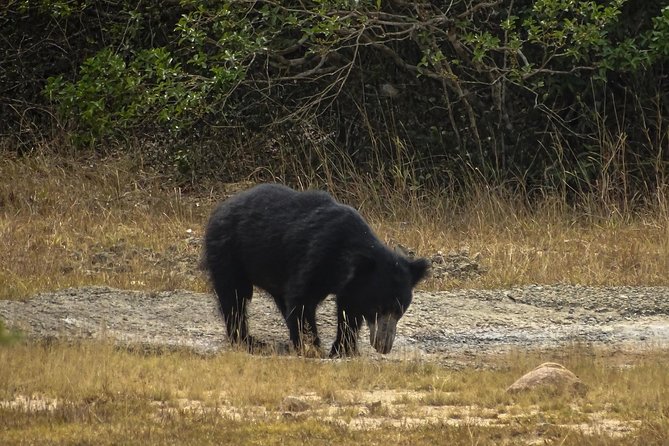
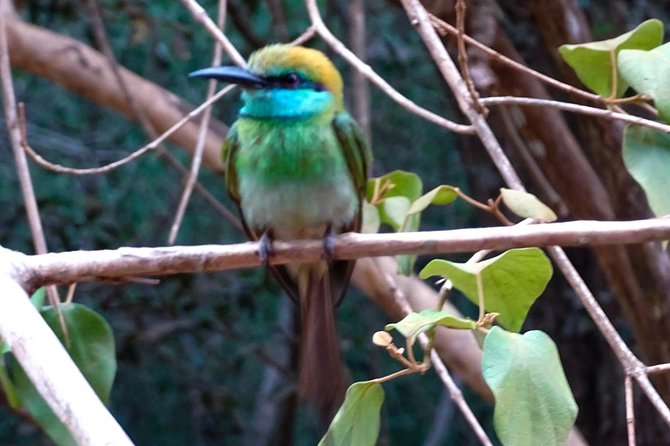
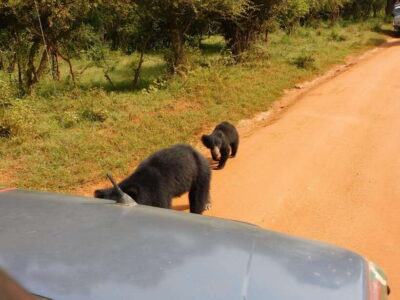
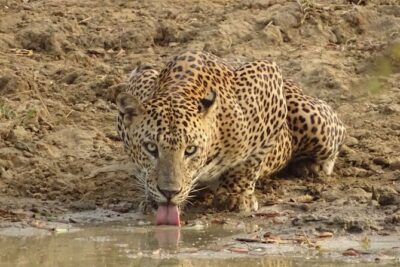
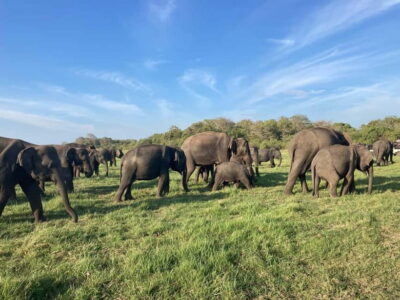
- Wildlife can include leopards, elephants, jackals, crocodiles, wild pigs, sloth bears, and the endangered wetland fishing cat.
- The tour lasts about six hours, giving you a proper park visit rather than a quick drive past the entrance.
- The $100 rate covers the whole group of up to six, but admission to Kumana National Park is extra.
- The experience has a strong birdwatching angle, with Sri Lanka recording more than 430 bird species and over 200 often seen by birdwatchers.
Why Kumana is worth your time
Kumana sits in Sri Lanka’s Ampara District, near the southeastern coast. It is bordered on the west by the Kumubukkan Oya River and extends south toward Panama. That setting gives the park a mix of wetland, river, coastal, and dry-country habitats.
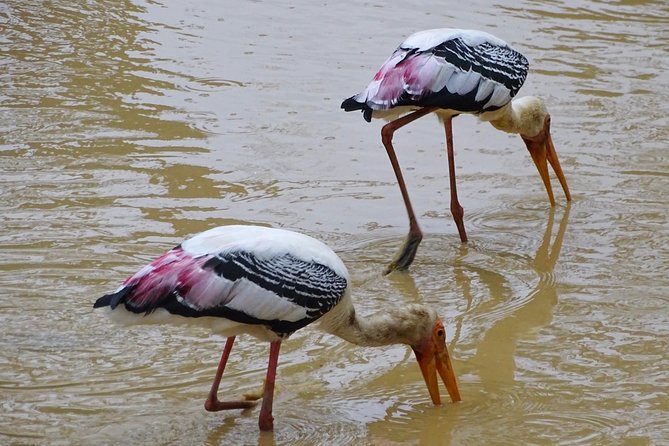
The park is best known for birds, and for good reason. The 200-hectare Kumana Villu swamp is occasionally flooded by seawater. During May and June, many water birds nest there. Even outside those months, the park’s wetlands and waterways give you plenty to watch while the jeep moves between larger animal sightings.
I would not book this as a guaranteed leopard trip. I would book it as a broad wildlife outing where birds are central and larger mammals are possible. The range is part of the appeal. You may spend one stretch watching water birds, then spot crocodiles near a wet area, and later search the roadside for elephants or a leopard.
That variety also makes Kumana a good choice for people staying around Arugam Bay who want to see a quieter part of Sri Lanka. The experience is not limited to the most famous animals. A jackal, wild pig, crocodile, or sloth bear can make the day memorable, especially when the guide is quick to notice it.
More Safaris in Sri Lanka:
- Udawalawe National Park | Private Safari Tour
★ 5.0 · 1,499 reviews - From Colombo: Sigiriya and Dambulla Day Trip with Safari
★ 4.7 · 842 reviews - Yala National Park Safari Tours: Morning/Evening/Full Day
★ 4.8 · 818 reviews
A private jeep for up to six people
The private format matters more than it may first appear. You share the vehicle only with your own group, up to six people, so you do not have to fit your plans around strangers. You can focus on the guide’s directions and wildlife without a large mixed group changing the mood.
A jeep also lets you cover much more of the park than a walking visit. Kumana is very large, and six hours passes quickly when you are moving between wetlands, river areas, and other parts of the park. The vehicle is particularly useful for wildlife watching because you can pause, scan, and move on without tiring yourself out in the heat.
Pickup is offered from your accommodation, and the tour begins at your door. That is a useful benefit if you are staying in the Arugam Bay area or nearby, since arranging separate transport would add time and cost. Bottled water is included, but you should still treat the day as a hot outdoor outing and bring practical clothing, sun protection, and a way to protect your phone or camera from dust.
The private arrangement may suit couples, families, or a small group of friends best. If you are alone, the $100 group price is less attractive unless you can share it with others, since the rate is for the vehicle and group rather than an individual seat.
Six hours inside Kumana National Park
The main stop is Kumana National Park, with about six hours devoted to the safari. That duration gives your guide room to search for different types of wildlife instead of rushing to one viewing point and returning.
You will travel by jeep through the park, looking along wetland edges, open areas, and routes where animals may cross. The exact order of the drive can change with conditions and sightings. That flexibility is important on a safari. You are not following a fixed museum-style route with a guaranteed display at each stop.
The guide’s role is especially useful here. A trained local eye can help you notice a shape in the grass, a bird resting far from the road, or animal tracks and movement that are easy to miss. The strongest praise for this outing centers on animal spotting and route choice. One outing produced two leopard sightings, while another included a sloth bear, crocodiles, wild pigs, leopards, and a wide range of birds.
Those sightings show the park’s potential, but they should not be treated as a promise. Wild animals decide where they go, and the park itself does not function like a zoo. Your best experience will come from treating every sighting, including a less famous bird or a distant crocodile, as part of the day rather than measuring success by one specific animal.
Kumana Villu and the birdwatching side of the safari
Kumana Villu is the park’s signature bird area. This mangrove swamp covers about 200 hectares and is sometimes inundated with seawater. In May and June, many water birds nest there, making that period especially interesting for birdwatchers.
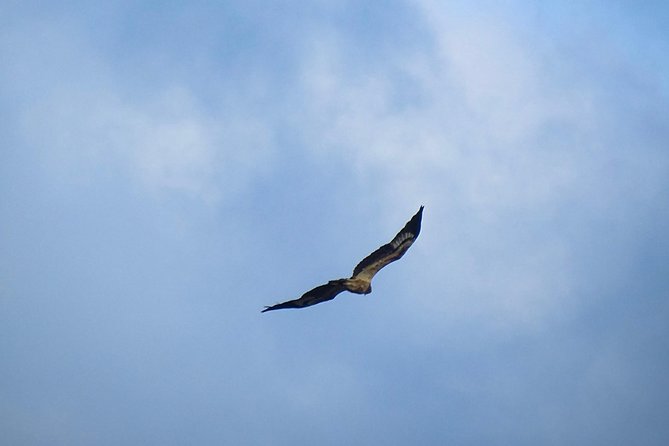
Sri Lanka records more than 430 bird species, including endemic, resident, and migrant birds. More than 200 species can be seen with relative ease by birdwatchers, though your exact sightings will depend on the date, weather, habitat, and the time spent scanning.
You do not need to be a serious birder to enjoy this part of the safari. A guide can help you notice movement, color, flight patterns, or birds sitting quietly near water. Bring patience. Birdwatching often means sitting still and looking carefully, which can feel slower than searching for elephants but often produces the most surprising moments.
If birds are your main reason for booking, ask about the best timing when you reserve. The supplied details specifically identify May and June as important nesting months at Kumana Villu. No other month-by-month wildlife schedule is provided, so it would be unwise to assume that every species is present at all times.
More National Parks in Sri Lanka:
- Udawalawe National Park: Elephant Safari with Expert Guide
★ 4.9 · 641 reviews - Full day Safari – Yala National Park – 04.30 am to 06.00 pm with – Janaka safari
★ 5.0 · 603 reviews - Yala National Park: Half, 7-Hour, or Full-Day Safari & Meals
★ 4.8 · 489 reviews - From Sigiriya: Minneriya National Park Private Jeep Safari
★ 4.9 · 415 reviews
Mammals, reptiles, and the chance of a leopard
Kumana is not only a bird park. The safari can also bring you into country used by mammals and reptiles. Possible sightings include jackals, elephants, leopards, and the endangered wetland fishing cat. The broader range of reported sightings also includes sloth bears, crocodiles, and wild pigs.
Leopards are the headline animal for many people, and this safari has produced sightings of two on one outing. Still, the right attitude is important. A private jeep and an attentive guide improve your chances, but neither can control where a leopard appears. If you need a guaranteed sighting, no safari can honestly offer that.
The wetland fishing cat is an especially interesting possibility. It is endangered and less familiar to many visitors than a leopard or elephant. Because the tour information identifies it as a possible sighting rather than a regular one, you should see it as a lucky bonus.
Crocodiles and wild pigs may be easier to find in the right areas, while elephants can be more obvious when present. Jackals and smaller animals may require a quicker eye. A sloth bear is another notable possibility, but it should be considered rare luck rather than part of a normal checklist.
The guide and driver work together here. One person can concentrate on handling the jeep while the other helps scan the park and decide where to pause. That partnership is one reason a guided jeep trip can be more productive than driving yourself through an unfamiliar park.
What the guide adds to the experience
The guide is not simply there to point out large animals. A good guide helps you read the park. That can mean directing your attention to a distant bird, stopping in a promising area, or choosing a route that gives your group more chances to see different habitats.
The strongest feature of this outing is the practical wildlife knowledge described by the experience itself. The guide improves your chances of spotting major animals, while the driver takes you to productive areas. One recorded outing specifically praised the guide for spotting many animals and the driver for reaching the good viewing spots.
No guide names are supplied, so I cannot tell you to request a particular person. Instead, focus on the service you can expect: a private group, a driver, a guide, and a six-hour search through the park. If you have a special interest in birds, leopards, or photography, mention it when booking so the team understands what you hope to see.
Keep in mind that the guide can improve your odds, not rewrite nature. Some of the best parts of the safari may be quiet stretches when you are looking, waiting, and listening. That is normal, not a sign that the outing is failing.
Is $100 good value for your group?
The price is $100 per group of up to six people. That works out to about $16.67 per person if six people share the vehicle. For two people, the effective cost is $50 each, and for a solo visitor it is the full group rate unless another arrangement is available.
That makes this much better value for a family or group of friends than for one person. The cost includes private transportation and bottled water, plus pickup from your accommodation. The national park entrance fee is not included, so add that extra cost to your budget before deciding.
The value is strongest if you are already staying nearby and want a private outing without arranging a separate vehicle. You are paying for time, transport, local wildlife spotting, and access to a large park that can be difficult to handle efficiently on your own.
I would compare the rate based on your group size and priorities. Six people sharing the price receive a good-value day out. Two people still get privacy and convenience, but the per-person cost rises. A solo visitor may prefer to ask if a shared safari or different rate is available, though the supplied information confirms only this private group price.
Practical points before you go
Confirmation is provided at booking, and most people can participate. The tour requires good weather. If poor weather causes cancellation, you are offered another date or a full refund.
You can cancel for a full refund up to 24 hours before the start time. Changes or cancellations made less than 24 hours before the start time are not accepted for a refund, and the cut-off follows local time.
Park entrance fees are separate, so ask for the current amount when planning your total budget. Bottled water is included, but the information does not list meals, snacks, camera equipment, or other personal supplies. Plan on bringing anything else you need for six hours outdoors.
The mobile ticket is convenient, and pickup means you do not need to find the park entrance on your own. The exact pickup area is not specified, so confirm that your accommodation is covered before booking.
Who should book this safari?
I would recommend this experience to anyone staying near Arugam Bay who wants a private wildlife day with a strong birdwatching angle. It suits small groups that value their own vehicle and want a guide helping them search for animals rather than driving themselves through a huge park.
It is especially appealing if your wish list includes more than one animal. Kumana may give you birds, crocodiles, wild pigs, elephants, jackals, or a leopard. The endangered fishing cat is possible too, but rare sightings should remain a pleasant surprise.
Families and groups of friends get the best financial value because the $100 price covers up to six people. Birdwatchers should pay close attention to May and June, when Kumana Villu becomes an important nesting area for water birds.
I would hesitate only if you want a guaranteed leopard sighting, dislike spending time in a vehicle, or are traveling alone and find the group price too high. The park entrance fee is also an extra charge, so include it in your calculation.
Should you book the Kumana jeep safari?
Book it if you want a private, flexible wildlife outing from the Arugam Bay area and you are happy to let the day unfold around real animal sightings. The combination of a six-hour drive, a private jeep, bottled water, pickup, and a guide who helps find wildlife gives the experience a clear practical advantage.
The strongest reason to choose it is variety. Kumana is a serious birdwatching area, but you also have a chance of seeing elephants, leopards, crocodiles, jackals, wild pigs, sloth bears, and the endangered fishing cat. Just remember that park admission is extra and nature offers possibilities, not guarantees.
FAQ
How long does the Kumana jeep safari last?
The safari lasts approximately six hours.
Is this a private tour?
Yes. Only your own group participates, with space for up to six people.
What is included in the price?
The price includes private transportation and bottled water.
Is pickup available?
Yes. Pickup is offered, and the tour begins at your accommodation door.
Is the national park entrance fee included?
No. Entrance fees to Kumana National Park are not included.
What animals might I see?
Possible sightings include jackals, elephants, leopards, endangered wetland fishing cats, crocodiles, wild pigs, and sloth bears. The park also supports many bird species.
Is Kumana National Park good for birdwatching?
Yes. Kumana is a major bird breeding area, and the Kumana Villu mangrove swamp is an important nesting site for water birds, especially in May and June.
How many people can share the $100 price?
The $100 price covers one group of up to six people.
Can I cancel for a full refund?
Yes, if you cancel at least 24 hours before the experience start time. Poor-weather cancellations offer a different date or a full refund.
Recently listed around Sri Lanka
- Minneriya National Park Safari in a 4×4 Vehicle★ 4.5 · 10 reviews
- Coastal Ride to Galle from Colombo★ 4.5 · 10 reviews
- One Day Udawalawe Safari from Galle/Mirissa/Unawatuna/Hikkaduwa★ 5.0 · 10 reviews
- Ella: Safari Day Trip to Yala & Udawalawe with Lunch★ 4.7 · 10 reviews
- Sri Lanka Private Tour Pick Up & Drop Off – Colombo Intl Airport★ 5.0 · 10 reviews
- Sigiriya Village Tour and Lunch with Hotel Pick up from Sigiriya★ 5.0 · 10 reviews
- From Ella: Shuttle to Down South Any Location w Yala Safari★ 5.0 · 10 reviews
- Wasgamuwa: Wasgamuwa National Park Private 3-Hour Safari★ 4.9 · 10 reviews
Safari, compared.
Udawalawe National Park | Private Safari Tour
Read our review →
Yala National Park Safari Tours: Morning/Evening/Full Day
Read our review →
Full day Safari – Yala National Park – 04.30 am to 06.00 pm with – Janaka safari
Read our review →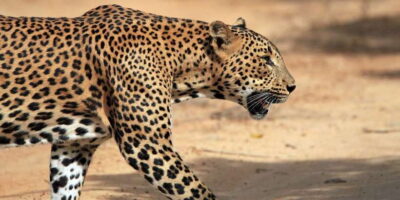
Browse the lists this tour appears in