
Reviewed · KANDY TOURS
Day Tour to Polannaruwa from Kandy by Lux Tours Lanka
Polonnaruwa’s greatest surprise is how much ancient Sri Lanka fits into one compact archaeological park. The Gal Vihara alone is worth the long ride from Kandy, with four Buddha figures carved from one slab of rock.
I like the private format, since you can explore at your own pace, and I like having a guide who points out details you might miss, including wildlife along the road. The tour also covers the city’s key monuments rather than stopping at only one famous temple.
The main catch is time. A Kandy to Polonnaruwa outing can last anywhere from five to twelve hours, and the longer version is a serious day on the road. Admission fees are not included in the $65 price, so budget for those separately.
Key points to know before booking
- Gal Vihara is the highlight: Four finely carved Buddha images share one long granite slab.
- The Quadrangle packs in the most ruins: Polonnaruwa Vatadage sits among several of the city’s most important buildings.
- Dan is one guide to request: He is described as friendly, attentive, enthusiastic, and good at spotting wildlife during the drive.
- This is a private experience: Only your own group takes part, which gives the day a more personal feel.
- The $65 price excludes admission: Factor in separate entrance costs for the archaeological sites and museum.
- Allow a full day if needed: The listed duration ranges from 5 to 12 hours, so confirm the planned timing before setting out.
Why Polonnaruwa is worth the trip from Kandy
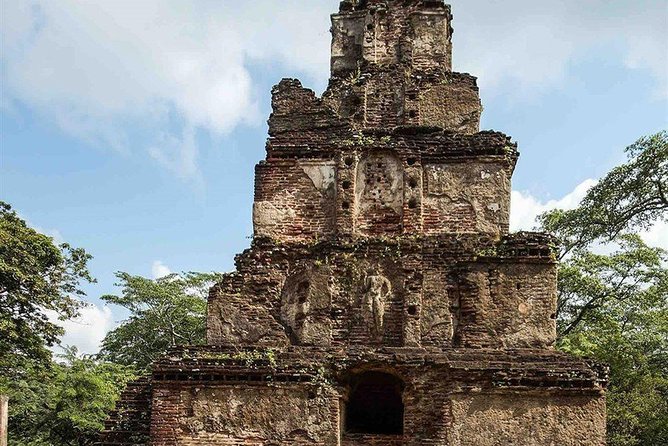
Polonnaruwa was the capital of Sri Lanka’s central plains about 800 years ago. It was a center of government, trade, and Buddhist worship, and its ruins still show the scale of that former city.
The appeal is not one isolated monument. It is the way tombs, temples, statues, stupas, image houses, and palace remains sit within a manageable area. You can move from a quiet stone Buddha to an enormous brick shrine, then on to a circular relic house, without spending the day crossing a modern city.
I find Polonnaruwa easier to appreciate when you know what to look for. The buildings are not just old stones scattered in the forest. They reveal how royal power, monastic life, engineering, and religious art worked together.
A private day tour from Kandy helps with that basic problem: getting there and making sense of what you see. You are not left to identify every half-ruined building on your own, and the guide can add useful comments during the drive. Dan, who has led this experience, is noted for being attentive and for pointing out wildlife on the way.
A few more Kandy days to line up
- Kandy Private Guided City Tour by Tuk Tuk
★ 4.9 · 1,307 reviews - From Kandy: Sigiriya Rock & Dambulla Cave Temple Adventure
★ 4.9 · 785 reviews - Sri Lanka Cooking Class with Granny
★ 5.0 · 587 reviews
Gal Vihara and the best stone carving in the park
The first listed stop is Gal Vihara, a group of four Buddha images cut from one long rock face. These carvings are linked to the northern monastery built under King Parakramabahu I, and they are often regarded as the finest expression of Sinhalese rock carving.
You will see seated, standing, and reclining figures arranged along the slab. The reclining Buddha is especially powerful, but the value of the group comes from seeing all four together. The sculptors used the same piece of stone while giving each figure a different pose and mood.
Plan on about 45 minutes here. That is enough for a focused visit, though you may want longer if you care about sculpture or photography. The stop is outdoors and centered on the rock carvings, so comfortable walking shoes and protection from the sun are sensible choices.
Admission is not included in the tour price. That matters because the entrance cost for the archaeological area is separate from the $65 paid to Lux Tours Lanka. Ask for the complete cost before departure so the low headline price does not catch you off guard.
The Archaeological Museum puts the ruins in order
The Archaeological Museum is a smart early stop because it gives you a framework for the scattered remains. Its rooms cover the citadel, outer city, monastery area, and Hindu monuments.
I particularly like the model of the monks’ hospital and the display of medical instruments. These details shift your attention away from kings and grand temples and toward daily life inside a large religious center.
The Hindu monuments room is also useful. Polonnaruwa was not only a Buddhist royal capital, and the objects there help show the range of religious buildings and artistic traditions present in the city.
The planned visit lasts about one hour. That is a substantial museum stop, especially on a long day from Kandy. If your main interest is outdoor ruins, you may find the hour demanding. If you want context, it is time well spent, since the models and displays can make the later stops easier to understand.
The museum also gives you a break from the heat. That small practical benefit matters when you are visiting several exposed monuments in one day.
Polonnaruwa Vatadage and the compact Quadrangle
The Polonnaruwa Vatadage sits in the Quadrangle, the most concentrated section of the ancient city. The Quadrangle is a raised, walled area filled with major religious buildings, so it gives you the best sense of how much was placed in one ceremonial center.
A vatadage is a circular relic house. The design includes a circular structure, entrances, stairways, carved stones, and a central sacred space. Even if you are not familiar with Buddhist architecture, the layout is easy to read once your guide points out how the parts fit together.
The planned time here is 30 minutes. That is enough to walk through the main area and take in the strongest details, but not enough for a slow archaeological study. Since several important buildings are close together, your guide can help you focus on the most meaningful features rather than wandering without a plan.
This is one of the stops where a private tour has a clear advantage. You can ask why a particular stairway, moonstone, or carved pillar matters, instead of simply taking photographs and moving on.
A different sort of day out of Kandy:
- Kandy Village Cooking Class
★ 5.0 · 536 reviews - Kandy to Ella Train Tickets – Reserved Seats
★ 4.5 · 523 reviews - From Kandy: Pinnawala Day Tour
★ 4.8 · 331 reviews - Kandy to Ambuluwawa & Kandy City Guided Tuk Tuk Day Tour
★ 4.8 · 270 reviews
Lankatilaka Image House and its towering walls
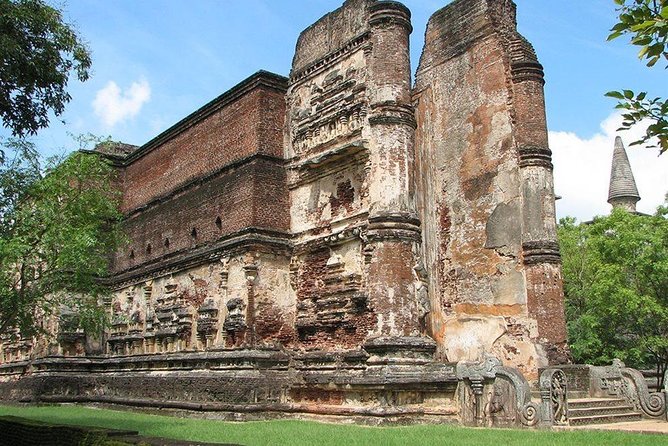
Lankatilaka is one of Polonnaruwa’s most striking buildings. It was built under Parakramabahu I and later restored by Vijayabahu IV.
The structure is a gedige, a solid Buddhist image house with thick walls and a corbelled roof. Its walls rise about 17 meters, giving the building a heavy, almost fortress-like presence. This is not a light or delicate temple. It feels built to protect the sacred image inside and to project royal authority outside.
The interior once held a large Buddha image, and the architectural setting is as important as the statue itself. Look closely at the walls and remaining decorative work. The worn surfaces show both the age of the building and the long history of repair.
The visit is scheduled for about 30 minutes. That suits the site well if you are seeing it as part of a larger circuit. The drawback is that a short stop can make it difficult to study every detail, especially if you are interested in architecture. Tell the guide if you want to linger here rather than treating it as a quick photograph stop.
Tivanka Image House and the three-bend figure
Tivanka Image House marks the northern end of Polonnaruwa’s main road. The name Tivanka means thrice bent, referring to the unusual three-curve pose of the Buddha figure inside.
That pose is normally associated with female statues, which makes the image especially interesting. The building is also known for its fine frescoes, although the condition and visibility of painted details can vary.
This stop lasts about 30 minutes. It is a good place to ask your guide about the difference between an image house and a stupa, since the two forms serve different purposes in Buddhist architecture.
You should keep your expectations measured. Ancient paint is fragile, and you may not see every detail clearly. Still, the combination of the building’s shape, the unusual statue pose, and the remaining wall paintings gives Tivanka a character different from the larger monuments.
Rankoth Vehera, the largest stupa in Polonnaruwa
Rankoth Vehera is the largest dagoba in Polonnaruwa, rising about 54 meters. It is also described as the fourth-largest on the island.
The stupa is linked to the reign of King Nissanka Malla. Like major dagobas at Anuradhapura and Polonnaruwa, its dome is made from earth and brick, then finished with a smooth surface. The scale becomes clear as you approach it. The structure is not a small shrine tucked beside a larger building, but a major religious monument designed to dominate its setting.
The planned visit lasts 30 minutes. Walk around it if conditions allow, and give yourself time to notice the relationship between the huge dome and the smaller structures around it. Your guide can also help explain how a dagoba differs from an image house or a relic house.
Rankoth Vehera is a strong final stop because it leaves you with Polonnaruwa’s grandest sense of scale. After seeing intimate carvings and compact temple buildings, you finish beside a monument built for distance and ceremony.
What the private format adds to the day
This is a private tour, so only your group takes part. That makes the day more flexible than a large coach excursion, at least in principle. You can ask questions without holding up a busload of people, and you can tell the guide which site deserves extra attention.
The service includes pickup, though the supplied details do not specify every pickup location or the exact vehicle arrangement. Confirm where you will be collected in Kandy and how long the driving portion is expected to take.
The guide can make a large difference here. Dan is specifically associated with this experience and is described as helpful, engaging, friendly, and attentive. He also points out wildlife during the journey, which adds something to the long road time.
That wildlife spotting is a small detail, but it changes the feel of the trip. The transfer is not only dead time between Kandy and the ruins. Keep your eyes open during the drive, especially if Dan is guiding your group.
The experience is listed as suitable for most people and near public transportation. It also uses a mobile ticket, and confirmation is received at booking. Those details make the basic arrangements straightforward, but they do not remove the need to confirm the day’s start time and expected return.
Is $65 good value for this Polonnaruwa trip?
At $65, the tour can offer good value if you want a private driver-guide and a planned route through Polonnaruwa. You are paying for transport, coordination, and interpretation rather than simply buying entry to a ruin.
The value depends on what is included in your final arrangement. Admission tickets are not included, so add those to your budget. The duration is also broad, from 5 to 12 hours, which suggests that the total driving and sightseeing time may vary.
I would ask three questions before booking:
- What time will pickup take place?
- How long will the vehicle remain at Polonnaruwa?
- What entrance fees should you expect to pay separately?
A lower-cost shared outing might suit you if you care mainly about reaching the ruins. The private option makes more sense if you value a personal guide, want to ask questions, or prefer not to follow a fixed group pace.
The day is also better value for two or more people sharing the private experience. A solo visitor should weigh the convenience against the separate admission fees and the long transfer from Kandy.
Timing, walking, and how to prepare
The listed operating hours run daily from 7:00 AM to 8:30 PM. That broad window gives the operator room to arrange different schedules, but your confirmed start time matters more than the general opening hours.
The six sightseeing stops add up to about four hours and 15 minutes before you count driving, transfers between monuments, and any stops arranged along the way. That is why the total duration can stretch toward 12 hours.
Wear shoes suitable for walking around uneven archaeological ground. The information provided does not give a detailed accessibility assessment, so you should ask Lux Tours Lanka if you have mobility concerns.
Carry water and sun protection. Several of the important monuments are open-air sites, and the itinerary gives you multiple outdoor stops in succession. The museum provides an indoor pause, but most of the visual highlights are outside.
Keep the schedule realistic. Gal Vihara, the Quadrangle, Lankatilaka, Tivanka, and Rankoth Vehera each deserve attention. A rushed visit may technically cover every stop while leaving you with little sense of the city.
Who should book this tour?
I would recommend it to you if Polonnaruwa is high on your Sri Lanka list and you are staying in Kandy. The route covers the city’s key monuments and gives you a guide for the details that are easy to miss.
It suits couples, families, and small private groups who want control over the pace. It is also a good fit if you prefer a driver-guide who can explain the sites and point out wildlife during the journey.
You may want another plan if you dislike long road days, want to spend many hours at each monument, or need every entrance cost included in the upfront price. The flexible 5 to 12 hour duration also means you should confirm the schedule rather than assume this is a fixed short excursion.
Lux Tours Lanka offers free cancellation if you cancel at least 24 hours before the local start time. Changes or cancellations inside that window are not accepted for a refund.
Should you book the Kandy to Polonnaruwa day tour?
Book it if you want the convenience of a private outing and a solid introduction to Polonnaruwa’s major monuments. The strongest reasons are the compact route, the exceptional Gal Vihara carvings, the Quadrangle, and the chance to travel with a guide such as Dan, who brings a friendly and attentive approach.
Before paying, confirm the pickup time, expected total duration, and separate admission fees. If those terms suit you, $65 is a reasonable starting price for a private Kandy excursion to one of Sri Lanka’s most rewarding ancient cities.
FAQ
Where does the tour begin?
The experience is based in Kandy, and pickup is offered. The supplied details do not specify every pickup point, so confirm your exact collection location when booking.
How long does the Polonnaruwa tour take?
The listed duration is approximately 5 to 12 hours. The final length depends on the day’s schedule, driving time, and time spent at the archaeological sites.
Is the tour private?
Yes. Only your own group participates in the activity.
Are admission tickets included in the $65 price?
No. Admission tickets are not included for the listed stops, so you will need to pay those costs separately.
Which places are visited?
The route includes Gal Vihara, the Archaeological Museum, Polonnaruwa Vatadage in the Quadrangle, Lankatilaka Image House, Tivanka Image House, and Rankoth Vehera.
Can I cancel for a full refund?
Yes, if you cancel at least 24 hours before the experience start time. Cancellations or changes made less than 24 hours before the start time are not refunded.
Recently listed around Kandy
- Discover Sigiriya Dambulla and Minneriya Park in Day Tour★ 5.0 · 3 reviews
- Kandy City Guided Day Tour by Tuk Tuk & Laxury Car★ 5.0 · 3 reviews
- Kandy: Ambuluwawa Day Tour by TukTuk with Local Guide★ 5.0 · 3 reviews
- Kandy To Dambulla and Sigiria City Full Day by Laka Tours★ 5.0 · 3 reviews
- Evening Tour at the Last Kingdom of Sri Lanka, Kandy★ 5.0 · 3 reviews
- Full Day Tuk Tuk Tour – Explore Kandy with Local Expert★ 4.1 · 3 reviews
- Day Tour Kandy to Sigiriya with Dambulla Cave Temple Excursion★ 5.0 · 3 reviews
- Climb sky-scraping tower in Ambuluwawa from Kandy★ 4.5 · 3 reviews
Kandy Tours, compared.

Browse the lists this tour appears in