
Reviewed · KANDY TOURS
Kandy Village Cooking Class
Sri Lankan cooking is built around fresh produce, coconut, spices, and patience, and this class lets you see all four in action. You begin at Kandy Municipal Central Market, choosing five vegetables and either chicken or fish before heading to a family kitchen in the countryside. Back at the village, Shyama guides you through a full meal, often eight to eleven dishes.
I like two things right away: the market visit gives you a useful lesson in ingredients, and the cooking is genuinely hands-on rather than a chef demonstration. I also like the small-group feel, with a limit of 15 people and a setting that feels far removed from a hotel kitchen.
The main point to check before booking is the return ride. Pickup may be offered, but the activity ends back at the meeting point, and some arrangements require you to pay for or arrange your own trip back from the village.
Key points at a glance
- Five vegetables and one main ingredient: Choose your produce at Kandy Market, then select chicken or fish for the meal.
- Shyama leads the cooking: Expect clear guidance on curry methods, spices, coconut milk, and traditional preparation.
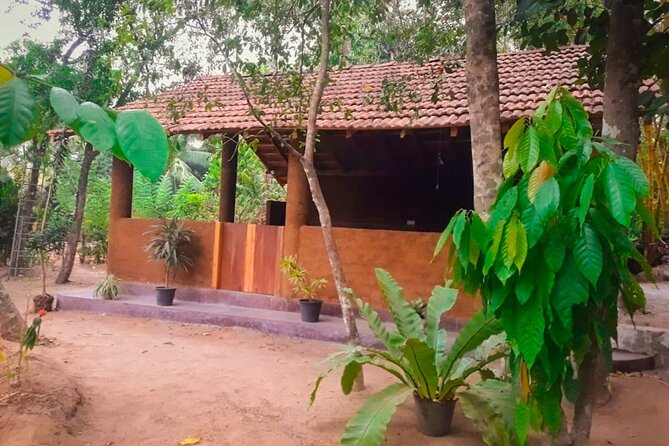
- A real village kitchen: Cooking takes place near the host family’s home, in a traditional outdoor setting surrounded by nature.
- A large meal for a short class: Past sessions have produced roughly eight to eleven dishes, including curries, sambal, rice, and dessert.
- Pickup needs checking: Some bookings include a tuk-tuk or hotel pickup, while return transport is not always included.
- Good value at $25: The fee covers a market visit, instruction, ingredients, a village visit, and the meal you prepare.
Starting with spices at Kandy Municipal Central Market
The experience begins at Kandy Municipal Central Market, at 144 Central Market, Kandy 20000. This is more than a quick shopping stop. It is your first lesson in how Sri Lankan cooks build a meal.
You choose five vegetables from the market’s selection, with guidance on what is fresh and how each ingredient is used. You can also choose chicken or fish. The exact vegetables depend on availability and your preferences, so you are not simply handed a fixed shopping list.
This is one of the class’s strongest features. Sri Lankan curry is not one single dish. It is a way of combining vegetables, coconut, aromatics, and spices in different proportions. Seeing the ingredients before they are chopped helps you understand the food later on your plate.
The market visit also gives you a chance to ask about spices and unfamiliar vegetables while they are still in their natural form. That matters. A short explanation beside a market stall can be more useful than a long recipe page once you are back home.
Allow for the market to feel like an active public place rather than a quiet classroom. You will be walking, looking, choosing, and listening. If you prefer to get straight to cooking, this may feel like an extra step. If you want to understand where the meal begins, it is time well spent.
More Cooking Classes in Kandy
- Sri Lanka Cooking Class with Granny
★ 5.0 · 587 reviews - Private Traditional Sri Lankan Cooking Class in Kandy with Hotel Transfers
★ 5.0 · 115 reviews - Cooking With Village Family
★ 5.0 · 104 reviews
Leaving Kandy for a family kitchen
After shopping, you travel from the city to the village cooking location. The exact transport arrangement should be confirmed when you book. Pickup is offered from a designated point, and some people have been collected from their hotels by tuk-tuk. The village is described as roughly 10 kilometers outside Kandy in some arrangements.
The activity ends back at the meeting point, but return transport deserves special attention. The outward trip may be arranged for you, while the ride back can require separate payment or planning. Ask clearly if your booking includes both directions, especially if you are staying in central Kandy and do not want to negotiate transport after a large meal.
The setting is a major part of the appeal. Cooking takes place in a traditional kitchen beside or near the host family’s home, rather than in a polished city studio. The surrounding countryside and forest give the class a calm change of pace from Kandy’s streets.
You also get a brief look at village life. This is not a long cultural tour, and it should not be treated as one. It is a short visit that adds context to the cooking. You see the home setting, meet the family, and understand that the recipes are part of daily life rather than a staged restaurant menu.
Cooking eight to eleven Sri Lankan dishes
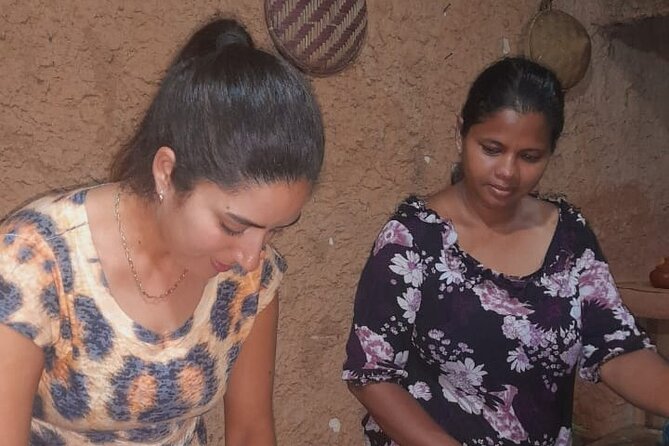
Once you arrive, the class becomes practical. Shyama and her family guide you through preparing the meal, explaining the ingredients, spices, and traditional methods as you work.
The number of dishes can vary. Sessions have included five curries, while other meals have contained eight, nine, or even about eleven separate dishes. You might prepare several vegetable curries, a chicken or fish curry, rice, sambal, and a sweet finish such as caramel pancakes with coconut.
That variety is impressive for a three-hour activity, but do not expect every minute to be spent chopping. Some dishes cook at the same time, and the pace depends on group size and the menu selected. With up to 15 people, you may have shared tasks rather than one private station for every participant.
The class is still hands-on. You are involved in buying ingredients, preparing food, and cooking it. You can expect explanations of how spices and vegetables work together, how coconut milk is made, and how traditional methods shape the final taste.
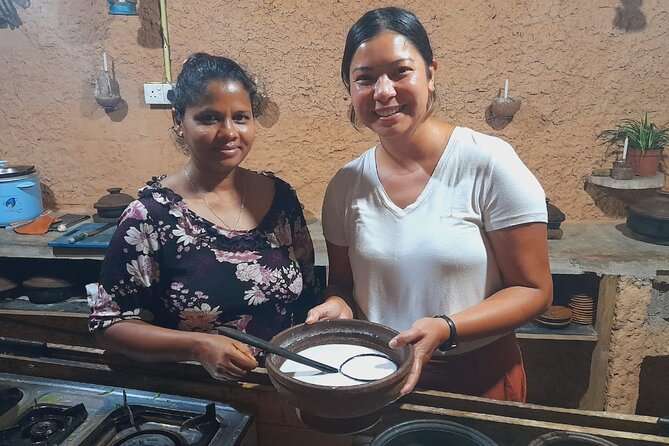
One particularly useful lesson is the preparation of fresh coconut milk. This is the sort of detail that helps separate Sri Lankan home cooking from a quick curry made with a jar of sauce. You learn not just what goes into the pot, but how the ingredient is prepared.
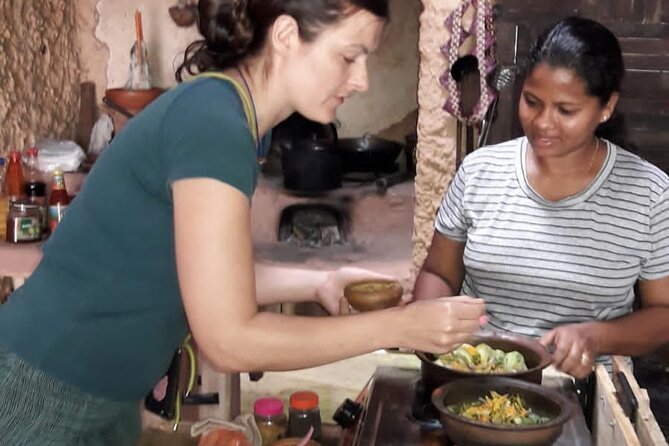
Shyama is often singled out for her patient teaching and clear explanations. She also makes room for questions and food preferences. That is helpful for solo participants, couples, and families, since people arrive with different levels of cooking experience.
The meal is part of the lesson
After the cooking, you sit down to eat what you have made. This is not a token tasting. The meal can be generous, with several curries and side dishes served together so you can compare the results.
The most frequently praised flavors include sambal, aubergine curry, chicken curry, and the broader spread of vegetable curries. The food is also a useful demonstration of balance. One curry may be creamy and mild, another sharper or hotter, while sambal adds a fresh, spicy edge.
I like this format because you taste the effect of each technique while the lesson is still fresh. If a curry tastes different from what you expected, you can ask why. Was it the coconut milk, the spice blend, the cooking time, or the vegetable itself? That kind of immediate answer is hard to get from a printed recipe.
Dessert may include caramel pancakes with coconut. It is a welcome ending, though anyone with a very large appetite should pace themselves. By the time the sweet course arrives, you may already have eaten a substantial rice-and-curry meal.
Recipes are provided in at least some sessions, which adds real value for anyone hoping to cook the dishes at home. Still, write down your own notes if you can. Words such as add a little spice or cook until ready can mean different things to different cooks, and your own reminders will help later.
A different sort of day out of Kandy:
- Kandy Private Guided City Tour by Tuk Tuk
★ 4.9 · 1,307 reviews - From Kandy: Sigiriya Rock & Dambulla Cave Temple Adventure
★ 4.9 · 785 reviews - Kandy to Ella Train Tickets – Reserved Seats
★ 4.5 · 523 reviews - From Kandy: Pinnawala Day Tour
★ 4.8 · 331 reviews
Why the village setting matters
Kandy has plenty of restaurants serving Sri Lankan food, but a restaurant only shows you the finished plate. This class takes you through the chain from market stall to family kitchen to shared meal.
The village setting also changes the tone. You are not only learning a dish for a photograph. You are spending time in a home environment, meeting the people who teach you, and seeing the kitchen where the food makes sense.
That personal contact is especially valuable for solo visitors. Shyama’s warm teaching style helps prevent the class from feeling awkward if you arrive alone. Couples and families also have enough variety of tasks to stay involved, and a group of 14 has taken part successfully, from children to grandparents.
The class can accommodate up to 15 participants. That is a useful maximum for larger families, but group size can affect how much individual attention you receive. If you want a private lesson, ask about the group arrangement before paying.
How the named Kandy stops fit in
The experience information includes several well-known Kandy locations: Kandy City Center, Kandy Lake, Kandy View Point, Kandy Lake Club’s cultural dance show, the wider Kandy District, and the Temple of the Sacred Tooth Relic.
These places should not be mistaken for a full sightseeing tour included in the cooking class. The practical meeting point is Kandy Municipal Central Market, and the main activity is the market visit followed by village cooking.
Kandy Lake and the city center are useful reference points if you are planning the rest of your day. The view point and cultural dance show are separate attractions to consider around the class, while the Temple of the Sacred Tooth Relic needs its own time and planning.
This distinction matters because the class already fills about three hours, not counting all transport. If you are trying to fit in the temple, market, viewpoints, and a cooking session on the same afternoon, your schedule could become tight.
The $25 price and what it covers
At $25 per person, this is strong value if your booking includes the market visit, village transfer arrangement, cooking instruction, ingredients, and the meal. You are paying for an activity that occupies about three hours and gives you both a cultural experience and a practical skill.
The value is even better for people who care about food. You are not only eating lunch or dinner. You are learning how the ingredients are selected and used, then consuming the finished meal. The recipes can also extend the benefit beyond your time in Sri Lanka.
The price does not remove the need to check transport details. If you must pay separately for the return journey, add that cost before comparing this class with other cooking schools in Kandy.
The group limit of 15 also helps keep the price accessible. The tradeoff is that a larger group may mean shared preparation rather than constant one-on-one instruction. For families, that may be ideal. For serious home cooks seeking intensive coaching, a smaller private class could suit you better.
Who should book this cooking class
I would choose this experience if you want food, local contact, and a change of scene in one outing. It suits:
- Solo visitors who want a welcoming activity with built-in company
- Couples looking for a shared meal with practical instruction
- Families with children and older relatives, since the activity has worked for a group spanning several generations
- Curious eaters who want to understand Sri Lankan vegetables and spices
- Home cooks who want recipes and methods they can repeat later
- People who prefer a family kitchen to a formal cooking school
It may be less suitable if you need a tightly timed city-center activity or guaranteed door-to-door transport. It is also worth discussing ingredients in advance if you have dietary restrictions.
One person with celiac disease was able to take part after certain ingredients were removed, including soy sauce, mustard, papadam, and pancakes, but the class did not offer a separate gluten-free menu. Do not assume substitutions are automatic. Explain your needs before the class begins.
Service animals are allowed, and the meeting point is near public transportation. That helps with access to the start, but it does not answer every question about the village kitchen itself, so ask the provider if you have mobility concerns.
Practical planning for a three-hour class
Wear clothes you can cook in and choose footwear suited to a market visit and village setting. The activity includes walking through the market and moving around a working kitchen, so comfort matters more than dressing up.
Do not plan a major meal immediately before the class. You are likely to prepare a wide spread and eat it afterward. A light breakfast or snack beforehand will leave you ready for the market and still hungry enough to enjoy the meal.
Bring questions. Ask how the spices are combined, how much coconut milk is used, and which vegetables can be substituted at home. The value of the class grows when you treat it as a lesson rather than just a meal.
If you are booking close to your travel date, confirmation is provided at booking. Free cancellation is available up to 24 hours before the start time. Cancellations or changes inside that window are not accepted for a refund, and the cut-off follows local Kandy time.
Should you book the Kandy Village Cooking Class?
Yes, if you want an affordable, food-focused experience with real participation. The market stop, choice of ingredients, family kitchen, and large shared meal give you more substance than a standard demonstration.
Book it with two checks in mind: confirm the pickup and return plan, and explain any dietary restrictions before arrival. If you are comfortable with those details, this is one of the better ways to spend three hours in Kandy. You leave with a full stomach, a clearer sense of how Sri Lankan curry is made, and recipes that can bring the experience back to your own kitchen.
FAQ
How much does the Kandy Village Cooking Class cost?
The listed price is $25 per person.
How long does the cooking class last?
The experience lasts approximately three hours.
Where does the activity start?
It starts at Kandy Municipal Central Market, 144 Central Market, Kandy 20000, Sri Lanka.
Does the class include pickup?
Pickup is offered from a designated point for the market visit. Confirm the exact pickup location and whether your booking includes hotel pickup.
Where does the activity end?
The activity ends back at the meeting point.
How many people can join?
The maximum group size is 15 participants.
What do you choose at the market?
You choose five vegetables from the available selection and either chicken or fish. The guide also explains spices and other ingredients used in Sri Lankan cooking.
More workshops and classes in Kandy
- Kandy Cooking Class with Granny
★ 4.9 · 95 reviews - Private Kandy Authentic Cooking Class
★ 5.0 · 65 reviews - Kandy: Interactive Batik Workshop
★ 5.0 · 51 reviews - Srilankan Cooking class by FFL kandy
★ 5.0 · 50 reviews
Recently listed around Kandy
- Kandy City Day Tour from Colombo, Negombo or Katunayake★ 5.0 · 10 reviews
- 3 Days Nature and Chill Tour of Ella, Nuwara Eliya and Haputale★ 5.0 · 10 reviews
- Knuckles Spice Trail Trek from Kandy★ 5.0 · 11 reviews
- Kandy Private City Tour With Local Guide★ 4.7 · 11 reviews
- Kandy & Pinnawala & Tea Factory Full Day Tour From Negombo★ 4.3 · 11 reviews
- Sigiriya and Dambulla Day Trip from Kandy★ 5.0 · 11 reviews
- Kandy City Tour with Mahaweli★ 5.0 · 11 reviews
- Kandy City Tour & Famous Ambuluwawa Tower with Friendly Chauffeur★ 5.0 · 11 reviews
Kandy Tours, compared.





Browse the lists this tour appears in