
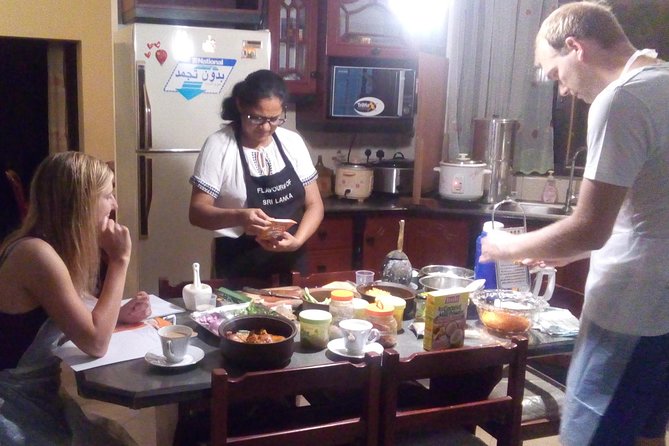
Reviewed · KANDY TOURS
Flavours of Sri Lanka
Sri Lankan cooking makes sense once you see the work behind it. At Glory Homestay, Chitra takes you into her garden to pick vegetables and herbs, then shows you how coconuts become fresh milk and spices become homemade curry powder. The class ends with rice and five curries cooked in traditional clay pots.
I like the hands-on format, since you are involved at every stage instead of watching a chef work from a distance. I also like the warm, shared meal afterward, where you can talk with Chitra about Sri Lankan food, culture, and daily life. The one thing to consider is the three-hour start at 3:30 pm, which may not fit a tight Kandy sightseeing schedule.
Key points to know before booking
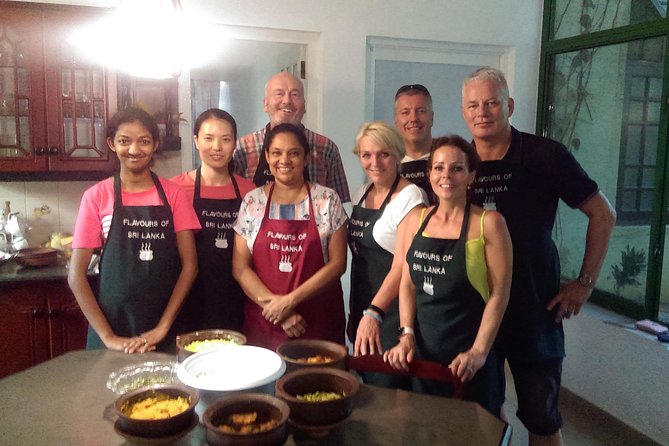
- Garden-to-table cooking: Pick fresh vegetables, herbs, and other ingredients in Chitra’s home garden before cooking.
- Five curries in one class: Prepare a typical Sri Lankan meal of rice with five curries, with recipes adjusted to your diet.
- Real coconut preparation: Crack coconuts, scrape the flesh, and extract fresh coconut milk.
- Traditional cooking methods: Use homemade curry powder and cook the curries in clay pots.
- Small group setting: The class accepts a maximum of eight people, allowing more personal attention.
- Good dietary flexibility: Vegan, vegetarian, and gluten-free meals are available when arranged through the experience.
Why this Kandy cooking class feels different
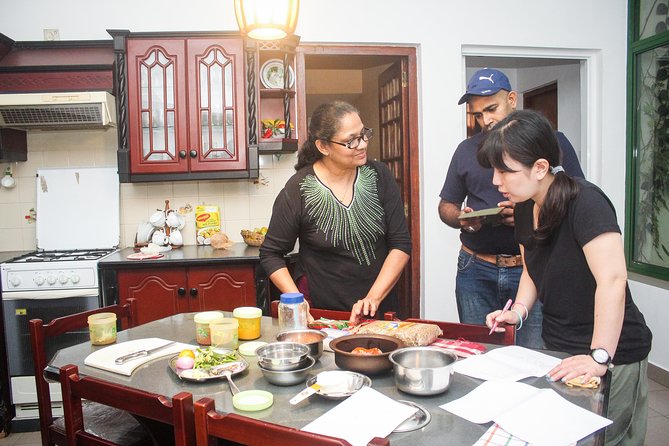
Many cooking classes begin at a market or a kitchen counter. This one starts in a home garden. That small change matters. You see the raw ingredients before they are chopped, seasoned, and transformed into a meal.
Chitra, the culinary instructor, leads the session at her home, Glory Homestay, on Meda Bowala Road in Kandy. The setting gives the class a personal feel. You are not simply being shown a list of dishes. You are being introduced to the ordinary tools and habits that shape a Sri Lankan meal.
The main project is a traditional plate of rice with five curries. That gives you a useful look at how Sri Lankan meals are built. Instead of one large main dish, you work with several preparations that bring different ingredients, textures, and spice combinations to the same plate.
The class is limited to eight people. That is still large enough to make the final dinner social, but small enough that Chitra can give you direction as you work. If you have questions about ingredients or technique, this format should be more helpful than a crowded demonstration.
The experience has earned a 5 out of 5 rating from seven reviews, with especially strong praise for the food, Chitra’s hospitality, and the enjoyable group atmosphere. That fits the design of the class: the teaching and the meal are equally important.
A few more Kandy days to line up
- Kandy Private Guided City Tour by Tuk Tuk
★ 4.9 · 1,307 reviews - From Kandy: Sigiriya Rock & Dambulla Cave Temple Adventure
★ 4.9 · 785 reviews - Sri Lanka Cooking Class with Granny
★ 5.0 · 587 reviews
Starting in the garden at 3:30 pm
The meeting point is Glory Homestay, 46 Meda Bowala Road, Kandy 20000. The class starts at 3:30 pm and runs for about three hours, ending back at the same place.
Your first task is to enter the home garden and choose fresh vegetables, herbs, and ingredients for the meal. The exact produce depends on what is available, so this part is not a fixed display of ingredients laid out for show. It is a practical introduction to what goes into the cooking.
I like this opening because it gives you a better sense of proportion. Sri Lankan food can look complex when you see several curries on a table, but the starting point is simple: fresh produce, spices, coconut, and careful preparation.
It also gives Chitra a natural chance to explain the ingredients before the cooking begins. If you are unfamiliar with Sri Lankan cuisine, this is useful. You can connect an ingredient in the garden to the curry it helps create.
The location is near public transportation, which helps if you are getting around Kandy without a private car. The supplied details do not promise hotel pickup, so plan to make your own way to Glory Homestay and allow enough time to arrive for the afternoon start.
Learning the spice base behind Sri Lankan curries
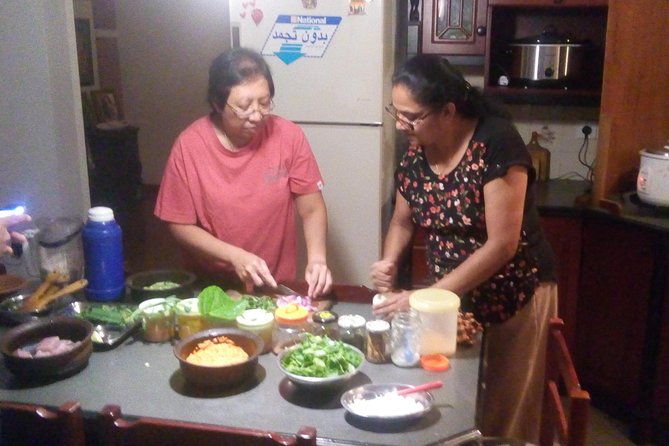
After collecting ingredients, Chitra introduces the curries and the spices used in them. The key lesson is not just which spices appear in a recipe, but how a traditional curry powder is prepared.
This is one of the most valuable parts of the class for anyone who wants to cook Sri Lankan food again at home. A recipe can tell you to add curry powder, but it does not always explain what that powder contributes or how it fits into the wider dish. Chitra shares cooking tips that are not easy to pick up from a standard recipe alone.
You can expect an explanation of the ingredients before they go into the pots. The format is hands-on, so you take part in the preparation rather than standing back while someone else handles the work.
The experience is especially useful if you enjoy learning through your senses. You can see the ingredients in their original form, handle them during preparation, and follow them through to the finished curries. The supplied information does not list every dish or spice, so you should not book expecting a fixed menu of named recipes beyond the stated rice and five-curry meal.
That flexibility is likely part of the appeal. The meal can be adapted to dietary preferences, and the cooking can focus on the ingredients available for the session.
Making coconut milk the traditional way
Coconut plays an important role in Sri Lankan cooking, and this class gives you the full process. You crack coconuts, scrape the flesh, and extract the coconut milk yourself.
That is a memorable lesson because it shows the work hidden inside a familiar ingredient. In many kitchens, coconut milk arrives in a can or carton. Here, you see how it is made for the dish in front of you.
The step also helps explain why Sri Lankan curries can have a smooth, rounded character. Fresh coconut milk is not treated as a minor garnish. It is part of the cooking process and helps shape the final meal.
You should be ready for a class that involves real kitchen work. This is not only a tasting session. You will be preparing ingredients and taking part in each stage, with kitchen equipment supplied at the home.
Unlimited boiled and filtered spring water is included. Alcoholic drinks are not included, so bring that expectation with you when planning the evening.
A different sort of day out of Kandy:
- Kandy Village Cooking Class
★ 5.0 · 536 reviews - Kandy to Ella Train Tickets – Reserved Seats
★ 4.5 · 523 reviews - From Kandy: Pinnawala Day Tour
★ 4.8 · 331 reviews - Kandy to Ambuluwawa & Kandy City Guided Tuk Tuk Day Tour
★ 4.8 · 270 reviews
Cooking five curries in traditional clay pots
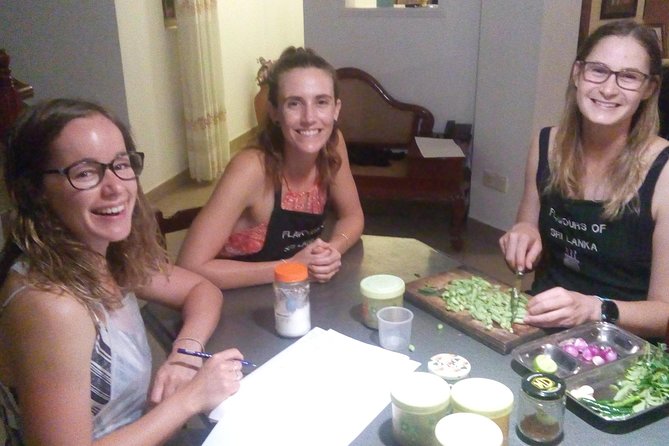
The central cooking session produces a typical Sri Lankan meal of rice with five curries. All curries are cooked in traditional clay pots using homemade curry powder.
Five curries may sound like a lot for a three-hour class, but you are not preparing five unrelated restaurant dishes. The point is to understand how the parts of a Sri Lankan meal work together. Rice provides the base, while the curries create variety across the plate.
The clay pots are more than a decorative touch. They connect the class to traditional cooking methods and give you a direct comparison with modern cookware. Chitra also shares practical tips as you work, helping you understand the order of preparation and how the ingredients come together.
Small groups are important here. With a maximum of eight people, you should have a chance to participate in chopping, mixing, seasoning, and other preparation steps. The experience does not state that each person makes every dish alone, so expect a shared cooking process rather than five separate individual meals.
This arrangement works well for couples, friends, solo visitors who enjoy meeting people, and families with an interest in food. It also suits anyone who would rather learn a few useful methods than collect a long list of recipes they may never make again.
A meal that completes the lesson
When the cooking is finished, everyone sits down to eat the meal together. Dinner is included, along with water and food prepared according to your dietary preferences.
This shared meal is not an afterthought. It gives you a chance to taste the results while the cooking steps are still fresh in your mind. You can ask Chitra why a curry tastes the way it does, compare the different dishes, and talk with the other people in the group.
The conversation also reaches beyond food. Chitra shares information about the history, culture, and lifestyle of Sri Lankan people. The experience is therefore part cooking lesson and part informal cultural exchange.
Past feedback gives special weight to this combination. The strongest praise centers on the delicious food, Chitra’s warmth, and the fun of cooking as a group. One note describes the class as a highlight of a Sri Lanka visit, while another points to the welcoming hospitality and the chance to learn from Chitra as a chef.
The meal is best viewed as the payoff for your work. If you want a quick demonstration followed by a plate prepared entirely by someone else, this may feel too involved. If you like eating what you have helped make, the structure makes good sense.
Dietary options and what to tell Chitra
The meal can be prepared for vegan, vegetarian, or gluten-free diets. That is a useful feature in a cuisine where curries often contain vegetables, lentils, coconut, and spices, but you should still communicate your needs when booking.
The supplied information does not give a separate menu for each diet. Instead, it says meals are provided according to dietary preference. Ask about your requirements in advance so the class can be planned properly.
This flexibility makes the experience suitable for mixed groups. One person can need a gluten-free meal, another can prefer vegetarian food, and the group can still cook and dine together.
Do not assume that every possible allergy or intolerance is covered. Only the listed vegan, vegetarian, and gluten-free options are confirmed in the experience details.
Is $25 a good value for three hours?
At $25 per person, the class offers solid value if you want more than a meal. The price includes the three-hour instruction, kitchen equipment, dinner, dietary meal options, and unlimited boiled and filtered spring water.
You are also paying for several activities in one visit: garden picking, ingredient instruction, curry-powder preparation, coconut processing, hands-on cooking, and a shared dinner. The small group limit improves the value because the session is designed for personal attention rather than a large audience.
The price does not include alcohol. That is easy to handle, but it is worth knowing before you arrive.
The best comparison is not simply the cost of dinner in Kandy. Ask what you want from the evening. If you only need an inexpensive meal, $25 may seem high compared with local food. If you want to learn how the meal is made, take part in the preparation, and spend time with a professional instructor in a home setting, the price is reasonable.
The 3:30 pm start also means the class can fill an afternoon and evening without taking up your morning sightseeing time. It lasts approximately three hours, and the activity ends back at Glory Homestay.
Who will enjoy this experience most
I would recommend this class to anyone who plans to eat Sri Lankan food during a trip and wants to understand it better. You do not need to be an experienced cook. The format is built around guided, hands-on participation.
It is a particularly good match for:
- People who enjoy learning through cooking rather than watching demonstrations
- Vegetarians, vegans, and people seeking a gluten-free meal
- Couples and friends who want a shared evening activity
- Solo visitors who like small-group social experiences
- Home cooks who want practical ideas about curry powder and coconut milk
- Anyone interested in food as a way to discuss Sri Lankan culture and daily life
You may want to choose another activity if you have a very tight schedule, dislike group cooking, or want a precisely fixed menu. The available information does not promise hotel transfers, a private class, or a set list of five named curries.
The mobile ticket makes the booking simple, and confirmation is provided at booking. Free cancellation is available up to 24 hours before the local start time. Inside that window, the amount paid is not refunded and changes are not accepted.
My verdict on Flavours of Sri Lanka
You should book this class if you want a warm, practical introduction to Sri Lankan food rather than a formal restaurant meal. The garden visit, fresh coconut milk, homemade curry powder, clay-pot cooking, and five-curry dinner give the three hours a clear sense of purpose.
The strongest reason to choose it is Chitra’s personal teaching style. You are not only collecting cooking steps. You are spending time with an instructor who explains food alongside Sri Lankan culture and everyday life.
Book with care if your schedule is packed or if you need transport arranged. For most people who enjoy food, small groups, and active participation, $25 is a fair price for a full afternoon-to-evening experience in Kandy.
FAQ
Where does the cooking class start?
The class starts at Glory Homestay, 46 Meda Bowala Road, Kandy 20000, Sri Lanka.
What time does the experience begin?
The start time is 3:30 pm.
How long does the cooking class last?
The experience lasts approximately three hours and ends back at the meeting point.
How many people can join the class?
The maximum group size is eight people.
Can the meal be made for dietary preferences?
Yes. Vegan, vegetarian, and gluten-free meal options are available.
Is dinner included in the price?
Yes. Dinner, kitchen equipment, and unlimited boiled and filtered spring water are included. Alcoholic beverages are not included.
Recently listed around Kandy
- Discover Sigiriya Dambulla and Minneriya Park in Day Tour★ 5.0 · 3 reviews
- Kandy City Guided Day Tour by Tuk Tuk & Laxury Car★ 5.0 · 3 reviews
- Kandy: Ambuluwawa Day Tour by TukTuk with Local Guide★ 5.0 · 3 reviews
- Day Tour to Polannaruwa from Kandy by Lux Tours Lanka★ 5.0 · 3 reviews
- Kandy To Dambulla and Sigiria City Full Day by Laka Tours★ 5.0 · 3 reviews
- Evening Tour at the Last Kingdom of Sri Lanka, Kandy★ 5.0 · 3 reviews
- Full Day Tuk Tuk Tour – Explore Kandy with Local Expert★ 4.1 · 3 reviews
- Day Tour Kandy to Sigiriya with Dambulla Cave Temple Excursion★ 5.0 · 3 reviews
Kandy Tours, compared.




Browse the lists this tour appears in