
Reviewed · KANDY TOURS
Cooking With Village Family
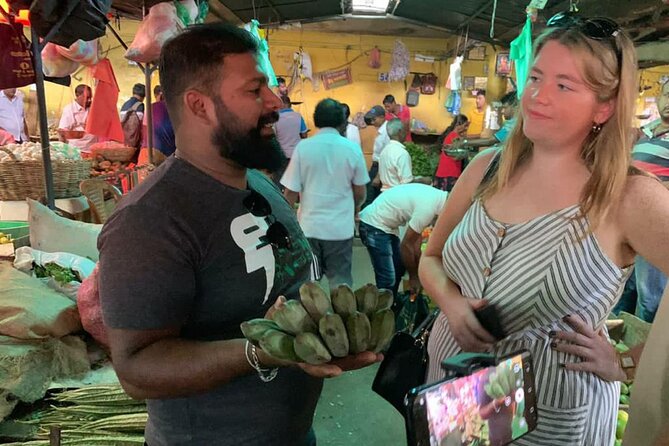
The best part of this Kandy experience is that you do not simply watch a chef perform. You choose the ingredients and cook the meal yourself, with a local family guiding each step. The lesson covers useful basics such as making coconut milk, preparing rice, cooking daal, and building several vegetable curries.
I like the private format, which gives you room to ask questions and work at your own pace. I also like the family setting and the chance to turn a meal into a practical souvenir you can recreate at home. The main consideration is that this is a hands-on class, not a polished demonstration, so you should be ready to do the chopping, mixing, and cooking yourself.
Key points
- Cook with a Kandy village family: The class takes you beyond the city center for a personal meal experience.
- Make coconut milk from scratch: This is one of the most useful and distinctive parts of the lesson.
- Choose your own lunch or dinner ingredients: Your meal is shaped around the dishes and vegetables you select.
- Work privately with the family: Only your group participates, making it easier to ask questions.
- Meet Nandi and Sudesh: Nandi leads the cooking guidance, while Sudesh has handled pickup for at least some bookings.
- Allow three and a half hours: Tea or coffee, preparation, cooking, and eating all take time.
A family kitchen outside Kandy
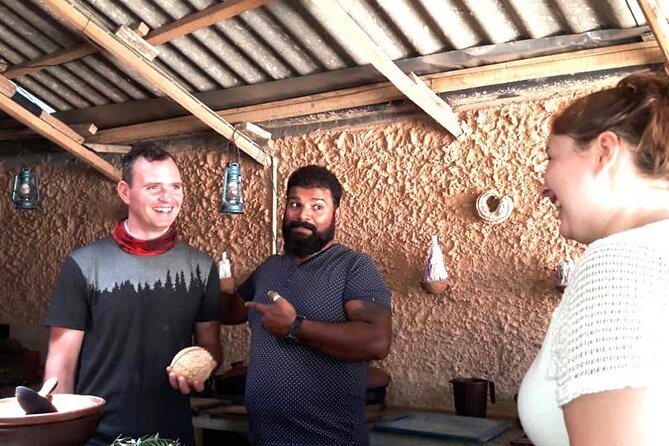
This workshop offers a different way to see Kandy. Instead of spending the entire day around temples, shops, and traffic, you head toward a village setting just outside the city and spend several hours around a family meal.
The experience begins with tea or coffee. That small welcome matters because it gives you time to settle in before the cooking starts. It also sets the tone: this is a visit built around hospitality and shared food rather than a quick class designed to rush you through a recipe.
The format is private. Only your group participates, so you are not trying to keep up with a large class or competing for space at a single work surface. If you are a solo visitor, a couple, or a small family group, that privacy can make the lesson feel more like being invited into someone’s home.
The setting may appeal most to you if you want a closer look at everyday food traditions. It is not presented as a formal culinary school, and that is part of its appeal. You are there to learn by doing, with the family explaining what to prepare and then letting you take over.
More Cooking Classes in Kandy
- Sri Lanka Cooking Class with Granny
★ 5.0 · 587 reviews - Kandy Village Cooking Class
★ 5.0 · 536 reviews - Private Traditional Sri Lankan Cooking Class in Kandy with Hotel Transfers
★ 5.0 · 115 reviews
Choosing ingredients for your Sri Lankan meal
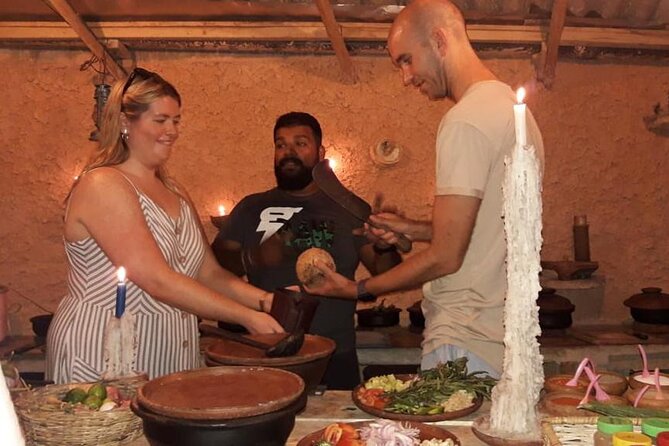
After the welcome drink, you select the ingredients for lunch or dinner. This gives you some control over the final meal and makes the class more useful if you already know which Sri Lankan dishes you want to learn.
The available information specifically points to rice, daal, coconut milk, and different vegetable curries. These are excellent foundations for a Sri Lankan meal because they teach several techniques rather than one isolated recipe. You learn how a staple is cooked, how lentils are prepared, how coconut becomes part of a sauce, and how vegetables are seasoned and cooked in different ways.
Your choice also affects how much the meal suits your tastes. If you prefer vegetables, the curry portion gives you room to focus on several varieties. If you are curious about a basic Sri Lankan plate, rice and daal provide a good starting point. The experience does not promise a fixed menu, so ask about the ingredient choices when booking if you have a particular dish in mind.
That flexibility is useful, but it also means you should not expect a printed menu or an identical meal every time. The class is built around your selections and the guidance available that day. Think of it as a lesson in the building blocks of Sri Lankan cooking, not a guaranteed masterclass in one named dish.
Making coconut milk the traditional way
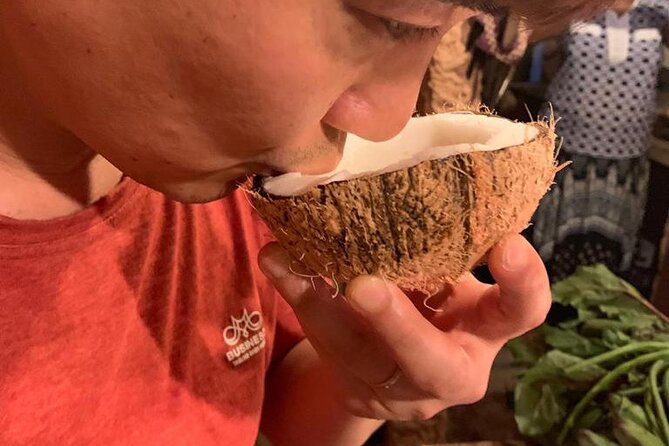
The coconut milk lesson is one of the most memorable details in this experience. The chef explains how to get coconut milk and how it fits into the cooking process, rather than treating it as an ingredient that simply appears in a carton.
For you, this is valuable because coconut milk can seem simple until you have to prepare it yourself. The lesson connects the ingredient to the texture and flavor of the finished curry. It also helps explain why coconut-based Sri Lankan dishes taste different from recipes made with prepared products.
You should expect clear guidance, followed by your own work. The instructions say that you do everything yourself while the family guides you. That means you will not be watching from the side as the chef does all the important parts.
This approach is especially useful for home cooks. You can ask how much coconut milk to use, how it should look, and when it belongs in the dish. Those are the small details that often matter more than a long ingredient list once you try the recipe back home.
Cooking rice, daal, and vegetable curries
The main cooking session covers several parts of the meal. Rice gives you a chance to work on a basic staple, while daal introduces a lentil dish that is filling, affordable, and easy to adapt. The vegetable curries add variety and show how a single meal can contain several separate preparations.
I like this combination because it reflects the structure of a full Sri Lankan meal. You are not learning only one curry and then eating it with plain rice. You are working toward a plate with different textures and flavors, each prepared as its own component.
Nandi is identified as the family member who provides the cooking instruction. A previous participant described her as patient and attentive while showing how to make coconut milk, rice, daal, and several vegetable curries. That gives you a useful sense of the lesson’s pace and focus. It is centered on careful instruction, not a quick recipe recital.
The best way to approach the class is to stay involved from the beginning. Pay attention to how ingredients are handled, ask questions as soon as something is unclear, and take mental notes about the order of preparation. Since you are doing the work yourself, you will have a better chance of remembering the method later.
Still, you should keep your expectations practical. The description does not promise professional equipment, a cookbook, or a formal recipe handout. If you want to recreate the meal at home, write down your own notes or ask permission to record key quantities and steps.
A different sort of day out of Kandy:
- Kandy Private Guided City Tour by Tuk Tuk
★ 4.9 · 1,307 reviews - From Kandy: Sigiriya Rock & Dambulla Cave Temple Adventure
★ 4.9 · 785 reviews - Kandy to Ella Train Tickets – Reserved Seats
★ 4.5 · 523 reviews - From Kandy: Pinnawala Day Tour
★ 4.8 · 331 reviews
From cooking lesson to shared meal
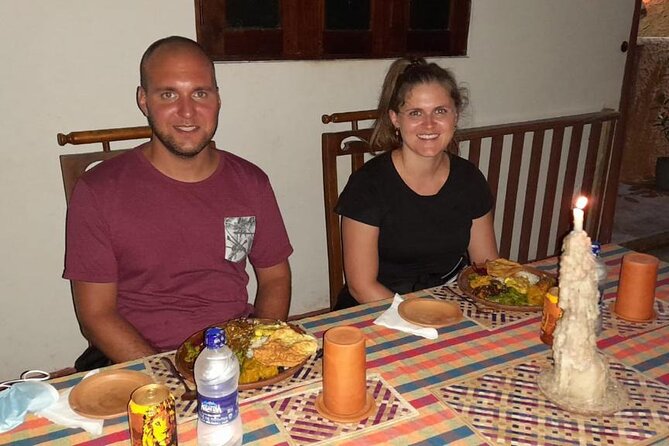
At the end, you eat the lunch or dinner you prepared. This is more than a simple meal break. It gives you a chance to see how the separate dishes work together and to judge the results of your own cooking.
Lunch and dinner are included, along with tea or coffee and bottled water. Alcoholic drinks are not included, so plan on a nonalcoholic meal unless you make separate arrangements outside the experience.
The meal is also where the family setting becomes most meaningful. You have spent time preparing food together, and then you sit down with the result. That creates a sense of connection that a restaurant meal usually cannot provide, even if the restaurant serves more polished food.
The experience is described as ending with unforgettable memories, but the practical value is simpler and more concrete: you leave having cooked a Sri Lankan meal from raw ingredients. For many people, that is a better souvenir than a spice packet or another photograph.
Why the private format matters
Private tours can cost more than group activities, but this one is priced at $30 per person. At that rate, the value is strong if you care about personal instruction and an included meal.
You are paying for roughly three and a half hours, not just a short cooking demonstration. The time includes the welcome drink, selecting ingredients, preparing food, learning techniques, cooking, and eating. It is a substantial portion of a day, but the pace should leave room for questions and hands-on practice.
The private format is particularly helpful for groups with different skill levels. A confident cook can ask about technique, while a beginner can take more time with each step. Families may also appreciate not having strangers at the same work surface.
The trade-off is that the price does not include private transportation. Kandy City Centre is listed as the start and end meeting point, though pickup is offered as a feature of the experience. Because those details can vary, confirm exactly where pickup occurs and if any transport charge applies before you go.
Sudesh has handled pickup for at least one booking, while Nandi led the cooking instruction. The names are useful to know when arranging your meeting, especially if you are being collected rather than walking from the city center.
Timing your visit in Kandy
The class lasts about three hours and thirty minutes. You should keep that block free rather than trying to squeeze it between two fixed sightseeing appointments.
A morning booking can work well if you want to prepare lunch. An afternoon booking may suit you if dinner is the main event. The experience allows for either lunch or dinner, so confirm the preferred time and meal when arranging your visit.
This is also an experience that depends on suitable weather. If poor weather causes cancellation, you are offered another date or a full refund. A minimum number of participants may also apply, and if that requirement is not met, you are offered another date or experience, or a full refund.
You can cancel for a full refund if you do so at least 24 hours before the start time. Changes or cancellations made inside that window are not accepted for a refund. That policy is worth noting if your Kandy plans are still shifting.
The experience is near public transportation, and most people can participate. No special ability requirement is stated, but you should be comfortable taking part in basic food preparation for several hours.
Who will enjoy this cooking class most
I would choose this experience if food is one of your main ways of understanding a place. It gives you direct contact with local cooking methods and a family setting, rather than only a restaurant meal made for visitors.
It also suits you if you want a private activity. Solo visitors can get more direct attention, couples can share the work, and small groups can tailor the meal to their tastes.
Home cooks will get the most practical value. The lesson covers techniques you can repeat, especially coconut milk, rice, daal, and vegetable curry preparation. You do not need to be an expert, but you should be willing to work rather than simply watch.
This may be less suitable if you want a fast, highly structured class with exact recipes and professional kitchen facilities. The experience is deliberately personal and hands-on. Its strength is the family connection, while its limitation is that the level of structure may depend on the group and the ingredients selected.
The class can also be a good choice for visitors who have already seen Kandy’s main sights. A half-day spent in a village setting adds a different side of the area without requiring a full-day excursion.
What the high rating tells you, and what it does not
The experience carries a 5 out of 5 rating from 104 reviews, with 100 percent recommending it. The strongest praise centers on the food, the family’s kindness, and the authentic feel of the village setting.
Those points match the design of the class. You are not being handed a finished meal and told a story about it. You are working through the meal with Nandi and the family, then eating what you made.
The high rating should not make you expect every detail to feel polished or identical. The class is personal, and the menu depends on your choices. The most rewarding experience will come if you value conversation, practical instruction, and local hospitality more than a staged performance.
Practical advice before you book
Before booking, think about what you want to learn. If you have a favorite curry or a dietary preference, ask how ingredient selection works. The class allows you to choose ingredients, but a specific dish is not guaranteed in the information provided.
Wear clothes you do not mind cooking in. You will be involved in the preparation, and the instructions make clear that you do the work yourself. Bring a phone or small notebook if you want to record techniques for later, and ask before taking photographs inside the family home.
Confirm the meeting arrangements. Kandy City Centre is the stated start and end point, and private transportation is not included, although pickup is offered. Clarifying this point avoids a last-minute surprise.
Finally, protect the full three and a half hours. The meal is part of the experience, not an afterthought. Rushing away before you eat would miss one of the best reasons to book a class like this.
Should you book Cooking With Village Family?
I would book it if you want a small, personal cooking experience with a real meal at the end. The $30 price includes instruction, lunch or dinner, tea or coffee, and bottled water, making it good value for a three-and-a-half-hour private activity.
The strongest reasons to go are the family setting, the hands-on preparation, and the chance to learn coconut milk, rice, daal, and vegetable curries from Nandi. You should skip it only if you prefer a formal cooking school, a fixed menu, or an activity that requires little participation.
For most food-focused visitors to Kandy, this is a rewarding change of pace. Bring curiosity, allow plenty of time, and confirm the pickup details before setting out.
FAQ
Where does the cooking experience start and end?
The activity starts at Kandy City Centre in Kandy, Sri Lanka, and ends back at the meeting point.
How long does the cooking class last?
The experience lasts approximately 3 hours and 30 minutes.
What food will I learn to cook?
You can learn to prepare coconut milk, rice, daal, and different vegetable curries. You select the ingredients for your lunch or dinner.
Is the cooking class private?
Yes. This is a private activity, and only your group participates.
Are lunch and drinks included?
Lunch or dinner is included, along with coffee or tea and bottled water. Alcoholic beverages are not included.
Can I cancel for a full refund?
Yes, if you cancel at least 24 hours before the experience start time. Cancellations made less than 24 hours in advance are not refunded.
Recently listed around Kandy
- 3 Days Nature and Chill Tour of Ella, Nuwara Eliya and Haputale★ 5.0 · 10 reviews
- Kandy City Day Tour from Colombo, Negombo or Katunayake★ 5.0 · 10 reviews
- Knuckles Spice Trail Trek from Kandy★ 5.0 · 11 reviews
- Kandy Private City Tour With Local Guide★ 4.7 · 11 reviews
- Kandy & Pinnawala & Tea Factory Full Day Tour From Negombo★ 4.3 · 11 reviews
- Sigiriya and Dambulla Day Trip from Kandy★ 5.0 · 11 reviews
- Kandy City Tour with Mahaweli★ 5.0 · 11 reviews
- Kandy City Tour & Famous Ambuluwawa Tower with Friendly Chauffeur★ 5.0 · 11 reviews
Kandy Tours, compared.




Browse the lists this tour appears in